Gazan Woman Narrates Ordeal as Israeli Army Dog Attacks Her

Despite the weeks since she was attacked and bitten by an Israeli occupation dog, Umm Hassan continues to suffer from the physical and psychological pain of such a harrowing experience.

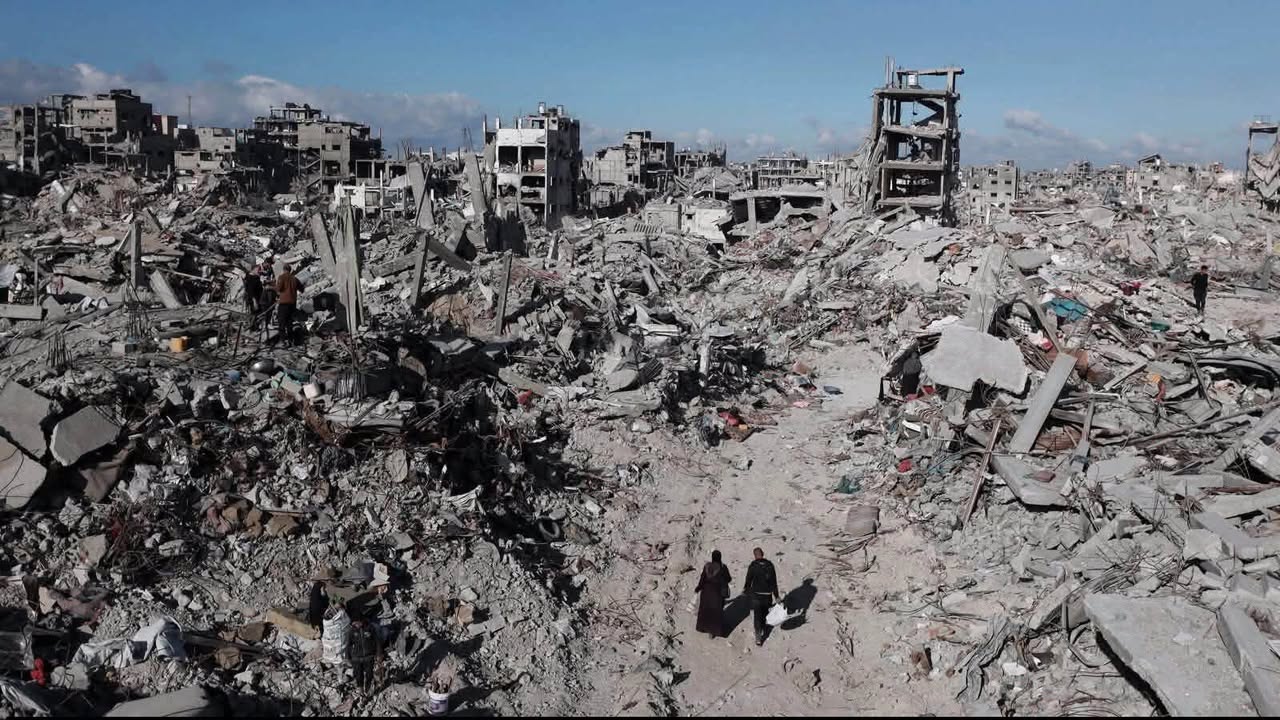
Umm Hassan has three children and lives in Khan Yunis, and her house was subjected to artillery shelling by the Israeli occupation army, which made it impossible to live in.

She  recalls the details of her tragedy on 24 October, when the Israeli army launched a surprise attack on her residential area in the Al-Manara neighborhood of Khan Yunis.

She said: “Unbelievably and indescribably, we began to hear the sounds of tank tracks and quadcopters surround our homes which were packed with families at the time according to the Palestinian Center for Human Rights.

On that day, the occupation army began shelling these houses with artillery shells and warplanes, including the Al-Farra family’s house next to Umm Hassan’s home, where 13 people were killed, most of them children.

She continued: The occupation bombed the second floor of our house, we were about 20 laying on the ground floor with my children, husband, my brothers and my husband’s family.

We were besieged in the house, and due to the intensity of the continuous artillery shelling, we hid in the bathroom, and remained there till late evening.

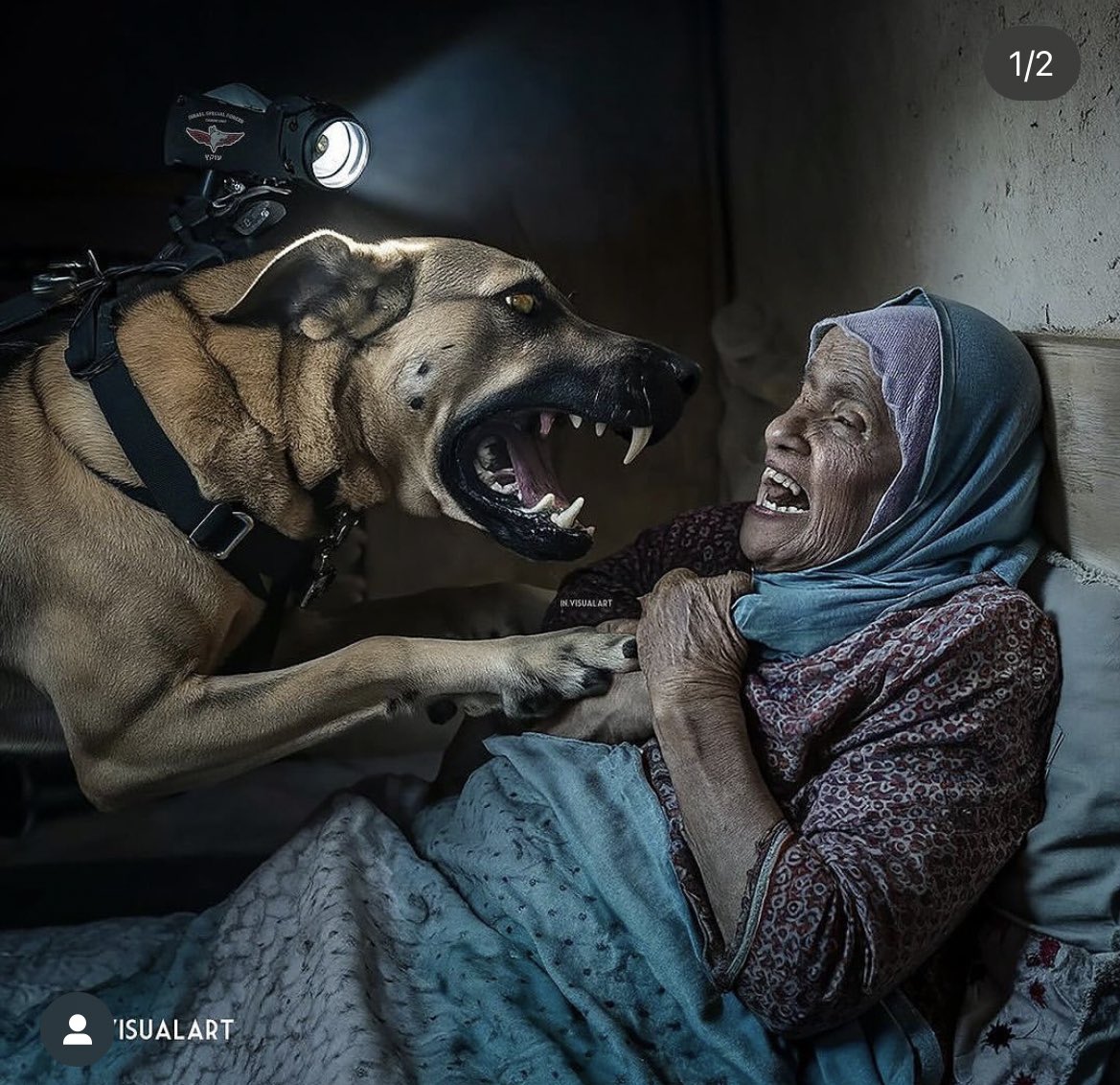
But suddenly, the occupation forces brought in a dog equipped with a camera to search the house. It stopped in front of us and headed towards us, and then bit my 17-year-old sister who is married and pregnant.

Soon after that the dog came at me and bit me in the thigh causing deep wounds and severe bleeding. I was already nine months pregnant.

Umm Hassan’s husband tried to shoo the dog away but the animal wouldn’t let go, amid the screams of her terrified young children.

 “Then the dog dragged me 15 meters from the bathroom whilst holding my feet tightly. I felt the flesh come out. My feet started to bleed profusely as the whole family in the house looked on in terror. The dog held my feet tightly for about 10 minutes and no one was able to pull its jaw off…

Soon we heard the sound of many soldiers ascending the stairs of the house whilst three of them came to pull the dog’s jaw out. But they could not do that until the fourth soldier, who was in charge, came and pulled the jaw out forcefully.”

Horrific

Her foot was mutliated. The wound was so deep, going all up to her thigh with an eight-centimeter-gash abd 12 centimeters long, the doctors later told her.

 “The sight was horrific. I felt as if my feet were going to be cut off due to the severity of the wound. It seemed like the dog was chewing on flesh from my thigh. The floor was drenshed in blood. I was screaming in pain, and I felt I might lose my unborn child.

The soldiers occupied the house and took full control, climbing the roof in large numbers whilst shooting randomly in all directions with the artillery shelling continuing non-stop from the moment they stormed in until they left, seven hours later.

Umm Hassan said there was a total siege of the area: “We did not know the fate of the neighboring families, whether they made it alive or killed.

She said the Israeli soldiers isolated the men in a room and put the women and children who were in great distress, shouting and screaming, in another.

I was in pain and bleeding, and I slowly began to lose consciousness. The officer came again and told me if I spoke about what happened to anyone that the soldiers were the ones who released the dog on me, they would come and torture me, and kill my children and my entire family, threatening to get to me wherever I maybe, I thought they were going to kill me.

However at 2:30 am, the occupation forces withdrew from the house. They arrested Umm Hassan’s husband with a young man from the Al-Farra family, and left under artillery shelling that continued incessantly.

The children began to cry and scream again for their father. Their mother did not know anything about her husband until 7 am in the morning when they began to hear the sounds of ambulances. They learned then the army withdrew from the neighborhood, so family went to the Nasser Hospital.

While I was leaving, I was surprised at the large number of martyrs, including children, women and elderly people on the ground, with neighbors pulling out their martyrs, with pproximately 35 dead from the Abu Abdeen, Awida and Al-Farra families.

In hospital, the doctors were shocked by the severity of her wound, says Umm Hassan, and worried about her pregnancy.

After examining me, they told me I had high blood pressure and I was in the stage of preeclampsia due to the severe bleeding and the dog bite. The doctors told me the wound was very deep and needed urgent surgery to save my foot. Initially they were unable to treat the wound properly due to the lack of medicines, disinfectants, gauze and sterilizers and transferred me to the Mubarak Hospital on 28 October, 2024; their the doctors decided to perform an urgent caesarean section.

I entered the operating room at 9 am, and I waited for a doctor until 6:30 pm, the place was in a pitiful state and no suitable bed for delivery and after the caesarean section, I  unfortunately lost the baby.

Three hours later, the doctors told her that she needed an urgent operation for the wound in her foot. Due to the lack of hospital resources, the operation was performed in the same operating room where she gave birth in.

An hour after the operation, Umm Hassan was transferred to intensive care at the Nasser Hospital, where she stayed there for a week. On 4 November, 2024, the occupation released her husband after 10 days, and told them he was taken to the border area with Egypt in Rafah where he was interrogated.

I still suffer from very difficult psychological conditions, and I become hysterical because of the threats I received from the officer and the physical pain I went through. I cannot forget the horror I experienced and my children were exposed to, especially my daughter Sham, who still suffers from extreme fear and involuntary urination due to the psychological trauma she was exposed to. I am still unable to walk or move normally, and I need to change the bandages twice a day so that the wound wouldn’t get infected.

Her husband’s arrest was not his first. On 13 November, 2023, Umm Hassan says the Israeli occupation army arrested him with workers in Qalqilya, and transferred him to Anatot prison, but he was released and returned to them safely after five days through the Kerem Shalom crossing.

Before this incident, Umm Hassan suffered from repeated displacement from her home in Khan Yunis to Rafah and back to Mawasi, where they experienced hunger, cold and the heat of tents before returning to their home to find themselves facing new sufferings and a life of hardship.

CrossFireArabia

CrossFireArabia
Dr. Marwan Asmar holds a PhD from Leeds University and is a freelance writer specializing on the Middle East. He has worked as a journalist since the early 1990s in Jordan and the Gulf countries, and been widely published, including at Albawaba, Gulf News, Al Ghad, World Press Review and others.

Related Posts

‘All I Want is to Bury My Family in Dignity’  

GAZA – Abdel Rahman Khalla no longer holds any dreams of a life; there is no home waiting for him, no family to return to, and no future he can envision as he once did. After losing 39 members of his family under the rubble of their home in northern Gaza, all hopes and aspirations dwindled to a single wish: To find the bodies of his loved ones and bury them with dignity.

Amidst the heavy stones, the dust, and the agonizing wait, he now asks for nothing more than a simple human right: A grave to embrace those who have passed away, and an end befitting the story of a family wiped out by war.

He has decided to dig and undertake this task himself.

Amid the rubble of a five-story building, Khalla stands as the sole witness to one of the most horrific massacres in northern Gaza. He lost about 39 members of his family in a single attack on their home in the Jabalia al-Nazla area on 21 December, 2023.

Read also: Gaza: Civil Defense begins recovering bodies from rubble

Abdul Rahman, the sole survivor of his family, recounts the details of the tragedy, which continues till this day. He says that 39 people, including women and children, were inside the house at the time of the bombing. All were killed under the rubble and no one else emerged alive.

He adds that only 18 bodies were recovered, while the rest, 20 to 21 others, are strill trapped under the debris – over 30 months later because there was no heavy machinery to remove the rubble and debris. Today, Israel continues to block such machinery from entering Gaza.

Abdul Rahman confirmed to the Sanad News Agency they exhausted all avenues, appealing to the Red Cross, Civil Defense, and the Jabalia al-Nazla Municipality, as well as the Qatari and Egyptian committees, requesting such heavy equipment to help in recovering the bodies but all of their appeals went unanswered.

“After 30 months of suffering, we decided to dig with our bare hands,” Abdul Rahman explained, adding the members of his surviving family had only begun manually removing the rubble four days prior, using simple and worn-out tools such as shovels, picks, and light rakes, despite the dangerous situation and the sheer size of their building that collapsed.

But during these arduous efforts, they only managed to recover two bodies; one belonging to his uncle, and the other who remains unidentified. About 19 bodies remain buried under the rubble, awaiting recovery and a proper burial.

Abdel Rahman appeals to the Egyptian Committee and the Reconstruction Committee for urgent intervention, requesting they send bulldozers and trucks to remove the rubble and debris. He emphasizes his family is not asking for the impossible, but simply for their right to reach their loved ones and bury them with dignity.

The tragedy of the Khalla family is not just another statistic in the war’s record, but a human story that speaks of all the suffering of Gaza, where entire families still live amidst the ruins of their homes, searching for their martyrs and awaiting for a long-delayed mercy.

Despite the ceasefire agreement in Gaza that came into effect on October 10, 2025, the Israeli occupation authorities continue to evade their obligations by preventing the entry of hundreds of heavy vehicles needed to remove the thousands of tons of rubble scattered throughout the Strip.

According to data from the Government Media Office, the occupation destroyed 90% of the civilian infrastructure in Gaza during the two years of its offensive, leaving behind more than 70 million tons of rubble, in one of the region’s largest humanitarian disasters in the world.

The Civil Defense Authority indicated in previous statements that dozens of families in Gaza continue to send appeals for help in recovering their relatives months after their martyrdom, but the Authority is unable to respond due to the lack of necessary equipment.

This article was in the Arabic Sanad Lil Anba website and reproduced in crossfirearabia.com.

Continue reading
‘Living Graves’, Is How Palestinian Journalist Describes Israeli Prison

Veteran Palestinian journalist Ali Samoudi described Israeli prisons as “living graves” after his release on Thursday, appearing in severely deteriorated physical condition following his arrest by Israeli forces last year.

Samoudi, who worked for the Palestinian newspaper Al-Quds and international media outlets, said he lost 60 kilograms (about 132 pounds) while in Israeli prison. “My weight was 120 kilograms (about 264 pounds); now my weight is 60 kilograms,” Samoudi said.

According to Samoudi, prison conditions were harsh and cruel, and prisoners suffered. “The food is very bad. Even a cat would not eat what they eat,” he said. “Prisoners have nothing. No notebook, no pen, nothing,” he added, calling on the families of detainees to take care of their well-being. 

He was arrested in April 2025 on false claims of transferring funds to the Palestinian Islamic Jihad. Samoudi and his family strongly denied the allegations.

In a statement issued in January, the Palestinian Journalists Syndicate said al-Samoudi has not been granted a fair trial and that his arrest is “a blatant violation of international law and press freedom”.

The syndicate also warned “that his life is now at risk” due to the harsh and inhumane treatment he has been experiencing in prison.

Samoudi’s son, Mohammed, said his father was an “independent journalist who isn’t affiliated with any party,” adding he was “surprised to hear him being accused of ties with Islamic Jihad. I was in shock.”

Mohammed said the forces raided their home at around 5 A.M., searched the premises and destroyed some of the family’s belongings before taking his father away. He said he didn’t know where his father is being held, but said the family is particularly worried because he is diabetic and suffers from high blood pressure, and therefore needs a special diet and medications.

On May 8, 2025, Wafa reported that an Israeli court had issued an administrative detention order against him for a period of six months.

This was because the Israeli army said it did not have “sufficient evidence” to formally charge him and had hence issued an administrative detention order.

In a statement issued to the United States news group CNN, the Israeli army said: “As sufficient evidence was not found against him, and in light of the accumulated intelligence material, security authorities requested to consider issuing an administrative detention order.”

The military claimed the order was justified as Samoudi’s “presence” posed “a danger to the security of the region”.

Since then, Samoudi has been held in administrative detention and his detention order has been repeatedly renewed.

Samoudi also witnessed the Israeli killing of Al Jazeera journalist Shireen Abu Akleh in Jenin in 2022 and was himself injured that day.

“I was there personally and witnessed the whole thing,” he said about the killing of his colleague. “There was no one there apart from the Israeli force, and they were the ones who shot at us.”

The Palestinian Prisoners’ Society said Samoudi is among more than 3,530 Palestinians held under administrative detention, in addition to over 40 journalists still held in Israeli prisons, including four women.

The group renewed calls for the release of all detained journalists and urged the international community to take responsibility for ongoing violations against prisoners.

More than 9,600 Palestinians remain in Israeli prisons, including women and children, facing torture, starvation and medical neglect, which have led to the deaths of dozens, according to Palestinian and Israeli rights groups. – Quds News Network

Continue reading

You Missed

An Egyptian House in a German Town

An Egyptian House in a German Town

Nakba Art

Nakba Art

Palestinian Population Tops 15.5 Million

Palestinian Population Tops 15.5 Million

‘All I Want is to Bury My Family in Dignity’  

‘All I Want is to Bury My Family in Dignity’  

Israeli Army: 18 Soldiers Dead, 910 Injured in Lebanon

Israeli Army: 18 Soldiers Dead, 910 Injured in Lebanon

Watch Out: Israel is Secretly Filling The West Bank With Settlements

Watch Out: Israel is Secretly Filling The West Bank With Settlements