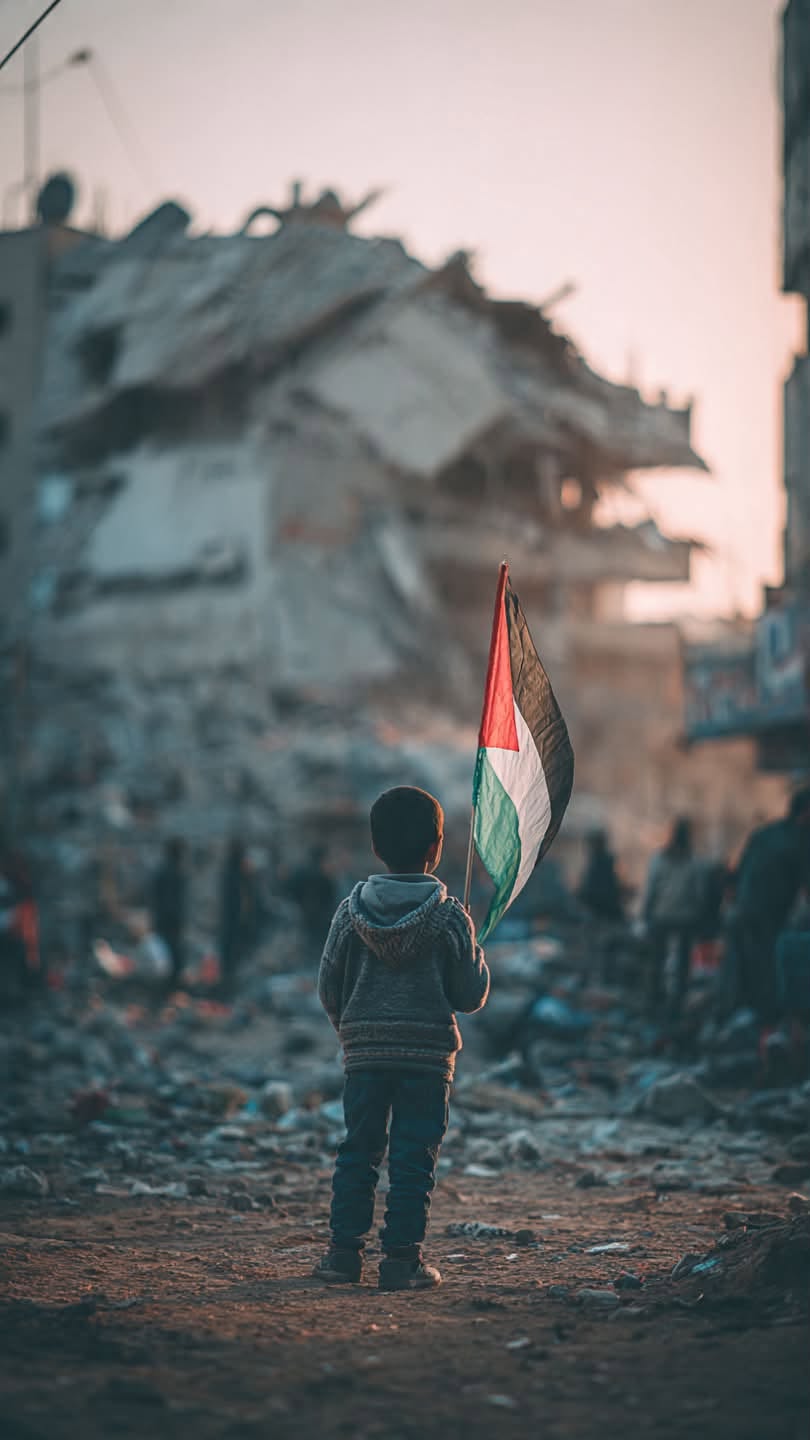
How Israel Uses Its Legal System For Genocide

The Israeli Supreme Court’s ruling to deny a request to allow humanitarian aid into the Gaza Strip is a crucial component of a well-functioning colonial system designed to perpetrate the crime of genocide against the Strip’s people.

The ruling made 27 March is further evidence that the Israeli judiciary—which has never served as a tool of justice for Palestinians—functions as a part of a system in which all state institutions participate, whether Israel’s government, army and other security forces, military prosecution, courts, or media. All of these institutions blatantly violate international legal and humanitarian norms by committing crimes against Palestinians, aiding in the commission of such crimes by coordinating their activities, and/or providing a false legal cover.

The Israeli Supreme Court has explicitly and directly legitimised Israel’s illegal blockade of the Gaza Strip. This blockade has denied food, water, medicine, fuel, and electricity to over two million people—half of whom are children—for nearly 18 months. Meanwhile, human rights organizations have warned that Israel’s refusal to allow humanitarian aid and basic supplies into the enclave for more than three consecutive weeks has accelerated famine in the Strip and led to the deaths of infants from starvation.

One of the most obvious examples of the complicity of all Israeli state institutions in the crime of genocide is the use of starvation as a declared weapon against Palestinians in the Gaza Strip, which has now been made an official policy through a “political” decision validated by a court ruling.

https://twitter.com/jncatron/status/1905672487326699995

To support its ruling, the Israeli court used the argument that the State of Israel is exempt from the obligations of belligerent occupation under international law in all cases pertaining to the Gaza Strip. This blatantly violates established international legal norms that are acknowledged to apply to the Occupied Palestinian Territory. It also goes against the International Court of Justice’s 2024 advisory opinion and gravely breaches the ICJ rulings in South Africa’s genocide case against Israel.

The Fourth Geneva Convention, which applies to the Occupied Palestinian Territory, including the Gaza Strip, is gravely violated by the Israeli court’s recent decision. The occupying power is required by the Convention to provide food and medical supplies to the occupied population. It is also required to permit relief efforts for the benefit of these populations in the event that local resources are insufficient, and to allow for the supply of facilities, including those conducted by states or humanitarian organizations, especially those involving food aid, clothing, and medical supplies.

Euro-Med Monitor emphasizes that the decision is a flagrant disregard of the rulings of the International Court of Justice in the South Africa v. Israel genocide case. In January and March of 2024, the Court mandated that Israel take prompt and decisive action to allow for the delivery of humanitarian aid and essential basic services to alleviate the terrible circumstances faced by Palestinians in the Gaza Strip. In coordination with the United Nations, these measures included providing food, water, electricity, fuel, shelter, humanitarian aid, clothing, hygiene, and sanitation needs, as well as medical supplies and medical care to Palestinians across the Strip, including by expanding the number and capacity of land crossing points and keeping them open for as long as possible.

The International Court of Justice affirmed that Israel’s actions in the Gaza Strip constituted a real and immediate threat of genocide to the Palestinian people there, as well as the possibility of irreversible harm and violations of Palestinians’rights to be protected from genocide under the Convention on the Prevention and Punishment of the Crime of Genocide.

The Israeli court’s rationale is therefore in direct opposition to the advisory opinion issued on 19 July 2024 by the International Court of Justice, the highest court in the world.

The ICJ unequivocally affirmed that Israel’s legal obligations were not terminated by its military withdrawal from the Gaza Strip in 2005, as Israel still maintains effective control over key areas of the Strip, such as the buffer zone, the land, sea, and air borders, restrictions on the movement of people and goods, and tax control. Since 7 October 2023, this control has become much more intense. As a result, Israel continues to be the occupying force in accordance with international law and is responsible for providing humanitarian aid and other necessities to the civilian population in the Strip. 

The rejection of these fundamental legal precepts by the Israeli court is not just a misreading; rather, it is a deliberate judicial intervention aimed at denying the existence of the Israeli occupation and undermining the laws that safeguard the rights of the people who are subject to it. Viewed within the larger framework of institutional complicity that helps to enable and carry out Israel’s crime of genocide against the Palestinian people, this intervention turns the international legal system from a tool of protection into a cover for impunity.

https://twitter.com/QudsNen/status/1905321169923829963

Israel has a legal duty to the people it governs, and this duty extends beyond its legal relationship with the territory. Instead, it necessitates a steadfast obligation to uphold and defend human rights and the principles of preemptive international law under all conditions. Israel’s responsibilities under fundamental human rights conventions, such as the International Covenant on Civil and Political Rights, the International Covenant on Economic, Social, and Cultural Rights, the Convention on the Rights of the Child, and other international instruments, extend beyond the regulations of occupation law and include duties pertaining to preventing population starvation and allowing the entry of humanitarian aid.

Regardless of a state’s legal standing under international law, its effective control over a territory serves as the foundation for its legal accountability for actions that impact this territory’s residents.

The presence of a state of occupation alone does not negate the duties of an occupying power to prevent the occupied population from living in substandard conditions or from suffering from severe physical or mental injury. 

Instead, these duties are enforced by preemptive standards of customary international law, such as the outright ban on crimes against humanity, such as apartheid and genocide. Whether in times of peace or conflict, these standards require all states to uphold these rights and guarantee their protection at all times.

All Palestinians in the Gaza Strip are experiencing a dire humanitarian situation, especially since Israel’s genocidal campaign of direct killings in the Strip resumed on 18 March. This occurs at a time when Israel has been using other tools of genocide against the Strip’s people for a year and a half now.

These tools include starvation, blockade, deprivation of virtually all means of survival, severe physical and psychological suffering, and the imposition of living conditions that are destructive, all of which are intended to destroy the Palestinian people there.

Not only does the ongoing situation in the Gaza Strip violate Israel’s legal obligations, but it also directly calls into question all other states’ adherence to their own obligations, whether these states are directly involved in the genocide or have not acted decisively to stop Israel if in a position to do so. The Fourth Geneva Convention, the Convention on the Prevention and Punishment of the Crime of Genocide, and customary international law all bind these states. These regulations require states to actively work to prevent genocide and to abstain from any actions that facilitate, encourage, or open the door for its occurrence. 

The international community must stop enslaving the Palestinian people to a state that is using all of its official institutions to destroy their lives, drive them off their land, and threaten their shared national identity. Given its decades-long failure to uphold international law and apply it equitably to, and without discrimination against, Palestinians, the international community is directly responsible for the disastrous reality that Palestinians face today, wherever they may be. This failure reveals the biased foundations upon which the international system was established, as this system has deprived Palestinians of their most fundamental rights, most notably their right to exist.

All states must take up their individual and collective legal obligations and act quickly to put an end to the genocide in the Gaza Strip. They must do everything they can to protect Palestinian civilians there, i.e. enforce all necessary measures to force Israel to immediately and fully lift the blockade; permit unhindered freedom of movement of people and goods; open all crossings without arbitrary conditions; and take decisive action to protect Palestinians from forced displacement and swift or slow-motion killing. This entails launching an immediate response to address the population’s pressing and pertinent needs, such as offering suitable temporary housing for displaced people.

The international community must impose economic, diplomatic, and military sanctions on Israel due to its systematic and serious violations of international law. These sanctions, which willincrease pressure on Israel to stop its crimes against Palestinians, should include barring arms exports to Israel; stopping military cooperation with Israel; freezing the financial assets of officials involved in crimes against Palestinians; and suspending trade privileges and bilateral agreements that give Israel economic benefits.

In addition to acting to stop Israeli policies that violate the most fundamental humanitarian principles and endanger the lives of millions of civilians, the States Parties to the Fourth Geneva Convention should fulfil their duty under Common Article 1 to uphold and guarantee adherence to the Convention under all circumstances.

The International Criminal Court must issue arrest warrants for Israeli officials involved in international crimes in the Gaza Strip, and expedite its ongoing investigations. Additionally, the Court ought to acknowledge and specifically address Israel’s crimes as genocide. The Rome Statute’s States Parties should fulfil their legal duties to assist the Court in every way possible;make sure that arrest warrants against Israeli officials are carried out; bring these officials to international justice; and make sure to end the policy of impunity that has been granted to these officials thus far.

Along with fulfilling its legal obligations, the international community must take immediate action to end the root causes of the suffering and persecution endured by the Palestinian people forthe past 76 years: Israeli occupation and settler-colonialism in the Occupied Palestinian Territory. The international community must compel Israelto guarantee the Palestinians’ right to live in freedom, dignity, and self-determination in accordance with international law; to dismantle the system of apartheid and isolation imposed on the Palestinians; to lift the illegal blockade of the Gaza Strip; to hold Israeli perpetrators and allies accountable and prosecute them; and to ensure Palestinian victims’ rights to compensation and redress.

Euro-Med Human Rights Monitor

CrossFireArabia

CrossFireArabia
Dr. Marwan Asmar holds a PhD from Leeds University and is a freelance writer specializing on the Middle East. He has worked as a journalist since the early 1990s in Jordan and the Gulf countries, and been widely published, including at Albawaba, Gulf News, Al Ghad, World Press Review and others.

Related Posts

Hormuz: Mines, Strategy or Business?

By Ismail Al Sharif

The US thought that assassinating senior Iranian leaders would bring down the regime, but this did not happen.

Iran’s inability to match American military and technological superiority led it to adopt a number of strategies, most notably what is known in the military literature as the Mosaic Defense Doctrine. This doctrine is based on dismantling its military central command into small, independent units, each operating autonomously and making its own decisions without consulting the higher command.

From Day 1 of the war, Iran adopted this approach. However, the lack of coordination and the disintegration of the military hierarchy led to chaos and confusion which affected the management of its operations. The situation became contradictory; the politicians were declaring one thing and military commanders acting in a completely different manner and direction.

This was reflected on the ground through extremely dangerous behavior. Military units, using small boats, indiscriminately laid naval mines to deter enemy ships. However, the lack of coordination here backfired resulting in the Iranian navy officers losing their ability to pinpoint the coordinates of the mines they planted in the Hormuz Strait with no accurate maps or reliable records. Some of these mines may have been completely displaced by the currents of the sea. This was further complicated by the fact that these mines were not primitive but far from it; they were sophisticated and able to detect sound and pressure, and thus able to track the passage of large ships and submarines, and detonate automatically upon approach.

However, mine removal is not easy task, as history shows. Even today, news reports continue to surface of mines in various parts of the Kingdom, half a century after the last war. Indeed, mines from World War II are still being discovered on land and at sea.

Even with Britain’s pledge to remove mines after the war, and despite possessing the latest specialized technologies in this field, the task remains arduous, protracted, and uncertain. The specter of a sudden explosion looms, reminding us that the danger of mines is not easily eliminated.

But the decisive factor in weakening navigation in the Hormuz Strait is not primarily military, but rather material. Commercial ships are massive investments, with some vessels valued at around $150 million and their cargoes potentially worth hundreds of millions of dollars. Therefore, a single mine explosion can cause catastrophic losses to both the ship and its cargo. Consequently, no ship sails without insurance; ports, banks, and shipping companies refuse to deal with uninsured vessels, and without insurance, global shipping grinds to a halt.

Herein lies the real surprise: the fate of the Strait is no longer dependent on Iran’s pronouncements regarding its opening or closure, but has effectively fallen into the hands of insurance companies. With the escalating risks, insurance costs have skyrocketed; “war risk” premiums have jumped from approximately 0.25% of the ship’s value to nearly 1% or more, exceeding a massive $1 million per voyage. And it doesnt stop there; seven major insurance companies announced their complete withdrawal, issuing notices of coverage cancellation just within just 72 hours.

And here comes the decisive turning point: Once the insurance coverage is lost, maritime traffic ground to a halt. During this 39-war, ships have effectively ceased sailing with the number of vessels transiting the Strait plummeting by more than 80%. Around 150 oil tankers remain anchored offshore, and major shipping companies suspended their operations, as if this vital artery of global trade had been frozen by a financial, rather than a military decision.

The US government attempted to provide alternative insurance coverage, but this effort failed and US President Trump’s pronouncements regarding mine removal were inconsistent with the reality.

The issue of reopening the Strait has once again become a prominent topic, but the deeper truth is that its fate is no longer determined by political statements or military actions, but rather by the decisions of insurance experts. Even if the war were to end immediately, ships would not resume sailing right away. Insurance companies need time to reassess the level of risk, and they base their decisions not on political logic, but on cold, hard numbers and rigorous data.

This article was originally published in Arabic in Addustour daily newspaper and republished in English in crossfirearabia.com.

Continue reading
Analysis: Middle East in Iranian Eyes

CROSSFIREARABIA – During the Israeli Genocide on Gaza Benjamin Netanyahu used to stand up and say with a smirk: ‘We are changing the face of the Middle East’.

Upbeat about murdering the women and children of Gaza from the late 2023 onwards, he was talking about the further normalization of the Arab world as established by the Abraham Accords, establish an economic order under Israel’s hegemony and end Hamas, Hezbollah and Houthis while clipping the wings of Iran.

Of course, Netanyahu’s face soon changed, albeit two-and-a-half years later, when Iran and Hezbollah were forced into a war generated by Israel and the USA on 29 February, 2026. While Iran got a battering, in the next 39 days, US ships and military bases in the Gulf and Jordan received such a hammering that soon forced US President Donald Trump to plead for a ceasefire.

In this war, Israel received a great shock, being attacked literally on an hourly and daily basis with its buildings, military basis and infrastructure taking directs hits while its millions of people living in underground shelters around-the-clock. 

To use a metaphor Tel Aviv’s nose was being rubbed in the sand in a way that has never been imagined by Netanyahu nor his ilk of extremist right wing fascist politicians who started calling for the expulsion of Gaza Palestinians from their homeland ever since the Israeli genocide on them since 7 October, 2023. 

Today’s Netanyahu’s vision of a new Middle East has been drastically changed, thrown in his face in fact! Iran’s political stances and its missiles have changed things around. The US and Israel were not able to change the current Iranian government in Iran despite killing the country’s spiritual leader Ali Khameini, have not ended the country’s nuclear program nor ended its ballistic missiles. 

So what is Netanyahu talking about? Yes, today there is clearly a new Middle East emerging but it is not according to Netanyahu’s eyes nor his wishful thinking. If anybody should be ‘celebrating’ it is clearly Iran, it’s government, revolutionary guard, its Generals, officers and soldiers who are very probably changing the face of the Middle East and may even be setting the map of how the region should look like in form from now on. 

From day one of the war, Trump started running scared despite his outlandish mutterings! He came to realize quickly that Netanyahu and the Mossad pushed him against Iran, convincing him it would be an easy fight and the government there would fall like a pack of cards. Trump since, started kicking himself as he finally fell to Netanyahu’s squinted prism to go after that country. Netanyahu kept pushing for this wild step since the 1990s through previous US presidents from Bill Clinton, George W Bush, Barack Obama and Joe Biden.

But they did not listen to him however, Trump fell into the trap and maybe this is why he is now privately kicking himself because he basically sent the globe into an economic tailspin and soaring exorbitant oil prices, a potentially deep recession and financial chaos.

In this war Netanyahu may have shot himself in the foot. His alliance with the USA  juxtaposed by Hezbollah whose fighters laid dormant since November 2024 when it stopped firing at Tel Aviv was a big surprise to the latter. Israel had previously thought that Hezbollah agreed to a ceasefire out of weakness and thus their entry into military action was unexpected. Hezbollah kept the military pressure on for six more days after Washington signed off with Iran and beating the Israeli army into submission.

On day 46 Trump intervened calling on the Israeli army to stop fighting Hezbollah. He had ulterior motive, he wanted to extract a normalization agreement between the Lebanese government and Israel; their ambassadors had just started meeting in Washington at the invitation of the US State Department in an upbeat atmosphere and inline for a final agreement to establish an accord between Tel Aviv and Beirut alongside the ones signed between Israel and four Arab states, the UAE, Bahrain, Sudan and Morocco starting September 2020. 

Thus a normalization agreement would be a feather in Trump’s cap, a sort of prestige move for the US president. But his pressure may have been seen as a life-saving formula. Trump was saving Israel from Netanyahu’s insistence that his army to keep fighting in southern Lebanon. Its fight has already cost Israel at least 13 soldiers who were killed, more than 500 injured and more than 100 topnotch Merkava tanks destroyed. Israeli towns and cities were being hammered from the north.

Israel was being beaten from the north. Its towns, cities and military bases again were wide-open to incoming rockets from Lebanon and were not being deflected. It was a war that had to be stopped. This time Trump insisted. If a ceasefire with Iran was going to stick, then Netanyahu had to be forced to make his soldiers stop their fight in Lebanon. 

Thus for the time being Netanyahu’s hand lie in check. Yet in the long run his dream for a new Middle East with Israel playing a central part in it may have been halted. After all, no Gulf or even Arab states now would think of normalizing with Israel despite the fact that Lebanon is being forced into it, but even for then its early days.

Netanyahu can kiss goodbye his long-life attempt to sign a normalization accord with Saudi Arabia for instance, a kingdom which is seen as a “major puller” in the Arab and Muslim world. It has already said that normalization is off the table with Israel. The Gulf has been disappointed in this war because it showed that America were not able to protect them from Iranian missiles that targeted their infrastructure as well the US military bases strewn across the region.

Netanyahu has lost on the economic level as well. His country stands economically devastated, army in ruins as admitted to by the Israeli chief of staff Eyal Zamir, and the dream of opening an ‘economic Middle East’ is definitely dashed for the time being.

America, as Trump knows, is left to pick up the pieces of a tattered world caused by war any choas in a region that is vital to the global system.

Continue reading

You Missed

Trump: Tunes, Ceasefire and Hormuz

Trump: Tunes, Ceasefire and Hormuz

Israeli Looters in Lebanon

  • By marwan
  • April 23, 2026
  • 17 views

Ayat, Qamar Bid Farwell to Their Martyr Dad

Ayat, Qamar Bid Farwell to Their Martyr Dad

‘We Killed Our Own Then Blamed Hamas’

‘We Killed Our Own Then Blamed Hamas’

An Unholy War!

An Unholy War!

‘Journalist Khalil Trapped Under Rubble Left to Die’

‘Journalist Khalil Trapped Under Rubble Left to Die’