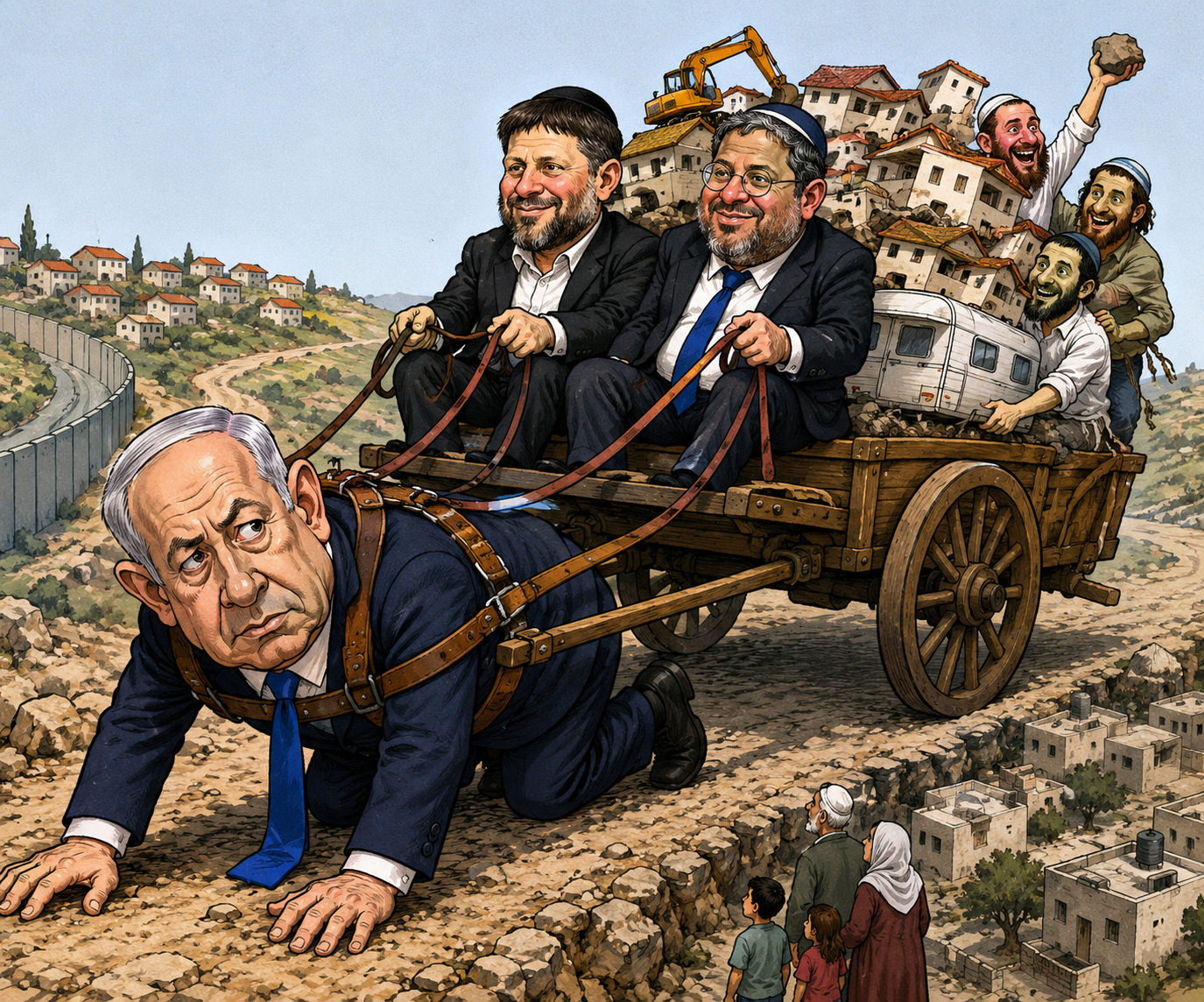
Israeli Soldiers: ‘…We Had to Kill Arabs’

Newly disclosed testimonies by Israeli soldiers and archival documents published by Israeli newspaper Haaretz have shed new light on the displacement of Palestinians and Syrians during and after the 1967 Arab-Israeli war, with accounts describing killings, expulsions, destruction of villages and widespread looting.

The investigation, published ahead of the 59th anniversary of the war and authored by Adam Raz, a researcher at the Akevot Institute for Israeli-Palestinian Conflict Research, is based on previously unpublished soldiers’ testimonies, military records, government correspondence and archival material.

According to the report, approximately 300,000 Arabs were expelled or displaced from the West Bank, Gaza Strip and the occupied Syrian Golan Heights during and after the June 1967 war.

Haaretz said many of the testimonies originated from discussions held among Israeli soldiers in kibbutzim, Israel’s collective farming communities, shortly after the war. While some excerpts later appeared in the influential 1967 book, The Seventh Day: Soldiers Talk about the Six-Day War, numerous accounts describing alleged war crimes remained unpublished for decades.

Several testimonies cited by the newspaper describe killings of prisoners, civilians and refugees. One soldier was quoted as saying: “At first I wasn’t willing to execute Arabs who weren’t resisting. Then we came to the conclusion that we had to kill.”

Another soldier described operations in Gaza after the war, saying: “Human lives didn’t matter. You could kill, there was no law. No one would say a word to you.”

A third testimony referred to what the soldier described as “punitive expeditions” in Gaza’s refugee camps. “We caught guys, lined them up and eliminated them. In retrospect, it looks like murder,” he said.

Shoot-at-sight orders for West Bank returnees

The report also cites testimonies and archival documents alleging that Israeli forces were ordered to prevent Palestinians who had fled across the Jordan River from returning to the West Bank after the fighting ended.

According to Haaretz, soldiers received instructions to shoot people attempting to cross back into the territory.

The newspaper cited testimony later published by former Israeli lawmaker Uri Avnery, who quoted a soldier as saying troops had received orders to “shoot, to kill, without prior warning.”

Another soldier recalled questioning whether such orders applied even if families with children were crossing the river. According to the testimony, he asked: “If I hear babies crying, should I shoot then too?” and was told: “Don’t be a girl.”

Haaretz said military records indicated that by early September 1967, nearly 150 Palestinians had been killed while attempting to return from Jordan. The newspaper also cited statements by senior Israeli military officials acknowledging the existence of orders aimed at preventing refugee returns.

According to the investigation, displacement during the war was not solely the result of battlefield conditions. The report cites government discussions and military documents suggesting that senior Israeli political and military leaders viewed the departure of Arab residents as desirable and, in some cases, encouraged or facilitated it.

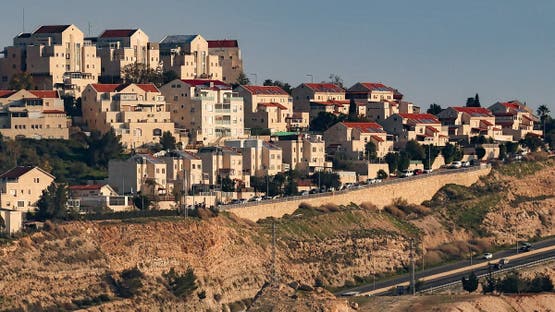
Among the most prominent examples highlighted by the report was the expulsion of residents from the Latrun villages of Imwas, Yalo and Beit Nuba west of Jerusalem. The villages were captured during the war and their approximately 8,000 residents were ordered to leave, according to the investigation.

Haaretz reported that the villages were subsequently demolished and their inhabitants prevented from returning. The area later became the site of Canada Park.

‘Population transfer’

The newspaper also cited testimony from Ishai Amrami, a deputy battalion commander during the war, who later described what he witnessed as “an attempt at massive population transfer.”

The investigation further details events in Qalqilya and other communities near the Green Line, where residents were allegedly encouraged or forced to leave through military pressure, loudspeaker announcements, transportation arrangements and destruction of homes.

According to the report, tens of thousands of Palestinians also fled or were displaced from refugee camps in the Jericho area and elsewhere in the West Bank. Many carried memories of the 1948 Nakba and feared another permanent displacement.

The report revisits events in Gaza as well, where soldiers described raids, arrests and killings in refugee camps after the war. One soldier was quoted as saying: “We would roam through refugee camps in Gaza and carry out purges.”

Another testimony stated: “Every man we saw was a combatant,” while acknowledging that civilians may also have been among those killed.

Beyond the Palestinian territories, Haaretz reported that approximately 120,000 Syrians left or were expelled from the Golan Heights after Israeli forces captured the territory from Syria.

The newspaper cited military documents and testimonies indicating that villages in the Golan Heights were later demolished to prevent residents from returning. According to the report, Israeli commander Elad Peled later described a decision to bring in bulldozers and destroy villages “so there would be nowhere to return.”

Haaretz also cited reports submitted by Syria to the United Nations and records from the International Committee of the Red Cross alleging intimidation, forced displacement, looting and destruction of civilian property in the occupied territory.

Israel warned of legal repercussions

The investigation further describes what it says was widespread looting in areas captured during the war. According to the report, soldiers, civilians and local authorities participated in the removal of property from Palestinian and Syrian homes, schools, businesses and public institutions.

Among the documents cited is a previously unpublished 1967 letter by Theodor Meron, then legal adviser to Israel’s Foreign Ministry. According to Haaretz, Meron warned that expulsions of civilians constituted “a serious violation of the Geneva Convention” and could create diplomatic complications for Israel.

The report says Israeli officials were aware of legal concerns surrounding the expulsions but nevertheless approved measures aimed at preventing displaced populations from returning and consolidating control over newly occupied territories.

The Six-Day War began on June 5, 1967, and ended with Israel capturing the West Bank, East Jerusalem, the Gaza Strip, the Sinai Peninsula and the Golan Heights. While Israel later returned Sinai to Egypt under the 1979 peace treaty, it continues to occupy the West Bank and the Golan Heights.

For Palestinians, the conflict is remembered as the Naksa, or setback, which triggered a new wave of displacement nearly two decades after the 1948 Nakba and remains a defining event in collective Palestinian memory. Anadolu

Continue reading
Hammering The UN?

By Dr Khairi Janbek

Even from the moment of its inception, the UN was subjected to constant criticism and derision. Though it started as a coalition of the willing in order to deal with differences and sources of conflict in a peaceable and/or diplomatic manner, the term willing remained nebulous.

The strong and mighty wanted to bend this will to suit their interests, and the weak and the needy wanted to bend this will for their own protection. Still in this dialectical formula the need for the UN remains as the only viable formula which offers the possibility of negotiations in the Churchillian wisdom of jaw jaw, better than war war, and it remains in this sense, the standard which provides the vaneer for international legality and the semblance of consensus.

Then suddenly and apparently, the concept of the Donald Trump Board of Peace emerged on the scene, thought of, initially, as an effort to deal with the mayhem of Gaza, and to which one may add ironically and cynically, that the most two concerned parties – Palestinians and Israelis – are out of its functioning. On top of this, the notion was propelled in the media that this Board is really an attempt to replace the UN.

So in this context we can assume what is meant is that if the UN started, all these years ago, as a coalition of the willing, today’s Board of Peace is a coalition of the frightened, of states who want to stay on the good side of Trump. This is aside from the reluctant opportunists whom seek some benefits out of becoming a member of this entity.

On the face of it, one can say that the real purpose of its establishment is not to replace the United Nations per se, but a serious attempt to bypass the UN and redefine international relations in accordance with the Trump notion of who is the enemy of peace and who is its friends, with the essential outlook of not needing the international organization at all. Under the new legality, it is Trump who lays down the law, and the one whom distributes the spoils. As for the UN it remains in his eyes as a gathering for losers.

But if we go back to the beginning, in fact the Board of Peace, not only got the blessing of the UN for its creation, but also the support of the Security Council with resolution 2038, but then again, it was linked to the reconstruction and ‘stabilization’ of Gaza, while the current format of the Board emerged on the sidelines of the recent World Economic Forum meetings.

Now irrespective of some in the international community wanting to spite Trump or of waning his influence, there is a serious and big concern that President Trump and the fact that he is presiding over this Board, will mean that the talked about peace will be the peace of the strong imposed by the strong. In itself this rings many alarm bells on the strategic level for many regions in the world about the kind of peace Trump is talking about.

Among the myriad of world conflicts, currently the Palestinian problem, Ukraine war, and Iran, stand out as the most deadly and critical. So in what shape the proposed peace will come?

Dr Janbek is a Jordanian writer based in Paris.

Continue reading
Making Arabic The Future Language!

By Ali Abu Hablah

On December 18, 2025, the world celebrates World Arabic Language Day, an occasion that transcends mere celebration to touch upon the core of cultural and intellectual conflict in a rapidly changing world. This day commemorates the 1973 United Nations General Assembly resolution adopting Arabic as an official and working language of the UN system, in recognition of its historical and cultural significance.

This year’s celebration, organized by UNESCO at its headquarters in Paris, carries the theme:

“Innovative Pathways for Arabic: Policies and Practices for a More Inclusive Linguistic Future.” This theme reflects a growing awareness that the future of Arabic can no longer be secured through emotional rhetoric or historical glorification, but rather through public policies, educational strategies, and serious investment in technology and innovation.

Arabic is not simply a means of communication; it is the language of the Holy Quran, the language of the Prophet’s sayings (Hadith), and a repository of poetic, intellectual, and philosophical heritage. It is also a liturgical language for several Eastern churches. It is spoken today by more than 400 million people and is widespread throughout the Arab world and its surrounding regions, as well as in the diaspora across five continents. It is also one of the most influential languages ​​in the history of world languages.

For centuries, Arabic played a pivotal role as the language of science, politics, and administration. It contributed to the transmission of Greek and Roman knowledge to Europe and served as a bridge for dialogue between cultures along land and sea trade routes. However, this historical leadership is now met with a worrying paradox: Decline of Arabic’s presence in scientific research, higher education, and digital content, in favor of other global languages.

This decline is due to a complex set of factors, most notably the dominance of foreign languages ​​in universities, weak Arabization policies, a decline in translation activity, and the digital revolution, which Arabic has not adequately kept pace with. The widespread use of local dialects, especially through media and social media platforms, has also contributed to weakening the presence of Standard Arabic in the public sphere. This does not mean that the dialects themselves are responsible for the crisis, but rather that it reflects the absence of a balanced linguistic vision. In this context, the 2025 slogan acquires strategic significance, linking the future of Arabic to three fundamental paths:

First, language policies, as no language can be protected without clear legislation guaranteeing its presence in education, administration, and media.

Second, innovation and technology, given that the survival of a language today depends on its presence in artificial intelligence, software, search engines, and the digital content industry.

Third, linguistic inclusivity and equity, by making Arabic accessible to multilingual societies, supporting low-income groups, and promoting linguistic justice without compromising the integrity of the language or politicizing it ideologically.

UNESCO’s celebration of World Arabic Language Day constitutes a platform for global cultural dialogue, but at the same time, it places a heightened responsibility on Arab states and their educational and cultural institutions. The problem does not lie in a lack of international recognition, but rather in the absence of a comprehensive Arab linguistic project that restores Arabic to its role as a language of knowledge and production, not merely a language of heritage and celebration.

Ultimately, the Arabic language does not face an existential crisis, but rather a crisis of management and awareness. It must either be integrated into the core of the civilizational and developmental project, as a language of science, law, and technology, or it will remain confined to occasions and speeches. On World Arabic Language Day 2025, the question remains: Do we want Arabic to be the language of the past, or the language of the future?

Ali Abu Hablah originally wrote this article for the Arabic Addustour newspaper.

Continue reading
UN Condemns Israeli Onslaught on Gaza City

The United Nations has condemned the deadly Israeli military offensive in Gaza City that occurred this past weekend, Spokesperson Stéphane Dujarric said on Monday.

The situation “is having an appalling impact on civilians enduring suffering and starvation,” he told journalists in New York.

“The United Nations condemns the deadly escalation of the Israeli military offensive which took place over the weekend across Gaza City, with scores of people reportedly killed or injured,” he said.

“We reiterate our call for the protection of civilians and humanitarian personnel and full respect for international law.” 

70,000 more uprooted

In a post on X on Sunday, the head of the UN agency for Palestine refugees, UNRWA, said that 10 of its buildings in Gaza City had been hit in the past four days alone, including seven schools and two clinics which were being used as shelters.

Almost 70,000 displaced people have headed south in the past few days, while UN partners counted 150,000 movements from north to south this past month.

Partners further reported that one third of malnutrition treatment facilities in Gaza City have shut down due to forced displacement orders, while the Ministry of Health today reported 425 deaths overall due to malnutrition and starvation in Gaza, about a third of which were children.

A call for ‘unimpeded humanitarian access’

Over the past few days, UN partners have managed to distribute 40,000 additional meals each day. As of Saturday, 558,000 daily meals were prepared and distributed by 20 UN partners to 116 kitchens.

“However, health services continue to be heavily constrained, since clinics have suspended their services due to insecurity and displacement orders,” warned Mr. Dujarric, adding that in Deir Al-Balah, only a few ambulances remain in order and are able to serve the thousands of people in need.

Additionally, 77 per cent of the road networks in Gaza have been damaged and according to UN aid coordination office OCHA, humanitarian aid continues to be obstructed.

On Sunday, only four of the 17 missions that the UN coordinated with the Israeli authorities were facilitated. Seven missions were denied, one of which was meant to deliver water tanks to the north, while another four were impeded in the field, and two were cancelled by the organisers.

Nevertheless, three humanitarian missions were accomplished, including the collection of fuel and food cargo from the Kerem Shalom/Karem Abu Salem crossing.

“Our humanitarian colleagues continue to call for unimpeded humanitarian access,” stressed Mr. Dujarric. “Aid should flow at scale through multiple crossings into and within Gaza, including the north,” accoeding to UN News.

Continue reading
‘One Killed Every 12 Minutes’

New Islamic Relief analysis of UN data1 reveals July is now the deadliest month in Gaza for 18 months, with Israel killing one person every 12 minutes as it accelerates the systematic targeting and starvation of civilians.

An average of 119 Palestinians are being killed daily so far in July – the highest rate since January 2024. More than 401 Palestinians a day are being wounded, the highest figure since December 2023, whilst doctors report 19 people, mostly children, died from starvation in just one day this week – victims not just of violence, but of a deliberate policy of deprivation and man-made famine.

The killings have accelerated since Israel imposed its new heavily militarised food distribution scheme in late-June, with almost daily massacres of starving people as they try to collect food. The Israeli blockade has systematically impeded humanitarian aid, forcing people into starvation and shooting those who seek aid. Hundreds of desperate civilians have been gunned down, with many of the wounded piled onto donkey carts as ambulances are prevented from reaching them.

Waseem Ahmad, Chief Executive of Islamic Relief Worldwide, says world leaders must urgently take action to stop the escalating slaughter:

“The rate of killing is accelerating every day that world leaders fail to act. We are witnessing people massacred just for trying to get food, water or medicine. We’re seeing babies and young children starve to death because Israel is blocking humanitarian aid. We’re seeing starving families ordered to leave their homes, then bombed in the tents where they are told to shelter. Israel is using starvation as a weapon of war, shutting down the humanitarian system then forcing people to militarised death traps.

“There is no excuse for inaction when five more people are being killed every single hour. Every minute costs lives. Gaza’s entire society is being killed – sons, daughters, parents, medics, teachers, artists, aid workers, journalists, entrepreneurs, engineers, poets, farmers. No one is spared.

“This dehumanisation and normalisation of suffering must not be allowed to continue. Governments that fail to act are complicit. More words of condemnation and concern are not enough – we urgently need world leaders to take meaningful action to pressure Israel to stop the killing and allow humanitarian aid to reach those in need. That means ending all arms sales, suspending trade agreements and banning produce from illegal Israeli settlements. Only increased and sustained international pressure can stop this catastrophe and save lives.”

International governments have a moral and legal duty to act to prevent genocide, in line with the ruling of the International Court of Justice. They must flatly refuse the militarised distribution system and demand the restoration of the UN-coordinated humanitarian response, in line with humanitarian principles and international law.

Most of the casualties are civilians and at least 30% of people killed throughout the crisis are children. UNICEF says that 28 children are being killed every day and the global Protection Cluster warned last week that 10 children a day in Gaza are losing a limb, with a surge in amputations due to missile strikes and artillery fire.

In total, around 9% of Gaza’s entire pre-war population have now been killed or wounded, with over 59,000 people dead and over 140,000 wounded – many with life-changing injuries such as loss of limbs.

Notes

  • 1 Between 1—20 July in Gaza, at least 2,382 Palestinians have been killed and 8,030 injured, according to figures collated by the UN-coordinated Health Cluster in the Occupied Palestinian Territory. This is already the highest number of fatalities in a calendar month since March 2024 when 2,617 Palestinians were killed at an average of 84 people killed a day. The average number of people killed so far in July 2025 is 119 every day, the highest since January 2024 when 5,041 people were killed at an average of 162 per day. The average number of people wounded per day so far in July is 401, which is the highest since December 2023 when 667 people a day were wounded.
  • Islamic Relief has worked in the Occupied Palestinian Territory since 1997. During the current crisis our Palestinian staff and partners have provided vital aid to more than 600,000 people, including food, water, healthcare and education.

Reliefweb

Continue reading