Gaza: Only 3% of Land Safe to Grow Food

Amid ongoing deadly hostilities in Gaza, the enclave’s farmers face the increasingly difficult challenge of finding safe land to grow their crops.

Satellite images published last Tuesday in news analysis from the UN Food and Agriculture Organization (FAO) and UNOSAT, the UN Satellite Centre, indicate that just three per cent (448 hectares) of the shattered enclave’s farmland remains usable. 

In October 2025, only 601 hectares were accessible and undamaged.

This latest assessment paints a stark picture of the continued deterioration of Gaza’s agriculture sector,” said Rein Paulsen, Director of FAO’s Office of Emergencies and Resilience. “Without urgent action to restore safe access and provide farmers with the support they need, opportunities to restore local food production will continue to diminish.”

Bombed out

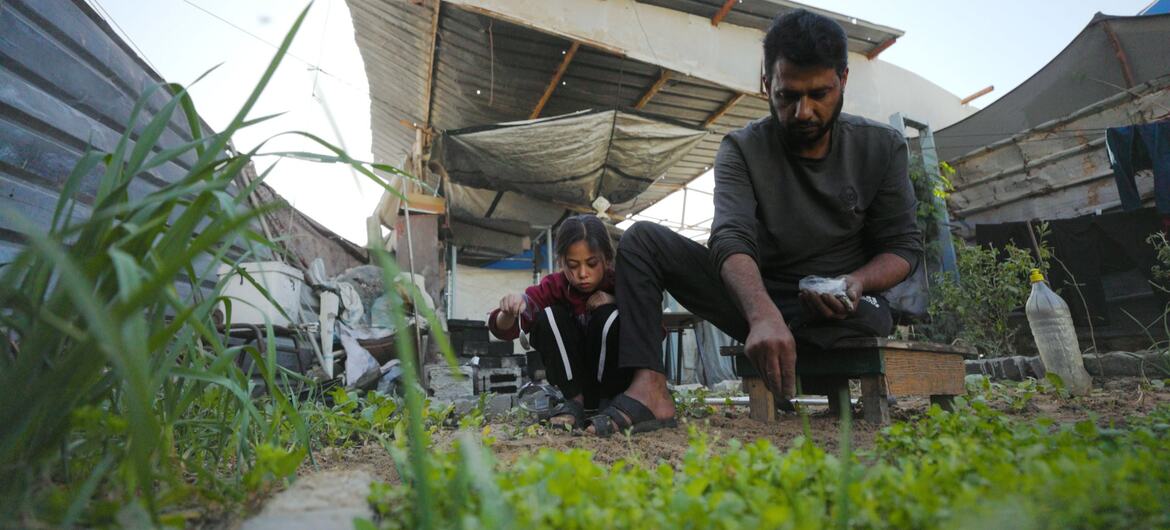
For cucumber and tomato grower Taysir Dahdouh, the war between Hamas fighters and Israel sparked by Hamas’s deadly attacks in October 2023 has been marked by overwhelming loss.

“I had a good income before the war,” he said. “Suddenly, we were left with nothing…Even the steel frames of the greenhouses disappeared, along with our homes, belongings, and irrigation pipes. Nothing was left.”

After returning from displacement, Mr. Dahdouh tried to restore the land using basic tools, working with his family. “We managed to rehabilitate about one dunum (about one-tenth of a hectare) of our land to bring it back to life,” he explained.

Another Gaza farmer, Wajiha Dahdouh, highlighted other equally serious problems: “We came back to support ourselves and return to farming so we could survive. Unfortunately, there is not enough water, there are no fertilizers, no seeds, and none of the basic necessities that would allow people to continue their lives.”

Squeezed out

The reduced growing space for Gaza’s farmers today is mainly the result of a lack of access, rather than additional damage from the war, which was already massive.

In June 2026, just over 4,000 hectares of cropland in Gaza – or 27 per cent – could be reached, but approximately 3,600 hectares of this was unfit for planting.

Farmers in Deir al-Balah and Khan Younis have seen the largest reductions in available land, FAO said. 

This is primarily because of the “westward expansion” of the so-called ‘Yellow Line’ that separates the ceasefire zone from the Israel Defense Forces’ military-controlled area.

Rafah in the far south of Gaza has the highest levels of inaccessible cropland and greenhouse growing areas, at 97.2 per cent and 98.4 per cent respectively.

“The most extensive physical damage remains concentrated in North Gaza and Gaza governorates,” the agency noted. Most damage is in North Gaza and Gaza, satellite images show.

An infographic showing a map of Gaza and a bar chart illustrating the percentage of cropland that is damaged or accessible in 2025 and projected for 2026.
Lucica Matei UN News infographic

The situation for Gazans remains dire. Just this weekend, UN partners reported multiple air strikes and incidents of shelling, gunfire and naval fire, primarily west of the Yellow Line, where most of Gaza’s 2.1 million people are now confined to an area less than half the size of the enclave. UN News

CrossFireArabia

CrossFireArabia
Dr. Marwan Asmar holds a PhD from Leeds University and is a freelance writer specializing on the Middle East. He has worked as a journalist since the early 1990s in Jordan and the Gulf countries, and been widely published, including at Albawaba, Gulf News, Al Ghad, World Press Review and others.

Related Posts

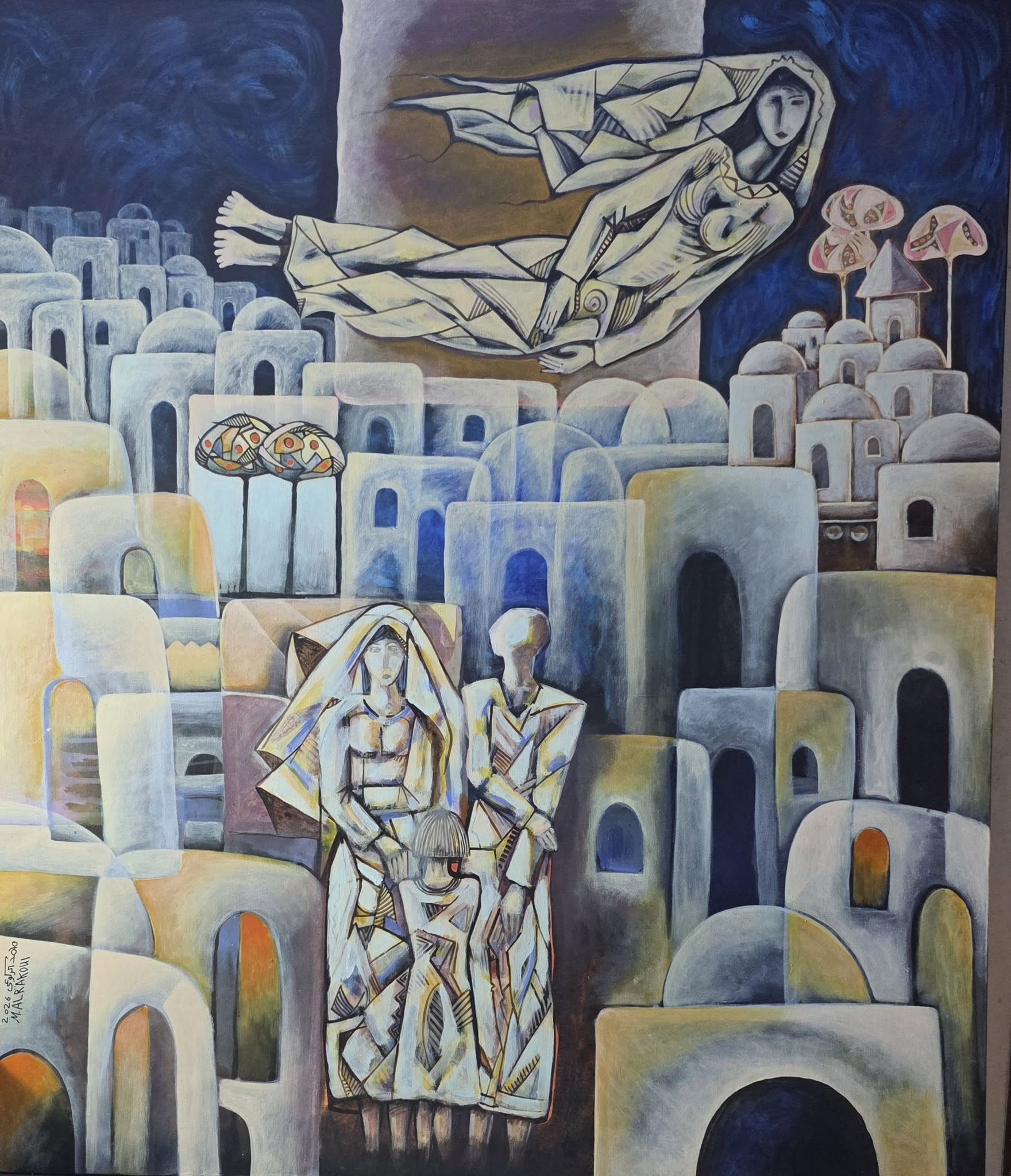
Gaza: Lolo Heriz Finally Buried After 975 Days

After she was killed in an Israeli airstrike, the body of Palestinian bride Lolo Heriz was recovered from beneath the rubble of her family home in Gaza. Lolo was killed on 18 December, 2023, alongside members of her family.

Continue reading
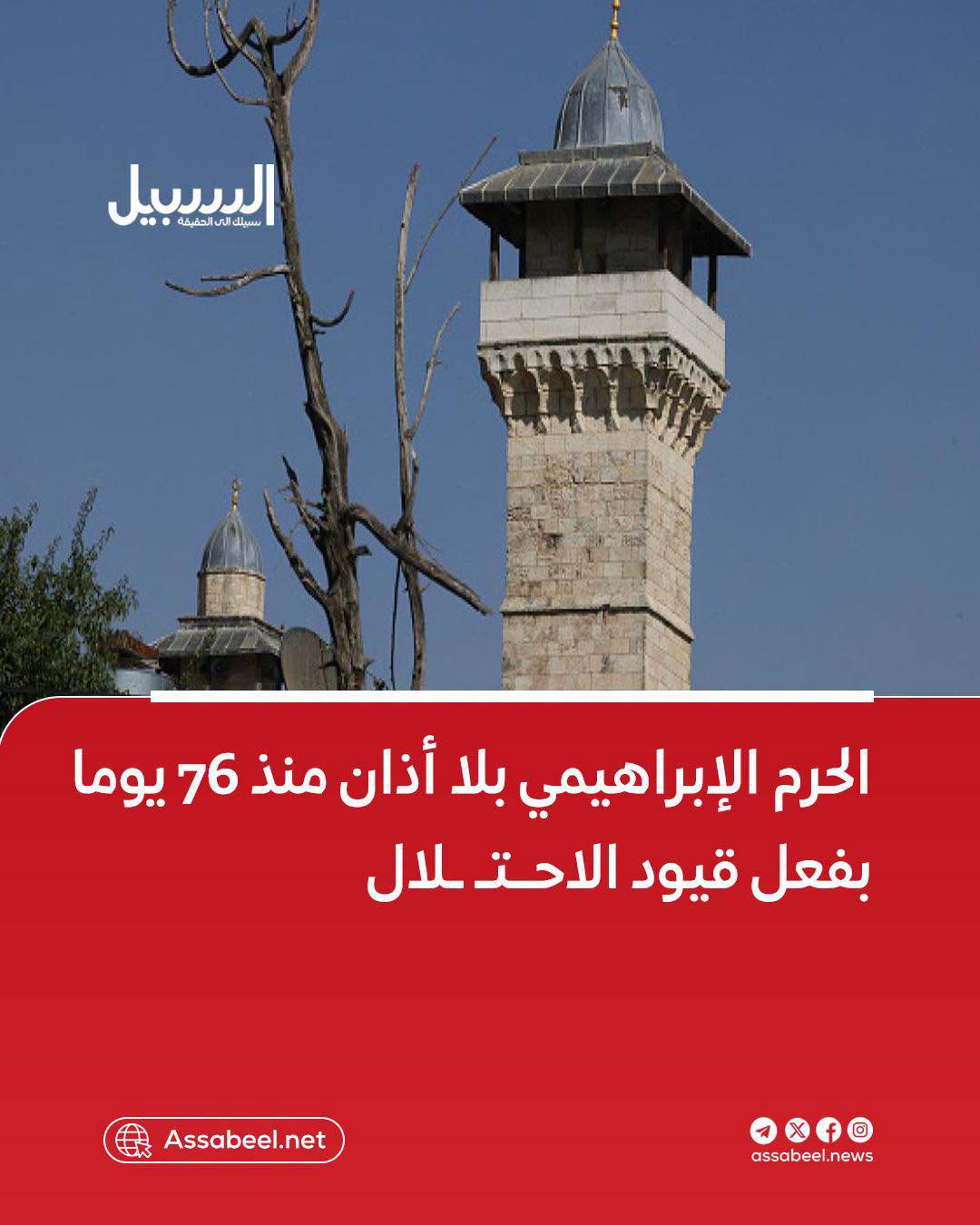
57th Year of Al Aqsa Burning: ‘The Fire Continues’ Ekrima Sabri Warns

The ex-Mufti of the Al-Aqsa Mosque, Sheikh Ekrima Sabri, affirmed that the fire that engulfed the mosque in 1969 has not been extinguished, for it continues till this day, with its scope expanding, targeting the entire city of Jerusalem, its geography, demographics, and its Arab and Islamic identity.

On the anniversary of the Al-Aqsa fire, which falls on Friday, Sheikh Sabri explained to Sanad News that the flames that consumed parts of the Qibli prayer hall 57 years ago are now taking on more complex forms through systematic Israeli policies targeting the Palestinian presence, tightening the noose around its residents, and threatening homes with demolition to forcibly impose a new reality.

He pointed out that what is happening in the neighborhoods and areas surrounding the mosque is a direct continuation of that historic fire, adding: “In 1969, the flames were visible inside the mosque, but today the fire is wider; we see it in the homes threatened with demolition, in the families facing displacement, and in the attempts to change the face of Jerusalem.”

He explained the danger does not stop at home threatened here and there, or a family being targeted. He said  today “every Jerusalemite home is being threatened with demolition and every family is threatened with displacement..”

He stressed the Al-Aqsa Mosque is not merely a building separate from its surroundings, but it is an integral part of the city’s history, and that targeting the surrounding towns is a direct attack on its status and identity.

Sheikh Sabri warned against treating the anniversary of the fire as just a historical event to be commemorated once a year. He emphasized that the essence of the crime remains present and ongoing as long as there are Israeli dangers that threaten the holy sites and the city.

He said the Palestinian people and the Arab and Islamic nations must keep the issue of Jerusalem and Al-Aqsa active in their consciousness and actions, and not to allow the ongoing attacks to become normative or accepted as facts on-the-ground.

“That fire which has since been consuming the Arab identity of the city and the mosque will only be extinguished by the will and steadfastness of the Palestinian people. Fire can burn stone, but it cannot burn the identity of Al-Aqsa, the memory of Jerusalem, or the will of a people clinging to their land.”

On 21 August, 1969, the Australian extremist Denis Michael Rohan stormed the Al-Aqsa Mosque compound through the Al-Ghawanimah Gate and set fire to the Qibli prayer hall. The fire consumed a large part of the mosque, including the pulpit of Saladin, which holds immense historical and cultural value.

Despite attempts by the Israeli occupation authorities at the time to provide an excuse for the crime and claim the fire was caused by an electrical short circuit, technical and engineering reports prepared by Arab engineers definitively proved it was deliberate and premeditated.

That incident sparked widespread international condemnation, with the UN Security Council issuing a resolution condemning it. It also ignited widespread anger in the Arab and Muslim worlds, leading to the establishment of the Organization of the Islamic Conference (now the Organization of Islamic Cooperation).

Rehabilitation and restoration work on the Qibli prayer hall began a year after the fire and continued until 1986, while a temporary iron pulpit remained in the mosque until 2006, when a new pulpit was installed that was exactly identical to the historical pulpit that was set on fire.

#Occupation Attacks, #Sheikh Akrama Sabri, #Displacement of Jerusalemites, #Al-Qibli Mosque, #Anniversary of the Burning of Al-Aqsa Mosque, #Anniversary of the Al-Aqsa Fire, #Al-Aqsa Burning 1969

Continue reading

Leave a Reply

Your email address will not be published. Required fields are marked *

You Missed

Gaza: Only 3% of Land Safe to Grow Food

Gaza: Only 3% of Land Safe to Grow Food

Gaza: Lolo Heriz Finally Buried After 975 Days

Gaza: Lolo Heriz Finally Buried After 975 Days

57th Year of Al Aqsa Burning: ‘The Fire Continues’ Ekrima Sabri Warns

57th Year of Al Aqsa Burning: ‘The Fire Continues’ Ekrima Sabri Warns

Remember Hind Rajab

  • By Heba
  • August 20, 2026
  • 13 views
Remember Hind Rajab

A ‘Palestinian’ Palace in Jerusalem

A ‘Palestinian’ Palace in Jerusalem

Israel Bombs Police Station, Kills Group of Officers

Israel Bombs Police Station, Kills Group of Officers