CrossFireArabia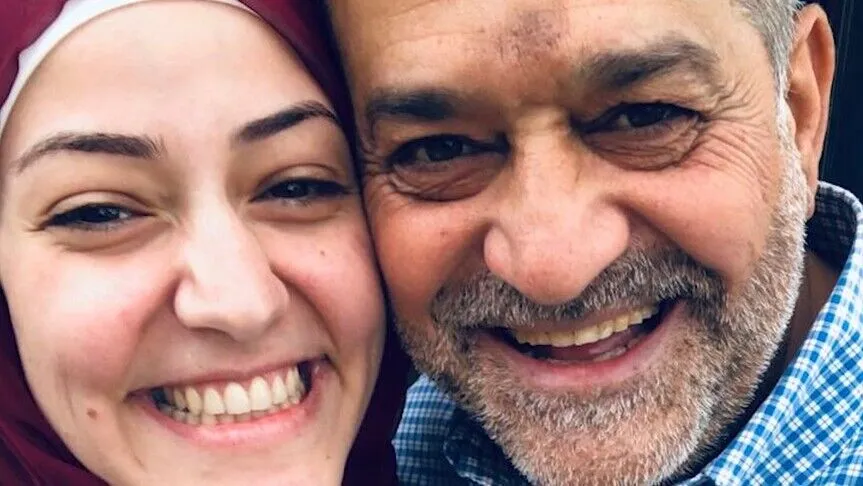
Zeinab Imad Yassine, a Lebanese journalist, learned of her father’s death while scrolling through her phone.
There was no phone call from a relative, no official notification, no moment of preparation.
Somewhere between WhatsApp messages was the news that Imad Yassine, 68, had been killed in an Israeli strike while at his poultry farm in southern Lebanon.
For decades, the farm had been part of his daily life. Inherited from his father, it was a family business he refused to abandon even as Israeli attacks made southern Lebanon increasingly dangerous.
His daughter had urged him to stay in Beirut. He would not.
Her father believed there was no reason for Israel to target him, Zeinab said.
“I have my cell phone every day, every night with me. They know what I’m doing. They know that I have a poultry company. They know that I’m taking care of the chickens and the farms,” she recalled him telling her.
“They know exactly what I’m doing, because the drones are 24-7 in the sky and sometimes the drone can go through your eye level.”
He repeatedly asked his daughter the same question.
“Why would they kill me? I’m not a threat for them. I’m not a soldier. I’m not a fighter. I’m not doing anything. I’m just taking care of my farm,” she recalled him saying.
When he was killed on June 8, Zeinab said, her father was doing exactly that – carrying out his normal work on the farm and repairing an electricity generator after power infrastructure in the area had been damaged.
After his death, his question became hers.
From private grief to public accountability
Zeinab is now trying to turn her family’s loss into a case for accountability.
She said she decided to pursue legal action to determine who was responsible for the strike that killed her father, including the person who “pressed the button that released that rocket or that missile that cut the artery veins in my father’s thighs.”
She chose to pursue the case with the Human Rights Council of the United Nations.
“I had to go through that because I want to sue Israel for taking my father’s life. And they never had the right to do so,” she told Anadolu in an exclusive interview.
Zeinab said she has contacted an official within the UN human rights system, presented details of her father’s killing and submitted supporting evidence.
She said the material is expected to be examined before the next steps are determined.
“My father is not … a number in the count of the dead,” she said.
“When you go to the Human Rights Council, you’re saying that I’m a human and I have rights to live, like everyone else on this earth.”
For Zeinab, pursuing the case is also about ensuring that her father’s identity and the circumstances of his death are documented.
“I’m going to say to the international court that this is my father. This is Imad Yassine. That’s what he was doing,” she said.
“And this is what the occupation did to him, and they must never get away with it.”
Zeinab said she wants accountability to extend from those directly responsible for the strike to Israel’s political and military leadership.
“In the first place, I need to know who pressed the button. I need to see that person in jail. I need to see Netanyahu in jail,” she said, referring to Israeli Prime Minister Benjamin Netanyahu.
Israel’s message to civilians
Her father’s killing left Zeinab haunted by a broader question: Why would a 68-year-old civilian working on his family farm be targeted?
“I asked myself many times, what did they want from him? Why did they kill him?” she said.
Zeinab said she ultimately came to believe that his death was intended to send a message to civilians seeking to remain in or return to southern Lebanon.
“They killed him, not because he was a soldier or because he was a fighter, but because they wanted to end the life in the south,” she said.
“They want to tell everyone in Lebanon, don’t go back to the south of Lebanon, because if you go back, we’re going to kill you, even if you are not soldiers, even if you’re not fighters. That’s the case of my father.”
Zeinab linked her father’s killing to the broader Israeli-Palestinian conflict, saying her greatest hope is to eventually see a free Palestine.
Zeinab argued that as long as the occupation of Palestine continues, both Palestinians and Lebanese will remain vulnerable to Israeli attacks, and accused Israel of pursuing territorial expansion in the region.
“They need to know that they cannot still commit any genocide or any crimes,” she said. “It’s not fine that Israel will continue doing what it’s doing without, and they escape without any punishment. We are losing the humanity in this world, because we are not confronting the real killer in the world.”
In Gaza, Palestinian authorities have said Israel has killed more than 73,000 people since Oct. 7, 2023.
According to the Lebanese Health Ministry, 4,346 people have been killed and 12,301 injured in Israeli attacks since March 2, and the UNHCR estimates that around 360,000 people in the country remain displaced.
‘I can’t go back to my house’
The consequences of the conflict for Zeinab extend beyond her father’s death.
She said she no longer feels able to safely return to her own home in southern Lebanon.
“If I go to my house in South Lebanon, if I go over the roof, I can see the Israelis. I can’t go back to my house now. Can you imagine the situation?” she said.
She also pointed to reported Israeli removal of hundreds of olive trees from Zawtar Shariyeh, a village neighboring her hometown of Shukin, as another example of what she sees as the erosion of civilian life in the area.
The experience, she said, has left her feeling that “the bare minimum of humanity is collapsing in this world.”
Zeinab said the experience has strengthened her determination to document what is happening and encouraged others affected by Israeli attacks to pursue accountability.
“We need to sue Israel for every pint of blood, for every house they demolished,” she said.
She urged people to continue documenting and speaking about the impact of the conflict on civilians.
“If you can’t do anything but talk, talk about Israel and document everything, because this is the bare minimum we can do.”
Without action, she warned, other families will continue to suffer similar losses.
“That’s what I need the world to always remember,” she said, warning that otherwise “there will be more and more and more of Imad Yassine and of all the martyrs that Israel killed in South Lebanon.”

 marwan