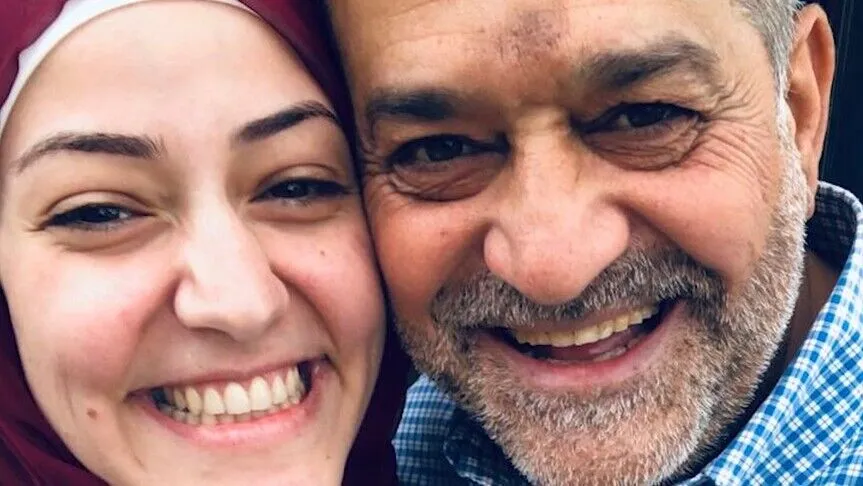
Zeinab Imad Yassine, a Lebanese journalist, learned of her father’s death while scrolling through her phone.
There was no phone call from a relative, no official notification, no moment of preparation.
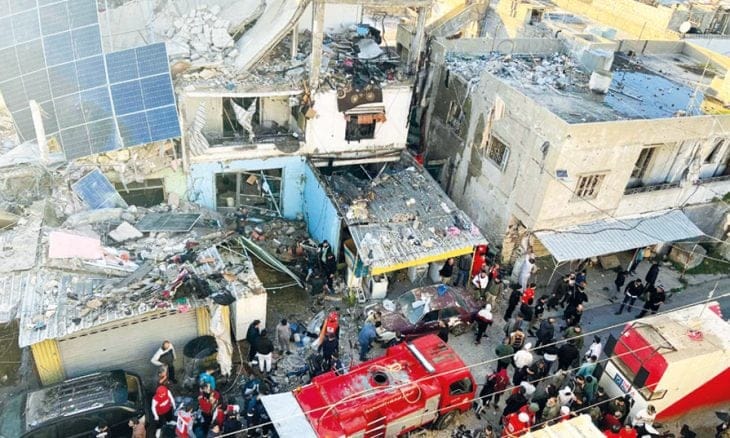
Somewhere between WhatsApp messages was the news that Imad Yassine, 68, had been killed in an Israeli strike while at his poultry farm in southern Lebanon.
For decades, the farm had been part of his daily life. Inherited from his father, it was a family business he refused to abandon even as Israeli attacks made southern Lebanon increasingly dangerous.
His daughter had urged him to stay in Beirut. He would not.
Her father believed there was no reason for Israel to target him, Zeinab said.
“I have my cell phone every day, every night with me. They know what I’m doing. They know that I have a poultry company. They know that I’m taking care of the chickens and the farms,” she recalled him telling her.
“They know exactly what I’m doing, because the drones are 24-7 in the sky and sometimes the drone can go through your eye level.”
He repeatedly asked his daughter the same question.
“Why would they kill me? I’m not a threat for them. I’m not a soldier. I’m not a fighter. I’m not doing anything. I’m just taking care of my farm,” she recalled him saying.
When he was killed on June 8, Zeinab said, her father was doing exactly that – carrying out his normal work on the farm and repairing an electricity generator after power infrastructure in the area had been damaged.
After his death, his question became hers.
From private grief to public accountability
Zeinab is now trying to turn her family’s loss into a case for accountability.
She said she decided to pursue legal action to determine who was responsible for the strike that killed her father, including the person who “pressed the button that released that rocket or that missile that cut the artery veins in my father’s thighs.”
She chose to pursue the case with the Human Rights Council of the United Nations.
“I had to go through that because I want to sue Israel for taking my father’s life. And they never had the right to do so,” she told Anadolu in an exclusive interview.
Zeinab said she has contacted an official within the UN human rights system, presented details of her father’s killing and submitted supporting evidence.
She said the material is expected to be examined before the next steps are determined.
“My father is not … a number in the count of the dead,” she said.
“When you go to the Human Rights Council, you’re saying that I’m a human and I have rights to live, like everyone else on this earth.”
For Zeinab, pursuing the case is also about ensuring that her father’s identity and the circumstances of his death are documented.
“I’m going to say to the international court that this is my father. This is Imad Yassine. That’s what he was doing,” she said.
“And this is what the occupation did to him, and they must never get away with it.”
Zeinab said she wants accountability to extend from those directly responsible for the strike to Israel’s political and military leadership.
“In the first place, I need to know who pressed the button. I need to see that person in jail. I need to see Netanyahu in jail,” she said, referring to Israeli Prime Minister Benjamin Netanyahu.
Israel’s message to civilians
Her father’s killing left Zeinab haunted by a broader question: Why would a 68-year-old civilian working on his family farm be targeted?
“I asked myself many times, what did they want from him? Why did they kill him?” she said.
Zeinab said she ultimately came to believe that his death was intended to send a message to civilians seeking to remain in or return to southern Lebanon.
“They killed him, not because he was a soldier or because he was a fighter, but because they wanted to end the life in the south,” she said.
“They want to tell everyone in Lebanon, don’t go back to the south of Lebanon, because if you go back, we’re going to kill you, even if you are not soldiers, even if you’re not fighters. That’s the case of my father.”
Zeinab linked her father’s killing to the broader Israeli-Palestinian conflict, saying her greatest hope is to eventually see a free Palestine.
Zeinab argued that as long as the occupation of Palestine continues, both Palestinians and Lebanese will remain vulnerable to Israeli attacks, and accused Israel of pursuing territorial expansion in the region.
“They need to know that they cannot still commit any genocide or any crimes,” she said. “It’s not fine that Israel will continue doing what it’s doing without, and they escape without any punishment. We are losing the humanity in this world, because we are not confronting the real killer in the world.”
In Gaza, Palestinian authorities have said Israel has killed more than 73,000 people since Oct. 7, 2023.
According to the Lebanese Health Ministry, 4,346 people have been killed and 12,301 injured in Israeli attacks since March 2, and the UNHCR estimates that around 360,000 people in the country remain displaced.
‘I can’t go back to my house’
The consequences of the conflict for Zeinab extend beyond her father’s death.
She said she no longer feels able to safely return to her own home in southern Lebanon.
“If I go to my house in South Lebanon, if I go over the roof, I can see the Israelis. I can’t go back to my house now. Can you imagine the situation?” she said.
She also pointed to reported Israeli removal of hundreds of olive trees from Zawtar Shariyeh, a village neighboring her hometown of Shukin, as another example of what she sees as the erosion of civilian life in the area.
The experience, she said, has left her feeling that “the bare minimum of humanity is collapsing in this world.”
Zeinab said the experience has strengthened her determination to document what is happening and encouraged others affected by Israeli attacks to pursue accountability.
“We need to sue Israel for every pint of blood, for every house they demolished,” she said.
She urged people to continue documenting and speaking about the impact of the conflict on civilians.
“If you can’t do anything but talk, talk about Israel and document everything, because this is the bare minimum we can do.”
Without action, she warned, other families will continue to suffer similar losses.
“That’s what I need the world to always remember,” she said, warning that otherwise “there will be more and more and more of Imad Yassine and of all the martyrs that Israel killed in South Lebanon.”
Kozo Okamoto, the Japanese fighter who devoted much of his life to the Palestinian liberation struggle and became known as Ahmad al-Yabani, died in Beirut on Thursday at the age of 78.
The Popular Front for the Liberation of Palestine (PFLP), which had supported and protected Okamoto during his decades in Lebanon, announced his death and said he had suffered from poor health for an extended period.
The Front praised a life marked by “immense sacrifices” alongside the Palestinian cause, saying Okamoto remained committed to his principles and never abandoned the struggle he had chosen.
The Palestinian resistance movement Hamas also mourned the Japanese fighter, describing his journey as an embodiment of humanitarian values and sincere, sustained support for the Palestinian people and their rights.
Known affectionately among Palestinians as “Ahmad the Japanese,” Okamoto adopted the name Ahmad after converting to Islam. The name reflected both his Japanese origins and his close association with the Palestinian Resistance.
🇵🇸 🇯🇵 Kozo Okamoto (Ahmad the Japanese), pro-Palestinian JRA militant dies
Japanese activist Kozo Okamoto has died more than five decades after taking part in the 1972 Lod Airport operation near Tel Aviv, which killed 26 people. Okamoto was one of three Japanese Red Army members… pic.twitter.com/rfH8nFm5yf
Okamoto was born in Japan’s Kumamoto Prefecture in 1947 and studied botany before becoming politically active in his youth. He eventually joined the Japanese Red Army, a Marxist-Leninist organization whose members developed close ties with Palestinian and Lebanese factions, particularly the PFLP.
The Japanese organization operated internationally and viewed the Palestinian struggle as inseparable from the wider confrontation with imperialism, colonialism, and Western political domination.
Okamoto left Japan and joined Palestinian fighters in Lebanon, where he received training and became closely involved with the PFLP.
His background made him an unusual figure within the Palestinian movement and allowed him to operate in circumstances where Israeli security forces were primarily watching for Arab or Palestinian fighters.
The Al-Lydd Airport Operation
Okamoto became internationally known following the May 30, 1972 operation at Al-Lydd Airport, later renamed Ben Gurion Airport. He and two other Japanese Red Army fighters arrived on a flight from Rome carrying weapons concealed inside luggage and opened fire inside the airport terminal.
Twenty-six people were killed, and dozens were wounded during the operation. Contemporary reporting identified many of those killed as Christian pilgrims from Puerto Rico, alongside Israelis and other passengers.
The operation was organized jointly by the Japanese Red Army and the PFLP and was described by the Front as retaliation for Israel’s 1968 attack on Beirut International Airport, during which Israeli forces destroyed a large part of Lebanon’s civilian aircraft fleet.
Okamoto’s two companions were killed during the operation. He was wounded, captured, and brought before an Israeli military court.
Thirteen Years in Israeli Prisons
Okamoto was sentenced to life imprisonment and spent approximately 13 years in Israeli prisons, much of that period reportedly in solitary confinement. According to accounts later cited by the PFLP, he endured severe abuse and was at times forced to eat from the ground with his hands restrained behind his back.
He was released in 1985 under the Jibril Agreement, a major prisoner exchange in which three captured Israeli soldiers were freed in return for approximately 1,150 Palestinian and Arab prisoners.
Among those released in the exchange were figures who later assumed leading roles in the Palestinian Resistance, including Hamas founder Sheikh Ahmed Yassin and Palestinian Islamic Jihad Secretary-General Ziyad al-Nakhalah.
Following his release, Okamoto traveled through Libya and Syria before eventually settling in Lebanon.
Lebanon Grants Political Asylum
Lebanese authorities arrested Okamoto and four other Japanese Red Army members in 1997 on charges relating to forged documents and illegal residency.
After serving his sentence, four of the Japanese nationals were extradited to Japan. Okamoto, however, was permitted to remain in Lebanon and became the first person granted political asylum by the Lebanese state.
Japan repeatedly requested his extradition, but Lebanese authorities refused to surrender him. Okamoto lived quietly under the protection of Palestinian and Lebanese organizations, making only rare public appearances.
One of his final widely reported appearances came in Beirut in May 2022, during an event commemorating the 50th anniversary of the Al-Lydd Airport operation.
Kozo Okamoto, May 20, 2022.
It was his last public appearance.
Although he was Japanese, Okamoto took up arms and dedicated his life for Palestine. pic.twitter.com/h8GHkvD3tB
The PFLP remembered Okamoto as an international fighter who had crossed national, cultural, and linguistic boundaries to stand alongside the Palestinian people.
His life became closely associated with a period in which international revolutionary organizations viewed Palestine as a central arena in the global struggle against colonialism and imperialism.
Hamas said Okamoto would remain a symbol of freedom and resistance against injustice and tyranny, praising what it described as his tireless commitment to Palestinian rights.
Okamoto remained in Lebanon until his death on Thursday, July 23, more than five decades after the operation that made him one of the most recognized international figures associated with the Palestinian Resistance. Palestine Chronicle
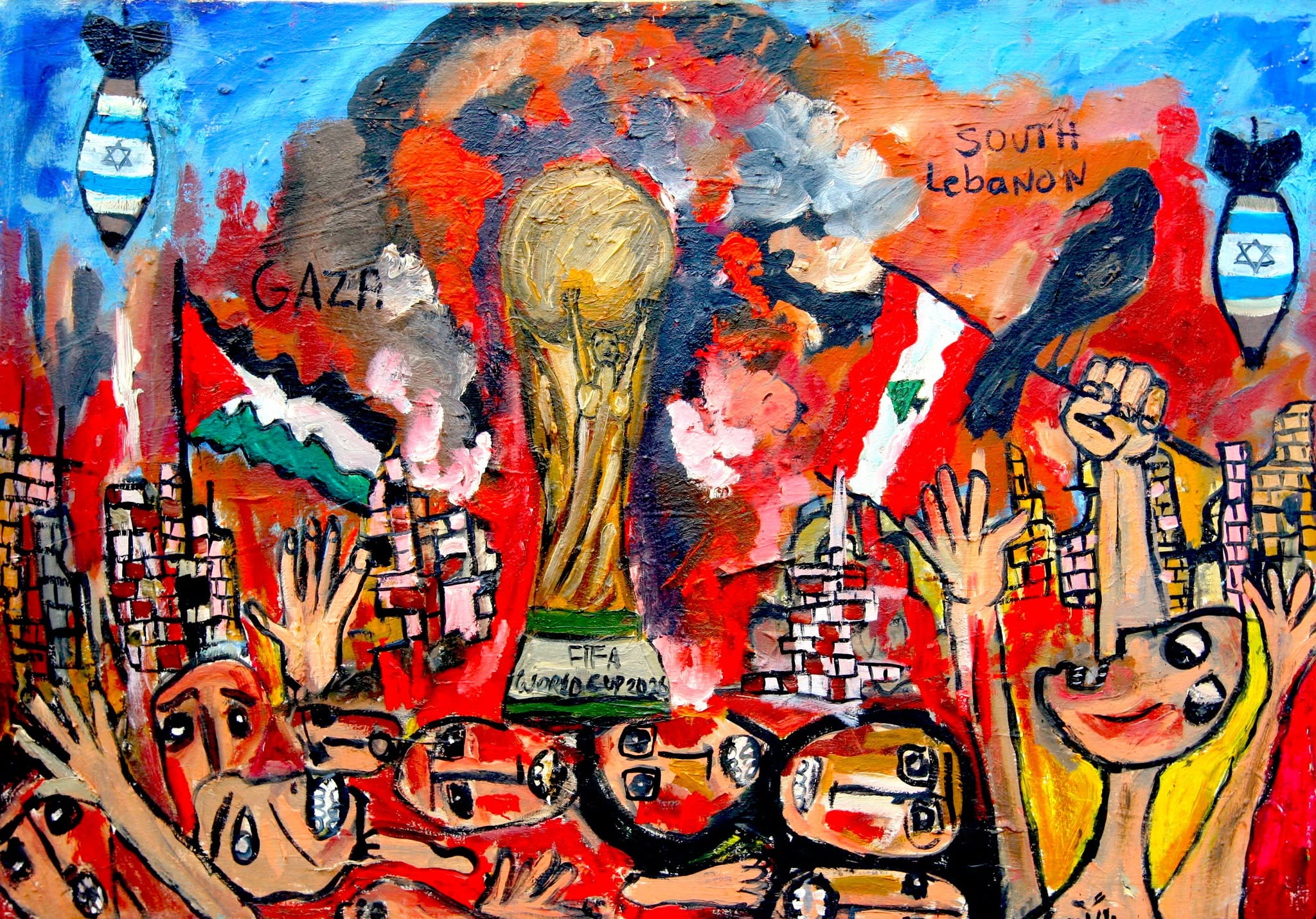
The Art of Tragedy. Said Elatab calls his latest painting ‘FIFA WORLD CUP 2026’: He writes:
Despite the death of Lebanese and Palestinians, the world chose not realize that the war on the Gaza Strip and Lebanon – a genocide – is still going on and killing of people in these places, continues. He adds, God save the Lebanese and Palestinians from this evil war.
Young Lebanese chess champion Lauren Abdel Samad decided to withdraw from the World Chess Championship for the under-8s, held in Georgia, to avoid playing against Israeli players. Lauren is a distinguished player with an impressive record in chess, having won matches in the World Championship in just three minutes! Despite her young age, she took a patriotic stance after watching the news and following the actions of these individuals against her fellow Lebanese countrymen, especially children of her age.
According to her family, the move was intentional despite the consequences, with her father saying she was fully aware of the outcome but maintained a firm personal stance shaped by her awareness of Israel’s “destruction of homes and the targeting of children.”
Iman al-Rifai did not choose to seek refuge in Burj al-Shamali in south Lebanon for the camp is far away from Lubya, her hometown in the Tiberias district. Nor did she choose to to move to al-Badawi camp in the north of the country.
The forced displacement of Iman and her family was not their first in the latest Israeli war on Lebanon. It is their third. On the two previous occasions, they moved to Ain al-Hilweh camp in Sidon to remain close to their original camp.
In the 2024 war, Iman and her family were forced to flee to Syria and from there to Nahr al-Bared camp before returning to Burj al-Shamali after the ceasefire was declared. Each time, she preferred forced displacement to protect her children whilst leaving her husband behind. He like many of the other men, refused to leave, choosing to stay put despite the Israeli bombing.
“I’m now displaced with my children. But I am also scared. Honestly, both options are difficult. Staying under bombardment is hard, and being displaced is also difficult, but you try as much as possible to protect your life and the lives of your children,” said Iman, pointing out the feeling of being lost about the decision to flee or not never leaves her.
“Every time I’m forced to leave, I feel like I won’t come back. This feeling never leaves me, and it keeps me in a state of anxiety and fear. I’m even afraid to buy certain things. I feel that if I buy these things, it means I’m going to stay longer, I see it as a bad omen.”
Iman sums up displacement in one word: “Oppression.” It destroys a person from inside, the life of the family members is turned upside down, and this tremendously effects their psychological stability. “The anguish resulting from the past displacement of our families endured, and which we have experienced and has extended to our children. My children, who are not yet 17, already lived through two wars and five displacements, as if this is our fate in this country, as if this is what was written for us,” she ends with a sigh.
Iman’s situation is similar to that of many others, except for some of the details. Displacement, as everyone agrees is harsh in every aspect of life, regardless of whether one is in a shelter, with relatives, or in rented apartments.
Psychological Costs of Displacement
Bassam Jamil, who originally came from Tiberias, fled from Syria to Lebanon in 2013 during the Syrian war and eventually settled in Baalbek in the Bekaa Valley. But Lebanon has not been kind to Palestinian refugees especially from Syria like Jamil. It has placed more restrictions on them, even greater than those placed Palestinian refugees already living in Lebanon. This included the denial of legal residency and any other civil rights and leaving most of them fearful of being imprisoned, deported, or separated from the rest of the family.
“Refuge is like a stone in our throats and chests, preventing us from talking or breathing,” said Jamil, who fled from the al-A’edeen camp in Syria to a rural area for several days before crossing the border into Lebanon.
His displacement journey did not end there. In the 2024 Israeli war on Lebanon, he was forced to flee to Zahle and seek refuge in a shelter in one of the city schools, with his Alzheimer’s-afflicted father, his mother, and sister. Unlike other Palestinians in Lebanon who are embraced by the local community in the different camps, Jamil has never felt he “belonged or even a warm welcome”.
“Instead,” he says, “there is a strange competitiveness from the local community, as if our presence among them will deprive them of privileges and livelihoods.” Jamil believes “displacement to another camp is more difficult than displacement outside of it, given this strange competitiveness among the downtrodden.” He and his family have chosen to remain in Baalbek in this current war because of the great difficulties they faced during their previous displacements, economically and psychologically.
“The act of being displaced is one that follows a state of emergency and this means we are not prepared for its psychological, financial, and even physical costs. For us, it is the implementation of a harsh judicial ruling against our will,” Jamil says with a sigh.
Displacement Steals Human Lives
The United Nations Relief and Works Agency for Palestine Refugees (UNRWA), in its latest report on the emergency response in Lebanon—from May 20 till June 2—shows a 59 percent increase in the number of displaced refugees at the agency’s emergency shelters in the Siblin Institute in the south and the Battir School in the Nahr al-Bared camp in northern Lebanon. The increase from 1,264 to 2,148 displaced persons followed evacuation warnings and the ongoing Israeli aggression against camps and communities in Tyre, particularly the Rashidieh, Boss, and Burj al-Shamali camps.
The UN agency indicates there are 728 displaced Lebanese, 724 displaced Palestinians from Lebanon, 436 displaced Syrians, 241 displaced Palestinians from Syria, 15 displaced persons of other nationalities, and four unregistered Palestinian refugees.
Rania Saadallah was forced to flee from the Rashidieh camp in Tyre to a relative’s home in Sidon. Her displacement was multiple; between the first and second displacement, she lost her ailing mother. “The hardest part about this displacement is leaving my mother alone, it’s as if I’m leaving a part of me in the south,” she explained. Saadallah hasn’t let the Israeli attacks and constant eviction notices stop her from sneaking out from time to time to visit her mother’s grave. However she said that displacement steals a person’s life, “it’s as if you move from one world to another, a world that is alien to you, doesn’t belong to you, where the most basic elements of privacy are absent.”
Like other displaced refugees, Saadallah won’t even consider the possibility of not returning to return to her camp. “Its a slow death,” she said emphatically. For Saadallah and many like her, the camp has become “a small homeland” that cannot be severed from the refugee’s life. Just returning to the camp would revive our souls,” she pointed out.
The reality of forced displacement for Palestinian refugees is not limited to the 2024 and 2026 wars. Palestinian refugees have a long history of displacement during the past successive wars and internal conflicts in Lebanon. Studies indicate that there have been multiple waves of forced Palestinian displacement within Lebanon, beginning in the 1960s and continuing till this day. Some of these waves have led to the destruction of several Palestinian camps, such as Tal al-Zaatar, Jisr al-Basha, Nabatieh, and Nahr al-Bared, resulting in the displacement of many if its residents to other camps.
Historically, there has been a “demographic movement” within the camps, said Jaber Suleiman, a researcher in refugee and forced migration studies while attributing this movement to the destruction of the camps and/or other factors. Suleiman believes that under the current political conditions and the ongoing Israeli threat in the south and should it extend north of the Litani River, many residents of the camps and communities around Tyre who sought refuge in other camps may be forced to remain there, with some family members, with young people, staying in the original camp.
“The return of those who are displaced is linked to the return of the situation in the south to normalcy. If they cannot return quickly, they will remain in the camps they fled to and build new lives, as has happened before.”
Suleiman attributes the permenant displacement to economic factors and cost. “Those displaced to camps can stay with relatives or friends, and there is greater availability of aid from various organizations. Furthermore, many believe that displacement to a camp guarantees them a greater commitment from UNRWA,” he emphasized, adding that it is the “economic factors are the driving force and not location.”
Ali Hweidi, Director-General of the 302 Foundation for the Defense of Refugee Rights, agrees with this assessment, stressing the primary factor controlling the refugee displacement—whether to other camps, outside the camps, or reluctance to leave—is economic.
Hweidi pointed to available statistics indicating that “a smaller number of displaced people went to UNRWA shelters in southern and northern Lebanon, while the majority moved to camps, communities, and cities north of the Zahrani River, such as Mieh Mieh and Ain al-Hilweh camps, the city of Sidon, Wadi al-Zina, and others.”
He added most of these refugees are staying with acquaintances or relatives because renting is virtually impossible, “which places an additional burden on relatives and acquaintances,” especially since the unemployment rate among Palestinian refugees, according to UNRWA, has reached 45 percent, while the poverty rate exceeded 80 percent before the latest Israeli aggression. But Huweidi attributed the reluctance of some to flee to two reasons: Financial constraints and a lack of privacy.
A study by the Palestinian Human Rights Organization “Shahed,” published last March, indicated that the Israeli war contributed to deepening the economic crisis for Palestinian refugees in Lebanon, the majority of whom live below the poverty line and rely primarily on humanitarian aid. The study also showed the disruption of economic activity and the closure of many facilities and services as a result of the Israeli bombing and led to increased unemployment and food insecurity in the camps.
According to the study, many refugees lost their jobs outside the camps, specifically in cities like Beirut and Tyre, due to security risks and movement restrictions imposed in the war, leaving many families without any source of income. The “Shahed” study indicated concerns about deteriorating living conditions and food insecurity have become a real preoccupation for Palestinian refugees, hiking up psychological stress and social tension among camp residents.
Who is meeting the needs of the displaced?
The majority of Palestinian refugees displaced by this last war believe the shortcomings in providing assistance extend to all parties, from UNRWA to the various Palestinian factions and Lebanese state. The role of UNRWA has been limited to providing two shelters and some in-kind and cash assistance.
“The biggest pitfall for UNRWA was its lack of an emergency plan and pre-prepared scenarios for dealing with the displacement, despite many indicators which point to a security breakdown in Lebanon and the direct and indirect impact on the camps,” explained Hweidi. He noted UNRWA launched its emergency plan after the start of the Israeli aggression against Lebanon and allocated a budget exceeding $12 million to meet the needs. “However, it is striking that the agency relies primarily on its partners to provide everything within the shelters—food, water, and other necessities—and then distributes it.”
Suleiman pointed out to the historical failure to meet the needs of displaced persons, whether during the Lebanese Civil War or subsequent Israeli wars on Lebanon, by either UNRWA or other Palestinian factions. “The scale of the needs is always far greater than the services provided, given the ongoing deficit in UNRWA’s budget, which only allows it to offer the bare minimum, such as opening shelters,” he continued.
Suleiman and Hweidi agree the Palestinian factions offer virtually nothing. “The role of the different factions is limited to counting the displaced persons in the camps.” Suleiman sarcastically remarks: “The factions’ role has become limited to criticizing UNRWA rather than providing services,” placing the greatest burden on the UN agency and civil society.
Walid al-Ahmad, secretary of the Popular Committee in the Mar Elias camp in Beirut, says the displaced people seek the help of the Popular Committee upon their arrival at the camp. The committee role is usually collecting data of the families sheltering in the camp, and these are mostly Lebanese. He did however, say some Palestinian families who were displaced came to Burj al-Barajneh when Beirut’s southern suburb was threatened and faced eviction notices by the Israelis.
Al-Ahmad said as well that the main reason why displaced people contact Popular Committees is because of the services they provide. “As the Popular Committee in the Mar Elias camp, we have provided mattresses, blankets, personal hygiene items, and some food supplies since the beginning of the displacement, in addition to providing hot meals.”
He added that some organizations have also provided parcels, food, psychological support, and supplies for the elderly, as well as organizing recreational activities for the displaced.
In this context, social activist Dalal Shahrour, in the Beddawi camp, confirms the number of displaced families in the camp, according to the latest statistics from the Popular Committee, reached 400. “What usually happens is that the displaced persons stay with relatives until they can rent their own home. Those who cannot afford to rent are transferred by the Popular Committee to the shelter in the Batir school in the Nahr al-Bared camp,” Shahrour explained, emphasizing that the majority of displaced people go to the Popular Committee to register because various organizations rely on the data provided by the Popular Committees to distribute aid. She confirmed that only a small number of those who are well-off do not wish to receive aid register with the Popular Committee.
Shahrour considers the fluctuating number of displaced people, especially during this war, to be one of the most significant challenges facing the committee. “The numbers change with every ceasefire announcement and every evacuation notice,” she said, adding the scarcity of aid is another challenge to meet the need of the displaced.
With each wave of displacement, displaced persons lose a part of themselves and their human dignity. With each wave of displacement, the chances of survival in an environment fraught with daily challenges diminish.
“We face, as much as possible, the choice between waiting or pursuing the dream of return—two oppressive paths, each with its own heavy price,” says Bassam Jamil. Have the dreams of displaced refugees, once focused on returning to their villages and cities in occupied Palestine, now narrowed down to return to the camps, homes, and lives they were forced to leave behind?

 CrossFireArabia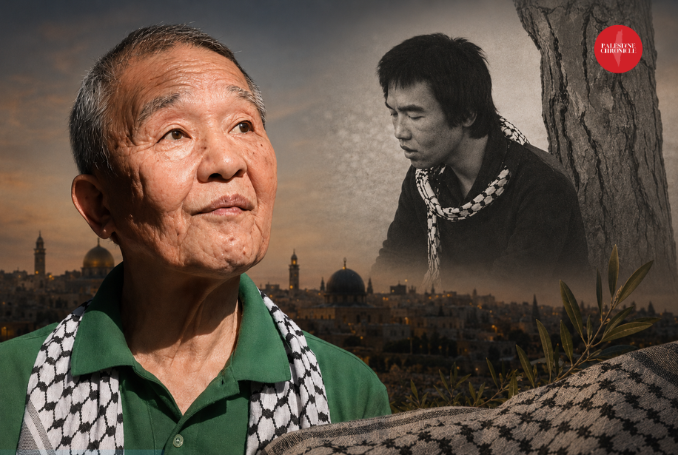

 marwan