On ‘Average 12 Children Are Killed…Maimed Every Day,’ – UNICEF Chief in Lebanon

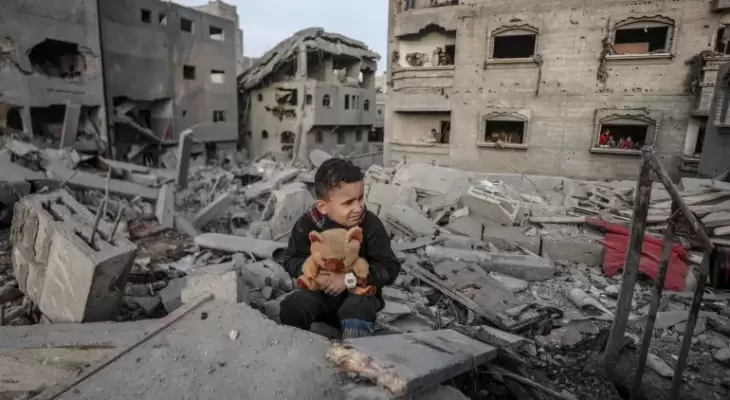
“For more than three months, children in Lebanon have lived through experiences no child should ever endure. Many have fled their homes multiple times, witnessed violence first-hand, lost loved ones, and seen their schools, communities, and sense of safety shattered,” said UNICEF’s Country Representative in Lebanon Marcoluigi Corsi.

“After over 100 days of increased hostilities – since 2 March – 247 children have been killed and 992 injured, an average of 12 children killed or maimed every day. Behind these staggering figures are lives cut short or forever changed, and families facing profound loss, trauma, and uncertainty,” he added in a statement released Wednesday.

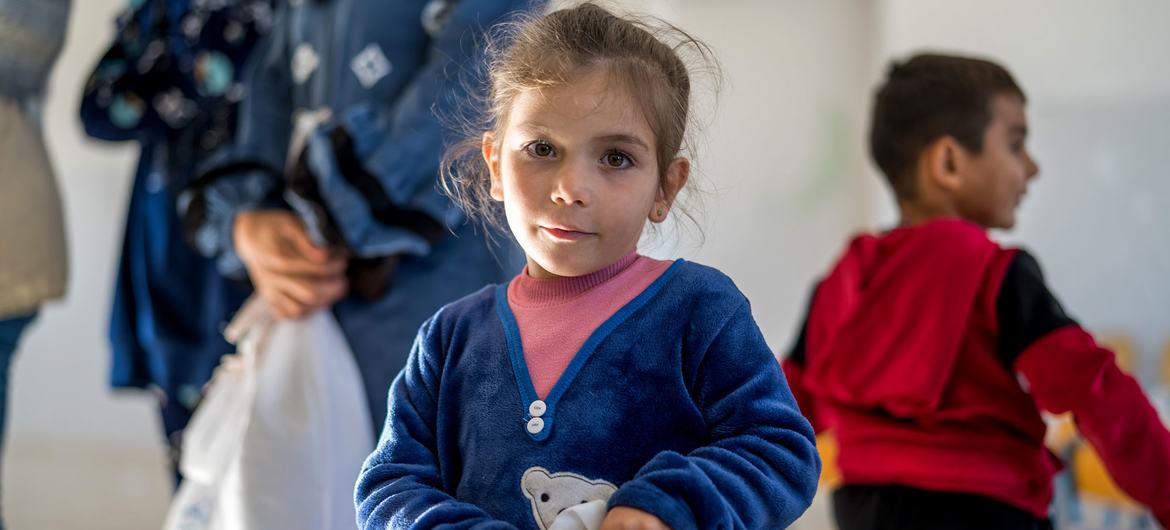
“The numbers alone cannot convey the full scale of the crisis. Beyond those killed and maimed, an entire generation of children has seen its childhood disrupted. Their sense of safety – one that every child needs to grow and thrive – remains profoundly undermined,” Corsi pointed out.

“With renewed hope for hostilities to halt, children need more than an end to violence – they require protection, sustained support to restore access to essential services, and to be offered a consistent pathway to recovery and a safer future,” he continued.

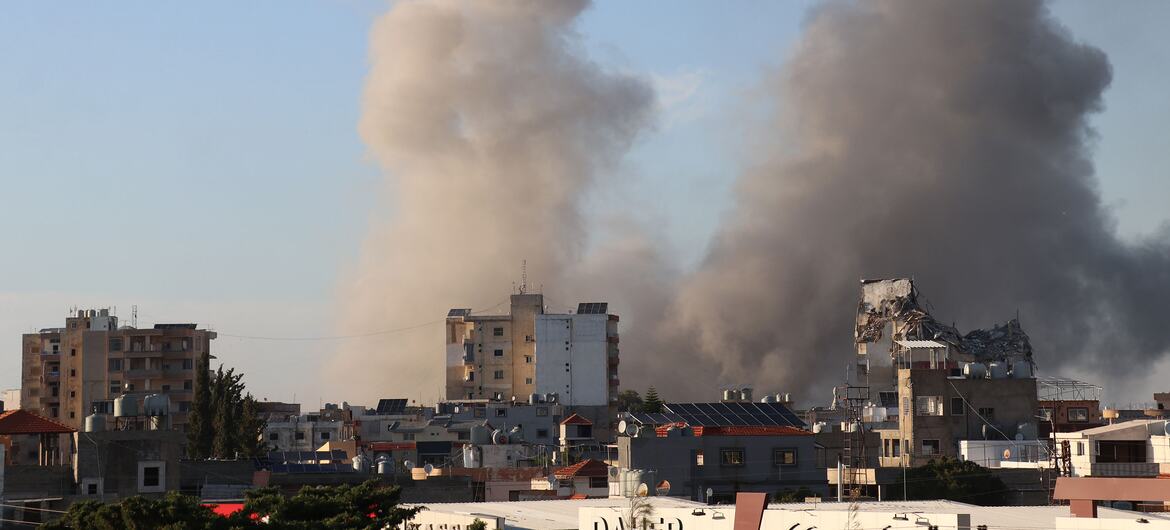
“Widespread destruction remains across large parts of the country, affecting homes, schools, and essential services – including water, sanitation and hygiene systems – further compounding already severe humanitarian needs,” the UNICEF country representative stressed. 

“More than 770,000 children are experiencing heightened distress from repeated exposure to violence, loss and displacement. Many remain unable to return home because of ongoing fighting and the threat of unexploded ordnance,” Corsi continued.

“The scale of physical and psychological harm we are witnessing is unacceptable, and children continue to pay a terrible price for this conflict. Ending the violence is essential to restore access to education and other basic services and provide children with a pathway to recovery and a safer future. The true cost of this crisis will not only be measured in lives lost today, but in the opportunities missed tomorrow. Without sustained support, many children risk carrying the consequences of this war with them for years to come,” the UNICEF Chief in Beirut believes.

UNICEF reiterates its urgent call for a sustained cessation of hostilities. Children need to be protected from further harm and schools, hospitals, water systems and other civilian infrastructure urgently safeguarded. Humanitarian access must be ensured and international law must be respected.

“Most importantly, Lebanon’s children must be given the chance not only to survive this crisis, but to recover from it and reclaim the future that conflict has placed at risk,” Corsi concluded.
Continue reading
Lebanon: Israel Kills 3,884 Civilians, Injures 11,856

The Lebanese Health Ministry announced the total death toll from the Israeli military offensive, from 2 March to 17 June, 2026, rose to 3,884 martyrs and 11,856 people injured.

The Health Ministry stated, Thursday, these figures are the documented cumulative toll of victims from 2 March to 17 June, 2026, amidst the ongoing Israeli military operations and airstrikes on different Lebanese regions.

Israeli airstrikes and shelling are targeting towns and villages in southern Lebanon. This is whilst there are direct attacks on civilian vehicles, including the targeting of a car in the southern town of Zifta.

On the humanitarian front, reports issued by UNICEF indicate that the Israeli offensive is causing, on average, the death and injury of 11 children every day.

These developments coincide with intensive diplomatic and regional efforts aimed at reaching understandings to halt the fighting and end the military escalation on the Lebanese front.

Diplomatic circles have circulated information about anticipated meetings and negotiations between Lebanon and Israel, directly or indirectly, in Washington between 23-25 June, to discuss withdrawal and the cessation of military operations.

This escalation coincides with discussions and leaks regarding a non-binding memorandum of understanding between the United States and Iran, with Tehran asserting that any progress in the negotiation process requires a complete end to the war in Lebanon.

In the international context, diplomatic sources spoke of American pressure on Israel to adhere to the ceasefire, while France called for the immediate implementation of agreements related to de-escalation and respect for Lebanese sovereignty.

On the other hand, Hezbollah Secretary General Sheikh Naim Qassem affirmed the party’s adherence to its positions and stressing his rejection of the disarmament of the group.

Continue reading
Trump Ticks Off Israel in Rebuke…

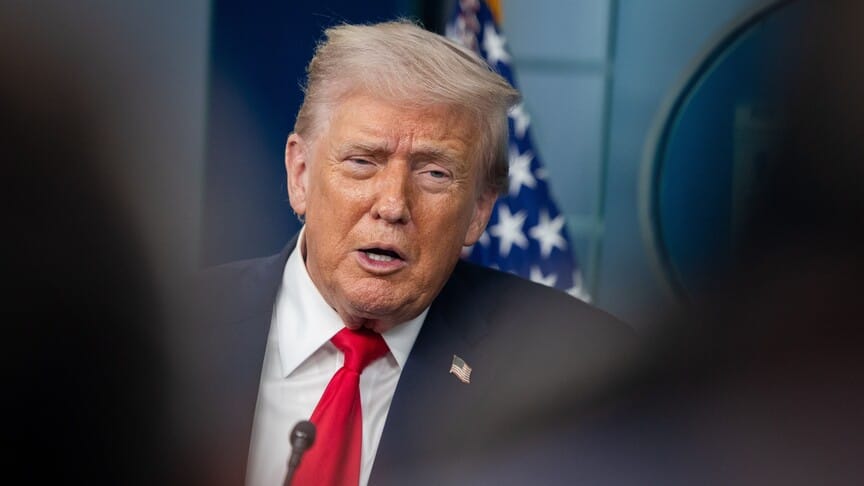
US President Donald Trump, Tuesday, issued a rare rebuke of Israel, rejecting the destruction of entire residential buildings in Lebanon in the search for a single Hezbollah member. He noted that many of the residents of those buildings are not affiliated with the group.

This came in remarks he made to reporters after meeting with Emir of Qatar Sheikh Tamim bin Hamad on the sidelines of the G7 summit in France. It comes two days after the announcement of a US-Iranian agreement.

In response to a reporter’s question, Trump said: “I’m not happy with the way Israel has dealt with Lebanon and with Hezbollah. They should have been able to get the job done much faster.”

He added: “You don’t have to destroy an entire apartment building every time looking for one Hezbollah member; there are many people living in those buildings, and not all of them are Hezbollah members.”

Trump said he had suggested to Israel that Syria be left to deal with the Lebanese Hezbollah group.

He pointed out: “The person running Syria (Ahmed al-Sharaa) is someone that I, Turkish President Recep Tayyip Erdoğan, and other figures supported, and we helped him come to power. He has done an exceptional job in restructuring the country.” He continued: “I suggested to Israel that Syria take care of Hezbollah, because frankly I think they would do a better job.”

https://www.facebook.com/reel/1565129145177584

He added: “If Israel can’t get the job done against Hezbollah without killing everyone, then (Syria) will take over. Syria will do the job.”

Trump also criticized the Israeli attack on Beirut just before the signing of the US-Iran agreement, saying: “I didn’t think it was right for Israel to attack Lebanon and Beirut hours before the agreement was signed. I didn’t like it at all, and I told him (Israeli Prime Minister Benjamin Netanyahu) that very clearly.”

Trump said that without the United States, “Israel wouldn’t exist and would have been destroyed,” calling on Netanyahu to act more responsibly toward Lebanon.

On Sunday, the Israeli army launched an airstrike targeting an apartment building in Beirut’s southern suburbs, claiming to be targeting “Hezbollah targets,” while the world awaited the imminent signing of a memorandum of understanding between Washington and Tehran to end the war.

The airstrike killed three people, including two women, and wounded 16 others, including four women. Iran vowed an “imminent response” to the Israeli attack in Beirut’s southern suburbs.

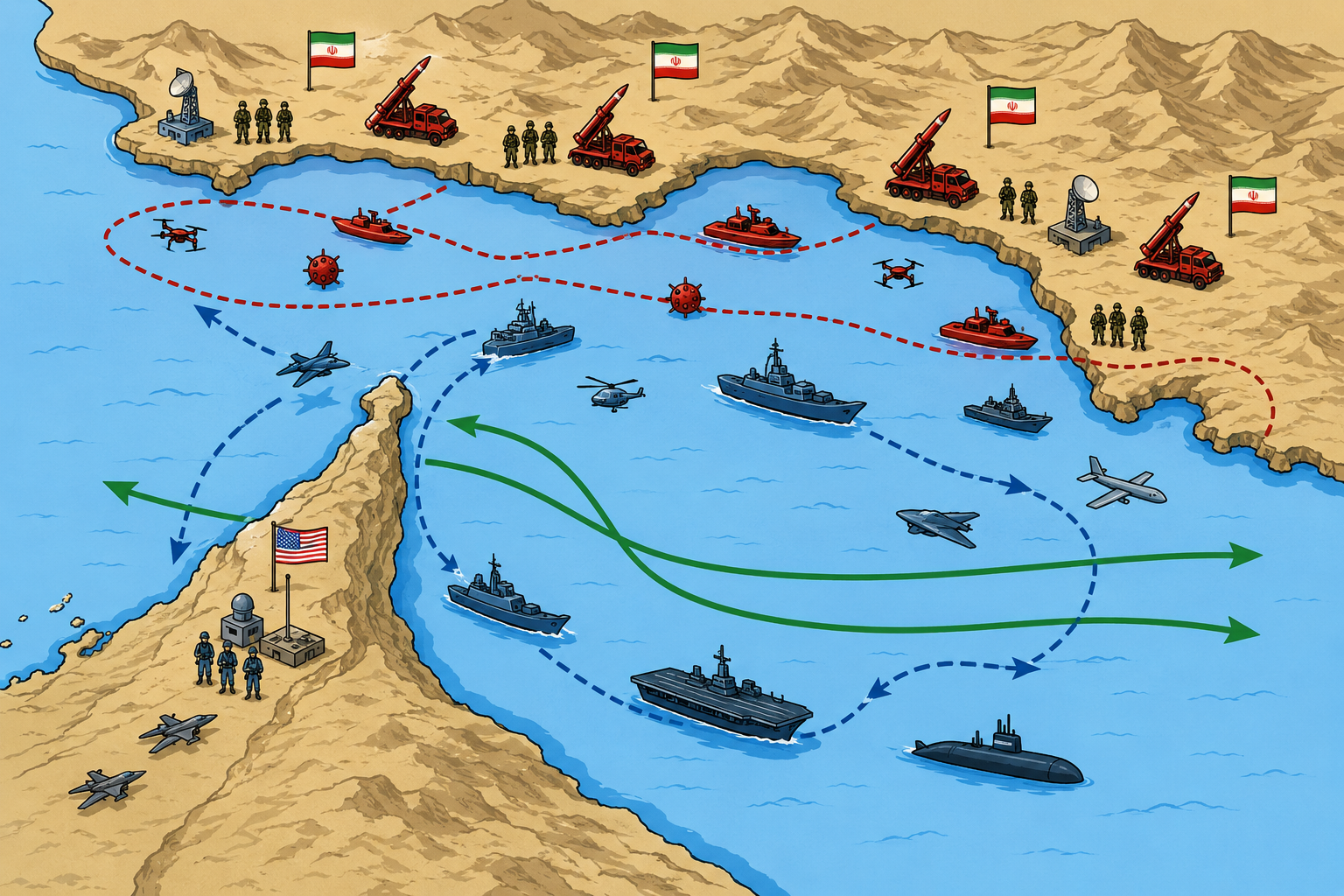
On Sunday evening, Washington and Tehran announced an agreement, brokered by Pakistan, to end military operations on all fronts, including Lebanon, reopen the Strait of Hormuz, and lift the naval blockade on Iran. The agreement is scheduled to be signed in Switzerland next Friday.

Since 2 March, 2026, Israel escalated its aggression against Lebanon as part of the ongoing conflict it has waged, alongside the United States, against Iran.

These attacks have resulted in the deaths of 3,826 people and injuries to 11,851 others in Lebanon, according to the latest figures released by the Lebanese Ministry of Health.

Israel continues to occupy areas in southern Lebanon, some for decades, and others since the previous war between 2023 and 2024, while during the current aggression it has expanded the scope of its incursion to a distance of more than 10 kilometers inside Lebanese territory according to Anadolu.

Continue reading
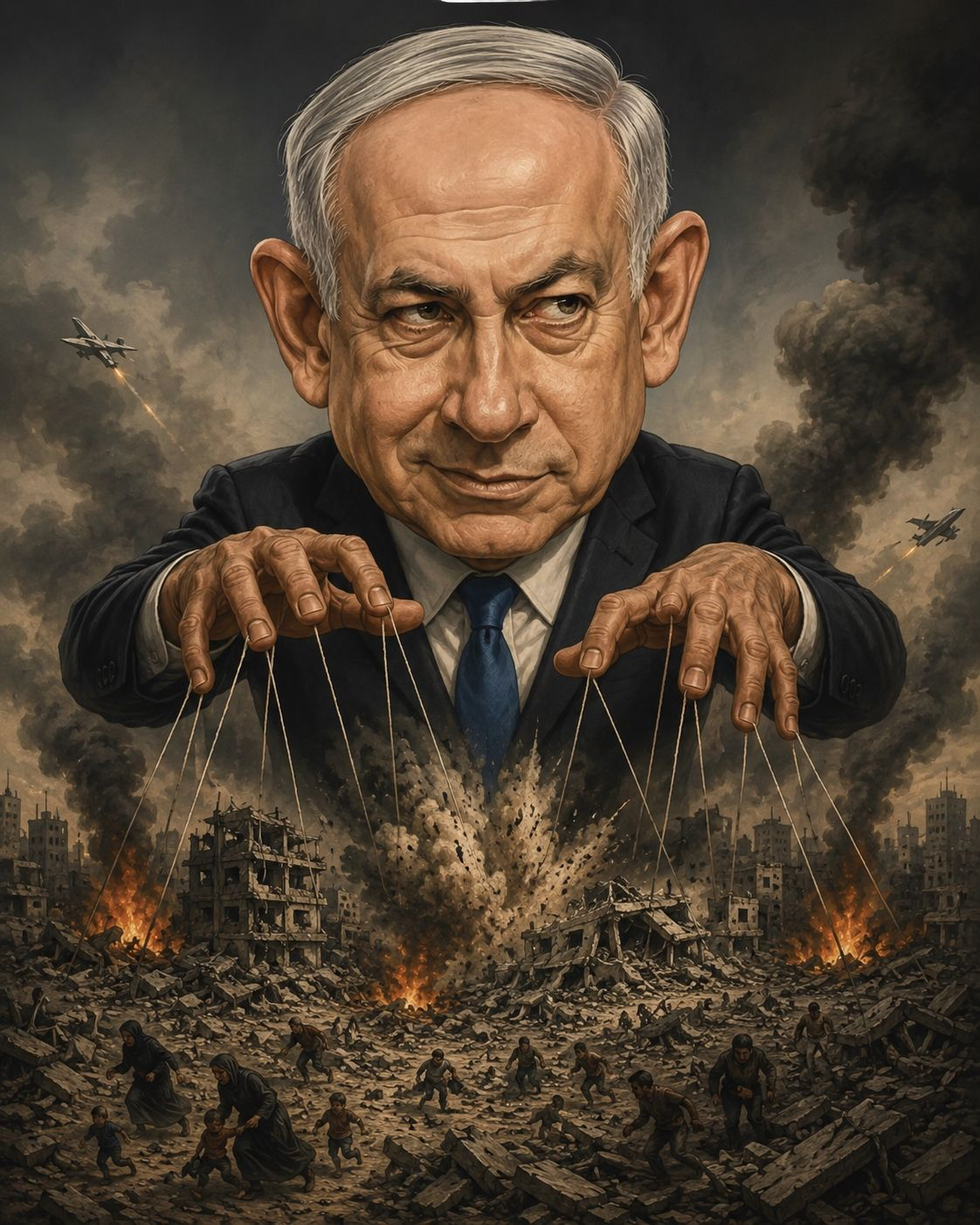
Netanyahu, Iran and The ‘Destructive’ Israeli Personality

By Dr Adnan Naeem

The recent escalation between Israel and Iran suggests that Prime Minister Benjamin Netanyahu is currently experiencing one of his most complex and perplexing political moments. The man who has long relied on military force as a tool to resolve conflicts and impose realities now finds himself besieged by outcomes that fall short of his stated objectives and the immense cost borne by the entire region.

In Gaza, after months of war, destruction, and continuous military operations by the Israeli army, fundamental questions remain unanswered: Where is the victory promised to the Israelis? Where are the strategic achievements that justified the continuation of the war? The Gaza battle was transformed from a project for a swift resolution into an open-ended war of attrition, with the political, security, and humanitarian costs increasing daily and rapidly.

As for the northern front (Lebanon), Netanyahu has failed to impose the equations he repeatedly wanted to create. Instead of restoring Israel’s image of deterrence, new realities have emerged confirming that the region does not respond to threats, and that the power balance has become far too complex to be determined by the rhetoric of force or displays of military capability.

At the heart of these shifts, Iran has emerged as a model distinct from the many adversaries Israel has traditionally dealt with. Tehran does not merely declare its right to retaliate; it exercises this right whenever it perceives its interests or sovereignty are threatened. The recent regional confrontations demonstrated that a policy of threats is no longer sufficient to subdue or deter adversaries while military calculations have become far more costly and complex than Netanyahu imagined.

It is to be noted while Netanyahu sometimes speaks of opportunities for negotiation or security and political arrangements, he at the same time continues to generate the conditions for escalation. How can peace be built while the circle of confrontation widens? And how can the world be convinced of the seriousness of the political process when the language of force remains the sole instrument for managing the conflict?

He appears like a cunning fox, claiming to be engaged in negotiations for  peace but focusing on security matters rather than the political file. The security file establishes a limited, relative stability, not a lasting one, waiting to reignite conflict in the region, particularly on the Lebanese front.

Netanyahu works on downplaying and delaying the importance of resolving the political issue first. He thus evades political obligations and commitments under international pressure regarding Lebanese rights for instance, most importantly ( is a complete withdrawal, even from the Shebaa Farms, demarcation of borders, including maritime borders, and Lebanese rights to the gas fields off the Lebanese coast – the Karish field).

This contradiction reveals a crisis deeper than a mere disagreement over military tactics; it reflects a personal political predicament facing Netanyahu. He understands – as he approaches the general elections – that a ceasefire could open the door to domestic accountability regarding security and political failures, and could revive questions about his political future, not to mention corruption cases and crises such as his dismantling of the judicial system and the conscription of Haredim. Therefore, it seems the continuation of the tension gives him more room to maneuver than political compromises would.

Within Israel itself, and as the general elections approaches, the gap between Netanyahu and growing segments of society widens. The opposition is gaining strength, protests continue unabated and the families of fallen and wounded soldiers are raising their voices in an unprecedented manner. Meanwhile, criticism is mounting from security and military figures who believe the government lacks a clear vision to resolve the crisis.

Today, Netanyahu’s image resembles that of his missiles: Soaring into the sky, creating a deafening roar, but quickly returning to reality, where difficult questions and stubborn facts await him. Wars may postpone crises, but they do not eliminate them, and escalation may temporarily alter the landscape, but it does not create a lasting victory.

Conversely, the United States appears more inclined toward de-escalation and preventing the region from erupting into a full-blown war. Washington understands its strategic interests require containing the conflict, not expanding it. It prefers pursuing political and security arrangements that reduce the likelihood of a major confrontation. However, this approach clashes with Netanyahu’s desire to keep the region on the brink of conflagration, hoping to alter the facts on the ground or escape the demands of domestic politics.

Between heaven and earth, Netanyahu oscillates between the rhetoric of power and the reality of impotence, between his political ambitions and the limits of what military force can achieve. As for the region, it continues to pay the price for this oscillation, which has so far produced nothing but more tension and instability.

This article, written by Dr Adnan Naeem, an Israeli affairs expert, was published in the Arabic  Maannews website and reprinted in crossfirearabia.com

Continue reading
Iran: ‘Strategic Patience’ to ‘Sustained Confrontation’

By Najih Mohammad Ali

In a clear and direct language, the Iranian Revolutionary Guard Corps (IRGC) affirmed that regional “peace and stability will not be achieved unless there is withdrawal from the occupied Lebanese territories.” This stance followed Hezbollah’s Secretary-General’s rejection of the Washington talks, emphasizing his refusal to separate the arenas and the “Dahieh for the North” equation.

This statement expresses a coherent strategic vision that considers regional stability inextricably linked to ending occupations and aggressions. It places the defense of Lebanon, Syria, and the region among Iran’s political and military priorities.

This shift to a strategy of “eternal war”—or continuous confrontation—and reflects a pragmatic and principled decision made by Tehran after decades of pressure and aggression. Iran did not abandon the idea of ​​a settlement in vain; rather, it realized that relying on partial agreements with Washington, which imposes unilateral conditions and disregards the rights of peoples, is no longer a viable option.

The cowardly assassination of Martyr Qassem Soleimani, followed by direct strikes targeting high-ranking Iranian leaders, including Supreme Leader Ayatollah Seyyed Ali Khamenei, proved that relying solely on “strategic patience” is mistaken for weakness. Therefore, Iran has shifted to a doctrine of active deterrence based on the entire axis of resistance, making any aggression costly for its adversaries.

This transformation was not the result of the absolute dominance of a hardline faction, as Zionist-American narratives and their Arab proxies (and, of course, the Iranian opposition abroad) claim. Rather, it is a natural evolution of the Iranian elite that stood united in the face of external aggression.

After significant losses, the priority of maintaining national and revolutionary cohesion emerged. Defending revolutionary principles—exporting the spirit of resistance and confronting arrogance—has become an essential part of the regime’s identity that has become a source of strength to prevent internal collapse whilst uniting the people behind the leadership in the face of sanctions. Pragmatists and hardliners alike now agree that continued confrontation better protects national interests than concessions that could lead to disintegration.

The leaders of the Iranian regime believe—and I think they are right—that continuing the confrontation will yield greater strategic gains than any fragile peace agreement. History proves that America understands only the language of force and attrition. From Vietnam to Afghanistan, wars of attrition forced Washington to withdraw.

Today, the “Axis of Resistance” is cleverly applying this equation: Linking the arenas to prevent separate deals that would weaken Lebanon, Iraq, or Yemen, and imposes a heavy price on its adversaries. Iranian diplomacy has been transformed into the diplomacy of the field, as General Soleimani envisioned, and is now a flexible tool that buys time and exposes the contradictions of the other side, while maintaining full military readiness.

The American-Israeli strikes have already altered Tehran’s calculations in favor of adopting an offensive-defensive posture. Instead of settling for limited responses, Iran is developing comprehensive deterrent capabilities through its natural allies, who represent the will of the region’s peoples in the face of occupation.

This is a calculated escalation, a precise strategic calculation based on resilience and strategic depth. Within the elite, a balance prevails between caution, fearing losses, and resolve, which sees resistance as the only path to dignity and independence.

Compared to the previous “strategic patience,” the strategy of sustained confrontation has proven effective in preserving battlefield gains and preventing the regional collapse of the resistance axis. It has succeeded in exhausting the enemy and strengthening internal unity, despite economic challenges primarily attributed to unjust sanctions, not Iranian policy.

The most serious risk facing this strategy lies in the possibility of miscalculation by adversaries and their attempts to impose a full-scale war, but Iran has repeatedly demonstrated an exceptional capacity for resilience and adaptation.

We are indeed facing a “simmering cold war,” where there is no false peace imposed by force, nor a total war that destroys everyone. This situation serves Iran and its axis because it maintains the strategic balance, prevents surrender, and opens the door to a comprehensive and just settlement based on withdrawal from occupied territories and respect for the sovereignty of states.

In conclusion, this “perpetual war” relies on the long-term vision of the Iranian character. It is not a whim, but an existential choice imposed by the ongoing aggression against Iran and the peoples of the region.

Iran is defending itself and the dignity of the nation, and affirms that true stability begins with ending aggression, occupation, and foreign interference. This path, despite its difficulties, reinforces Tehran’s position as an indispensable regional power and paves the way for a new balance of power that respects the rights of peoples. The region needs such firm stances to achieve an honorable peace, not surrender.

The author is a researcher in Iranian and regional affairs and this article is reproduced from the Arabic Al Rai Al Youm website and reprinted in crossfirearabia.com.

Continue reading