CrossFireArabia
In a dangerous increase in crimes targeting civilian gathering places, particularly in the northern Gaza Strip, the Israeli occupation army has targeted shelter centres 39 times since the beginning of October. These attacks aim to forcefully displace the Palestinian population from the area, and have killed 188 people and injured hundreds more.
Since the beginning of August 2024, the Israeli army has targeted schools, hospitals, clinics, and shelter halls 65 times, including 39 times in the current month of October, killing 672 Palestinians and injuring over 1,000 more, according to the Euro-Med Monitor field team. Fifty-seven of the targeted locations were located in Gaza City or the northern Gaza Strip, while the remaining eight were in the central part of the Strip.
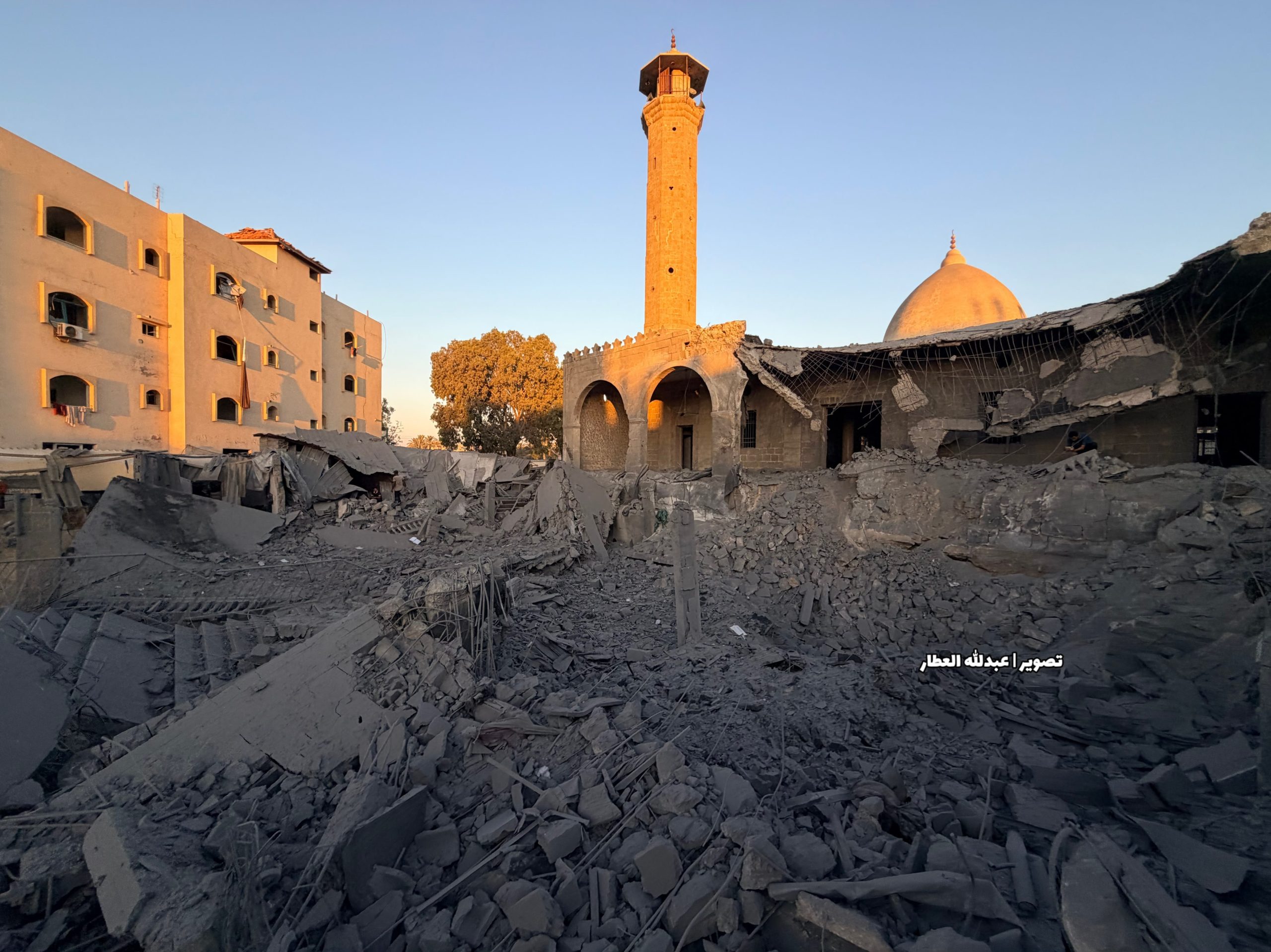
The Israeli targeting has included shelling, direct shootings, killing forcibly displaced people and their families, or making them leave schools-turned-shelters under fire and/or with orders to relocate. These schools are then burned or otherwise destroyed by Israeli forces in order to render them uninhabitable and stop displaced people from returning to them.
Israel’s systematic policy of destroying shelters further restricts the options available to residents in terms of places to seek refuge, which helps the country achieve its objectives of destroying and forcibly displacing Palestinians and altering the demographic makeup of the Strip. This is particularly apparent in northern Gaza, where Israeli officials with varying degrees of authority have made it clear they intend to annex and settle.
The most recent Israeli targeting of shelters and ensuing waves of forced displacement in the north have caused dozens of Palestinian families to be dispersed and their members to be separated from one another, which has doubled their psychological suffering, and especially that of the children.
Targeting shelters is a crucial component of Israel’s strategy to continue to weaken the social structures of Palestinians in the Gaza Strip; erode their physical and psychological well-being; and eradicate any communal areas that might, even in small ways, provide social and emotional support.
Additionally, targeting shelters has a negative impact on the likelihood that families and individuals will receive humanitarian aid, because many of these spaces serve as distribution points for charitable organisations. If they are forced to relocate, they might end up in places where there is no access to the already limited amount of humanitarian assistance available in the Strip. In this way, the Israeli targeting of shelters worsens the already-dire humanitarian situation and the suffering of the Palestinian populace in the Gaza Strip.
The Euro-Med Monitor field team reported, on the afternoon of Sunday 27 October, that the Israeli air force bombed the Asmaa School in the Al-Shati refugee camp, west of Gaza City. The school-turned-shelter was home to thousands of displaced people, and the bombing killed 11 Palestinians—including four journalists, two of whom were women—and injured dozens more. The Israeli air force had bombed the same school eight days prior, killing eight Palestinians and injuring others.
The Israeli air force had bombed the Shuhada Al-Nuseirat Secondary School for Boys earlier, on Tuesday 24 October. This school was home to thousands of displaced people in the central Gaza Strip’s Nuseirat refugee camp, and the bombing killed 18 Palestinians, including 12 children and three women, and injured 52 more, according to the Euro-Med Monitor field team.
According to a review by the Euro-Med Monitor field team, none of the victims—which include 54-year-old professor Ashraf Yaqoub Al-Jadi, Dean of the Islamic University of Gaza’s Faculty of Nursing—were militants.
At least 10 schools in northern Gaza are currently being evacuated by the Israeli occupation army, which is also setting the majority of them on fire. The evacuation of these schools occurred after the Israeli occupation army sent quadcopters or Palestinian detainees and told those inside to leave and head to checkpoints. Some of these schools were bombed without any prior notice, such as the Jabalia Preparatory School, in which 10 displaced people were killed on 21 October, and the Zaid Bin Haritha School, in which seven displaced people were killed on 22 October.
All nations should fulfill their international obligations by preventing Israel from completing the crime of genocide and other serious crimes in the Gaza Strip; protecting civilians there; making sure Israel abides by international law and the rulings of the International Court of Justice; enforcing effective sanctions against it; and halting all forms of military, financial, and political support and cooperation, including by immediately suspending military aid, export licenses, and arms sales to Israel.
Additionally, all nations who engage in criminal activity alongside Israel, particularly those that offer Israel support or assistance in any way, should be held responsible. This includes aiding Israel and entering into contractual agreements in the areas of military, intelligence, politics, law, finance, and the media, among other areas that could help Israel continue to commit its crimes.
At the international, regional, and local levels, the path of universal jurisdiction must be seriously and cooperatively activated in order to hold the perpetrators of crimes against Palestinian civilians accountable before the national courts of nations that adopt such jurisdiction.
A summary of these attacks, based on Euro-Med Monitor documentation, is provided below:
| School | Area | Date | Nature of the attack | |
| 1. | Dalal Al-Maghribi School | Shuja’iyya – East Gaza City | 1 August 2024 | Aerial bombardment |
| 2. | Al-Rafidain School | Gaza City | 3 August 2024 | Aerial bombardment |
| 3. | Al-Huda School | Gaza City | 3 August 2024 | Aerial bombardment |
| 4. | Hamamah School | Gaza City | 3 August 2024 | Aerial bombardment |
| 5. | Muscat School | Beit Lahia Project – North Gaza Strip | 3 August 2024 | Aerial bombardment |
| 6. | Hassan Salama School | Sheikh Radwan – Gaza City | 4 August 2024 | Aerial bombardment |
| 7. | Al-Nasr School | Sheikh Radwan – Gaza City | 4 August 2024 | Aerial bombardment |
| 8. | Al-Zahra School | East Gaza City | 8 August 2024 | Aerial bombardment |
| 9. | Abdul Fattah Hamoud School | Yaffa Street – East Gaza City | 8 August 2024 | Aerial bombardment |
| 10. | Al-Tabi’in School | East Gaza City | 10 August 2024 | Aerial bombardment |
| 11. | Mustafa Hafez School | Gaza City | 20 August 2024 | Aerial bombardment |
| 12. | Salah Al-Din School | Gaza City | 21 August 2024 | Aerial bombardment |
| 13. | Al-Ezz Bin Abdul Salam School | Nuseirat – Central Gaza Strip | 26 August 2024 | Aerial bombardment |
| 14. | Safad School | Zeitoun Neighbourhood – Gaza City | 1 September 2024 | Aerial bombardment |
| 15. | Halima Al-Saeeda School | 7 September 2024 | Aerial bombardment | |
| 16. | Amr Bin Al-Aas School | Sheikh Radwan – Gaza City | 7 September 2024 | Aerial bombardment |
| 17. | Al-Nuseirat Girls’ Preparatory School (A) | Nuseirat – Central Gaza Strip | 11 September 2024 | Aerial bombardment |
| 18. | Shuhada Al-Zeitoun School | Zeitoun Neighbourhood – South East Gaza City | 14 September 2024 | Aerial bombardment |
| 19. | Ghazi Al-Shawa School | Beit Hanoun – North Gaza Strip | 15 September 2024 | Aerial bombardment |
| 20. | Ibn Al-Haytham School | Shuja’iyya – East Gaza City | 18 September 2024 | Aerial bombardment |
| 21. | Al-Zeitoun School (C) | Zeitoun Neighbourhood – South East Gaza City | 21 September 2024 | Aerial bombardment |
| 22. | Kafr Qasim School | Al Shati’ Camp – West Gaza City | 22 September 2024 | Aerial bombardment |
| 23. | Khaled Bin Al-Walid Secondary School for Boys | Nuseirat Camp – Central Gaza Strip | 23 September 2024 | Aerial bombardment |
| 24. | Al-Fakhari Government School | Zeitoun Neighbourhood – South East Gaza City | 24 September 2024 | Aerial bombardment |
| 25. | Al-Faluja School | North Gaza Strip | 26 September 2024 | Aerial bombardment |
| 26. | Umm Al-Fahm School | North Gaza Strip | 29 September 2024 | Aerial bombardment |
| 27. | Al-Nuseirat Girls’ Preparatory School (C) | Nuseirat – Central Gaza Strip | 1 October 2024 | Aerial bombardment |
| 28. | Al-Shuja’iyya Boys’ School | Shuja’iyya – East Gaza City | 1 October 2024 | Aerial bombardment |
| 29. | Muscat School | Al Tuffah – East Gaza | 2 October 2024 | Aerial bombardment |
| 30. | Al-Nuseirat Girls’ Elementary School (A) | Nuseirat – Central Gaza Strip | 2 October 2024 | Aerial bombardment |
| 31. | Khalifa School | Beit Lahia Project – North Gaza Strip | Aerial bombardment | |
| 32. | Deir al-Balah Mixed Basic School | Deir al-Balah – Central Gaza Strip | 3 October 2024 | Aerial bombardment |
| 33. | Baghdad Hall | Jabalia Camp – North Gaza Strip | 4 October 2024 | Aerial bombardment |
| 34. | Al-Rafei School | Jabalia al Balad – North Gaza Strip | 9 October 2024 | Aerial bombardment |
| 35. | Yemen Happy Hospital | Jabalia Camp – North Gaza Strip | 9 October 2024 | Aerial bombardment |
| 36. | Rufaidah Elementary School | Deir al-Balah – Central Gaza Strip | 10 October 2024 | Aerial bombardment |
| 37. | Abdul Rahman Ibn Auf School | Al-Saftawi Neighbourhood – North Gaza | 10 October 2024 | Aerial bombardment |
| 38. | Al Ramal Clinic | Gaza City | 10 October 2024 | Aerial bombardment |
| 39. | Hafs School | Jabalia Camp – North Gaza Strip | 11 October 2024 | Artillery shelling |
| 40. | Hafsa Al Fouqa School | Jabalia Camp – North Gaza Strip | 14 October 2024 | Bombardment |
| 41. | Abu Hussein School | Jabalia – North Gaza Strip | 17 October 2024 | Bombardment |
| 42. | Sheikh Khalifa Bin Zayed School | Beit Lahia Project – North Gaza Strip | 17 October 2024 | Bombardment |
| 43. | Asma School | Gaza City | 19 October 2024 | Bombardment |
| 44. | Abu Hussein School | Jabalia – North Gaza Strip | 19 October 2024 | Shelling |
| 45. | Abu Hussein School | Jabalia – North Gaza Strip | 20 October 2024 | Shelling |
| 46. | Hafsa School | Jabalia – North Gaza Strip | 20 October 2024 | Bombardment |
| 47. | Jabalia Preparatory School | Jabalia – North Gaza Strip | 21 October 2024 | |
| 48. | One of the Al Fouqa schools | Jabalia – North Gaza Strip | 21 October 2024 | Aerial bombardment |
| 49. | One of the Al Fouqa schools | Jabalia – North Gaza Strip | 21 October 2024 | Evacuation |
| 50. | One of the Al Fouqa schools | Jabalia – North Gaza Strip | 21 October 2024 | Evacuation |
| 51. | One of the Al Fouqa schools | Jabalia – North Gaza Strip | 21 October 2024 | Evacuation |
| 52. | One of the Al Fouqa schools | Jabalia – North Gaza Strip | 21 October 2024 | Evacuation |
| 53. | One of the Al Fouqa schools | Jabalia – North Gaza Strip | 21 October 2024 | Evacuation |
| 54. | Palestine School | Beit Hanoun – North Gaza Strip | 21 October 2024 | Evacuation |
| 55. | Al Shawa School | Beit Hanoun – North Gaza Strip | 21 October 2024 | Aerial bombardment |
| 56. | Khalifa School | Beit Hanoun – North Gaza Strip | 22 October 2024 | Evacuation |
| 57. | Kuwait School | Beit Hanoun – North Gaza Strip | 22 October 2024 | Evacuation |
| 58. | Aleppo School | Beit Hanoun – North Gaza Strip | 22 October 2024 | Evacuation |
| 59. | Zaid Bin Haritha School | Beit Hanoun – North Gaza Strip | 22 October 2024 | Bombardment |
| 60. | Al Zahraa School | Gaza City | 23 October 2024 | Bombardment |
| 61. | Shuhada Al-Nusairat Secondary School for Boys | Nuseirat – Central Gaza Strip | 24 October 2024 | Bombardment |
| 62. | Abu Hussein School | Jabalia – North Gaza Strip | 24 October 2024 | Bombardment |
| 63. | Tal Al Rabi School | Beit Lahia Project – North Gaza Strip | 25 October 2024 | Bombardment |
| 64. | Salah Al Din School | Gaza City | 27 October 2024 | Bombardment |
| 65. | Asma School | Gaza City | 27 October 2024 | Bombardment |