Israel Jails Institutionalized Torture For Palestinians

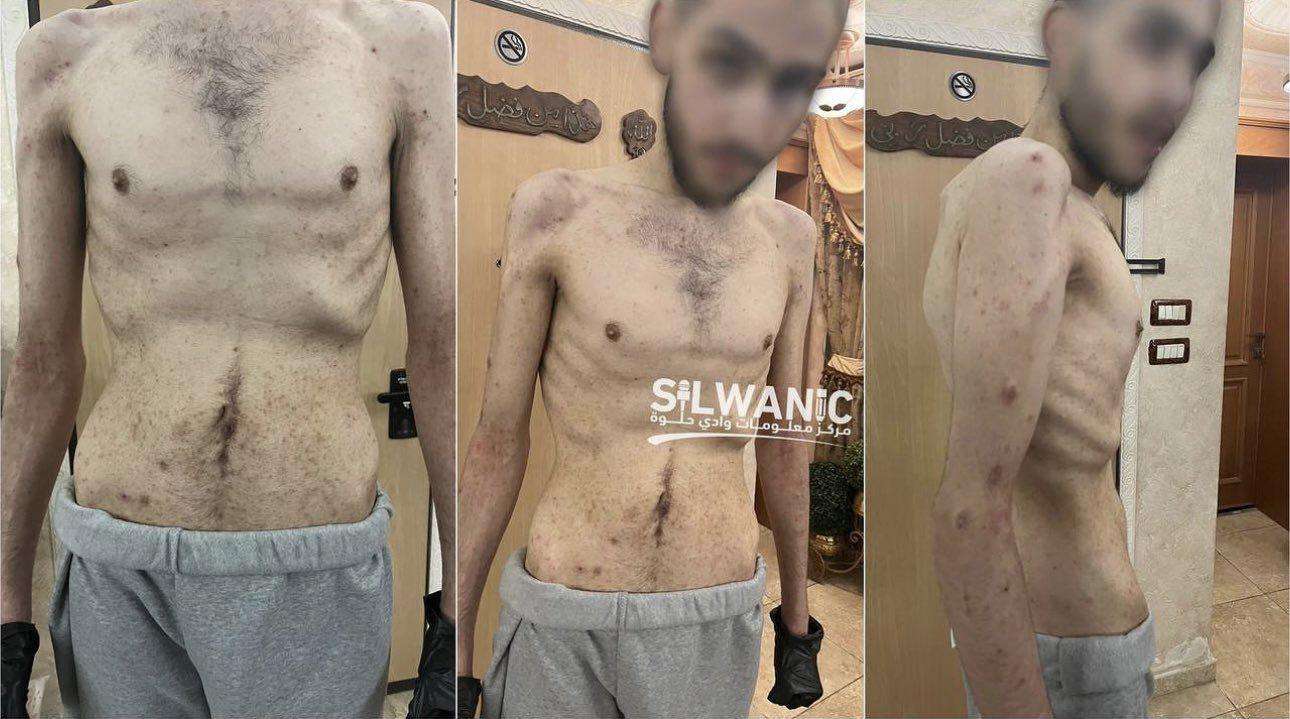
The poor health of Palestinian detainees and prisoners released by Israel as part of the ceasefire agreements in the Gaza Strip reflects the terrible conditions they endured while in custody, including torture, mistreatment, and degrading abuses that persisted until the very last minute.

The Israeli authorities released the detainees and prisoners in four batches, the last of which was last Saturday. The majority appeared to be in a serious state of decline, with each of them losing several kilogrammes of weight due to what appears to be intentional starvation.

Following their release, many of the inmates and detainees required immediate hospital transfers for critical medical examinations. One in particular seemed incapable of recognising his future after being denied treatment while in custody.

These circumstances demonstrate how Israel has transformed its jails into institutionalised torture facilities for Palestinian detainees and prisoners, including those who were convicted and imprisoned prior to October 7, 2023.

Until the final moments before their release, most of the detainees endured psychological torture in addition to mistreatment and beatings.

The Euro-Med field team recorded that, in addition to forcing the detainees to wear prison clothes and subjecting them to beatings and violence before and during their loading onto buses, Israeli forces also made many of them shave their heads – a deliberate and degrading measure meant to degrade their morale.

https://twitter.com/EuroMedHR/status/1885774865212293613

All prisoners and detainees were released under appalling conditions by the Israeli occupation forces, who also stormed their homes and locations designated to receive and celebrate their release. They attacked family gatherings, suppressing them with tear gas and bullets and injuring some people.

According to the testimonies of the released prisoners and detainees that Euro-Med recorded and analysed, the prison administrations’ violations extended beyond subpar detention conditions and turned into a systematic policy of retaliation against all Palestinian prisoners and detainees. Detainees were subjected to severe torture, intentional starvation, and prolonged solitary confinement as part of punitive measures that ramped up brutally after the events in the Gaza Strip in an attempt to punish them for nothing more than the fact that they were Palestinians. Since October 7, 2023, the conditions inside the prisons have seen an unprecedented deterioration.

According to the testimonies documented by Euro-Med, the Israeli occupation forces also tortured and beat the freed detainees, held them in buses with their hands bound for extended periods of time before releasing them, and subjected them to taunts and profanities that were intended to diminish their human dignity right up until the very end.

The day before their scheduled release, Israeli forces seized them and forced them to shave their hair, according to former prisoner “Haitham Jaber” from the town of Haris in the Salfit district. When he refused to shave his hair, the prison administration took him by force and shaved his hair all the way. “Jaber” went on to say: “The inmates endure extremely harsh living conditions, and the most extreme forms of torture, abuse, and degrading treatment were performed against us until the very end.”

The detainees were humiliated by being made to stand in a single queue and occasionally asked to walk on all fours, he said, demonstrating how the prison guards treated them like ‘animals’. Additionally, they were denied basic rights like access to water, as each room was only given one bottle of water per day, and the restrooms were completely devoid of water, making it impossible for them to relieve themselves.

Former prisoner Wael al-Natsheh, who has been behind bars since 2000 and has been sentenced to life in prison, said: “They played with our nerves.” Without providing us with any information or an explanation, they took us back to the prison for three hours after we had left for the buses. This led to anxiety and misunderstanding. We assumed that after giving us the impression that there would be significant issues in the exchange that would be challenging to resolve, he would assign us to the prison sections. He was merely playing with our nerves, as it turned out.

“The inmates who were scheduled to be released were gathered in Ofer Prison and were previously told that their release date was last Saturday,” he said. But they were imprisoned for roughly a week. According to him, the prison administration has been waging a “fierce attack” on the inmates over the past 16 months, causing them to starve, be beaten, be abused, sleep in the cold, and have their clothing and blankets taken away.

According to one of the kids the Euro-Med met and who was set free in the northern West Bank (Euro-Med does not reveal his identity for his own safety), everyone suffered in the prisons, particularly from malnourishment and beatings. He clarified that in order to avoid being arrested again, he was made to sign a pledge not to speak.

According to the testimonies of those who were released, the Euro-Med emphasised that these practices constitute a blatant violation of human rights and the rights of prisoners and detainees guaranteed by international law because they mirror the “abuse, humiliation, starvation, and systematic torture” that they endured both during their detention and after being released.

Additionally, he cautioned that the attacks are not just physical abuse but also have terrible psychological effects on the detainees and prisoners, which worsens their suffering and eventually causes their psychological condition to deteriorate. He continued by saying that the conditions the detainees were subjected to upon their release, the descriptions they gave of their conditions of confinement, and the reference to prisons as “graves for the living” are all blatant examples of an Israeli policy that violates international humanitarian law and human rights standards in order to destroy the Palestinian people’s will and subject them to the greatest amount of suffering and humiliation possible.


To end Israel’s systematic and pervasive crimes of murder, torture, and other grave violations against Palestinian prisoners and detainees, all *countires* and relevant international organisations must act swiftly and forcefully. Additionally, detainees who were arbitrarily arrested must be released immediately and unconditionally. The involved local and international organisations should be given immediate permission to visit the detainees and give them legal representation. Furthermore, Israel should face pressure to end all types of arbitrary detention, including administrative detention, which is a blatant violation of fundamental human rights and a manifestation of a repressive policy meant to undermine the Palestinian people’s will and social cohesion while denying them their legal rights.

In addition to taking all required legal actions to prosecute and try the occupation leaders accountable for these crimes, all nations and interested parties must launch an immediate, independent investigation into these crimes and grave violations.

All concerned countries must also assist the International Criminal Court in its efforts to look into these crimes, submit specialised reports to the court about the crimes committed against Palestinian detainees and prisoners in Israeli prisons and detention facilities, particularly after October 7, 2023, and issue arrest warrants for all of the perpetrators so that they can be prosecuted and brought before the International Criminal Court to stand trial for their crimes.

The crimes committed by the Israeli occupation army and other Israeli security forces against Palestinian prisoners and detainees from the Gaza Strip are considered crimes against humanity and full-fledged war crimes. They also constitute acts of genocide against the Palestinian people in the Strip because they are carried out in a systematic and brutal manner with the intention of eradicating the Palestinian people as a group, including through rape, torture, and other forms of sexual violence.

The international community must put pressure on Israel to immediately cease the crime of enforced disappearance against Palestinian detainees and prisoners from the Gaza Strip, to make public all secret detention facilities, to reveal the identities of all Palestinians it is detaining from the Strip, their whereabouts and fates, and to take full responsibility for their safety and well-being.

Euro-Med Human Rights Monitor

CrossFireArabia

CrossFireArabia
Dr. Marwan Asmar holds a PhD from Leeds University and is a freelance writer specializing on the Middle East. He has worked as a journalist since the early 1990s in Jordan and the Gulf countries, and been widely published, including at Albawaba, Gulf News, Al Ghad, World Press Review and others.

Related Posts

In The Grip of Starvation: Israel Will Not Let Gaza Rest!

Gaza Government Media Office Advisor Taysir Muhaysin warned of a gradual return to famine in the Gaza Strip as a result of continued Israeli policies restricting aid entry and other basic necessities.

He told the Sanad News Agency the amount of aid entering Gaza by truck does not exceed 27% of that stipulated in the last ceasefire agreement.

Muhaysin stated the Israeli policy of reducing aid is not limited to food and humanitarian supplies, but extends to fuel, including diesel, gasoline, and cooking gas, which is an essential commodity for Palestinian families to manage their daily lives and prepare whatever food they can find under the difficult living conditions.

Read also: Al-Hayek: Gaza sounds the alarm of famine due to declining aid

Government institutions in the Strip continue to perform their duties at the minimum level possible, given the available resources and the exceptional circumstances Gaza is experiencing, whilst Muhaysin denying an administrative vacuum in the enclave.

He affirmed that Gaza government institutions continue to function and maintain a minimum level of stability and essential services essential to the population.

The Media Office Advisor indicated different government bodies expressed their full readiness to hand over their administrative and executive responsibilities to the “technocratic committee” as soon as it arrives in the Strip to begin its work, in accordance with the ceasefire agreement signed in 10 October, 2025. He stressed however, there are real obstacles as procedure and conditions is imposed by the Israel occupation that prevent this.

A Complex Humanitarian Crisis…

Muhaysin warned the living conditions in Gaza are really a “complex humanitarian crisis” affecting all aspects of life.

“Hundreds of thousands of citizens are still living in tents amidst the spread of epidemics and diseases,” whilst pointing to the decline in the capabilities of the health system and municipal services in addition to the severe shortage of food and essential shelter supplies.

The health sector faces increasing risks due to the ongoing shortage of fuel and medical supplies. Muhaysin noted the administration of the Al-Aqsa Hospital were forced to shutdown about 50% of its power generators, and this threatens the lives of patients, especially kidney patients, premature infants, and those in operating rooms and intensive care units.

“What Gaza is witnessing today represents an ongoing humanitarian catastrophe, caused by the decisions and measures imposed by the Israeli occupation, which has led to an unprecedented deterioration in living, health, and humanitarian conditions.”

He pointed out that the technocratic committee that is yet to enter the Gaza Strip needs to assuming its responsibilities across the entire enclave, and this needs to happen with the concurrent withdrawal of the Israeli occupation forces from the areas they reoccupied in Gaza and the commencement of international forces operations tasked with monitoring and security separation under the terms of the ceasefire.

Muhaysin accuses the Israeli occupation of attempting to impose new realities on the ground through excluding areas east of what is known as the “yellow line” from the committee’s administrative responsibility. He said these go against the principles agreed upon in the proposals put forward to end the ongoing crisis.

He concluded by saying the occupation continues to impose its own vision on the future of the Gaza Strip by repeatedly introducing new conditions and ideas, contradicting the fundamental understandings and initiatives discussed over the past months. This, he asserted, obstructs any genuine efforts to alleviate the suffering of the population and end the escalating humanitarian crisis.

The specter of famine is returning to haunt the Gaza Strip, and is coinciding with the tightening of military measures at the crossings controlled by the Israeli occupation. Such prevents the entry of humanitarian and relief aid, and allows militias affiliated with the occupation to steal the incoming aid.

At the end of May, the Palestinian Council of Ministers warned of the severity of UN reports that indicate that about 1.6 million Palestinians in the Gaza Strip, nearly 77% of the population, face the immediate threat of famine due to declining humanitarian funding and reduced aid flow.

In a previous statement to Sanad News Agency, Ali al-Hayek, head of the Palestinian Businessmen Association, warned of the deteriorating humanitarian situation in the Gaza Strip. He emphasized that famine indicators are becoming increasingly apparent amid the continued decline in humanitarian aid and the curtailment of relief organizations’ operations. He noted the Gaza situation “threatens the onset of an unprecedented humanitarian catastrophe.”

This article is based on an extended interview by Advisor Taysir Muhaysin published in Arabic by the Sanad News Agency and republished crossfirearabia.com

Continue reading
Jordan 2007! Elections and Hiccups: Looking Backwards

EDITOR’S NOTE: This article was written more than 18 years again in October 2007 for the 7iber.com online portal and is reprinted her

Its election time! As a good non-totalitarian democrat I love the elections, when they happen that is. What I really love about the elections is the time leading up to their finale when voters go up to the polling stations and vote. Although I’ve never voted in my life, I’ve always carefully watched election campaigns, right from start to finish. They are exciting days, of banners hoisted, constituency meets, mini-rallies and all the rest of it.

Prospective candidates, some running for the very first time and of which we are expected to know and vote for, hoist their banners across streets and roundabouts, screaming at the electorate to vote for them because they are the best candidates.

This is the 15th elections for the 15th Lower House, and parliament in Jordan has consistently been in session since 1989, after a long absence of parliamentary life in the country. I am proud to say I covered the 1993 elections, the 1997 ones, and just about missed the 2003 elections because of being away from Jordan.

In all these years, the excitement never faded. Islamic Action Front candidates continuously stood under the IAF banner, but this was never the case with the other political parties, such as the nationalists, the leftists, the middle-of-the-roaders and the tribalists. Although a lot of parties came on the scene after 1993, like Al Ahad, Al Yaqatha and Al Risala and still many others, for some reason or another, many of their candidates preferred to stand as independents arguing they are known for their own independent political personalities rather than as representatives of their parties.

Is this a wrong attitude? Well, maybe. However, once some of them were elected to the Lower House of Parliament, they revealed their true political colors and supposedly argued on party-political lines. Ironically, most of the electorate never knew what those lines were when the MP was just a candidate running for a seat. Many of these parliamentarians argued that they stood a better chance of getting into parliament as individuals rather than under the banner of their political parties. This is due to the belief that such organizations were still seen as relatively new and unknown, despite the fact that many, including leftists, Arab nationalists and Baathists parties, had existed in the 1960s and 1970s, but many of which were effectively banned.

They may of course have been right in their assumptions as political parties were just made legal in the early 1990s, and have thus needed time to be nurtured. As independents, the negative connotations of belonging to political parties would wither away among the electorates who needed to get used to voting for candidates on party political platforms. But the problem with running on independent tickets is that it actually perpetuated individualism, parochialism and depended on the appeal to family, kinship and tribal relations. In past Jordanian parliamentary elections, and even today, the tribal bloc vote has been very important in deciding who wins and who loses.

The effect of this frustrates the process of developing political parties, which, except for the Islamic Action Front, remains weak, ineffective and are no more than talking shop. They have even been used by established politicians to further their own individual political ends and causes. This stands contrary to the need for building modern, strong political parties designed to make democracy and the democratic experiment effective.

Realizing that there is a lot to say about the tribal vote, sometimes political candidates, even Islamists, have been known to appeal to kinship and family relationships as a means of getting into parliament. Once they do, they start the usual game of political party meandering under the parliamentary dome.

That may also be why election banners and slogans on roads are no more than hackneyed, clichéd phrases emptied from their political content. They are read for what they are: brief formulaic statements, lacking the resonance of strong, vibrant agendas and political manifestos that promise change and development, as is the case with elections in more mature democracies around the world.

Political parties in Europe, for instance, are big machines with national and local clout. Everyone, especially the main personalities, know who they are, what they stand for, and what they hope to do once they form the government, or become the party in the majority. In this part of the world, the political culture, machinations and value systems are different and have to be treated differently.

However, in the final analysis, a political party is a political party in which ever part of the world it belongs to; sharing little differences with its counterparts. That’s why such parties have to be strong, come out of their closed shops and enclosures, and appeal to the masses; become broad-based with clout in order to be listened to by decision-makers.

In all fairness however, we have to be gentle with our political parties by understanding the history and the context of where they came from. It took political parties in the western world, centuries to develop and become the national institutions they are today.
They emerged through political struggles and a great deal of pushing and shoving.

But does that mean we have to take that long? Not necessarily, the element of transition from one era to another can take place quickly, but it has to be supported by the state and government. There has to be a political will for democracy, where parties are nurtured rather than left alone.

Jordan is doing well despite different hiccups, but the Arab world in general has to pull itself by the bootstraps if it is to enter into a meaningful political era where representation, democracy and political pluralism is seen as healthy for a society. Our problem now is to move faster in order to catch up with the rest of the world, and develop politically.

In the meantime, let’s for a minute stop and enjoy the political actions of the electoral campaign.

Continue reading

You Missed

Israeli Violates The ‘Gaza Ceasefire’ 10 Times

Israeli Violates The ‘Gaza Ceasefire’ 10 Times

Price of Israel’s War in Lebanon

Price of Israel’s War in Lebanon

Gaza’s Dead Mounts Despite Ceasefire

Gaza’s Dead Mounts Despite Ceasefire

In The Grip of Starvation: Israel Will Not Let Gaza Rest!

In The Grip of Starvation: Israel Will Not Let Gaza Rest!

Trump to Netanyahu: ‘You’re crazy. If it weren’t for me, you’d be in jail’ – Axios

Trump to Netanyahu: ‘You’re crazy. If it weren’t for me, you’d be in jail’ – Axios

Israeli Capitan Killed, 7 Soldiers Injured in Lebanon

Israeli Capitan Killed, 7 Soldiers Injured in Lebanon