CrossFireArabia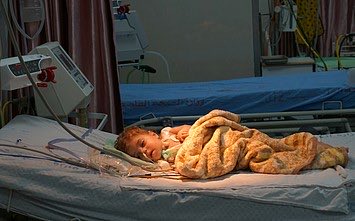
The Israeli authorities continue to enforce their ongoing arbitrary blockade of the Gaza Strip, refusing to allow humanitarian aid and necessities that are essential for survival—such as cleaning and personal hygiene supplies—into the Strip. This comes amid the spread of infectious diseases and on top of the precarious living conditions faced by the approximately 2.3 million Palestinians in the enclave, constituting a perpetuation of Israel’s comprehensive crime of genocide, which began on 7 October 2023.
Euro-Med Human Rights Monitor emphasizes that the consequences of Israel’s intentional worsening of the humanitarian situation in the Gaza Strip, by blocking people’s access to cleaning and personal hygiene products, medical equipment, and sterilization supplies, are dire. Nothing justifies subjecting the population to conditions that can cause widespread death, including by causing the spread of serious skin diseases and and infections, including hepatitis.
https://x.com/EuroMedHR/status/1818950544188227969
Israel continues to systematically and arbitrarily deny hygiene supplies and equipment to all Gaza Strip residents, exacerbating the catastrophic health crisis that Israel has caused there. This crisis has been made worse by the population’s forced, widespread, and repeatedly occurring displacement, as well as the lack of personal hygiene supplies and disinfectants in shelters and camps housing hundreds of thousands of displaced people. Israel continues to prevent and obstruct the entry of the most basic supplies into the Strip, creating conditions that are ripe for the spread of infectious diseases, water pollution, and the absence of sanitation services, as Israeli army forces have destroyed these facilities.
Since the beginning of the genocide nearly, Israel has arbitrarily closed crossings into the Gaza Strip, blocking the entry of humanitarian supplies and the flow of food and water. These actions have resulted in a dangerous accumulation of crises that directly threaten the lives and health of the Gaza Strip’s residents, most notably due to their lack of access to food, clean water, medicines, medical supplies, sanitary tools, and cleaning supplies.
Aya Kamal Ashour Abed, a 20-year-old displaced mother of two at the Deir al-Balah Preparatory School for Girls in the central Gaza Strip, spoke with the Euro-Med Monitor team. “We are more than 30 people living in this classroom for about nine months,” she stated. “A few months ago, we numbered roughly 70, but after some of the displaced individuals relocated to tents outside the school, our numbers dropped somewhat.
“We only receive cleaning and personal hygiene supplies in small quantities every two or three months, despite the fact that our number is very high and we require them constantly,” Abed continued. “Sanitation supplies, like tissues, soap, and shampoo, are extremely expensive [or] even nonexistent in the markets.”
Added Abed: “A bar of soap, for instance, now costs 30 shekels (roughly nine USD) while a bottle of shampoo costs 90 shekels (roughly 25 USD). We do not have anything to eat, so how can we afford these amounts for basic hygiene?”
Abed, who was displaced from her home in the Jabalia refugee camp in the northern Gaza Strip following its bombing last October, said that her two sons had become afflicted with allergies and bacteria, for which she is unable to provide ointments because they are unavailable in UNRWA clinics. “I showed my son to the doctor, and he told me that his entire body is seriously infected with bacteria due to poor hygiene,” Abed told Euro-Med Monitor.
Obtaining sanitary pads—which are pricey and hard to find in local markets—is one of her biggest challenges. “Even though my children’s diapers are completely unusable, I have to cut them into tiny pieces and use them as sanitary pads,” Abed explained. “During my period, I also have to use a single pad for the entire day, which has led to numerous infections and rashes.”
Approximately 680,000 women and girls in the Gaza Strip are of reproductive age. These individuals lack access to menstrual pads and other essentials, and also face other challenges such as inadequate access to water, toilets, various hygiene products, and privacy. Additionally, they must use contaminated or unsterilised materials, which puts them at risk of developing infections that can lead to infertility and uterine cancer.
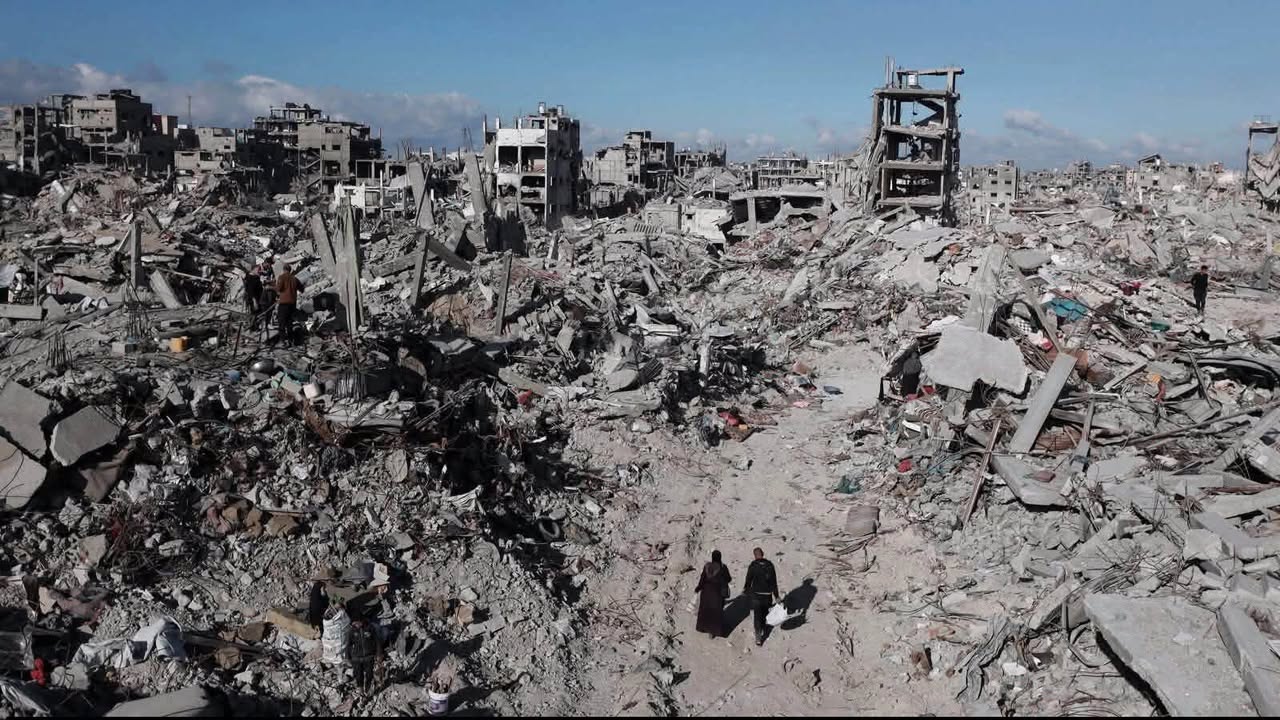
Since Israel has cut off electricity to the Gaza Strip, there is a growing risk to all residents caused by waste accumulation and sewage flooding of roads and markets due to the inability to drain it. Israel has destroyed most of the Strip’s vital infrastructure, including sewage networks, and forced over two million people—the majority of whom have been displaced more than once—into shelters and tents that lack the basic necessities of life, personal hygiene, and health care.
Forty-two-year-old Mohammed Saad Abu Haitham said that his family of eight, which resides in a tent in the Mawasi neighborhood of Khan Yunis in the southern Gaza Strip, is severely impacted by the lack of cleaning supplies, laundry detergent, and bar soap. Due to its scarcity, soap is unusually expensive and therefore difficult to purchase.
“We do not have the money to buy enough meals for our children, so we cannot buy cleaning materials and soap in light of their high prices and the lack of availability,” Abu Haitham told the Euro-Med Monitor team. “My spouse and kids’ hair has been infected with lice, and we all have skin diseases as a result of not washing and not using enough soap and shampoo.”
Food dyes are used instead of traditional dyes for making liquid soap and sterilisation products, which have not entered the Gaza Strip in months due to the Israeli closure of the crossings and the imposition of an arbitrary siege. These alternative and primitive cleaning products are made locally, are unsafe, and are generally insufficient in both quality and quantity when sold in the markets of the central and southern Gaza Strip.
Tens of thousands of cases of skin diseases, including eczema, have been reported to medical facilities as having cropped up in shelters and camps for displaced people living in tents. This is particularly concerning for women, as eczema often appears on the hands of people working to clean food utensils using antiquated and dangerous materials. Meanwhile, reports from the United Nations indicate that skin rashes and skin infections, especially among children, are sharply increasing in the Strip.
The Israeli authorities have placed an arbitrary and oppressive siege on the Palestinian people there, squeezing them into a tiny area with exceedingly limited resources; denying them access to food, clean water, and other necessities; and leaving them exposed to extreme heat.
The right to dignity is an internationally recognised human right that protects people from humiliation, among other forms of unethical treatment. It is meant to ensure fairness by providing the means for people to live in dignity, as well as other fundamental needs and rights, like the right to health and the right to water and sanitation. These rights are essential to maintaining human dignity and preserving the lives of the populace.
The only way to guarantee the rights of Gaza Strip residents is to put an end to Israel’s crime of genocide, lift the arbitrary siege on the Strip, and rescue what remains of the currently uninhabitable region. Delays will either cause the region to irreversibly deteriorate, or incur significant costs in terms of civilian lives and health.
The international community is required to guarantee the entry of humanitarian aid into the Gaza Strip, including the entry of non-food essentials needed to respond to the dire circumstances faced by the Strip’s entire population. Euro-Med Monitor stresses that swift and effective action must be taken to safely deliver aid to civilians across the entire Strip, including the northern section, which is particularly isolated right now. Additionally, the international community must prioritise providing adequate supplies of personal and family hygiene products, as well as products for menstruating individuals, plus sexual and reproductive health care services to prevent and mitigate further harm to women and children in particular, and the entire Palestinian population in general. These actions are mandated by international human rights law and relevant international obligations.
Pressure needs to be put on Israel, as the occupying force, to maintain sanitation facilities and services in the Gaza Strip, as well as to guarantee the safety of the technicians charged with repairing and renovating water lines and their various sources. The main water pipelines that enter the Strip need to be restored, particularly those that enter it from the north.
In addition to ensuring the entry of enough fuel to operate the Gaza Strip’s water and sanitation infrastructure, including desalination plants, water wells, and mobile toilets, it is crucial to exert pressure on Israel to permit the entry of materials required for repair work and rehabilitation of civilian infrastructure. These services are essential to the civilian population’s survival in the Strip, and will protect them from the threat of further health disasters.

 marwan
 Heba
Heba