Israel Uproots 100s of Olive Trees in Palestine

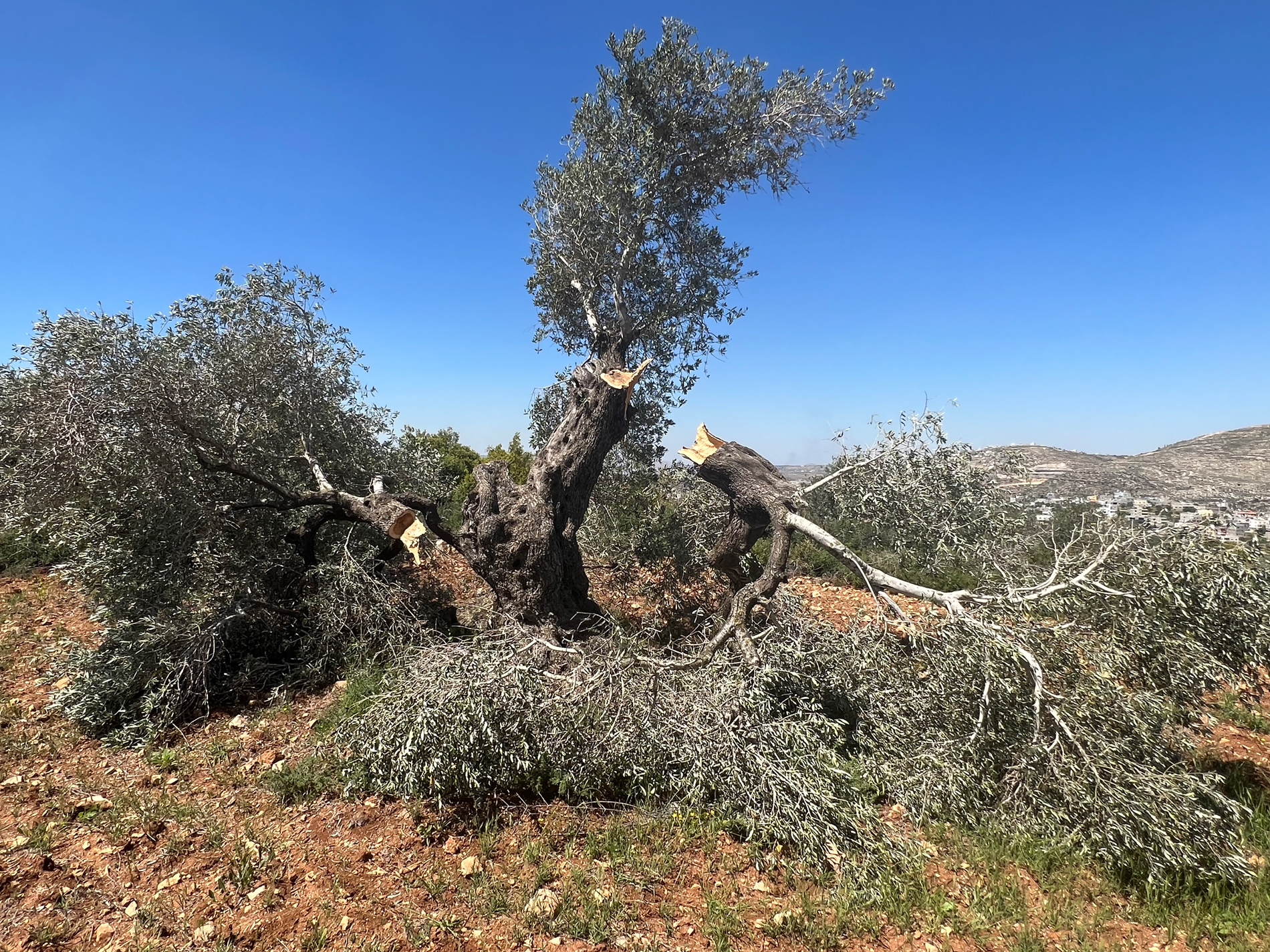
Israeli occupation forces uprooted hundreds of olive trees last Monday in the Wadi al-Hummus area near the town of Dar Salah and the village of al-Khas, east of Bethlehem, according to a local activist.

Activist Nidal Hazibi told WAFA that Israeli forces bulldozed nearly 50 dunums of land in the al-Buq‘a site of Wadi al-Hummus, uprooting hundreds of olive trees over 60 years old belonging to Palestinian residents of Bethlehem and the Sur Baher area, in addition to several forest trees.

Approximately a week ago, Israeli forces stormed the area and created an opening in the separation wall to facilitate upcoming land leveling.

According to the Colonization and Wall Resistance Commission, Israeli forces and colonists carried out a total of 1,965 attacks during February, in continuation of the ongoing series of terrorism by the occupying state against the Palestinian people and their property. Of these, the Israeli army carried out 1,454 attacks, while colonists carried out 511 attacks, primarily concentrated in the following governorates: Hebron (421 attacks), Nablus (340), Ramallah and al-Bireh (320), and Jerusalem (210).

The commission said that the attacks included direct physical assaults, the uprooting of trees, the burning of fields, the seizure of property, and the demolition of homes and agricultural structures. At the same time, vast tracts of Palestinian land remain inaccessible due to restrictions imposed by Israeli forces under the pretext of security, while colonists are allowed to expand into these areas.

  • CrossFireArabia

    CrossFireArabia

    Dr. Marwan Asmar holds a PhD from Leeds University and is a freelance writer specializing on the Middle East. He has worked as a journalist since the early 1990s in Jordan and the Gulf countries, and been widely published, including at Albawaba, Gulf News, Al Ghad, World Press Review and others.

    Related Posts

    Iran Fools Israel With Inflatable Tanks

    Posted by Reza Samo

    Iran again fooled Israel with a surprisingly simple military trick.

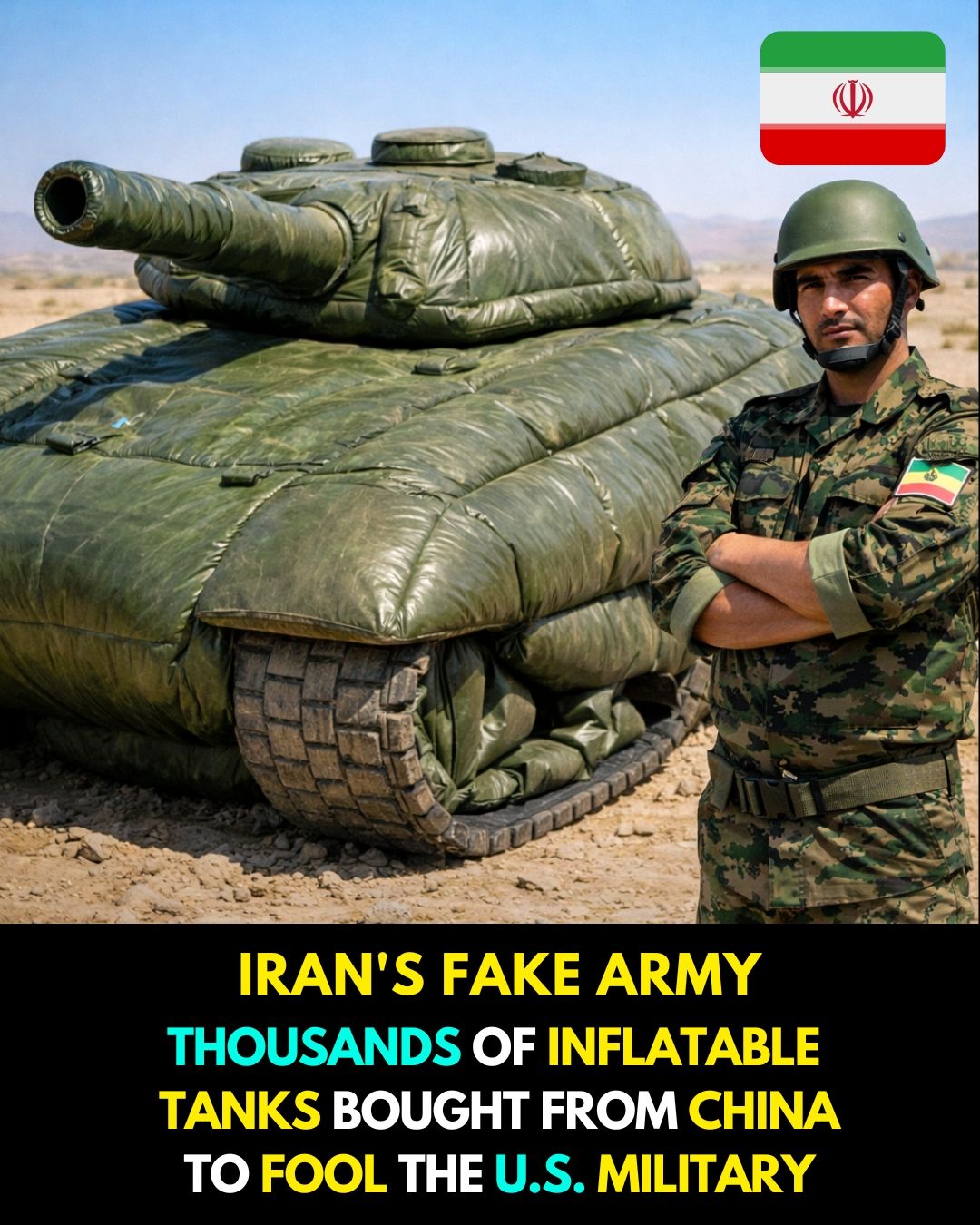
    Military decoys have been used for decades, but Iran appears to be taking the tactic to a new level. Reports suggest Tehran has purchased thousands of inflatable tanks, fighter jets, and missile launchers—many reportedly sourced from China—to mislead enemy surveillance and airstrikes.

    The strategy is straightforward but effective: create realistic-looking targets that draw enemy fire away from real military assets. In some cases, it could mean forcing an opponent to spend a $2 million precision missile on a $500 inflatable decoy.

    These fake systems are designed to look convincing from satellite imagery, drones, and even certain radar systems. From a distance, they can appear nearly identical to real armored vehicles or missile platforms, making it difficult for attackers to immediately distinguish between genuine and fake targets.

    According to some reports, the tactic may already be complicating targeting decisions during the conflict. By flooding the battlefield with decoys, Iran could potentially increase the cost of airstrikes for its adversaries while protecting its actual equipment from destruction.

    Continue reading
    Israeli War on Lebanon Displaces Around 700,000

    It has been just over a week since the new escalation in conflict started on 2 March, when Israeli evacuation warnings to residents of more than 53 villages and densely populated areas in Lebanon and intensified airstrikes forced families across Lebanon to flee within minutes. Lives have been upended on a massive scale.

    According to the authorities, as of today, more than 667,000 people in Lebanon have now registered on the government’s online displacement platform – an increase of over 100,000 in just one day – and numbers continue to rise.

    Around 120,000 of the displaced are sheltering in government-designated collective sites, while many others are staying with relatives or friends, or are still searching for accommodation. Many – often displaced for the second time since the hostilities in 2024 – fled in a rush with almost nothing, seeking safety in Beirut, Mount Lebanon, northern districts and parts of the Bekaa.

    During a visit yesterday to a shelter in Beirut, I met a woman in her 90s who had lost 11 members of her family during the 2024 attacks. She is now displaced again, staying in the same school that was turned into a shelter. Stories like hers illustrate the fear, uncertainty and repeated trauma families are facing.

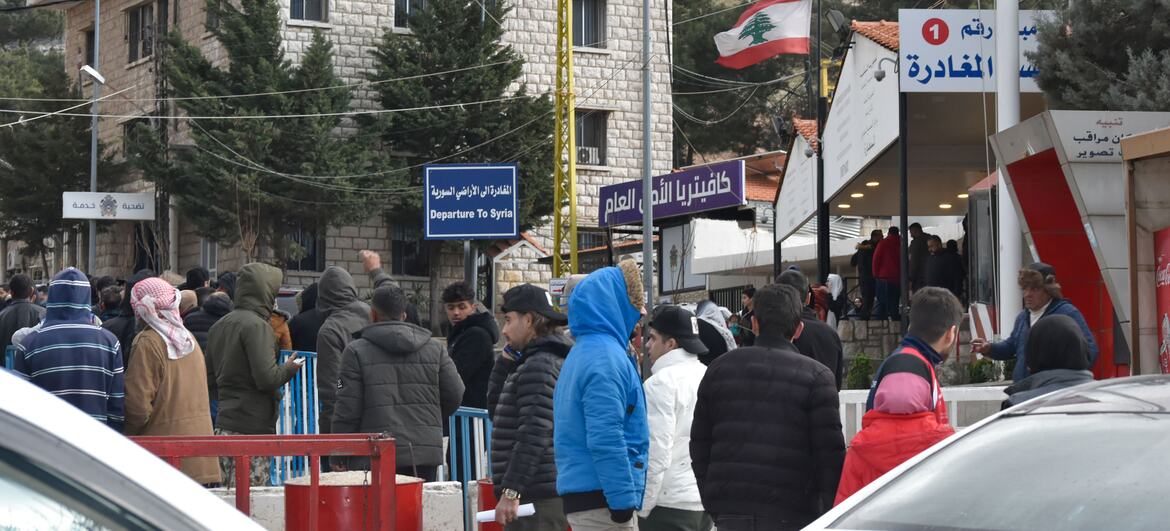
    We are also seeing urgent movements into Syria. According to Syrian authorities, more than 78,000 Syrians have entered from Lebanon since the escalation began, and over 7,700 Lebanese. Among them are Syrian refugees who had been planning to return home in the coming months, and others who now rushed to return due to the current escalation. UNHCR teams are present at Syrian border crossings alongside authorities and partners to support those arriving with essential relief.

    In Lebanon, since day one, UNHCR has supported the government and local authorities in responding to the crisis. To date, we have delivered around 168,000 emergency items to more than 63,000 displaced people across over 270 government-designated collective shelters. These include mattresses, blankets, sleeping mats, sleeping bags, solar lamps, and jerry cans, helping displaced families meet their most urgent needs.

    To ensure this critical assistance reaches as many displaced people as quickly as possible, UNHCR is dispatching relief items from our warehouse to the collective shelters through multiple channels: through national and international NGO partners, as well as through municipal authorities and partners like the Lebanese Red Cross, ensuring fast, coordinated support, even in hard‑to‑access areas where some families remain.

    I have seen first-hand over the past week how this volatile situation and displacement also trigger fear and emotional trauma. Children and adults alike, including many older people, are in shock and fear. UNHCR, through community centres, outreach volunteers and protection partners, is providing psychosocial support, identifying people at heightened risk, reuniting separated children with families, and assisting people with disabilities. – Reliefweb

    At the current pace of displacement, we are working hard to replenish our country-level stocks of essential items, but UNHCR’s operation in Lebanon is currently only 14 per cent funded. Fast and sustained international solidarity is critical to enable us to support the Lebanese Government and authorities in responding to the emerging needs. Every day this conflict continues, more suffering is inflicted on hundreds of thousands of civilians, while Lebanon and the region are further destabilized.

    Civilians must be protected at all times, and safe, unhindered humanitarian access must be guaranteed so aid can reach those who need it most.

    For more information, please contact:

    Continue reading

    Leave a Reply

    Your email address will not be published. Required fields are marked *

    You Missed

    Israel Uproots 100s of Olive Trees in Palestine

    Israel Uproots 100s of Olive Trees in Palestine

    ‘This War is Not Hours’

    ‘This War is Not Hours’

    Ali Larijani: The Behind Iran’s War

    Ali Larijani: The Behind Iran’s War

    Iran Fools Israel With Inflatable Tanks

    Iran Fools Israel With Inflatable Tanks

    Israeli War on Lebanon Displaces Around 700,000

    Israeli War on Lebanon Displaces Around 700,000

    What Hold Does Netanyahu Have on Trump?

    What Hold Does Netanyahu Have on Trump?