Israeli Army Turns to Teachers to Plug Shortage

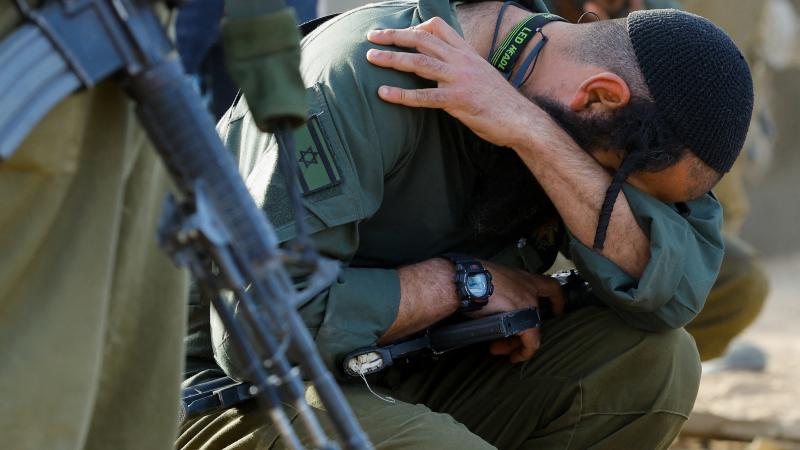
The Israeli media reported the occupation army is resorting to summoning hundreds of school teachers in Israel to serve in its army to address its manpower crisis in light of the acute shortage in the number of soldiers after thousands of them were killed and wounded in the Gaza and Lebanese battles.

The Hebrew Ynet website showed in recent months, the army recruited hundreds of teachers in schools to serve in its ranks and pushed in  repeated rounds of fighting in Gaza and Lebanon.

It added this measure has “put schools in Israel in great distress, leading to the cancellation of classes with schools appearing empty and students not finding anyone to help them.”

It pointed out in an attempt to fill the classes, invitations and appeals have been sent to retired teachers, parents and graduates – to enter the classrooms.

 “A large number of our best teachers have been called up for reserve service, and we are trying to help administrators in their distress, which is why we have turned to retired teachers, parents and school graduates who are willing to dedicate a few hours to replace teachers on the front lines,” Rabbi Rafi Maimon, director of the Amit school network, told Ynet.

“We are facing a major challenge here, and in my opinion, the army must take into account the situation and understand that teachers have a vital role. For more than a year, students have been studying in a shaky reality,” he added.

He pointed out the war on the Lebanese and Gaza fronts exacerbated the IDF’s crisis, due to the severe shortage of manpower and following the heavy losses it suffered in soldiers and officers in the ground battles, which requires the immediate recruitment of thousands of soldiers.

To avoid this predicament, the now-dismissed Defense Minister Yoav Galant had announced the recruitment of 7,000 ultra-Orthodox Jews, starting next week, which threatened to dismantle Benjamin Netanyahu’s government coalition, who was quick to sack him. Galant was replaced by Foreign Minister Yisrael Katz, who has no military background.

The Israeli occupation army, supported by the United States and Europe, continues its aggression on the Gaza Strip for the second year, where its warplanes bomb hospitals, buildings, towers and homes of Palestinian civilians and destroy them over the heads of their residents, and prevent the entry of water, food, medicine and fuel.

The Israeli aggression left about 146,000 Palestinian martyrs and wounded, most of them children and women, and more than 10,000 missing, amid massive destruction and famine that killed dozens of children and elderly people, in one of the worst humanitarian disasters in the world according to Jordan24.

CrossFireArabia

CrossFireArabia
Dr. Marwan Asmar holds a PhD from Leeds University and is a freelance writer specializing on the Middle East. He has worked as a journalist since the early 1990s in Jordan and the Gulf countries, and been widely published, including at Albawaba, Gulf News, Al Ghad, World Press Review and others.

Related Posts

Hormuz Strait in The Checkered Ceasefire

Re-opening the Strait of Hormuz would bring vital relief for many economies, but developing countries will continue to grapple with increased food and fuel costs, according to a new UN report released on Tuesday.

Following the shaky ceasefire in the US and Israeli war with Iran, commercial shipping through the strait quickly began to rebound in mid-June, but has slowed in recent days as Washington and Tehran have exchanged strikes in the region.

Iran has reportedly rejected an effort by France and Oman to remove mines from the strait and safeguard international trade as well as a suggestion by the UN’s International Maritime Organization (IMO) to open a new shipping lane off the coast of Oman.

While the report from the UN Trade and Development agency (UNCTAD) expects oil shipments to recover, it warns that freight contracts, supply chains and food systems would take longer to adjust and that high food costs could contribute to acute malnutrition in developing countries.

Vulnerable economies bear the brunt

Higher energy prices fuel higher transport costs, agricultural costs and inflation, which increases food prices long after the initial shock, UNCTAD noted.

Small island countries like Cabo Verde and Micronesia depend heavily on food and oil imports, which creates a “dual exposure” to shocks, making them especially vulnerable to price increases, UNCTAD said.

The agency estimated that 61 vulnerable economies are exposed to both oil and cereal import shocks.

Developing countries and small island States also tend to have tighter public finances and therefore less ability to absorb shocks, according to UNCTAD.

If these countries face difficulties mobilising resources, a heavy debt servicing burden, a drop in remittances or a decline in international aid, trade shocks could affect small nations even more.

Impact on food security

Beyond economic impacts, UNCTAD warned that although it is necessary to fully re-open the strait, food production risks remain.

Even short periods of unaffordable food in import-dependent countries can have lasting consequences for child wasting, meaning that a child has a low weight-for-height.

As real food prices increase by five per cent, the risk of child wasting increases by 15 per cent for poor children and 26 per cent for children of rural, landless poor households.

The report called for greater international support to help countries manage higher import costs, cushion food and fuel price shocks and strengthen their ability to cope with future trade disruptions.

“These shocks will be felt for many months, with developing countries bearing the heaviest impacts. I call on all parties to honour the ceasefire and redouble efforts,” UN Secretary-General António Guterres said. UN News

Continue reading
Media Cries Foul: CBJ Removes 20 Martyred Palestinian Journalists From its Records

The ‘Palestinian Journalists Bloc’ states that it is condemning with anger the decision by the Committee to Protect Journalists (CBJ) to amend its definition of who qualifies as a journalist, and which resulted in the removal of martyred Palestinian journalists from its records. Journalists say this decision is a dangerous precedent and a professional and ethical violation, providing the Israeli occupation with further cover to justify its crimes against Palestinian journalists.

In a statement received by Quds Press, Wednesday evening, the Bloc added that the Committee based its decision on Israeli allegations claiming that some Palestinian journalists are affiliated with military entities, despite the absence of any legal or professional evidence to substantiate these claims. It pointed out the CBJ, in contrast, ignored its own established standards for dealing with journalists in other countries who accompany their militaries or work for media outlets affiliated with their governments, without revoking their journalistic status. This, according to the statement, is a double standard and a targeting of Palestinian journalists.

The Palestinian journalists note the committee’s announcement of removing 20 names from the list of martyred Palestinian journalists, while offering explanations for only eight of them, raises serious questions about the basis for its decision and undermines its credibility as a body that is supposed to defend press freedom and protect journalists, not adopt the narrative of the occupying power.

The bloc emphasized that the martyred Palestinian journalists were performing their professional duty of reporting the truth and documenting the genocide committed against the Palestinian people. It stressed that the removal of their names from the committee’s records does not negate their journalistic status, erase the truth, or absolve the Israeli occupation of its responsibility for deliberately targeting and killing them.

The bloc warned that this step constitutes a dangerous precedent that could open the door to justifying the targeting of journalists in conflict zones based on political claims, thus undermining the principle of international protection for journalists and weakening efforts to combat impunity.

And hence, the Palestinian bloc is demanding that the CBJ’s board of directors immediately reverse its decision and reinstate all Palestinian journalists killed in action on its official lists, and issues an apology for this bias, which is damaging the credibility and mission of the committee.

It is calling on the international press and human rights organizations and media unions to reject the latest decision, adhere to unified professional standards in dealing with journalists, and work to hold the Israeli occupation accountable for its crimes against Palestinian journalists, instead of adopting its narrative.

The bloc concluded its statement by affirming that the blood of Palestinian journalists will remain a testament to the truth, and that all attempts to erase their sacrifices or strip them of their professional status will fail.

This statement was translated from a report translated from Quds Press and appeared in crossfirearabia.com

Continue reading

You Missed

Hormuz Strait in The Checkered Ceasefire

Hormuz Strait in The Checkered Ceasefire

Media Cries Foul: CBJ Removes 20 Martyred Palestinian Journalists From its Records

Media Cries Foul: CBJ Removes 20 Martyred Palestinian Journalists From its Records

UN: Israeli Expansion Risks Civilians

UN: Israeli Expansion Risks Civilians

Israel Demolishes House Near Bethlehem

Israel Demolishes House Near Bethlehem

‘We Will Win’

‘We Will Win’

Israel Kill Palestinian Goalkeeper Saleem Al Ashqar

Israel Kill Palestinian Goalkeeper Saleem Al Ashqar