Israeli Kills 6-Member Family As They Slept

Story by Abdel Qader Sabbah, Mohamed Ahmed, Sharif Abdel Kouddous, and Jawa Ahmad

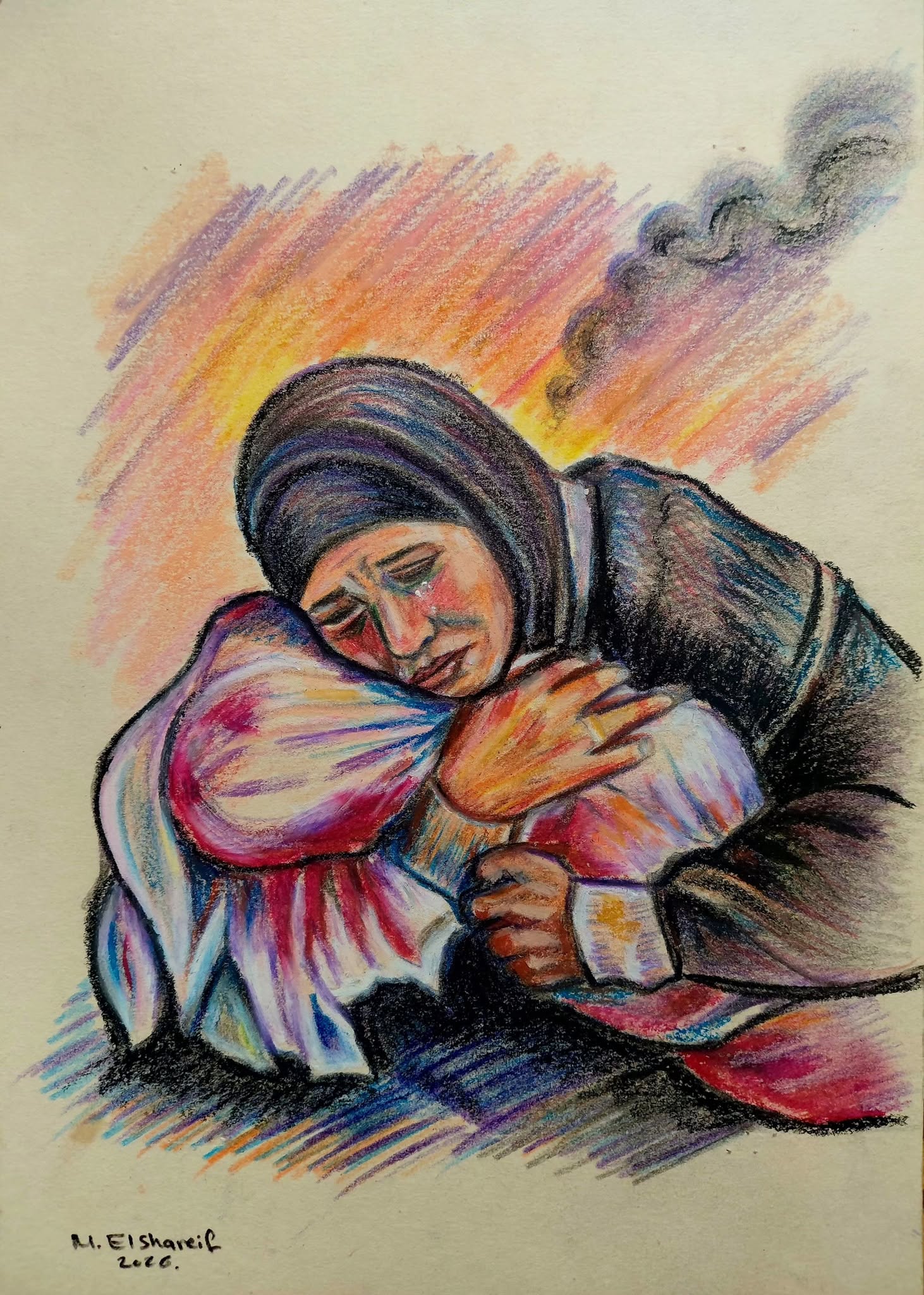
GAZA CITY—The charred shell of the Al-Masri family home in the Sabra neighborhood of Gaza City was still smoldering on Tuesday afternoon, hours after the Israel military bombed it, killing Firas and Salsabeel al-Masri and their four children—Faryal, Salma, Amira and Naim—as they slept.

The airstrike came without warning in the middle of the night, destroying the upper floor of the simple two-story structure and setting it ablaze. “We were asleep in the middle of the night, at around 2 a.m. or so, when we heard a huge explosion,” Abu Youssef Al-Masri, the children’s grandfather, told Drop Site as he stood in front of the partially collapsed home. “We realized the house had been struck. The house collapsed and caught fire.”

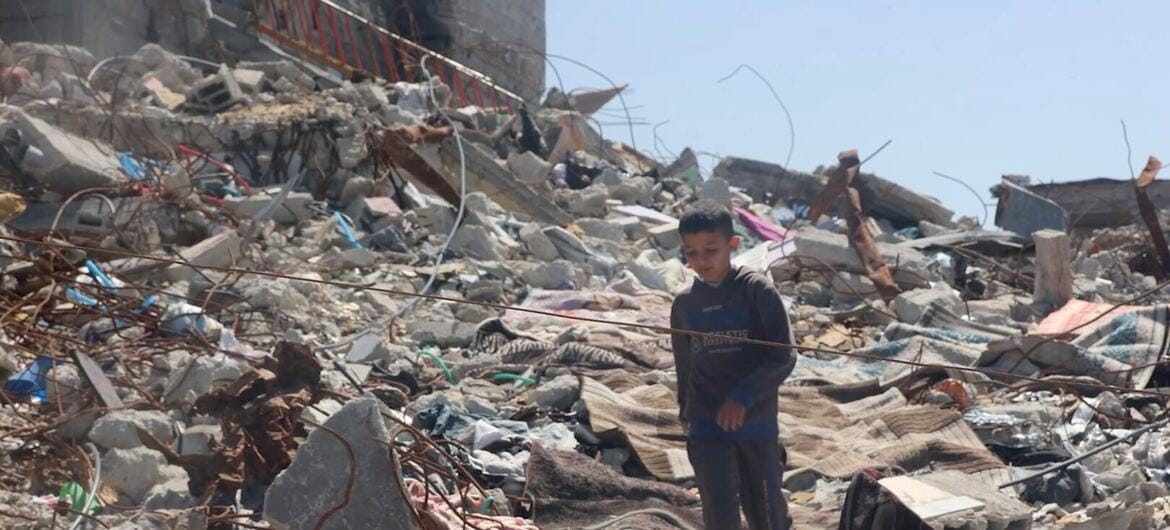
The fire spared nothing inside, family belongings burnt to ash lay among broken cinder blocks, the walls that remained standing blackened with soot.

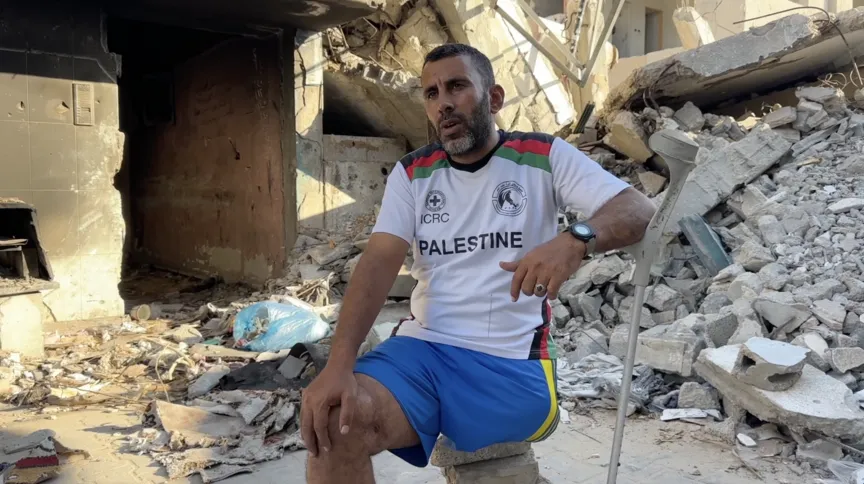
“The house burned completely. It was my brother’s home—he, his wife, and their four children. Burned until it was charred. My brother’s entire family has been erased,” Mohammed Al-Masri, the brother of Firas, said. “They burned before our eyes and we couldn’t do anything.” He spoke standing at the graveyard where the family of six were buried on Tuesday afternoon.

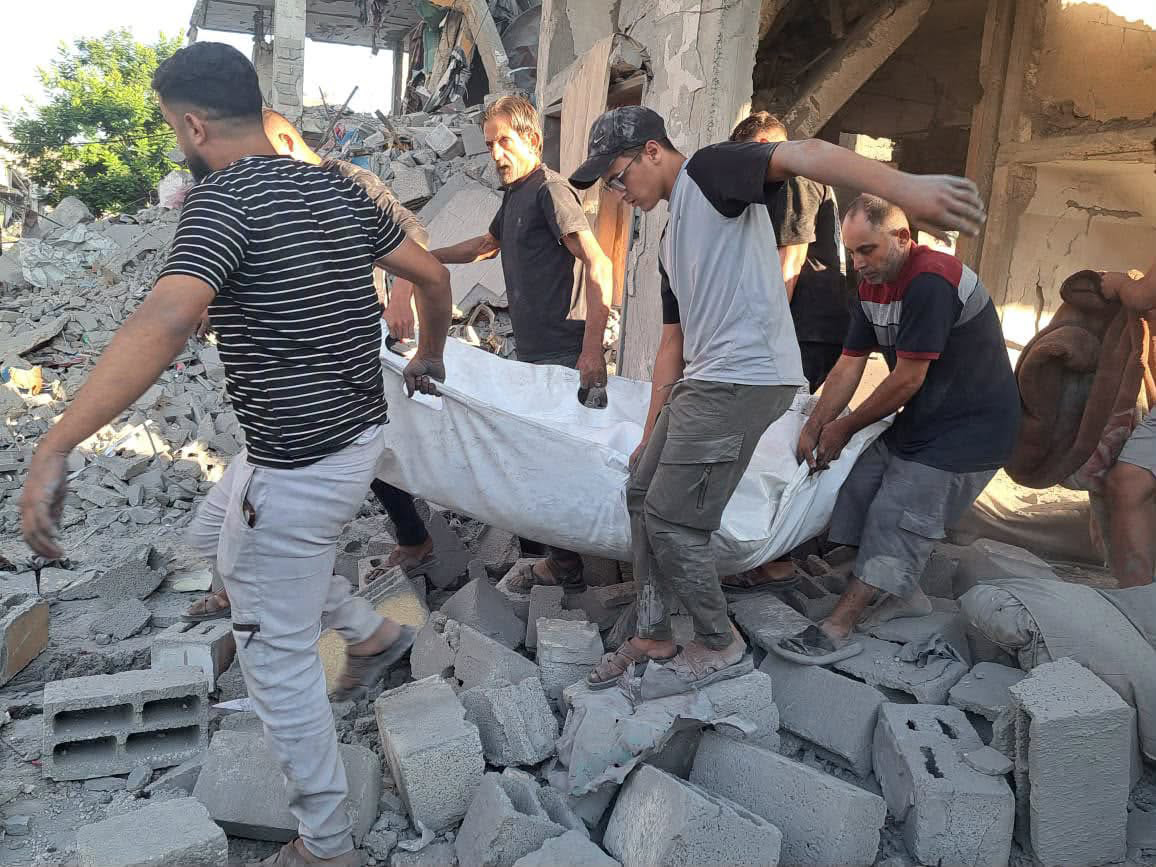
The bodies were carried by relatives wrapped in white shrouds through the rubble-strewn cemetery to be laid to rest. Abu Youssef stood in the middle of the shallow graves and placed the small body of his granddaughter, Amira, next to her mother as Israeli drones buzzed incessantly overhead. “The whole world is watching us,” Mohammed said. “There is no ceasefire in effect, the war hasn’t stopped, and no one cares about us.”

The attack on Tuesday came amid a particularly brutal and escalated Israeli assault across Gaza over the past several days as the world’s attention has been distracted by the renewed U.S. war with Iran. Daily airstrikes, shelling, quadcopter attacks, and shootings have targeted residential buildings, tent encampments, civilian vehicles, a funeral procession, a police station, and a hospital-turned-shelter, killing dozens of Palestinians across the enclave over the past week alone. At the same time, Israeli ground troops have been pushing further into Gaza, steadily extending the “yellow line” westward, taking more land, and driving the Palestinian population onto an ever-shrinking territory.

“It’s not simply that the resumption of the war in Iran provides cover, it’s also the fact that the war has largely been a failure from an Israeli perspective, and the Israeli state will look to compensate for this failure elsewhere before a new regional balance takes shape,” Nasser Abourahme, a professor of Middle Eastern and North African Studies at Bowdoin College, told Drop Site. “It’s most important to remember that the genocide itself has both stalled and never stopped. For all the horrific and unprecedented destruction and death, Israel hasn’t yet achieved any of its core aims: the ethnic cleansing of the Strip, the disarming of the resistance factions, or the resettlement of the Strip.”

The latest killing spree has brought the Palestinian death toll in Gaza since a so-called ceasefire went into effect in October 2025 to 1,180—including over 250 children—with 127 being killed in the first three weeks of July. Over 3,800 have been injured. The total recorded death toll since Israel launched its genocidal assault in October 2023 is now over 73,300 killed, with nearly 174,000 injured, according to Gaza’s health ministry.

On Monday, an Israeli airstrike slammed into the Al-Yemen Al-Saeed Hospital building in the Jabaliya refugee camp, killing at least four people and wounding several more. Like many hospitals in Gaza, the facility entirely ceased functioning during the war and is instead being used primarily as a shelter for displaced Palestinians.

“I went out to visit my friend near Al-Yemen Al-Saeed and suddenly there was a very large explosion, two consecutive explosions,” Youssef Akasha, an eyewitness who was just meters away from the attack, told Drop Site as he stood outside Shifa Hospital in Gaza City where the dead and wounded were being brought. Bloodied children were carried out of ambulances while bodies wrapped in blankets were put on gurneys. “The children were having fun, playing football, and suddenly they started screaming. We went directly to Al-Yemen Al-Saeed…we found the place destroyed and children were lying on the ground, women screaming, and men running to rescue the wounded.”

One of the worst attacks came on Friday, when Israel bombed a funeral procession outside the Ahmed Yassin Mosque in the Nuseirat refugee camp in central Gaza, killing at least eight mourners as they gathered to bury a man killed just hours earlier. Bodies lay strewn on the blood-soaked ground. One man was blown in half, his legs torn off his body as crowds of people screaming on the street tried to rescue the wounded. At Al-Awda hospital, injured children lay wide-eyed and silent on hospital beds as doctors rushed to treat them. One man knelt and embraced a bloodied corpse lying on a gurney, unable to let go.

“It was a very big attack and there was a large number of martyrs,” Medhat Saleh, an eyewitness who was wounded in his right arm, told Drop Site. “We couldn’t have imagined they would bomb a funeral of this size. Many children, women, and men…A massacre in every sense of the word. The people were piled on top of each other, torn apart.” He continued, “It’s gotten much, much worse. In recent days, this has become a daily occurrence.”

The UN High Commissioner for Human Rights, Thameen Al-Kheetan, made note of the escalated Israel assault in a statement on Tuesday. “The Israeli military has intensified its attacks in Gaza in recent days, killing and injuring dozens of Palestinians—children, women and men…Nine months after the announcement of a ceasefire, still, nowhere is safe for Palestinians in Gaza,” Kheetan said, noting that the UN had documented 57 Palestinians killed between July 13 and July 20 alone. “Meanwhile, the Palestinian population in Gaza remains trapped in an ever-shrinking area, with the ‘yellow line’ constantly being moved westwards by the Israeli occupying power, presenting a continuous threat to life as the Israeli military appears to routinely fire on Palestinians for mere presence in the vicinity of that line…The violations, the suffering and the misery that continue to be imposed on the Palestinians in Gaza cannot be ignored.”

As part of the October 2025 agreement, Israeli troops withdrew to the “yellow line,” a boundary running roughly parallel to the coastline and cutting off large swathes of north and south Gaza, that gave Israel control of 53% of the enclave. The move was supposed to mark the beginning of an eventual phased withdrawal back to a “buffer zone” at the border with Israel. Yet over the past nine months, the Israeli military has instead steadily pushed further westward in areas along the yellow line, taking more Palestinian land and placing yellow concrete blocks in some places to indicate their new line of control, which is now estimated to encompass closer to 70% of Gaza, according to Israeli military officials.

“The escalation of the killing, the expansion of the so-called yellow line in new land grabs, and the agitation of politicians and the settler movement for renewed Jewish settlement in Gaza all point to the fact that Israel’s endgame remains the ethnic cleansing of Gaza and its full conquest one way or another,” Abourahme said. “At the end of the day, the so-called ceasefire didn’t stop the genocide, it only modulated its tempo and intensity.”

For the past several days, Israeli ground troops have launched a sustained attack on areas near the Zeitoun neighborhood in Gaza City, including aerial bombing, shooting, and shelling attacks, razing land with bulldozers, and issuing displacement orders to force residents to flee their homes and shelters and drive them eastward.

“Today, they moved the yellow line here. The day before, they bombed the area, so we left. We spent one more night at home, then we had to leave,” Umm Salem Dawla, a resident displaced from the area, told Drop Site. “We gathered our belongings and left them at the camp. I keep saying I’ll go and sit by the cemetery. What can I tell you? What kind of life is this?”

On Wednesday, the troops pulled back and residents in the area found yellow concrete blocks placed at the Dawlah junction on Salah al-Din street—the main north-south thoroughfare running the length of the enclave.

“The Israelis started shelling the area, tanks started firing at us and at our home so we fled because the situation was extremely difficult…the tanks are always visible in the street, firing at our homes, and the quadcopters are constantly overhead. They don’t leave us alone. Twenty four hours a day there is shelling and gunfire,” Assem Dawla, another displaced resident of Zeitoun, said. “As you can see, we’re now taking out our belongings and leaving because the occupation has advanced the yellow line to Salah al-Din street. There is no longer any possibility of life here. Life in Zeitoun has been wiped out. There is no hope left and no way to live here anymore.”

The Israeli military’s encroachment to the Dawlah junction in effect prevents Palestinians in this area of Gaza City from accessing Salah al-Din road and the rest of the enclave further south.

“My fear is that all of Gaza will end up inside the occupation’s new boundaries. Netanyahu is now talking about taking 67% to 70% of the Gaza Strip, but I believe he wants to control all of it. There won’t be anywhere left for us. We’ll all be living under the control and domination of the Israeli army,” Dawla said. “The war is not over. We’re still living in a state of fear, greater even than when the war was ongoing.”

Sami Vanderlip edited the videos for this report.

Related Posts

Israel Punishes Britain, a State that Led to its Creation

By Naela Alwaari

On 8 September 2026, the British government announced that it considers the continued Israeli occupation of the Palestinian territories to be illegal, and that it would prohibit the import of products from illegal settlements, ban the promotion of settlement properties in Britain, and take measures against individuals and companies that support, facilitate, or benefit from settlement activity. It also imposed sanctions on extremist settlers who supported or participated in acts of violence against Palestinians.

The British government went further than in its previous positions when it agreed to describe what is taking place in parts of the West Bank as the ethnic cleansing of Palestinians by settler groups, amid the silence of the Israeli government or the support of some of its members for acts of forced displacement.

This position, however, came after a long period of British silence and inconsistent positions toward Palestinian suffering, particularly during the war on Gaza, when British policies and measures failed to correspond to the scale of the killing, starvation, displacement, and destruction inflicted upon the Palestinian people. The significance of the current step therefore does not erase that history, nor does it absolve Britain of its political and moral responsibility for what has happened, and continues to happen, in Palestine.

Israel’s response was swift and angry. It announced the closure of the British Consulate-General in East Jerusalem and the termination of several forms of cooperation with Britain. The decision to close the consulate was not merely an administrative measure, but a clear political punishment for London’s move—albeit a partial one—from statements of condemnation to measures that directly affect the settlement project and the interests of those who support it.

The deeper irony is that Israel is today punishing the very country whose consulate historically played a role in protecting Jewish immigrants, before Britain, during the Mandate period, went on to sponsor the Zionist project and create the political and administrative conditions for its establishment in Palestine.

Yet the significance of this development goes beyond the fate of the consulate itself. Britain, together with other Western countries that contributed to the formulation and protection of the Zionist project, is beginning to confront the consequences that resulted from it. The entity whose establishment was celebrated as a solution to the Jewish question in Europe was created on the land of another people. Its successive policies subsequently revealed an expansionist settler-colonial character that did not stop at the borders of 1948 or 1967, but extended to the confiscation of land, demolition of homes, expansion of settlements, and displacement of the Palestinians—the owners of the land and its indigenous inhabitants.

To understand the significance of Britain’s present position, it is necessary to return to the beginnings of the British presence in Palestine. British interest in Palestine emerged during the first half of the nineteenth century, within the context of European competition over the Ottoman Empire and its possessions, particularly Greater Syria. The system of foreign privileges granted European powers opportunities to expand their commercial, religious, and political activities, while giving their consuls considerable scope to intervene and provide protection to individuals and communities associated with their respective countries.

On 11 November 1837, British Foreign Secretary Lord Palmerston sent a letter to the British ambassador in Istanbul, Lord Ponsonby, explaining the importance of appointing a British consul in Jerusalem. Following negotiations with the Ottoman Empire, an imperial decree was issued in 1838 establishing the consulate, and William Young was appointed Britain’s first consul in the city.

This occurred shortly before the London Conference of 1840 and the resulting changes in the regional balance of power, including the end of the rule of Muhammad Ali and Ibrahim Pasha in Greater Syria. From that period onward, European influence—and British influence in particular—expanded in Palestine through consulates and religious, commercial, and exploratory missions.

The choice of Jerusalem was not arbitrary. Britain sought a foothold in a city of exceptional religious and political importance, as well as a centre from which to protect its interests and receive its citizens and visitors, while supporting and expanding the Protestant presence. The activities of the consulate, however, went beyond these objectives to include the sponsorship and protection of Jews, particularly those arriving from Russia and Eastern Europe.

The documents on which I relied in my book, The Role of Foreign Consulates in Jewish Immigration and Settlement in Palestine, 1840–1914, reveal that British consuls in Jerusalem, during the period preceding the Balfour Declaration, received instructions to extend British protection to Jews, assist their immigration, and increase the number settling in Jerusalem.

British Consul James Finn expanded this policy even further. He received at the port of Haifa ships carrying immigrants from Europe. The consulate prepared special files on Russian Jews, counted their numbers, registered them in separate records, and worked to bring them under British consular protection.

This protection was not confined to legal matters. It extended to improving their living conditions, facilitating their permanent settlement, and granting some of them travel documents or a legal status connected with Britain. The consulate was therefore not simply a neutral observer of Jewish immigration; it played a role in providing political and legal cover for it.

The British presence assumed other forms as well. In the 1870s, Britain dispatched a technical mission that conducted an extensive survey of the territory of Palestine from north to south. These surveying and exploratory activities were not separate from colonial competition. They provided detailed knowledge of the land, population, roads, and resources—knowledge that subsequently acquired political, military, and settlement-related value.

The Balfour Declaration of 1917 was therefore not the sudden beginning of an entirely new British policy. Rather, it represented the culmination of a long trajectory that preceded the emergence of the Zionist movement as a global political organisation. The protection, encouragement, and facilitation of immigration undertaken by the British consulate during the 19th century helped prepare the political and legal ground for Britain’s subsequent position.

With Britain’s occupation of Palestine and the subsequent imposition of the Mandate, London no longer needed to pursue its policy through the window of a foreign consulate. Britain itself had become the ruling and administrative authority, and its role shifted from indirect consular protection to the official sponsorship of the Zionist project.

The Mandate for Palestine obliged Britain to create the conditions necessary for the establishment of the “Jewish national home.” Article 6 stipulated the facilitation of Jewish immigration and encouraged the settlement of Jews on the land, including state lands and lands not required for public purposes. The initiatives that had begun with consular protection were thus transformed into official policies implemented by the Mandate authorities through their administrative, legislative, and security institutions.

What Britain today describes as ethnic cleansing is not an event disconnected from the past. Rather, it is an extension of a logic that began with protected immigration and organised settlement, and subsequently developed into the continuing uprooting of the indigenous population and their replacement by settlers.

Nevertheless, Britain’s latest position should not be given more significance than it warrants, nor should it be regarded as a rupture with Israel or a complete reversal of British policy. The British Embassy remains in Tel Aviv, and political, commercial, and security relations between the two countries continue. This may be a positive political step, but it has not, so far, reached the level of a strategic transformation in British policy toward Israel and the Palestinian question.

The British government itself has stressed that its measures target settlements and the economic activities associated with them, rather than Israel itself, and that it remains committed to maintaining trade as well as academic, scientific, and investment relations with Israel. It has also declared its opposition to the Boycott, Divestment and Sanctions movement (BDS).

The step should therefore be viewed with both a degree of welcome and caution: Welcome because it moves opposition to settlement activity beyond words toward certain practical measures; caution because it does not mean that Britain has decided to sever its relationship with Israel or undertake a comprehensive reassessment of its historical policy.

We, as Palestinians and Arabs, are often quick to celebrate any international position that challenges Israel, because of our sense that the world has left the Palestinians alone for far too long. Experience, however, teaches us not to build great hopes upon a single step, and not to rely excessively on a position that may change with governments, elections, and in response to the crimes committed against the Palestinian people.

The real measure is not speeches or angry Israeli reactions, but whether these measures continue, expand, and are transformed into a permanent and binding policy that holds the occupation accountable for settlement activity, displacement, and crimes committed against the Palestinian people.

Any international shift derives its significance not from the degree of Israeli anger it provokes, but from the extent to which it provides genuine protection for the rights of the Palestinian people on their land.

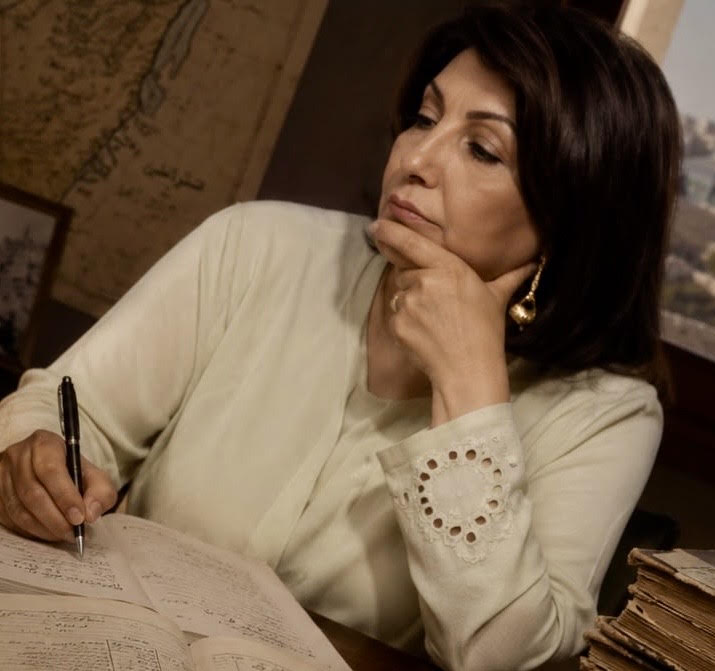
This article was originally written in Arabic and appeared in Akhbar Al Baled in Jerusalem. Dr Naela Alwaari is a historian and an expert researcher on Palestinian affairs with particular focus on Jerusalem anf has written many books on the subject. This article appears in crossfirearabia.com

Continue reading

You Missed

Pain…

  • By marwan
  • September 10, 2026
  • 12 views
Pain…

Israel Punishes Britain, a State that Led to its Creation

  • By marwan
  • September 10, 2026
  • 16 views
Israel Punishes Britain, a State that Led to its Creation

Battle for Hormuz: How Iran Found America’s Achilles Heel

  • By Heba
  • September 10, 2026
  • 17 views
Battle for Hormuz: How Iran Found America’s Achilles Heel

Palestinians Slam Adidas For Pro-Israel PR Campaign

  • By Heba
  • September 10, 2026
  • 9 views
Palestinians Slam Adidas For Pro-Israel PR Campaign

The Other Exodus: How War, Politics and Insecurity Are Driving Israelis Abroad

The Other Exodus: How War, Politics and Insecurity Are Driving Israelis Abroad

Israel Strikes at House, Kills Family of Four

  • By Heba
  • September 10, 2026
  • 21 views
Israel Strikes at House, Kills Family of Four