Israel’s Economy Sinks as Gaza War Deepens

The Israeli economy is in the doldrums, going from bad to worse because of the country’s war on Gaza. The recent shock is the fact that the US technology giant Intel  has halted the construction of its new $25-billion factory in Israel as reported by Anadolu.

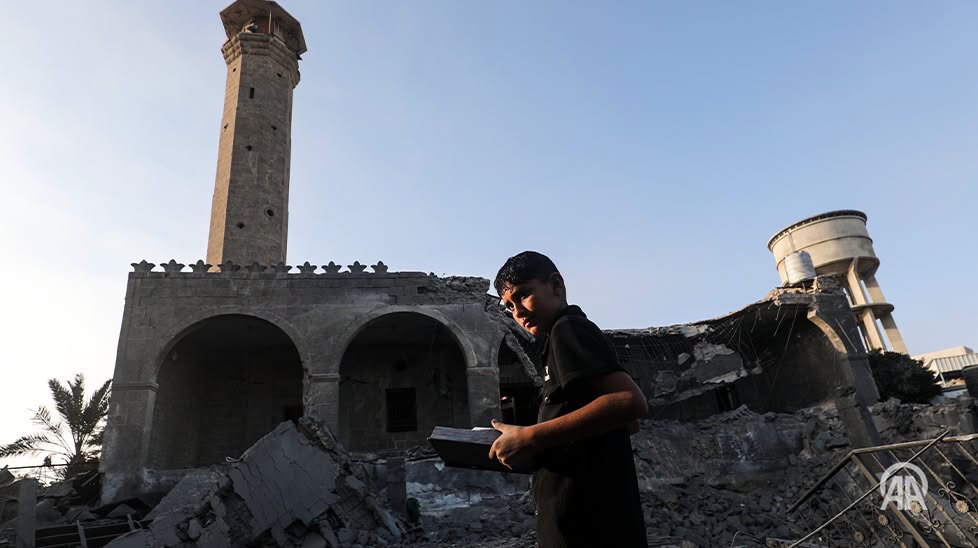
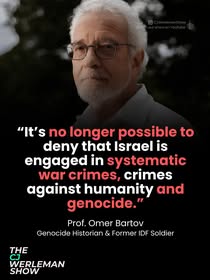
The Israeli genocide has reflected badly on its economy in the last eight months. The massive war on the Gaza Strip has basically created an economic slump and a recession. It would take years for Israel to recover from.

Economic growth has shrunk by 20 percent in all economic sectors with construction and tourism taking the lead part. Thousands of stores are closing with Israeli companies suffering hundreds of millions of dollars. The figures are likely to be higher still today in June.

Israeli products have become so ashamed with the genocide its carrying out in Gaza, that companies are reverting to hiding the Israel tagmark on their products so they can be sold in other countries.

Israel is suffering massive losses from its war on Gaza

to the tune of $750 billion dollars. Around 50 percent of Israeli companies experienced a significant drop in their revenues.

This is because 11 percent of their workforce were called up for military service. And because of this only 37 percent of the Israeli companies operated with fewer than five of their employees in the past two weeks. These figures were up to 4 November, 2023, about one month into the war on Gaza.

So one imagine the economic situation in the country with Israel starting its nine months of war and genocide on Gaza.

As the war started 764,000 workers in the occupied territories in the West Bank and Gaza became unemployed because they were no longer allowed to work in Israel. Palestinian workers form 18 percent of the total workforce in Israel. About 90,000 of these were working in the construction sector that is now at a standstill.

The Houthi naval blockade through Bab El Mandeb registered huge economic losses for Israeli ports. The Eilat Port in south Israel has come to a complete standstill since December 2023 when the Houthis started to target ships carrying goods to Israel.

This immediately resulted in huge economic losses to the tune of $3 billion because it effectively put an to trade with Far East that included China, Japan, South Korea and India.

Eilat was seen as a critical trade port but ships carrying goods to Israel ceased operating to the port in fear that they would be targeted by Houthi missiles.

Quickly however the war on Gaza deepend Israel’s economic crisis. In a Bloomberg report in May, it was revealed economic losses amounted to $16 billion.

The war had created a 6.6 percent deficit in the financial budget which increased by 7 percent of the GDP while spending increased by 36 percent in the first four months of 2024. This was mainly due to the fact that defense expenditure accounted for a third of Israeli spending.

The Israeli Central Bank had estimated that the cost of the Gaza war would be about $64.4 billion but now the figures could well be revised because of the determination by Israeli Prime Minister Benjamin Netanyahu to continue with the conflict for the foreseeable future.

Finally, the Israeli economy is suffering billions of dollars from cyberattacks. The National Cyber Directorate revealed last May that Israel loses $3.3 billion annually because of cyber attacks.

CrossFireArabia

CrossFireArabia
Dr. Marwan Asmar holds a PhD from Leeds University and is a freelance writer specializing on the Middle East. He has worked as a journalist since the early 1990s in Jordan and the Gulf countries, and been widely published, including at Albawaba, Gulf News, Al Ghad, World Press Review and others.

Related Posts

Israel Kills 200 Lebanese Children – UNICEF

More than four children have been killed or injured every day on average in Lebanon in the first 25 days of a temporary ceasefire with families still unable to return to their homes, said Save the Children.

New data from Lebanon’s Ministry of Health on Tuesday showed that 22 children have been killed and 89 injured since the temporary ceasefire started on 17 April. This brings the number of children killed in Israeli strikes since renewed escalation in hostilities in Lebanon on 2 March to almost 200 with about 2,900 people killed.

The violence and renewed displacement orders have forced more than one million people – or one in six of the population – from their homes with many now living with relatives, in host communities or in collective shelters.

The number of families living in collective shelters has increased 5% since the conditional ceasefire due to renewed displacement orders by Israeli forces and as families return home to find destroyed houses and damaged farmland so move back the collective shelters. There are now 44,800 children among about 125,000 people in collective shelters.

Thousands of children have been living in collective shelters for over two months in overcrowded conditions with inadequate water, sanitation and hygiene facilities leading to reports of scabies and growing health concerns.

Parents are reporting widespread behavioural changes among children living in collective shelters due to a lack of routine and reduced school engagement including loss of appetite and trouble sleeping. Many children are struggling to continue learning with some schools used as collective shelters and also difficulties accessing online learning due to limited electricity, and poor connectivity.

Tala*, 10, has been living in a collective shelter after being displaced from southern Lebanon, said:

“I just want the war to end so I can go home to my village and sleep in my own bed. I really miss school, I want to see my teachers and be with my friends, and study and play again.”

Nora Ingdal, Save the Children’s Lebanon Country Director, said:

“This ‘so called’ ceasefire that still sees more than four children killed or injured every day is not a ceasefire for children. Attacks on civilians have not stopped – it has simply continued under another name. Colleagues have told me that the airstrikes feel more intense in some areas than they ever did before. Children are not safe until there is a permanent and definitive ceasefire with no violations.”

With further peace talks set to take place on Thursday to determine next steps between Lebanon and Israel, Save the Children is calling on the international community to urgently work toward a permanent and definitive ceasefire and ensure flexible and sustained funding to protect children and allow families to return home to resume their lives.

Save the Children has worked in Lebanon since 1953. In collaboration with partners and local authorities, we are distributing essential items in hard-to-reach areas in the south, provide psychosocial support for children, educate families and children about the risks of unexploded ordnance, ensure access to safe water and sanitation facilities, and distribute essential items for those displaced.

ENDS:

Sources:

Lebanon Ministry of Health

Israeli strikes have killed 380 in Lebanon since truce: Health ministry

Lebanon Ministry of Health

Lebanon-Emergency-Sitrep-23-2026.pdf

Continue reading

You Missed

Iran is Writing The Final Chapter!

Iran is Writing The Final Chapter!

Gaza Fishermen Dream of Life Prior to 7 Oct

Gaza Fishermen Dream of Life Prior to 7 Oct

Giant Phillippines Volcano Shows no Rest!

Giant Phillippines Volcano Shows no Rest!

The Chinese Fortune Cookie and The “Thucydides Trap”! A  View From Amman

The Chinese Fortune Cookie and The “Thucydides Trap”! A  View From Amman

Israel Kills 200 Lebanese Children – UNICEF

Israel Kills 200 Lebanese Children – UNICEF

Nakba – 78 Years of Occupation Misery

Nakba – 78 Years of Occupation Misery