Killing The Fish of Gaza

Following the war, Gaza’s fishing sector has been left in a catastrophic state, with infrastructure largely destroyed, production severely reduced and fishermen facing an ongoing battle to resume their livelihood. Although a ceasefire now is in place, Israeli restrictions continue to hamper any recovery.

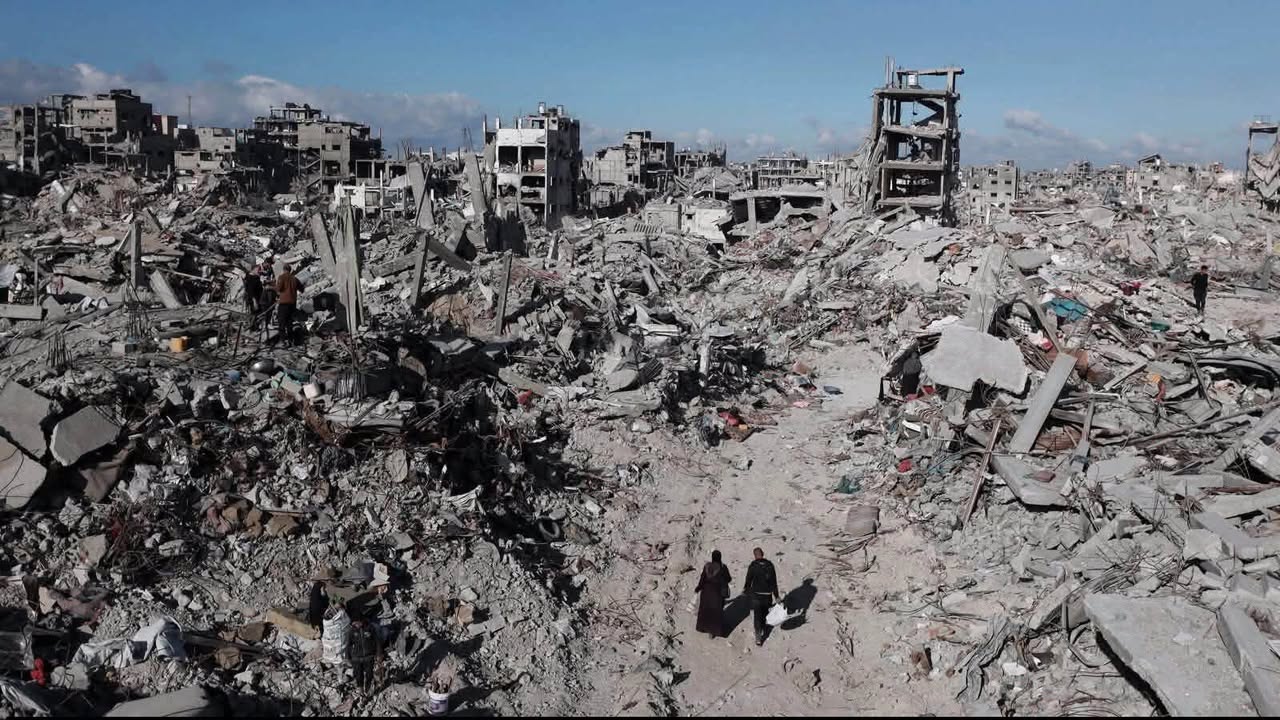
The conflict has brought Gaza’s once thriving fishing sector to collapse and the impact of the two- year escalation on the sector is devastating. Since October 7, Israel has systematically destroyed Gaza’s important source of food and livelihoods for residents of the Strip as its critical fishing sector has been almost completely obliterated.

Gaza’s average daily catch just between October 2023 and April 2024 dropped to 7.3 percent of 2022 levels, causing a $17.5 million production loss.

The main seaport in Gaza City and other landing sites has been destroyed and Gaza’s two main aquaculture farms along with the hatchery facility wiped out leaving the sector unable to produce alternative aquatic foods through aquaculture.

According to an assessment, before the conflict, over 6,000 residents in Gaza relied on the fishing industry for their primary source of income, of this total; approximately 4,500 were fishermen and boat owners.

The fishing sector supported approximately 110,000 people, according to the UN Food and Agriculture Organization (FA0), although Israel’s restrictions on the industry before the war thwarted its potential both in terms of local production to meet the needs of the population and as a source of export.

Over the years, Israel blocked access to the maritime area off the coast of the Gaza Strip, maintained a limited “fishing zone” and allowed fishermen to operate in an area only up to six nautical miles from the coast in the northern Gaza Strip and up to 15 nautical miles in certain areas, despite the Oslo Accords stipulating that should be allowed up to 20 nautical miles from the coast.

The Israeli navy enforced restrictions on the fishing zone through warning shots or live fire towards vessels and fishermen, killing or severely injuring people on multiple occasions.

In addition, Israel destroyed or confiscated boats and equipment as a matter of policy, arrested fishermen and restricted the entry of material necessary for the repair and rehabilitation of boats, such as fiberglass, engines and other items.

Over the course of the aggression, the coastal fishing infrastructure has sustained massive damage, including the main Gaza Seaport, several smaller ports, fishermen’s rooms, and vital fishing equipment.

As of late 2024 and mid – 2025, reports from NGO’s and human rights groups state that approximately 95 per cent of the fishing sector in Gaza has been destroyed.

The damage to Gaza’s fishing sector has exacerbated an already dire food security crisis as fish, once a vital source of protein and other essential nutrients for Gazans, is now nearly unavailable.

Today, in Gaza’s fishing areas lie broken boats, torn nets, and ruined infrastructure, standing in stark contrast to the once-vibrant industry that supported thousands of fishers for generations.

Fishermen have been killed, chased, and arrested, while most of their boats and equipment have been destroyed.

For Gazans, the sea was not just a source of food, but a source of livelihood and identity.

The Israeli military’s tactics in its horrific war have shown a focused effort to disrupt and destroy the civilian way of life, thereby crippling the very survival of the Gaza population.

The territory’s fishing sector stands among the hardest hit, its work force devastated and productivity nearly extinguished.

According to the Palestinian Fishermen’s Syndicate, Israel has pursued a systematic campaign to dismantle the industry that for centuries has played a significant part in the Palestinian economy, culture, and cuisine.

The fishing industry has been central to Gaza’s economy, providing employment for fishermen and others in subsidiary jobs related to packaging, marketing, and transportation as well as boat repair and maintenance.

Notably, the sector provided direct and indirect employment opportunities for youth and women, particularly through small and medium-sized enterprises (SMEs) in both formal and informal settings.

According to the Palestinian NGO Network (PNGO), before the war, there were more than 2,000 fishing vessels in Gaza, of which 1,100 had engines and about 900 were manually operated.

The fishing industry in Gaza was one of the few autonomous food production sectors in the Strip, and therefore had a direct and critical impact on the food security of the population. According to PNGO, the sector produced an average of 3,000-4,000 tons of fish per year, alongside an additional 300-500 tons from artificial fish farms in recent years.

The decimation of the fishing industry, together with the destruction of other means of food production, has contributed to the humanitarian catastrophe in Gaza and ensured continued dependence of the population on entry of aid.

According to the Integrated Food Security Phase Classification (IPC) report, from May 2025, the entire population of the Gaza Strip, approximately 2.1 million people, has been facing an imminent risk of famine.

Given the restrictions on the entry of humanitarian aid into the Strip since the beginning of the war, the fishing industry could have provided a source of protein to partially alleviate the crisis; instead, Israel’s destruction of the industry dramatically worsened the situation.

In addition, the Gaza fishing sector faces severe environmental challenges, including the depletion of fish stocks due to overfishing in a confined area, the destruction of fish farms, and the pollution from wastewater and damaged infrastructure.

Today, after Israel’s war halted, the situation underscores the urgent need for coordinated recovery efforts, including the restoration of fishing infrastructure, support for affected workers, and sustainable investment to rebuild the sector and protect the livelihoods it sustains.

After extensive damage, the reconstruction of Gaza’s fisheries sector requires a multi prolonged and long- term effort.

The plan involves emergency relief for fishers, restoring critical infrastructure, removing explosive ordnance, rebuilding the fish farming industry, and addressing environmental contamination.

Sufficient and sustained international funding is needed, as the estimated recovery cost of Gaza across all sectors is in the tens of billions of dollars.

A stable and sustained ceasefire is the most crucial precondition, as demonstrated by the failure of recovery efforts during renewed conflicts.

Significant international aid and a lasting peace are essential for the sector’s revival.

Najla M. Shahwan is a Palestinian author, researcher and freelance journalist and contributed the above article to the Jordan Times.

  • CrossFireArabia

    CrossFireArabia

    Dr. Marwan Asmar holds a PhD from Leeds University and is a freelance writer specializing on the Middle East. He has worked as a journalist since the early 1990s in Jordan and the Gulf countries, and been widely published, including at Albawaba, Gulf News, Al Ghad, World Press Review and others.

    Related Posts

    ‘All I Want is to Bury My Family in Dignity’  

    GAZA – Abdel Rahman Khalla no longer holds any dreams of a life; there is no home waiting for him, no family to return to, and no future he can envision as he once did. After losing 39 members of his family under the rubble of their home in northern Gaza, all hopes and aspirations dwindled to a single wish: To find the bodies of his loved ones and bury them with dignity.

    Amidst the heavy stones, the dust, and the agonizing wait, he now asks for nothing more than a simple human right: A grave to embrace those who have passed away, and an end befitting the story of a family wiped out by war.

    He has decided to dig and undertake this task himself.

    Amid the rubble of a five-story building, Khalla stands as the sole witness to one of the most horrific massacres in northern Gaza. He lost about 39 members of his family in a single attack on their home in the Jabalia al-Nazla area on 21 December, 2023.

    Read also: Gaza: Civil Defense begins recovering bodies from rubble

    Abdul Rahman, the sole survivor of his family, recounts the details of the tragedy, which continues till this day. He says that 39 people, including women and children, were inside the house at the time of the bombing. All were killed under the rubble and no one else emerged alive.

    He adds that only 18 bodies were recovered, while the rest, 20 to 21 others, are strill trapped under the debris – over 30 months later because there was no heavy machinery to remove the rubble and debris. Today, Israel continues to block such machinery from entering Gaza.

    Abdul Rahman confirmed to the Sanad News Agency they exhausted all avenues, appealing to the Red Cross, Civil Defense, and the Jabalia al-Nazla Municipality, as well as the Qatari and Egyptian committees, requesting such heavy equipment to help in recovering the bodies but all of their appeals went unanswered.

    “After 30 months of suffering, we decided to dig with our bare hands,” Abdul Rahman explained, adding the members of his surviving family had only begun manually removing the rubble four days prior, using simple and worn-out tools such as shovels, picks, and light rakes, despite the dangerous situation and the sheer size of their building that collapsed.

    But during these arduous efforts, they only managed to recover two bodies; one belonging to his uncle, and the other who remains unidentified. About 19 bodies remain buried under the rubble, awaiting recovery and a proper burial.

    Abdel Rahman appeals to the Egyptian Committee and the Reconstruction Committee for urgent intervention, requesting they send bulldozers and trucks to remove the rubble and debris. He emphasizes his family is not asking for the impossible, but simply for their right to reach their loved ones and bury them with dignity.

    The tragedy of the Khalla family is not just another statistic in the war’s record, but a human story that speaks of all the suffering of Gaza, where entire families still live amidst the ruins of their homes, searching for their martyrs and awaiting for a long-delayed mercy.

    Despite the ceasefire agreement in Gaza that came into effect on October 10, 2025, the Israeli occupation authorities continue to evade their obligations by preventing the entry of hundreds of heavy vehicles needed to remove the thousands of tons of rubble scattered throughout the Strip.

    According to data from the Government Media Office, the occupation destroyed 90% of the civilian infrastructure in Gaza during the two years of its offensive, leaving behind more than 70 million tons of rubble, in one of the region’s largest humanitarian disasters in the world.

    The Civil Defense Authority indicated in previous statements that dozens of families in Gaza continue to send appeals for help in recovering their relatives months after their martyrdom, but the Authority is unable to respond due to the lack of necessary equipment.

    This article was in the Arabic Sanad Lil Anba website and reproduced in crossfirearabia.com.

    Continue reading
    ‘Living Graves’, Is How Palestinian Journalist Describes Israeli Prison

    Veteran Palestinian journalist Ali Samoudi described Israeli prisons as “living graves” after his release on Thursday, appearing in severely deteriorated physical condition following his arrest by Israeli forces last year.

    Samoudi, who worked for the Palestinian newspaper Al-Quds and international media outlets, said he lost 60 kilograms (about 132 pounds) while in Israeli prison. “My weight was 120 kilograms (about 264 pounds); now my weight is 60 kilograms,” Samoudi said.

    According to Samoudi, prison conditions were harsh and cruel, and prisoners suffered. “The food is very bad. Even a cat would not eat what they eat,” he said. “Prisoners have nothing. No notebook, no pen, nothing,” he added, calling on the families of detainees to take care of their well-being. 

    He was arrested in April 2025 on false claims of transferring funds to the Palestinian Islamic Jihad. Samoudi and his family strongly denied the allegations.

    In a statement issued in January, the Palestinian Journalists Syndicate said al-Samoudi has not been granted a fair trial and that his arrest is “a blatant violation of international law and press freedom”.

    The syndicate also warned “that his life is now at risk” due to the harsh and inhumane treatment he has been experiencing in prison.

    Samoudi’s son, Mohammed, said his father was an “independent journalist who isn’t affiliated with any party,” adding he was “surprised to hear him being accused of ties with Islamic Jihad. I was in shock.”

    Mohammed said the forces raided their home at around 5 A.M., searched the premises and destroyed some of the family’s belongings before taking his father away. He said he didn’t know where his father is being held, but said the family is particularly worried because he is diabetic and suffers from high blood pressure, and therefore needs a special diet and medications.

    On May 8, 2025, Wafa reported that an Israeli court had issued an administrative detention order against him for a period of six months.

    This was because the Israeli army said it did not have “sufficient evidence” to formally charge him and had hence issued an administrative detention order.

    In a statement issued to the United States news group CNN, the Israeli army said: “As sufficient evidence was not found against him, and in light of the accumulated intelligence material, security authorities requested to consider issuing an administrative detention order.”

    The military claimed the order was justified as Samoudi’s “presence” posed “a danger to the security of the region”.

    Since then, Samoudi has been held in administrative detention and his detention order has been repeatedly renewed.

    Samoudi also witnessed the Israeli killing of Al Jazeera journalist Shireen Abu Akleh in Jenin in 2022 and was himself injured that day.

    “I was there personally and witnessed the whole thing,” he said about the killing of his colleague. “There was no one there apart from the Israeli force, and they were the ones who shot at us.”

    The Palestinian Prisoners’ Society said Samoudi is among more than 3,530 Palestinians held under administrative detention, in addition to over 40 journalists still held in Israeli prisons, including four women.

    The group renewed calls for the release of all detained journalists and urged the international community to take responsibility for ongoing violations against prisoners.

    More than 9,600 Palestinians remain in Israeli prisons, including women and children, facing torture, starvation and medical neglect, which have led to the deaths of dozens, according to Palestinian and Israeli rights groups. – Quds News Network

    Continue reading

    You Missed

    An Egyptian House in a German Town

    An Egyptian House in a German Town

    Nakba Art

    Nakba Art

    Palestinian Population Tops 15.5 Million

    Palestinian Population Tops 15.5 Million

    ‘All I Want is to Bury My Family in Dignity’  

    ‘All I Want is to Bury My Family in Dignity’  

    Israeli Army: 18 Soldiers Dead, 910 Injured in Lebanon

    Israeli Army: 18 Soldiers Dead, 910 Injured in Lebanon

    Watch Out: Israel is Secretly Filling The West Bank With Settlements

    Watch Out: Israel is Secretly Filling The West Bank With Settlements