
 CrossFireArabia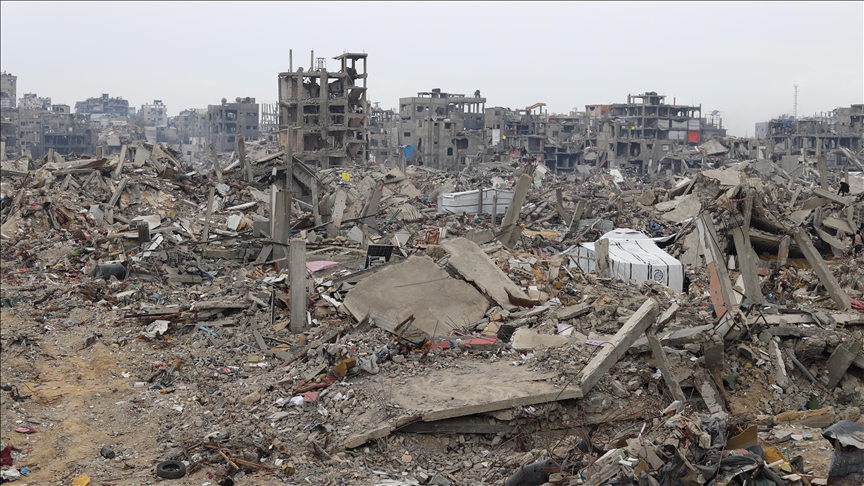
While the ceasefire in Gaza, Palestine, was implemented on 19 January, after 15 months of all-out war on the people trapped there, all components of society have been destroyed making it almost uninhabitable. Médecins Sans Frontières (MSF) teams are now able to reach the north of the Strip – which was previously besieged by Israeli forces – to assess the medical and humanitarian needs. The situation is appalling; there is nothing left.
Our colleagues no longer recognise their own neighbourhoods, hospitals have been razed, and people are settling in the rubble of their homes with no other shelter to face the winter conditions. Caroline Seguin, MSF’s emergency coordinator, shares insights and photos from the ground.
1. What is the situation in north Gaza?
In the North Governorate, the level of destruction is total, it’s a flat land. I’ve never seen anything like it in my life. Our Palestinian colleagues are no longer able to recognise their own neighbourhoods, some were in shock, others literally collapsed.
In Gaza City we were already shocked by the level of destruction, but then we went north to Jabalia, we couldn’t say a word. There is nothing there anymore. Only ruins and the smell of death everywhere because of the dead bodies still trapped under the rubble.
2. What is the state of the health system?
There is no health system anymore in the northern part of the Strip. Kamal Adwan hospital has been razed, while Al Shifa, Al Awda and Indonesian hospitals are seriously damaged and only partially functioning. We were utterly shocked to observe that in Indonesian hospital every medical machine seemed to have been deliberately destroyed; they were smashed to pieces, one by one, to make sure no medical care could be provided anymore. You have to ask, what is the motivation of such action? These machines are made to save people’s lives, mothers, fathers, children. It’s devastating to see the state of these hospitals.
The provision of medical care is largely insufficient compared to the needs of the hundreds of thousands of people living in the area. For example, between North Governorate and Gaza city, there are only six paediatric intensive care beds compared to 150 before the war and the number of patient hospital beds has plummeted from 2,000 to 350.
3. Are supplies reaching north Gaza?
The flow of vital supplies has improved since the ceasefire, but the level of needs is so high that people are still lacking basic items. The need for food, water, tents and shelter materials in this area remains critical. Water shortages are a real challenge given the high level of damage to water facilities and because they are in inaccessible locations in the buffer zones.
Our teams have started water trucking activities in Jabalia and Beit Hanoun and they repair damaged boreholes, but this is a temporary solution and is not sufficient for the massive needs. The problem is that because of the war we have located our activities in the south and it now takes time to redeploy them to the north.
After four weeks since the implementation of the ceasefire, we are still not seeing the massive scale up of humanitarian aid needed in northern Gaza. The humanitarian community is failing to provide vital services to a population in dire need of humanitarian and medical support. Both Israel and international actors need to urgently ensure the delivery of vital supplies such as shelter and food and to increase the capacities for its distribution.
4. What is the reality for people in northern Gaza today?
People are living in dire conditions. They try to settle as best they can on the ruins of their houses but it’s extremely difficult. The winter weather means people have to face very cold temperatures, heavy rains and strong winds, and they don’t even have walls around them to protect themselves. They don’t have access to healthcare, decent housing or water.
However, the conditions they had to face during the 15 months of war, being displaced and living in tents were even worse. After this hardship, people need to reunite with their loved ones and want to stay and rebuild their lives. Many of them have no intention of leaving. It is essential to ensure consistent, safe, and secure delivery of humanitarian assistance to people who have suffered unimaginable trauma.


 marwan



