‘Israel Killed My Sister’

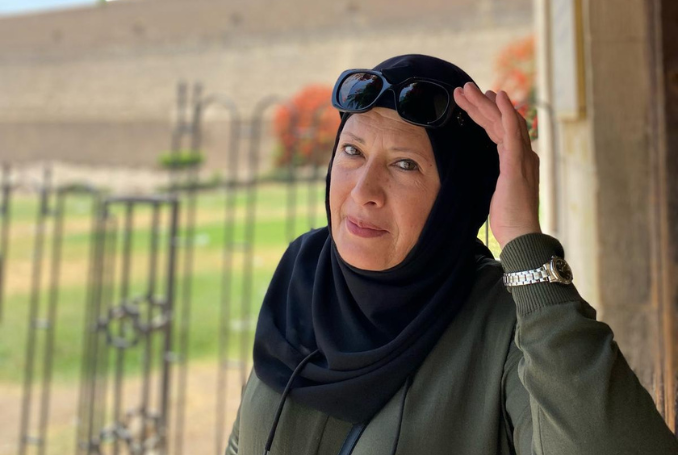
EDITOR’S NOTE: This is a personal note written by the Editor of The Palestine Chronicle Dr Ramzi Baroud on the assassination of his sister in Khan Yunis on 9 October, 2024. Dr Soma Baroud follows the more than 42,000 innocent civilians killed in this Israeli genicide of Gaza.

Early this evening, Israel killed, or more accurately assassinated, my sister Dr. Soma Baroud, by bombing her taxi in the Khan Yunis area, killing her and six other innocent people.

She was the kindest soul, a great mother and a most loving sister.

She was a member of a generation of female doctors that revolutionized medicine in the Strip.

She healed many people, never charged the poor and until the last day of her life remained principled, loving, kind and patient, even when Israel blew up her house a few weeks ago.

I don’t know what else to say, aside from the fact that I suddenly feel as if a child who became orphaned all over again.

She was a leader of our family, and fulfilled the role of our mother who died at a young age.

I am sorry, sister, that I could do nothing to protect you.

I feel deep shame that I live in the very country that paid for and made the bombs that killed you.

When the numbness is gone, I will try to stay strong only driven by the hope that we will meet again in Paradise.

Continue reading
‘When Do We Get to Bury Our Dead?’

By Shireen Al Akka

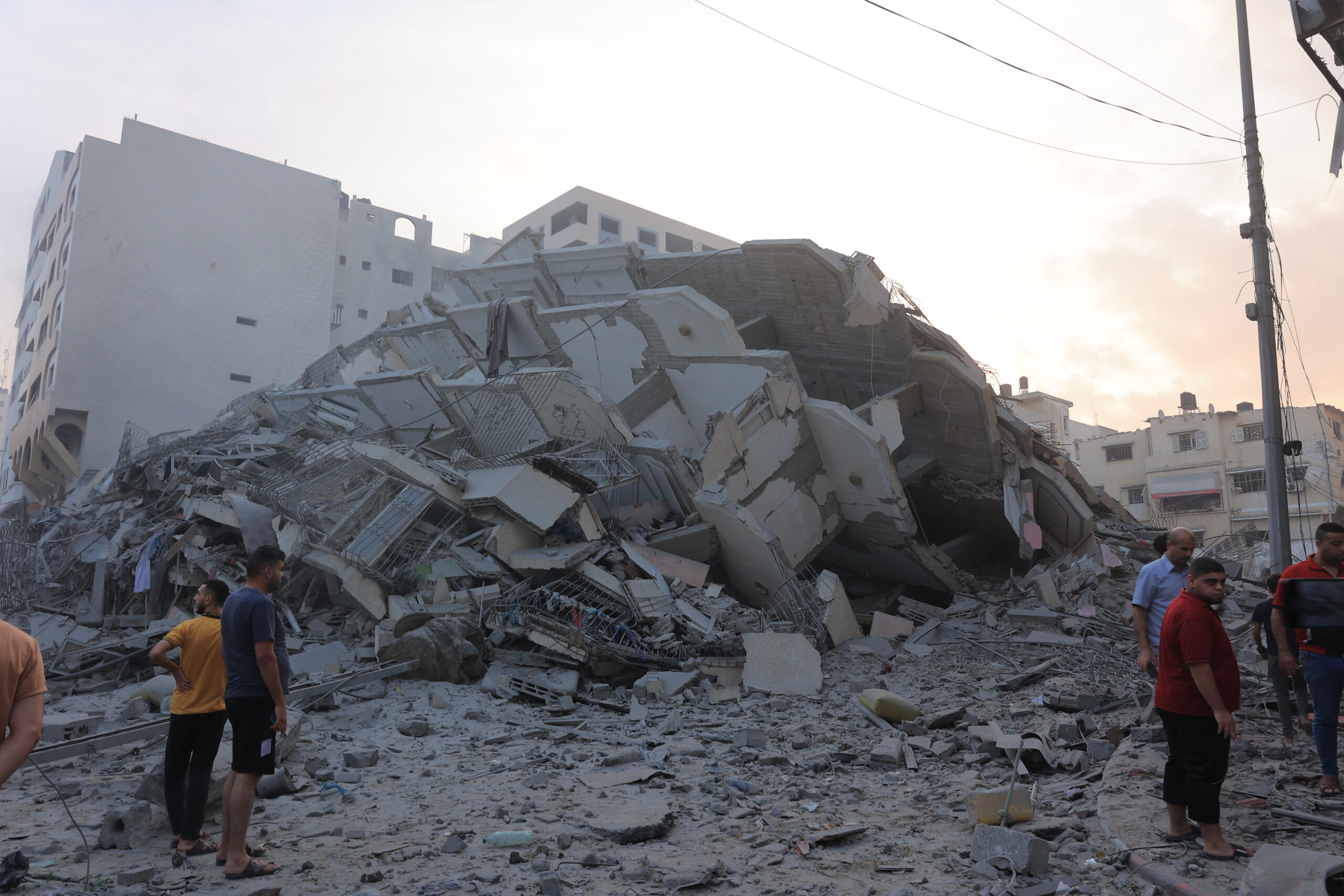
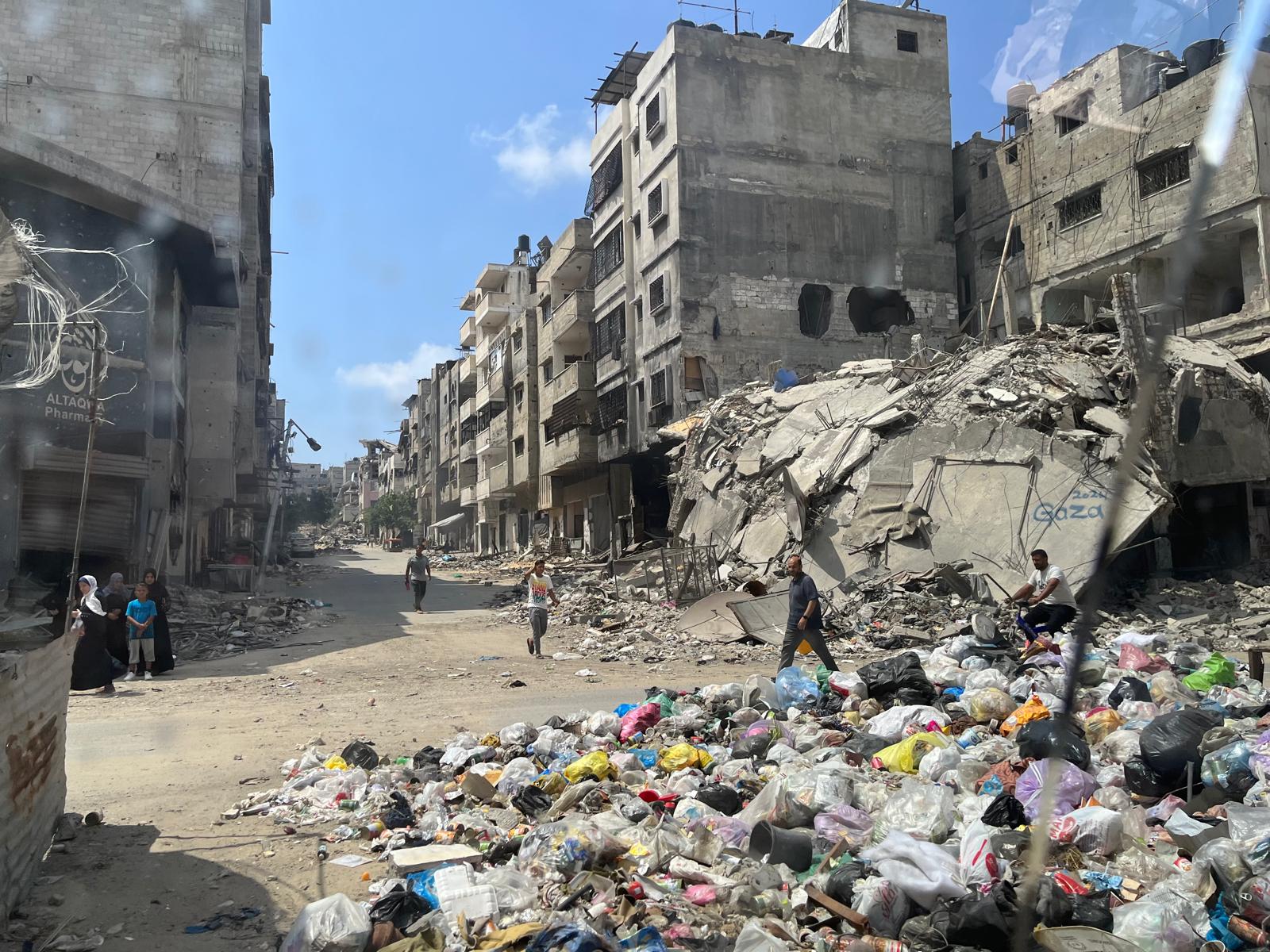
Amid the scenes of widespread destruction caused by the Israeli extermination war, there is a deep wound in the heart of Gazans who passe by destroyed houses, and still feel the souls that made their last breaths from under the rubble, and did not find anyone to rescue them alive or even honor them with burial.

These are souls that were not given a farewell and whose names were not mentioned in the records of martyrs. No one knows about their attempts to cling to life, and how much they tried to call for help before their final breaths were quashed by the dust and stones.

Since November 2023, my young brother Tamer Al-Akka has been trapped under tons of rubble, along with his wife Hind Hassouna and their children Tala (8), Zainab (6), and Khalil (3), as well as 18 others from his wife’s family.

My 60-year-old father, Khalil Al-Akka, searched for them with both hands for three consecutive days before he was forced to flee south. He was unable to dig them up due to the lack of fuel and the occupation’s prevention of rescue operations.

He repeatedly appealed to Civil Defense to bring in equipment to remove the rubble and rescue the survivors whose cries for help could be heard, but to no avail. Meanwhile, giant trucks were brought in from the Israeli side to transport tons of rubble mixed with the blood of martyrs to the Gaza beach, to build a sea pier said for bringing in humanitarian aid to the Strip.

Their presence under the rubble overwhelmed us.

My father wanted to honor his son and grandchildren with a burial. Perhaps the tombstone would have read “Martyrdom at the age of roses”, while my mother wanted to embrace his strong, healthy body to make sure that he had passed away, but she did not have the chance to see him and could not believe that she had lost him forever with her daughter-in-law and grandchildren.

None of us believed the news of his passing, and we were satisfied with saying that “my brother is under the rubble”. We procrastinated a lot until we mourned him, and we kept betting on his release. Perhaps because his personality was characterized by stubbornness and always searching for a way out and solutions!

In a phone call with my brother, Moamen, who lives abroad, he told me: “I do not accept condolences… perhaps he was able to save himself and will contact us soon”. At that time, I was silent for a long time and adopted his opinion that we are all waiting!

A comforting friend told me that “it is better for him -my brother – to remain under the rubble, because the bodies of the martyrs scattered in the streets are being devoured by dogs”. I was upset by her expression, but these tragic scenes were actually published by the media. I felt a kind of relief about their fate.

The Euro-Mediterranean Human Rights Monitor documented, in early January, the occupation army’s attacks on at least 12 cemeteries in the Gaza Strip, deliberately vandalizing them and stealing dozens of bodies. The Observatory’s field team inspected the (Al-Batsh) cemetery east of Gaza – established in October 2023 to bury dozens of unidentified martyrs after they were crowded into Al-Shifa Hospital – and their exposure to bulldozing and military vehicles trampling on the bodies. “Israel” does not stop at killing people, but goes so far as to deprive their families of even visiting their graves.

This act was repeated from Beit Hanoun in northern Gaza to Rafah in the south, and one father expressed his concern on his Facebook page for his child buried in a cemetery in Rafah, after he was forced to flee it. People still fear for the fate of their children, whether they are dead or alive.

At the time, I felt my brother might have been luckier than the others, and it seemed these feelings were nothing more than a temporary anesthetic, before the volcano ignited inside me again, and I wondered: “What are their bodies like now? Have they turned into bones? How will we recognize them? Well, my family cannot mistake their son. We will recognize him by looking at his teeth! When he was 15 years old, he lost one of his front teeth and had another artificial one installed, but what about his wife and children? How will we recognize them? Especially since the house was full of displaced women and children?”

No one knows how many martyrs remained under the rubble, but a report by the British organization “Save the Children” indicates that about 21,000 children in Gaza were lost as a result of the war. They were either trapped under the rubble, detained in occupation prisons, buried in unknown graves, or lost to their families.

Thus, after eight months, I was once again curious to know the number and names of the people who were with my brother. My sister Shaimaa, who is now living its the seventh displacement in Deir al-Balah and is taking shelter with her two children, Mira and Abdullah, in a palm frond roofed hut with no walls, spoke to me.

She was surprised by my question and answered me with a more bizarre and deadly question: “Why are you asking? Did you find him? Did you find Tamer alive?” My body trembled. I couldn’t find anything to say to her, but I adopted her question, and it has now become my obsession. A decent burial is one of the most basic human rights.

The family of the deceased does not give up this right even in the darkest and most difficult times. The 70-year-old woman, Laila al-Qulaq, who is my relative on my father’s side, did not give up burying her son, Mohammed (35 years old), a person with disabilities. When the Israeli occupation “army” penetrated Tel al-Hawa in Gaza and ordered the residents to flee, while she was busy with her other children, Mohammed caught her off guard by looking out the window and was immediately sniped.

The “fighter” – that’s what those who knew her called her, because she was widowed at a young age and raised 7 orphans, 4 of whom were disabled, whom she took care of alone, watching them from behind the sewing machine that stitched together me the most beautiful dresses of my childhood – wanted to bury her son’s body, but the occupation “army” forced her to leave.

Burial with honor

The next morning, Laila Al-Qulaq returned with her stubbornness that made her forget her fear. She insisted on removing her son’s body from the house and burying him with honor. Laila also lost her sick little granddaughter who passed away due to lack of treatment. I don’t know where she is now because of the incessant displacements, her situation is like that of two million people in Gaza struggling for survival or immortality.

The Israeli aggression on Khan Yunis has been ongoing for more than two months. With the frequent news of the genocide, the number of martyrs, and my pursuit of my family who are living in perdition in displacement, I forgot to check on my childhood friend Fidaa Ayyad, who is also displaced to Khan Yunis, until she called me recently, and her voice was very weak, “I am not well.”

I felt terrified and prepared myself for something great that I did not imagine would be this heavy, “Badr is gone, Shireen, Badr Badr,” and her voice disappeared. I lost contact with Fidaa.

Badr (14 years old) was his mother’s right hand in completing the tent work. He makes the bed, cleans the dishes, and collects firewood to light the fire in the oven. That day, he left his mother alone to bake loaves of bread. She turned around to look for him, thinking that he had gone away to play with his peers, especially since he insisted that day on taking an early shower and wearing his older brother’s shirt.

Badr moved away from the hard work next to the oven in the hottest month of the year… July! He went to the corner of the street. His father saw him and asked him to accompany him on a quick walk, but he also hesitated to accompany him. He stayed in his place on the corner of Al-Attar Street and was soon bombed, killing more than 28 martyrs and twice that number of wounded. His mother got up immediately and left the loaves of bread burning behind her. She went to look for Badr specifically, without his four brothers.

I learned these details later after many attempts to contact her. I hesitated a lot before asking her the question that had become my obsession: “Did you get to say goodbye to him? Did he get a grave?” She quickly answered me: “Yes, they brought him to me and I said goodbye to him, and yes, we buried him. My son has a grave and we buried him in Khan Younis, next to many martyrs.” She continued: “He who is not buried will be lost!” I felt the sting of her words, but I cannot blame her. We were silent, then she added anxiously: “When we go to Gaza, will we leave him here?” I stopped at that moment and I had been pacing the room back and forth throughout the call. I stopped and asked her to explain: “What do you mean?”

Shireen Al-Akka is a writer from Gaza and this article was originally printed from Arabic in the Al Mayadeen website.

Continue reading
Israel Must Provide Info of 88 Bodies It Left in Khan Yunis Street

It is regrettable that Israel turned over the bodies of 88 dead Palestinians in a container without providing any information about who they were, where they were found, when they died, or how they died.

Upon the bodies’ arrival in such condition, the Gaza Ministry of Health declared that it would halt the container’s delivery process until all necessary data and information about the bodies were obtained in order to identify their identities.

The “container” holding the dead bodies was left in one of Khan Yunis’s streets. This is a grave violation of the rights of the dead people and their families, as well as a catastrophic situation that could result in a health catastrophe.

Urgent international intervention is needed to open a thorough and impartial investigation into the circumstances surrounding the death of these Palestinians, identifying them, and returning their human remains to their families so they can be buried with dignity.

All pertinent international parties have an unavoidable international duty to carry out these investigations in compliance with international standards.

Under international law, specifically international humanitarian and human rights law, Israel must respect the dead and their remains and take all legal procedures to identify them, including documenting and sharing as much information as possible.

In addition to working with the Israeli occupation to identify and provide information about the victims, the UN Humanitarian Coordinator, the World Health Organization, and the Red Cross must move quickly to begin the burial process. This will stop the victims’ mistreatment and violation of their human dignity.

EuroMed Human Rights Monitor

Continue reading
The Mass Graves of Gaza

 Thousands of families continue to bury their children in random mass graves, a phenomenon brought on by over 11 months of systematic killings of Palestinians by Israel in every Gaza Strip governorate. The situation is worsening as a result of the Israeli occupation army’s constant targeting of people who attempt to enter these makeshift cemeteries to bury their loved ones.

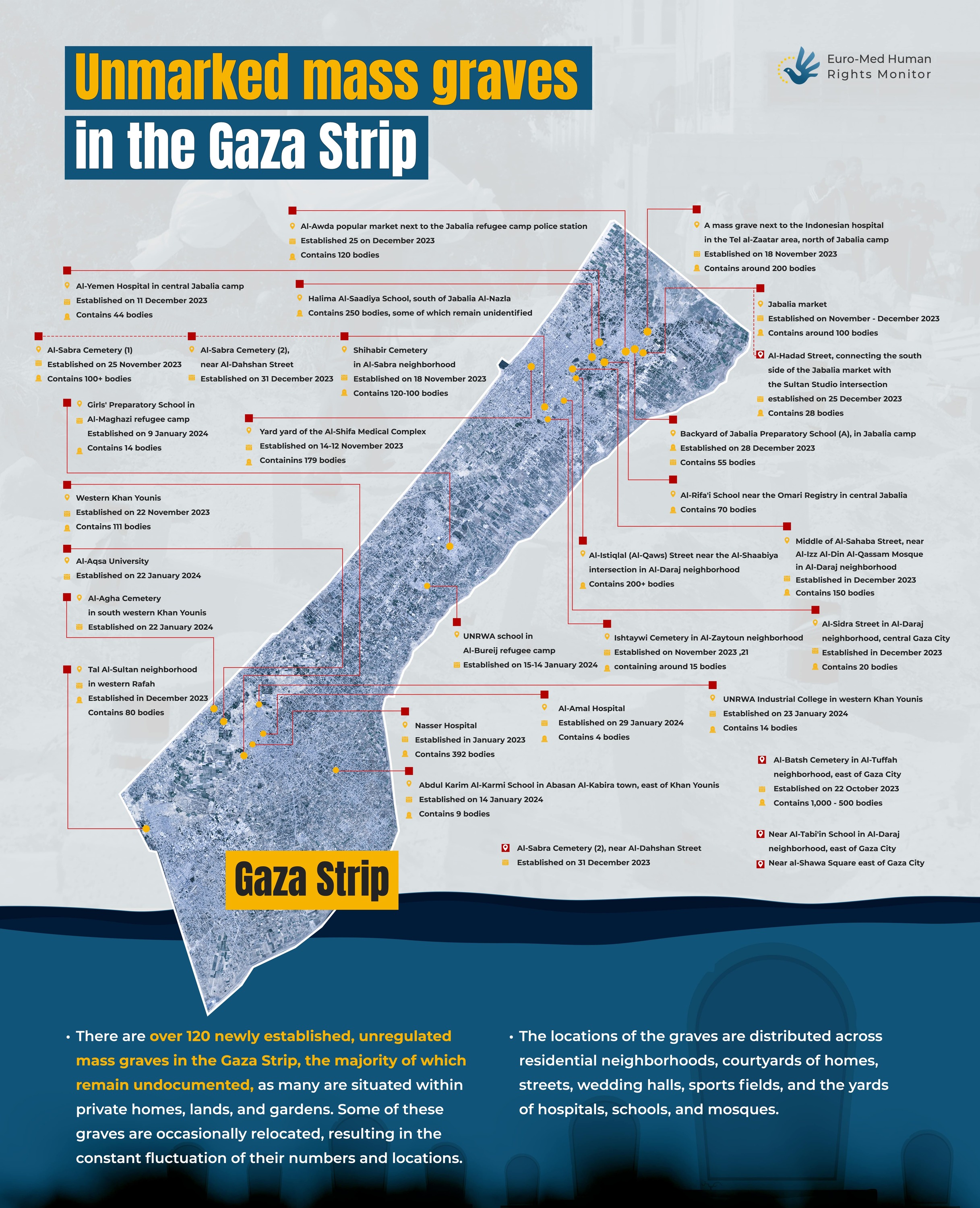
Euro-Med Monitor has released an infographic design that shows the locations and dates of approximately 30 randomly established mass graves in the northern, central, and southern governorates of Gaza, containing roughly 3,000 dead victims of Israel’s genocide in the enclave. The infographic also depicts 120 random mass graves in which three or more people are buried, and which were established in the Gaza Strip between now and last October.

Random graves

Since many random graves are found inside houses and other private spaces and some are periodically moved to new locations, the majority of them are still unrecorded. Thus, the number and location of these graves remain constantly changing. Furthermore, the Israeli occupation army is continuously bulldozing both makeshift cemeteries and official graves, disfiguring the victims’ bodies, and even stealing some of them, in grave violation of international law.  

Al-Batsh Cemetery, located in Gaza City’s eastern Al-Tuffah neighbourhood, is the largest documented mass grave in the Gaza Strip. Between 500 and 1,000 people have been buried there since the cemetery’s founding on 22 October 2023, just two weeks after Israel’s genocidal war on Gaza began.

Euro-Med Monitor field teams have been documenting the mass and random graves across the enclave since the establishment of the first mass grave in Al-Shifa Medical Complex on 15 October 2023, when it became impossible to transfer the dead victims to the official cemetery in Gaza City due to the large number of corpses and the danger presented by Israeli forces. Over time, more of these mass graves have been created, one after another, eventually totaling at least 120.

backyards, courtyards

These graves have been established throughout residential areas, in the backyards and courtyards of homes and hospitals, public road intersections, wedding halls, sports fields, schools, and mosques.

“Random mass graves have become something of a phenomenon in Gaza,” according to a Euro-Med Monitor field researcher in Gaza City whose name is being withheld due to safety concerns. “They are seen on the roads, in traffic islands, [and] near markets and residential buildings at random.”

Added the researcher: “Residents resort to using various tools as tombstones to write the names of the victims on—instead of cement and stone—including plastic food trays, plastic barrels or gallon jugs, wood or cardboard, and other household items.”

Families are forced to create these random graves due to the difficulty of accessing the main graves as a result of the continuous Israeli bombing and targeting of individuals, in addition to Israel’s division of the Gaza Strip’s governorates and destruction of infrastructure; imposition of the blockade; scarcity of fuel and means of transportation; and the fact that the main graves are already filled with corpses due to the large and ever-increasing number of victims.

Some of the officially documented mass graves contain the remains of yet-to-be identified people, buried months ago during the ongoing genocide.

Euro-Med Monitor teams have documented 29 random mass graves in the various governorates of the Gaza Strip. These include:

North Gaza Governorate:

1. A mass grave in Al-Awda Market next to the Jabalia refugee camp police station, established on 5 December 2023, containing about 120 bodies.

2. A mass grave next to the Indonesian Hospital in the Tel al-Zaatar neighbourhood, north of Jabalia Camp, established on 18 November 2023, containing about 200 bodies.

3. A mass grave in the Jabalia Camp market, established on 7 December 2023, containing about 100 bodies.

4. A mass grave in the backyard of Jabalia Preparatory School (A), in Jabalia Camp, established on 28 December 2023, containing more than 55 bodies.

5. A mass grave in Al-Rifai School, opposite Al-Omari Registry in Jabalia Al-Balad, containing more than 70 bodies.

6. A mass grave in Halima Al-Sadia School, south of Jabalia Al-Nazla, containing more than 250 bodies, some of whom are still unidentified.

7. A mass grave in Al-Yaman Hospital in Jabalia Camp, established on 11 December 2023, containing about 44 bodies.

8. A mass grave built on a traffic island along Sultan Street in Block (2) in Jabalia, established in November 2023.

Gaza City Governorate:

9. A mass grave in the courtyard of Al-Shifa Medical Complex, established on 12-14 November 2023, containing approximately 179 bodies.

10. Al-Sabra Cemetery (1), established on 25 November 2023, containing more than 100 bodies.

11. Al-Istiqlal Street Cemetery (Al-Qaws) near the Al-Sha’biya intersection in Al-Daraj neighbourhood, containing more than 200 bodies.

12. Al-Sabra Cemetery (2), near Al-Dahshan Street, established on 31 December 2023.

13. Al-Batsh Cemetery in Gaza City’s eastern Al-Tuffah neighbourhood, established on 22 October 2023, containing between 500–1,000 bodies.

14. A mass grave in Al-Sahaba Street, near Ezzedine Al-Qassam Mosque in the central Gaza City neighbourhood of Al-Daraj, established in December 2023 and containing 150 bodies.

15. A mass grave in Al-Sidra Street in the central Gaza City neighbourhood of Al-Daraj, established in December 2023 and containing about 20 bodies.

16. Shahibar Cemetery in Al-Sabra neighbourhood, established on 18 November 2023 and containing about 100–120 bodies.

17. Ishtiwi Cemetery in Al-Zeitoun neighbourhood, established on 21 November 2023 and containing about 15 bodies.

18. A mass grave near Al-Shawa Square, east of Gaza City.

Deir al-Balah Governorate (central Gaza Strip):

19. A mass grave in UNRWA school in al-Bureij refugee camp in the central Gaza Strip, established on 14-15 January 2024.

20. A mass grave in a girls’ preparatory school in al-Maghazi refugee camp in the central Gaza Strip, established on 9 January 2024, containing approximately 14 bodies.

Khan Yunis Governorate (southern Gaza Strip):

21. A mass grave in western Khan Yunis, established on 22 November 2023, containing approximately 111 bodies.

22. A mass grave in Abdul Karim Al-Karmi School in the town of Abasan Al-Kabira, in the east of Khan Yunis, established on 14 January 2024, containing approximately 9 bodies.

23. Three mass graves in Nasser Hospital, established in January 2023, containing approximately 392 bodies.

24. A mass grave in Al-Amal Hospital, established on 29 January 2024, containing approximately 4 bodies.

25. A mass grave at Al-Aqsa University, established on 22 January 2024.

26. A mass grave at the UNRWA Industrial College, in the west of Khan Yunis, established on 23 January 2024, containing approximately 14 bodies.

27. Al-Agha Cemetery, established by the Al-Agha family on their land after the Israeli army destroyed the family’s main cemetery in the Austrian neighbourhood, west of Khan Yunis city, established on 22 January 2024.

Rafah Governorate (southern Gaza Strip):

28. A mass grave in the Tel al-Sultan neighbourhood, in the west of Rafah, established in December 2023, containing approximately 80 bodies.

Israel’s ongoing military attacks and direct targeting of Palestinian civilians by shelling, sniping, or shooting from quadcopter drones continue to prevent families from reaching regular cemeteries in which to bury their relatives in a dignified manner that respects human dignity, and make the process of counting, registering, and identifying all of the victims impossible.

Since most of the victims have not died from epidemics or infectious diseases, the accumulation of dead bodies or their improper burial does not present a serious health risk to the public. However, if the remains of these bodies—including feces—leak into residents’ drinking and use water sources, this may result in a variety of intestinal diseases among the living.

Israeli attacks on cemeteries

Since the start of Israel’s genocide in the Gaza Strip, Euro-Med Monitor teams have documented numerous Israeli attacks on dozens of cemeteries through deliberate shelling and targeting, exhuming and vandalising graves, and stealing dozens of corpses. These attacks have pushed residents to create new random cemeteries and transfer the bodies of their relatives there.

Israel’s imposition of inhumane conditions on Gaza Strip residents constitutes a serious violation of the provisions of international humanitarian law (IHL). IHL guarantees respect for the dignity of the dead and the proper treatment of corpses, especially the Fourth Geneva Convention of 1949, which stipulates in Article 17 that conflicting parties must “take the necessary measures to ensure that the dead are buried in a dignified manner and that their honour is protected”.

The World Health Organisation and the International Committee of the Red Cross must play their role in ensuring the dignity of the bodies buried in dozens of mass graves in Gaza, and ensure their burial in accordance with international standards.

In addition to applying pressure from abroad on Israel to immediately end its genocide against the Palestinian people in the Gaza Strip, the international community must compel Israel to follow international law, which stipulates that bodies must be respected and protected during armed conflicts. It also requires Israel to take all reasonable steps to prevent the dead and deceased from having their bodies mutilated, and to ensure that they are buried properly.

EuroMed Human Rights Monitor

Continue reading
Gaza Genocide: 4% of Those Killed Are Old People

The Israeli occupation army’s recent killing of an elderly couple in the Gaza Strip and an elderly man in the West Bank constitute grave crimes against elderly Palestinians in the Occupied Palestinian Territory that require international investigation.

During the 330-day Israeli genocide against Palestinians in the Gaza Strip, 2,122 elderly men and women have been killed. This represents roughly 2% of the 107,000 elderly people who live in the Strip and roughly 4% of all Palestinian deaths there since 7 October 2023. These crimes, which have been committed hundreds of times, are unjustified and particularly cruel to this defenseless civilian group, which Israel has been targeting ever since it launched its large-scale attack on the Gaza Strip.

Most of these elderly victims were crushed to death under the debris of their homes or shelter centres after Israeli aircraft bombed them on their heads, or during their forced evacuations in the streets or visits to markets to meet their basic needs. Shockingly, however, dozens of them were killed directly through field executions and liquidation operations.

Following the withdrawal of the Israeli army from Khan Yunis on Friday 30 August, the discovery of the bodies of the elderly man Wajih Misbah Shaath (71 years old) and his wife Sabah Shaath (65 years old) was documented by the Euro-Med Monitor field team. The Israeli army shot the couple in their Khan Yunis home, in the south of the Gaza Strip.

Mr. Shaath’s sister-in-law provided Euro-Med Monitor with the following account of the execution of her husband’s brother and his wife, who were shot in the head: “My husband, my daughters, and I left Khan Yunis due to evacuation orders, but my husband’s brother Wajih Misbah Shaath, Abu Misbah, and his wife Sabah Shaath remained. Because of their advanced age, the difficulty of moving their belongings, the exhaustion of walking for extended distances every time the occupation issued new evacuation orders, and other factors, they decided to stay at home rather than endure the weariness of the displacement journey and the search for a safe place, which they had already gone through many times.”

She continued, “They stayed in the unlocked house because the doors were loose as a result of numerous previous attacks. We had been attempting to get in touch with them frequently since 26 August, but we had received no response. This worried us, so we reached out to friends, family, and acquaintances in the area to see if there was any update that would reassure us.”

Added Mr. Shaath’s sister in law: “My husband went home in the early hours of 30 August to see how his brother and his wife were doing after learning of the withdrawal of the Israeli army, only to discover that they had been killed by Israeli army bullets that struck them squarely in the head. Upon closer inspection, it was evident that the occupation forces had set off a hand grenade at the entrance of the house before raiding it and opening fire at the couple. Their bodies were discovered with bloodstains all over the floor of the room they were hiding in, empty bullet casings next to their blood, and bullet fragments scattered throughout the house.”

Numerous other horrific accounts of physical liquidations and field executions of elderly people over the age of 60 in the Gaza Strip have previously been documented by Euro-Med Monitor. During their second incursion into Al-Shifa Medical Complex and its surroundings during the ongoing genocide in Gaza, for example, Israeli forces executed and set ablaze the 92-year-old Naifa Rizk al-Sawda.

Maha Al-Nawati, the victim’s daughter, told the Euro-Med Monitor team: “After the Israeli army stormed Al-Shifa Hospital and invaded the surrounding area, they raided the residential building where my mother and married brothers live. As soon as they got inside, they separated the women from the men and told the men to undress. After searching and interrogating them, they ordered both the men and the women to evacuate towards the south. My 92-year-old mother was at home at the time. She suffers from Alzheimer’s and cannot walk, speak, eat, or do anything on her own. I think she probably would not have known how to respond if they had asked her about her name. ‘This is my mother, I will take her with me,’ my brother’s wife said to the soldiers. An Israeli officer responded, ‘No, you go, we will take care of her,’ and ordered her to leave my mother behind and evacuate right away.”

She added: “We had no information about her for about two weeks during the Israeli siege of the area and invasion of Al-Shifa Hospital. We had no knowledge about her fate during that time, nor did we know if they had left her alone inside the house or taken her with them to Al-Shifa Hospital. When the soldiers left the area, my sister and brother went to the house to look for her. As they searched for her, they climbed to the roof of the house, where they discovered my niece and her husband dead, with burned bones. Upon entering my niece’s flat, they discovered my mother lying on the bed in a fully burned-out room. Only a few of my mother’s bones were left, and her body was severely burned. It seems that they killed her or burned her alive inside the house.

In the West Bank last Friday, Israeli occupation forces executed the 82-year-old elderly man Tawfiq Ahmed Younis Qandil in the eastern neighbourhood of Jenin city, during the Israeli military attack that has been ongoing for five days in Jenin Governorate and other areas in the occupied West Bank. According to local medical sources, nine bullets fired by Israeli army snipers struck the elderly man, killing him. Ambulances carrying the man following the initial attack were also fired at.

These cases, along with other cases that have been well-documented, are but a sample of the systematic and deliberate executions and physical liquidations to which dozens of elderly Palestinians are being subjected in areas where Israeli occupation forces are conducting military operations in the Occupied Palestinian Territory.

In addition to bearing a heavy price for the haphazard and out-of-proportion attacks carried out by Israeli forces—particularly in the Gaza Strip, where hundreds of elderly people have been killed and thousands more injured—it will be difficult for survivors to recover because of their precarious health and lack of access to proper medical care.

Additionally, Israeli forces have arrested elderly Palestinians, both men and women over the age of 70. Many of those arrested have been subjected to abuse, torture, and denial of basic rights, without regard for their advanced age or health conditions. As a result, many of them have died in Israeli prisons and detention centres.

Tens of thousands of elderly people in the Gaza Strip are at serious risk of dying, as 69% of them have chronic illnesses, and the majority have not received any medical attention as a result of the Israeli army’s systematic and pervasive destruction of the healthcare system, as well as Israel’s arbitrary blockade of the area. Israel continues to prevent the entry of medical supplies, including medical devices and essential medicines, as well as sufficient and nourishing food, in an effort to deprive Palestinians of the necessities of life and subject them to intolerable living conditions meant to destroy them. The Palestinian Health Ministry in Gaza has provided data showing a marked increase in the number of deaths of members of this vulnerable group during the last 10 months when compared to the same period of time in previous years.

In addition to the protections guaranteed to civilians by international humanitarian law, the elderly are entitled to additional protection as a vulnerable group of people. This protection should include setting up organised recovery and safety areas and sites for them as well as making the necessary arrangements to safely transport them out of besieged or encircled areas. Yet amid the international community’s silence and complicity, Israel has violated these rights, turning all people in the Occupied Palestinian Territory, including women, children, the injured, the ill, and the elderly into targets.

International pressure must be applied immediately to compel Israel to stop all of its crimes against the Palestinian people, including the ongoing genocide in the Gaza Strip; to fully withdraw from the Palestinian territories that it has occupied since 1967; to hold it responsible for all of its serious human rights violations and crimes; and to guarantee compensation for all Palestinian survivors and victims’ families. Effective and decisive international intervention is needed at once to lift the blockade on the Gaza Strip completely and ensure the safe, complete, and unhindered access of humanitarian supplies to all affected people and the provision of basic services and urgently required relief aid. Should those on the outside fail to take the necessary action, it will soon be impossible to stop the humanitarian crises in the Gaza Strip from getting even worse.

Euro-Med Monitor

Continue reading