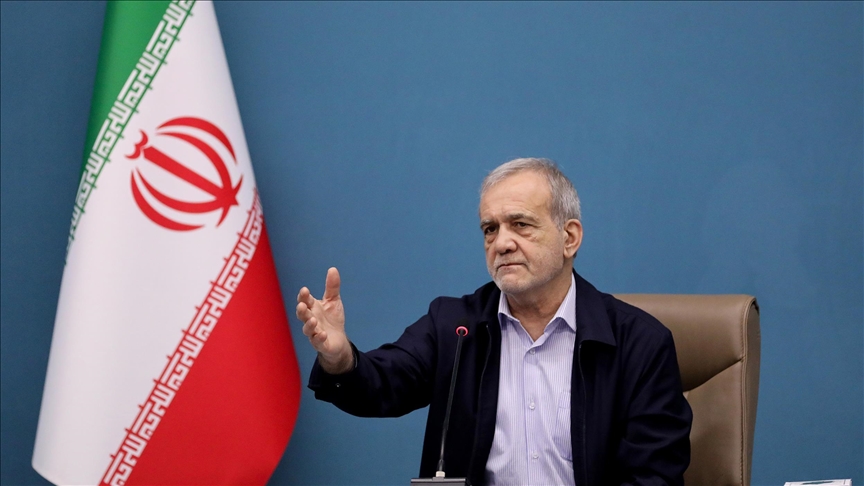
Exiled: Bashar Al Assad Wiles His Time in a Moscow Flat

Bashar Al Assad sometimes walks the streets of Moscow incognito. This was a prerequisite set by the Kremlin for his stay in Russia.

The Syrian president, who was forced into exile, exactly one year ago on 8 December, 2024, lives in one of Moscow’s top palatial flats in the capital’s business district with his wife and three children with 24-hour body guards who have been assigned to the family for their protection.

Since his stay Moscow, the message has been thrust forward that Moscow takes care of its friends even when they have fallen from grace and/or down in the dumps. Bashar Al Assad, and his father before and who held power since 1970 were always the strongest of allies and Damascus was always seen as Russia’s strategic gateway to the Middle East.

Friendship however doesn’t mean the end of political opportunism and interest. Whilst Assad is allowed to stay in Moscow under the rubric of humanitarian grounds, his asylum follows strict rules: he is not allowed to engage in any political activity nor is he allowed to talk to the press or the media. 

He is no longer treated as presidential but a private person. Russian president Vladimir Putin had never met him since he arrived in Moscow nor is he planning to despite  claiming otherwise. All Putin would say is he is planning to meet the ex-president ‘sometime’ in the future. Add insult to injury is the fact that Assad has been assigned a lowly figure in the Russian Foreign Ministry as a means of coordination whenever it’s necessary.

But this has long proved a sign of frustration. Today, Assad is alone despite his staff that either travelled with him when he was hastily bungled up last year on a military jet from a Russian airbase near Latakia last year or joined him latter in his residence to start his exile.

With little to do, he spends his days playing video games or going downstairs to the mall in his plush complex to wile his time away, doing it day after day after day. The strong man of Syria, at the top of the helm for the 24 years with ministers, officials, politicians and Ba’ath Party – for theoretically it was this pan-Arab institution that ruled Syria since the late 1960s – is no more.

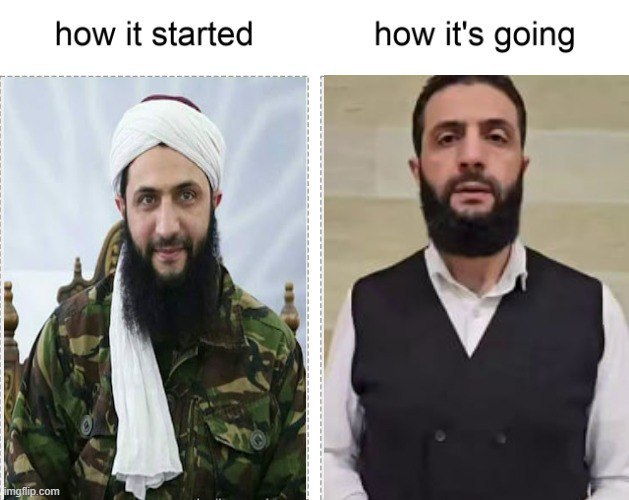
In Moscow he is a guest with his brother, Maher Al Assad, a former strong man and previous head of the Republican Guard who is staying at the capital’s Four Seasons Hotel. Today they have little political sway with the Kremlin preferring they stay as low as possible and ‘out of sight out of mind’ because of Moscow’s new strategic plans with the new government of Syria lead by previous Al Qaeda extremist-turned-president Ahmad Al Sharaa. 

Putin wants to maintain a rapport with the new government because Syria is still seen as the new battleground of political rivalry vis-a-vis the United States, Turkey and Israel. Moscow wants to continue to be a part of the geo-political pie despite the fact that Al Shara has continually called on Moscow to handover Assad to be tried for criminal charges in Damascus, something that was always refused by the Kremlin and Putin. 

But politics reflects the interests of both sides for Sharaa wants to be a favorite with everyone, both the West and Russia as demonstrated by his last visit to Moscow last October who continues to have military, strategic, economic and aid ties to Syria from the past Baathist regime. 

Thus, although relegated to his luxurious apartments, Assad can still be a valuable political asset to Moscow, being put on hold for the right time as a political chip to be used with the new government of Syria who is desperate to create the needed stability of the country, keep outside powers at bay, check Israeli incursion into its territory and start a program of reconstruction and economic development.
Continue reading
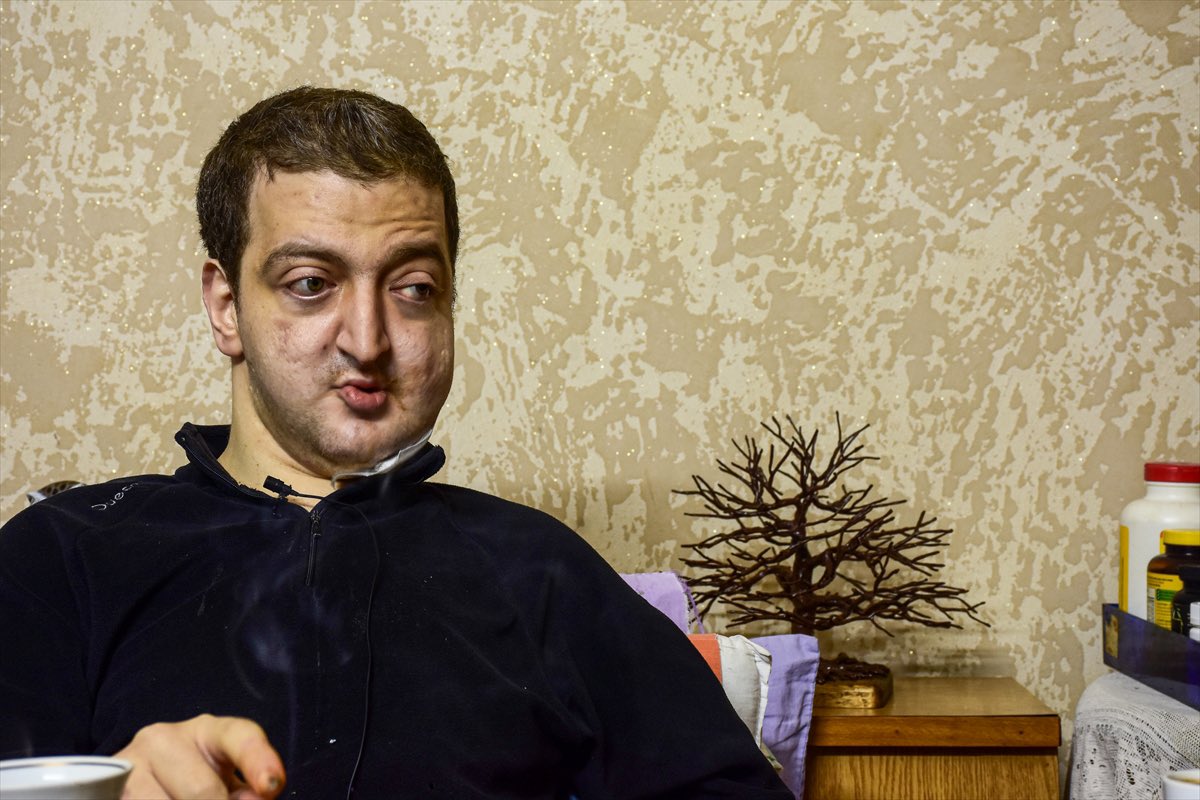
Blind Pianist Looks to a Better Syria

A blind Syrian musician said he believes the fall of the Assad regime will mark a “turning point” for his country and its people.

Gaby Sahyouni lives in the coastal city of Latakia and teaches piano to students at his home, sharing his passion for music despite the challenges of his environment.

Speaking to Anadolu, Sahyouni, 36, expressed his excitement at witnessing the beginning of a new era in Syria.

“It’s very exciting to see a new chapter being written for Syria,” he said.

The pianist described the joy among the people: “They truly experienced great happiness and said ‘Syria is free’.”

Highlighting his optimism for the future, Sahyouni said: “We hope for a more comfortable life for all Syrians. Our desire is for Syria’s rebirth to be rooted not in poverty but in hope and innovation.”

Bashar Assad, Syria’s leader for nearly 25 years, fled to Russia after anti-regime groups took control of Damascus on Dec. 8, ending the Baath Party regime, which had been in power since 1963.

The takeover came after Hayat Tahrir al-Sham (HTS) fighters captured key cities in a lightning offensive that lasted less than two weeks.

Continue reading
The Day After in Syria is Simply Bleak!

By Saleem Ayoub Quna


Syria has just turned a gloomy chapter of its long turbulent history that lasted for at least half-a-century. The question now is: Will this new era bring better or worse news for this beleaguered country and its people?

The new local stake holders on the ground and outside players are showing different and often conflicting signals of what lies ahead. A month ago, the totalitarian Assad dynasty regime collapsed, its
dictator fled the country, his strong men melted into the caves, his father’s imposing statues downed and his foreign supporters’ influence, Iran and Russia, evaporated. From this underdog dark side, the game
was over!


But it was not so on the other rising side of the game, where you have the local opposition of multiple groups and their new de facto foreign partners and friends, celebrating the defeat of the bygone oppressive regime.

All they see is a helpless, desperate and a lone prey for the cut! In real terms the country, so far, is being divided into different de facto regional enclaves or mini-states. Each is controlled by its own local
leaders. Members of each community share either the same faith, or speak the same language, or adhere to a host of old norms and traditions inherited from their ancestors.


Both leaders and their followers of each faction are finding themselves at a crucial turning point. Do they want to repeat what their previous leaders did when they, willy-nilly, allowed the central government under the Assad regime, run their daily life affaires, and then when it was too late, discovered that they were either deceived or coerced by the now defunct regime’s agents? Or are they saying no more of this stuff this time, and accordingly acting more independently to preserve their special identity and immune their rights?

The idea of partitioning Syria as we know it since its independence in 1946 is not new! It can be traced back to its pre-independence original format, conceived then by the French mandatory power in the early 1900s, when the Ottoman’s four centuries rule, of the whole of Arabia and North Africa, came to an end.


At that time, France, sanctioned by League of Nations, suggested to divide the country into five main enclaves or mini-states: An Alawite enclave on the eastern coast of the Mediterranean with Latakia as its capital, an Aleppo enclave in the north, a Jabal Druze enclave in the south, bordering Jordan, Alexandretta enclave which was taken by Turkey and renamed as the Hatay province, and finally the dominated Sunni region in the center with its capital Damascus.


Today, the US, with the consent of other good wishers, are openly pushing, by deeds and words, to create an additional enclave in the autonomous Kurdish oil-rich region in the north-eastern part of Syria.
On the Golan Heights, the new strong players are turning a blind eye to the serious Israeli military encroachments inside proper Syrian territories, previously recognized by the world community and UN resolutions. At the same time, the emerging clashes in the east and west of the country and other places in the center, between rivaling armed groups, leave little room for optimism.

The most important step Syrians need today is a constitution that can stand at the same distance from all components of the society. But surprisingly, the last statement attributed to the new top man in
Damascus saying such a constitution might take four to five years to come to life, can only send discouraging and negative signals to all the components of Syrian society and others!

A final question that must be asked: Is Syria nearing to lose its last chance to avoid falling back in the pre-independence fragmentation trap?

This opinion was especially written for Crossfire Arabia by Saleem Ayoub Quna who is a Jordanian author writing on local, regional and international affairs and has two books published. He has a BA in English Literature from Jordan University, a diploma from Paris and an MA from Johns Hopkins University in Washington. He also has working knowledge of French and German.

Continue reading