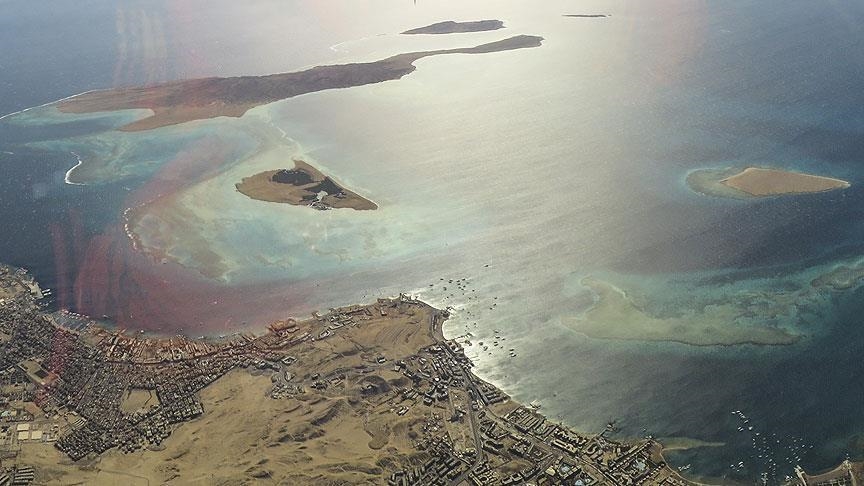
Who is Going to Rebuild Gaza?

No official announcement was made following the Riyadh Summit, which was considered fraternal, friendly, and consultative rather than formal. The summit, held a few days ago, was attended by the Gulf states, along with Jordan and Egypt, in anticipation of the Cairo Summit scheduled for March 4. The Cairo Summit is expected to approve and announce a new Arab plan for rebuilding Gaza as an alternative to Trump’s plan. However, more importantly, the Arab plan presents a comprehensive political approach linking the Gaza issue to the establishment of a Palestinian state and a peaceful resolution in the region. This approach counters Israel’s new policies, which are based on political hegemony—not only in Palestine by eliminating the two-state solution but also by expanding Israel’s security boundaries to include parts of Syria and Lebanon and inciting the U.S. into a confrontation with Iran.

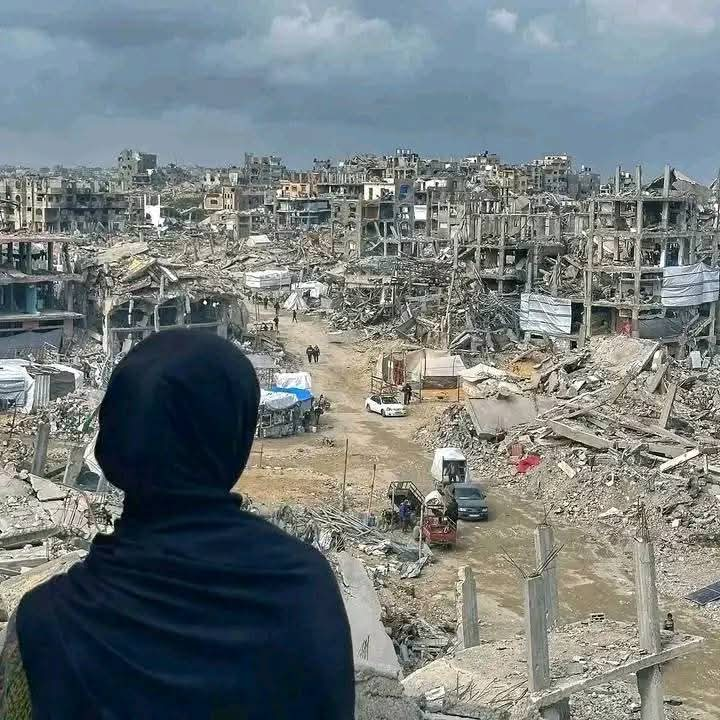
The Egyptian-Arab approach is still in its final stages of preparation. It takes into account a combination of financial, technical, political, and security aspects concerning Gaza. Palestinian Prime Minister Mohammad Mustafa has proposed modifications to the plan originally put forward by the World Bank, the United Nations, and the European Union, which estimated the cost of rebuilding Gaza at over $50 billion in a rapid and preliminary needs and damage assessment report (IRDNA). Instead, Mustafa proposed a more realistic and feasible plan costing no more than $20 billion, to be implemented in three phases. The Egyptians have incorporated this into their reconstruction plan, which includes dividing Gaza into three safe zones, using temporary housing (caravans) and tents, and developing a technical vision for redesigning the sector’s infrastructure through specialized Egyptian companies.

The Arab approach links the reconstruction plan to several key elements. The first is the technical, logistical, and financial aspect of rebuilding. The second is reforming the Palestinian Authority (PA) to counter Israeli claims of its incompetence, with reform measures covering political and security aspects. The third element concerns the administration of Gaza in the post-occupation phase. A significant development has occurred with the Palestinians agreeing on a temporary administrative committee responsible for technocratic affairs. Hamas has accepted this arrangement, and President Mahmoud Abbas has reluctantly agreed to it, as it implicitly means that the PA will not return to Gaza.

The most challenging aspect of the Arab plan lies in the security arrangements during the reconstruction phase. Arab states refuse to deploy security forces or enter Gaza without a clear vision for ending the Israeli occupation and establishing a Palestinian state. As Arab diplomats emphasize, what is needed is not just a roadmap for resolving the Palestinian issue, but rather an agreement on final-status issues and recognition of a Palestinian state—followed by a roadmap for implementation, not the other way around.

The most contentious issue in the Arab approach is Hamas’s weapons. Israel, along with the United States, will not accept Hamas retaining its weapons in Gaza. Israel has made it clear that it links the second phase of the process to this condition, and the U.S. has accepted this demand. On the other hand, the Arab side ties the issue of disarming non-state actors to the establishment of a Palestinian state that would have the exclusive right to possess weapons. The key question remains: Who would disarm Hamas? The only legitimate entity that could do so is a recognized Palestinian state, which remains the missing piece in U.S. policies that align with Benjamin Netanyahu’s vision.

The Arabs hope that this approach will establish a new framework for relations with the United States and offer alternative strategic options. They even believe it could persuade President Donald Trump to secure several achievements—perhaps even earning him a Nobel Peace Prize in the end.

This is undoubtedly a highly optimistic approach, but it represents a new Arab attempt to present a united position and alternative strategic options. However, the biggest challenge this vision overlooks lies in the details. As the saying goes, “the devil is in the details.” What kind of Palestinian state is actually possible under the current circumstances? What was previously proposed by Trump himself? Is there a single Palestinian—any Palestinian—who could accept a state comprising only 30% of the West Bank, without East Jerusalem, and without control over borders? How could Hamas and its supporters—or even the majority of Palestinian refugees—be convinced of such a proposal, even if there were Israeli and American acceptance of the new Arab approach?

Mohammad Abu Rumman is a columnist in The Jordan Times.

Continue reading
Roadmap: Gaza Needs $53 Billion to be Rebuilt

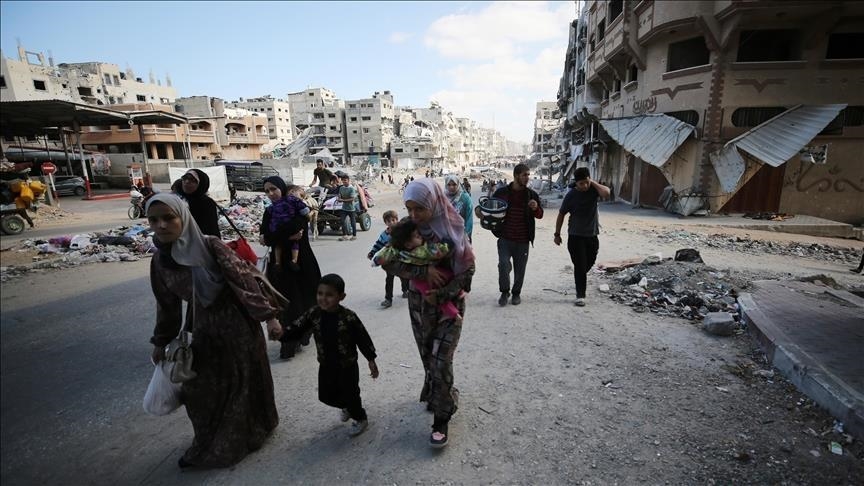
Reconstruction and recovery needs in Gaza are estimated to require $53 billion, according to the Gaza & West Bank Interim Rapid Damage and Needs Assessment (IRDNA) released Tuesday. The report analyzes damages and losses as well as recovery and reconstruction needs across almost all sectors of the Palestinian economy based on data from October 2023-October 2024.

  • Rapid Damage and Needs Assessments follow a globally recognized methodology that has been applied in multiple contexts to inform recovery and reconstruction planning.
  • With on-ground access restrictions and the rapid pace at which the situation is evolving in Gaza, the IRDNA provides an interim estimate of the impacts and needs.
  • Damages to physical structures alone are estimated at about $30 billion.
    • Housing was by far the hardest hit sector, accounting for 53% of total damages, followed by commerce and industry at 20%.
    • Extensive damage to lifeline infrastructure such as health, water and transport is estimated at over 15% of the total damages.
  • Economic losses from reduced productivity, foregone revenues, and operating costs are estimated at $19 billion, with health, education and commerce bearing the biggest toll.
  • Some sectors face higher recovery needs than the value of the physical destruction sustained, such as the funding needed for the management of the between 41 to 47 million tons of rubble and debris.

Almost all sectors in Gaza have experienced a total halt in economic production. Prices in Gaza have soared over 300% in one year, with food prices alone up by 450%. Gaza’s economy is projected to have contracted by 83% in 2024, dropping its overall contribution to the economy to 3%, despite being home to 40% of the population in the Palestinian territories. The West Bank’s economy is also struggling and is projected to have shrunk by 16% in 2024.

The report, jointly produced by the World Bank Group, the United Nations and the European Union, puts forward a roadmap for sequencing recovery efforts along with their associated costs in the short and medium term. It underscores the importance of a closely coordinated multisectoral response involving all stakeholders. The report further notes that the speed, scale and scope of recovery and reconstruction will be shaped by factors such as governance arrangements, entry to and mobility within the Gaza Strip for people and goods, law and order, and safety and security.

Reliefweb

Continue reading
Guterres: ‘Resumption of War Must be Avoided at All Costs’

UN Secretary-General Antonio Guterres on Tuesday called for avoiding the resumption of hostilities in the Gaza Strip, urging all parties to uphold the ceasefire agreement and engage in further negotiations.

“We must avoid at all costs the resumption of hostilities in Gaza that would lead to an immense tragedy,” Guterres said.

He also called on Hamas to follow through with the scheduled release of hostages next Saturday.


Guterres emphasized the need for “both sides” to uphold the ceasefire and resume “serious negotiations in Doha for the second phase.”

The UN chief’s remarks came amid heightened concerns over the fragile truce, as international mediators work to secure lasting peace in the region.

A three-phase ceasefire has been in effect in Gaza since January 19, pausing Israel’s assault that has killed over 48,000 people and devastated the region.

In the first phase, lasting until early March, 33 Israeli hostages are set to be exchanged for Palestinian prisoners, with the sixth swap planned this week.

In November, the International Criminal Court issued arrest warrants for Israeli Prime Minister Benjamin Netanyahu and former Defense Minister Yoav Gallant over war crimes in Gaza.

Continue reading
Riyadh Outraged at Netanyahu’s Creating ‘Palestine’ on Saudi Lands

The Saudi Foreign Ministry announced, Sunday, its rejection of Israeli Prime Minister Benjamin Netanyahu’s statements about establishing a Palestinian state on the Kingdom’s lands. It stated that these comments are “aimed to divert attention from the crimes committed by the Israeli occupation against the Palestinians in Gaza, including the ethnic cleansing they are subjected to.”

The ministry stressed, in a statement, that “the Palestinian people have a right to their land, and are not intruders or immigrants who can be expelled whenever the brutal Israeli occupation wants.”

In response to Netanyahu, it added: “This extremist occupation mentality does not understand what the Palestinian land means to the brotherly Palestinian people and their emotional, historical and legal connection to it, and does not consider that the Palestinian people deserve life in the first place.”

https://twitter.com/sultanalnefaie/status/1888457964081537242

It continued that “this extremist occupation mentality completely destroyed Gaza and killed and injured 160,000 Palestinians, most of whom were children and women, without the slightest human feeling or moral responsibility.”

With American support, Israel committed genocide in Gaza between 7 October, 2023 and January 19, 2025, leaving more than 159,000 Palestinians dead and wounded, most of them children and women, and more than 14,000 missing.

The Saudi ministry pointed out that “the owners of these extremist ideas are the ones who prevented Israel from accepting peace, by rejecting peaceful coexistence, rejecting peace initiatives adopted by Arab countries, and practicing systematic injustice against the Palestinian people for more than 75 years.”

It stressed that “the extremist occupation mentality does not care about right, justice, law, and the values ​​​​established in the United Nations Charter, including the right of a person to live in dignity on his land.”

The Kingdom also appreciated “what sister countries announced in terms of condemnation, disapproval, and complete rejection of what Netanyahu stated regarding the displacement of the Palestinian people from their land,” according to the same statement.

It explained that “these positions, which reject the establishment of a Palestinian state on the lands of the Kingdom, confirm the centrality of the Palestinian cause to Arab and Islamic countries.”

The Saudi Foreign Ministry concluded by saying that “the right of the brotherly Palestinian people will remain steadfast, and no one will be able to take it away from them no matter how long it takes, and lasting peace will not be achieved except by returning to the logic of reason and accepting the principle of peaceful coexistence through the two-state solution.”

In response to its firm position adhering to the establishment of a Palestinian state, Netanyahu said on Friday that “Saudi Arabia has vast areas and can establish a Palestinian state on them,” in response to a question from the Hebrew Channel 14 broadcaster regarding Riyadh’s insistence on establishing a Palestinian state as a condition to normalize relations with Tel Aviv.

Netanyahu claimed that “Riyadh does not stipulate the establishment of a Palestinian state for normalization with Israel.”

On more than one occasion, Saudi Arabia has stipulated the Israeli government’s approval of the establishment of a Palestinian state on the 1967 borders in exchange for normalizing relations.

Netanyahu’s statements come days after US President Donald Trump spoke about his country’s intention to seize the Gaza Strip and displace the Palestinians from it, and that Saudi Arabia no longer stipulates the establishment of a Palestinian state for normalization with Israel, which sparked widespread regional and international rejection.

Since 25 January, Trump has been promoting a plan to displace Palestinians from Gaza to neighboring countries such as Egypt and Jordan, which was rejected by both countries, and was joined by other Arab countries and regional and international organizations as reported by Anadolu news.

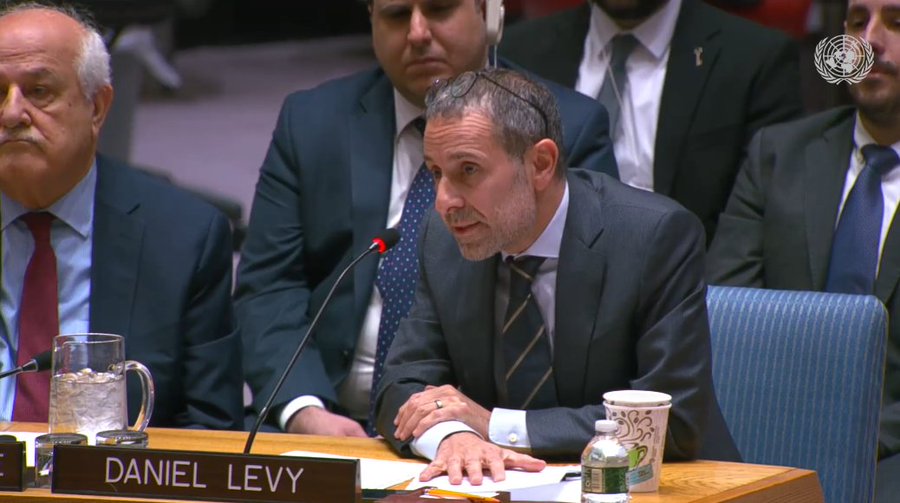
Continue reading