Top Israeli Military Chief Quits His Job Over 7 October

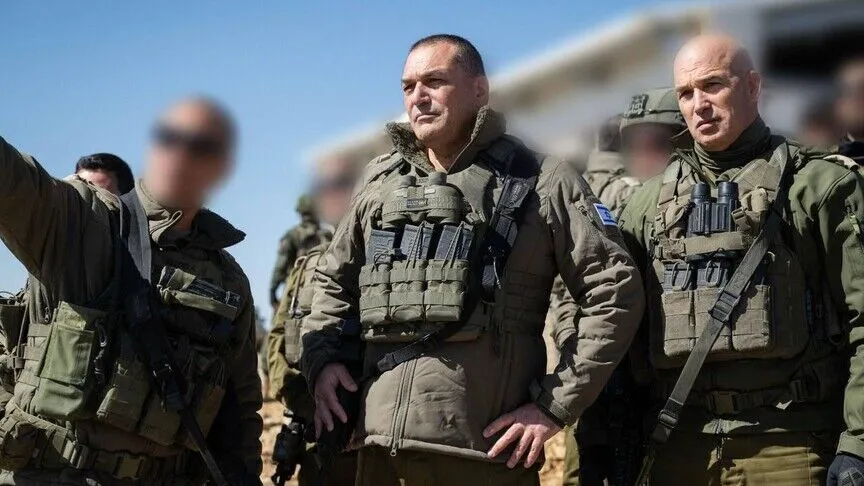
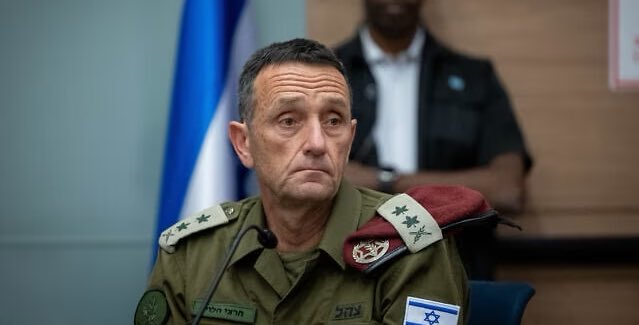
Israeli chief of staff Herzi Halevi made a dramatic announcement in the Israeli media he would resign in the coming December.

This piece of news is currently trending on the social with many speculating over the reasons for his acquittal amidst a war on Gaza that continues full blast ahead.  

His resignation, along with a string of others is being made for the failure to stop the 7 October attacks, 2023 in which Hamas fighters invaded Israeli territory took back to Gaza 250 hostages in never-before events in which up to 1200 Israelis were killed.

Israel’s Channel 12 broadcaster said Halevi decided to step down at the end of this year, pending the conclusion of investigations into the Israeli military’s failure to respond effectively to the Hamas attacks according to Anadolu.

Halevi disclosed his plan to step down during a conversation with his associates, indicating that he believes the end of the year is an appropriate time to announce his resignation, reports continued.

By late December, Tel Aviv is expected to complete its investigations into the army’s failure to thwart Hamas’s attack on 7 October, the Turkish news agency stated.

Halevi’s expected resignation comes after chief of the Israeli army’s intelligence Unit 8200 Brigadier General Yossi Sariel quit his post over the failure to prevent the 7 October events, according to Israeli media.

He is one of seven top army officials who resigned after criticism from different sections of the political and military establishments for failing to protect Israelis and stop the Hamas incursion.

In the last three months, the Israeli army’s Gaza Division commander, Brigadier General Avi Rosenfeld, head of the Shin Bet security agency’s Southern District, and an intelligence officer in the Gaza division have all resigned because of pressure.

On 3 September Tamir Yadai, the chief of the Israeli army’s ground forces, resigned for “personal reasons” after three years in his post.

Major General Aharon Haliva, head of the Israeli army’s Military Intelligence Directorate, resigned on 22 April for failing to predict the Hamas attacks into the Israeli territories that sorround Gaza.

And before that Brigadier General Amit Saar, head of the Military Intelligence Directorate’s Research Division, resigned in the first week of February 2024 “due to personal reasons, unrelated to the unit’s failure to sound the alarm about the 7 October attack, but over illness,” according to Israeli media reports.

More than 41,100 people, mostly women and children, have since been killed and over 95,100 injured, since Israel started its military offensive on Gaza after 7 October.

CrossFireArabia

CrossFireArabia
Dr. Marwan Asmar holds a PhD from Leeds University and is a freelance writer specializing on the Middle East. He has worked as a journalist since the early 1990s in Jordan and the Gulf countries, and been widely published, including at Albawaba, Gulf News, Al Ghad, World Press Review and others.

Related Posts

Israel Kills 200 Lebanese Children – UNICEF

More than four children have been killed or injured every day on average in Lebanon in the first 25 days of a temporary ceasefire with families still unable to return to their homes, said Save the Children.

New data from Lebanon’s Ministry of Health on Tuesday showed that 22 children have been killed and 89 injured since the temporary ceasefire started on 17 April. This brings the number of children killed in Israeli strikes since renewed escalation in hostilities in Lebanon on 2 March to almost 200 with about 2,900 people killed.

The violence and renewed displacement orders have forced more than one million people – or one in six of the population – from their homes with many now living with relatives, in host communities or in collective shelters.

The number of families living in collective shelters has increased 5% since the conditional ceasefire due to renewed displacement orders by Israeli forces and as families return home to find destroyed houses and damaged farmland so move back the collective shelters. There are now 44,800 children among about 125,000 people in collective shelters.

Thousands of children have been living in collective shelters for over two months in overcrowded conditions with inadequate water, sanitation and hygiene facilities leading to reports of scabies and growing health concerns.

Parents are reporting widespread behavioural changes among children living in collective shelters due to a lack of routine and reduced school engagement including loss of appetite and trouble sleeping. Many children are struggling to continue learning with some schools used as collective shelters and also difficulties accessing online learning due to limited electricity, and poor connectivity.

Tala*, 10, has been living in a collective shelter after being displaced from southern Lebanon, said:

“I just want the war to end so I can go home to my village and sleep in my own bed. I really miss school, I want to see my teachers and be with my friends, and study and play again.”

Nora Ingdal, Save the Children’s Lebanon Country Director, said:

“This ‘so called’ ceasefire that still sees more than four children killed or injured every day is not a ceasefire for children. Attacks on civilians have not stopped – it has simply continued under another name. Colleagues have told me that the airstrikes feel more intense in some areas than they ever did before. Children are not safe until there is a permanent and definitive ceasefire with no violations.”

With further peace talks set to take place on Thursday to determine next steps between Lebanon and Israel, Save the Children is calling on the international community to urgently work toward a permanent and definitive ceasefire and ensure flexible and sustained funding to protect children and allow families to return home to resume their lives.

Save the Children has worked in Lebanon since 1953. In collaboration with partners and local authorities, we are distributing essential items in hard-to-reach areas in the south, provide psychosocial support for children, educate families and children about the risks of unexploded ordnance, ensure access to safe water and sanitation facilities, and distribute essential items for those displaced.

ENDS:

Sources:

Lebanon Ministry of Health

Israeli strikes have killed 380 in Lebanon since truce: Health ministry

Lebanon Ministry of Health

Lebanon-Emergency-Sitrep-23-2026.pdf

Continue reading

You Missed

Israel Kills 200 Lebanese Children – UNICEF

Israel Kills 200 Lebanese Children – UNICEF

Nakba – 78 Years of Occupation Misery

Nakba – 78 Years of Occupation Misery

Palestinians Remember The Eveil Nakba

Palestinians Remember The Eveil Nakba

Nakba – 78 Years On

Nakba – 78 Years On

An Egyptian House in a German Town

An Egyptian House in a German Town

Nakba Art

Nakba Art