War and The Displaced in Lebanon’s South

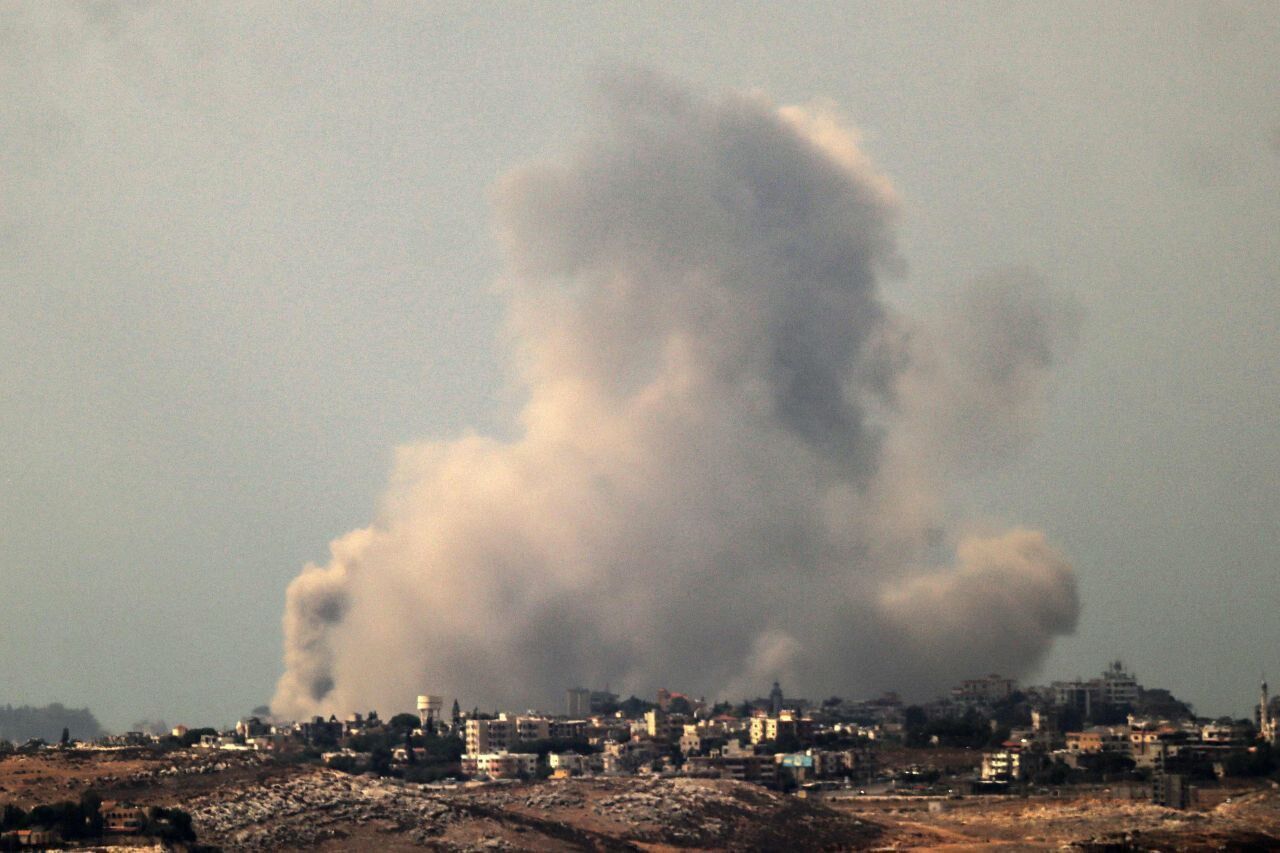
Five months of armed conflict along Lebanon’s southern border have resulted in hundreds of deaths and caused huge disruption to people’s lives, forcing more than 91,000 people from their homes and exacting a significant toll on their financial stability and psychological wellbeing.

Exchanges of fire across the border between Israeli forces and Hezbollah and other groups began on 8 October 2023 and show no signs of abating, while the conflict has recently spread to northeastern Lebanon with Israeli forces bombing the Baalbek-Hermel governorate.

Many of the displaced people left their homes with no possessions and struggle to get hold of basic necessities such as food and blankets. More than 60 families are living in an abandoned hotel repurposed into a shelter in Al-Merouaniye, some 60 kilometres from the border. One of its residents is Ali Hammoud, a barber and a father of three from Rab Al-Thalathine, who fights back tears as he recounts his family’s ordeal.

“My older son has had three mental crises,” he says. “We go to sleep, wake up, and repeat this every day. We are worried that our kids will develop mental problems from this situation. The same routine, day in and day out, is more burdensome to a child than an adult.”

Médecins Sans Frontières (MSF) teams are providing displaced people who fled the border region with psychological first aid. “We’re seeing an increase in depression and anxiety disorders,” says Felicitas Steinhoff, MSF mental health activity manager, who warns of the psychological toll of prolonged displacement.

“In terms of mental health, I think people are really good at coping with short-term stress, but what we see here is families who have been displaced from their homes for over five months now and who are living with a lot of uncertainty around when and even if they might be able to go back,” she says.

Our mobile medical team also provides people with care for chronic diseases and makes regular visits to a clinic in Nabatiyeh governorate, alongside the border.

The team provided 373 consultations since the start of 2024 in both locations. Manahel Rammel, who fled her home in the border town of Oudaisseh on 8 October, says that children and young people are suffering the most. “Young people aged between 18 and 20 sit around without any idea of what they want to do,” she says. “Their future is gone. The future of youth is gone.”

Manahel’s own daughter is fortunate to be studying in Beirut, but Manahel is unable to visit her there due to the high cost of transport. Like many people across Lebanon, Manahel already struggled to make ends meet before the current crisis, but being displaced has exacerbated her financial difficulties.

Lebanon is grappling with its fourth year of severe economic turmoil, which has seen two-thirds of its population pushed into poverty. The current violence has halted or severely impacted many people’s livelihoods, leaving them unable to meet even basic needs.

Ali initially sought refuge in Beirut, but after his savings were exhausted, he moved to the shelter in Al-Merouaniye. “We left our homes with nothing but the shirts on our backs,” says Ali.

“During the truce [a four-day truce in November 2023], we went back to pack some essentials and clothes just to warm ourselves… I had some savings, but they all ran out. I stayed in Beirut for two months and I spent all my money before eventually moving to this shelter,” he says.

While the walls of the abandoned hotel offer some safety and warmth to the families sheltering there, they – like thousands of other displaced people across Lebanon – are clearly in need of comprehensive and sustained assistance as they face an uncertain future.

“If I could rub a magic lantern right at this moment, I would wish to be back home in my village,” says Ali. “We have no solution, only God knows where we’re headed.”

Reliefweb

CrossFireArabia

CrossFireArabia
Dr. Marwan Asmar holds a PhD from Leeds University and is a freelance writer specializing on the Middle East. He has worked as a journalist since the early 1990s in Jordan and the Gulf countries, and been widely published, including at Albawaba, Gulf News, Al Ghad, World Press Review and others.

Related Posts

Albanese Calls For World Force to Protect Civilians in Gaza, West Bank

UN Special Rapporteur Francesca Albanese called Sunday for an “international protection presence” in the occupied West Bank, East Jerusalem and Gaza, saying such a deployment was “absolutely urgent.”

“Third states have an obligation, per the ICJ, to act to end Israel’s unlawful occupation,” Albanese wrote on the US social media platform X, referring to a July 2024 advisory opinion by the International Court of Justice that deemed Israel’s occupation of Palestinian territory unlawful and said states must not assist in maintaining it.

Albanese also questioned whether UN Secretary-General Antonio Guterres’ diplomatic efforts and the General Assembly’s “Uniting for Peace” mechanism could overcome the Security Council’s deadlock on the conflict.

The mechanism allows the General Assembly to consider international peace and security issues when the Security Council cannot act because of a lack of unanimity among its permanent members. The council has repeatedly been unable to take action on Gaza and the West Bank amid vetoes by the US. Anadolu

Continue reading
40 Million Tons of Rubble: Gaza Ministry Faces Challenges in Removing it

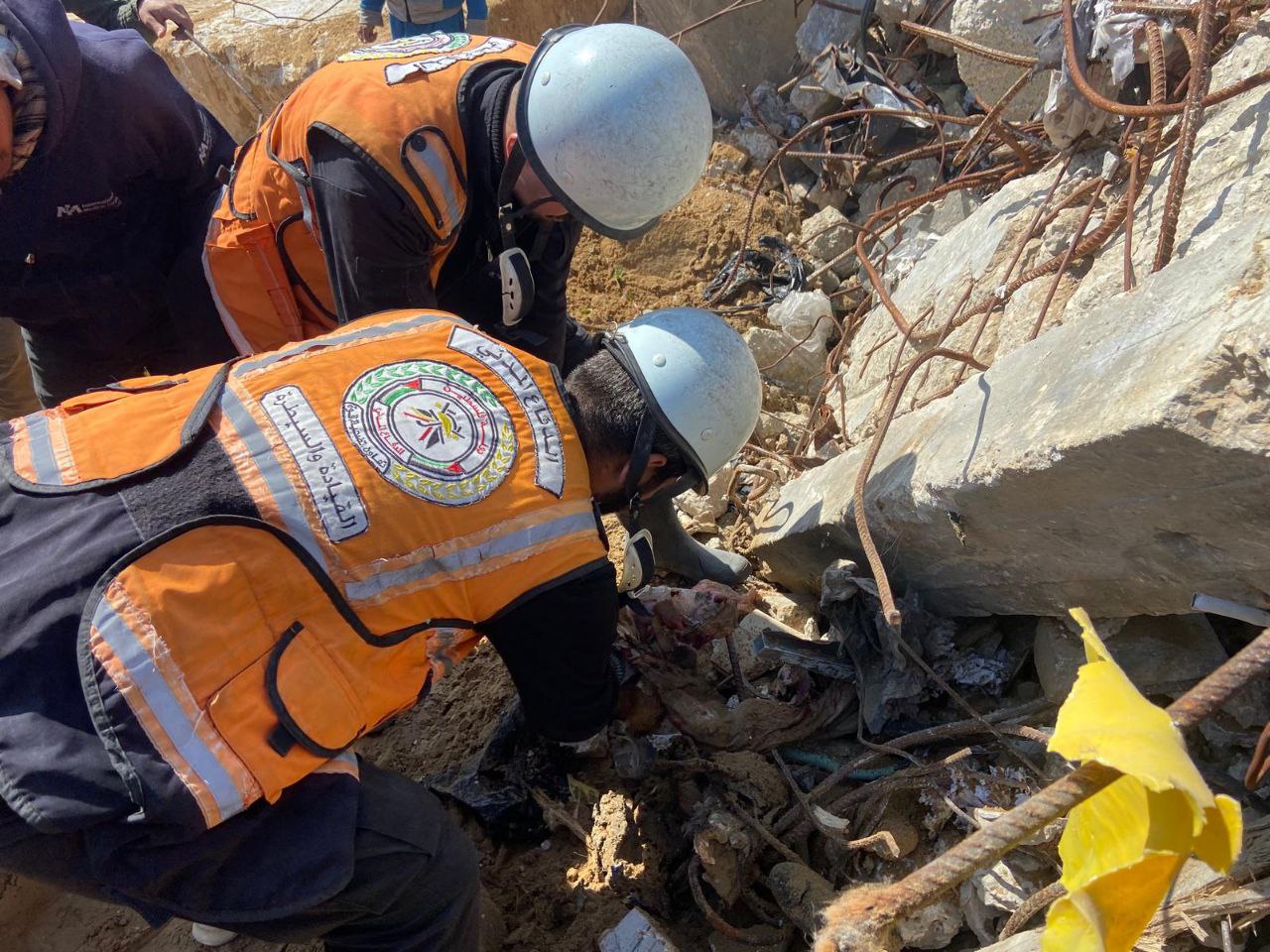
Gaza’s Ministry of Public Works and Housing confirmed that Israel’s ongoing targeting of tents and shelters of displaced people in the enclave is a systematic policy of destroying the basic necessities of life. It noted the amount of rubble that has piled up in the various regions of the Strip has exceeded 40 million tons.

Ministry spokesman Najla Hammad told the Sanad News Agency, Monday, the ministry is facing unprecedented challenges in removing the rubble because of the severe shortage of heavy machinery due to the Israeli-imposed blockade and the closure of crossings.

Hammad pointed out that the recent Israeli aggression has displaced more than 80 families, leaving them homeless and exposed, noting the ministry received widespread appeals to replace the tents that have been damaged and/or completely destroyed.

Read also: “Public Works”: Only 5% of shelter supplies enter Gaza

She added what is making things worse is that the Israeli occupation is preventing the entry of tents, tarpaulins, and shelter supplies and the reduction of usable land in the Gaza Strip to less than 30%.

Hammad explained that crews are continuing to work on opening main roads and providing alternative spaces for service facilities and educational centers but tough going. However, she announced the completion of the removal of the rubble at the site of the Hijazi Clinic in northern Gaza, in cooperation with the United Nations Development Programme (UNDP), and its handover to the Ministry of Health for reconstruction.

She indicated that the demolition and clearing of rubble is currently limited to only 4 out of the 10 sites previously identified, due to security restrictions and a lack of heavy equipment. The teams are operating with only one excavator and a very limited number of trucks.

Hammad noted the use of local alternatives and solutions, such as recycling crushed rubble to level roads and areas threatened by flooding, and melting plastic and aluminum to recycle supplies for health units in the camps is also moving.

UN reports confirm that the scale of destruction and rubble in the Gaza Strip surpasses that of major wars and conflicts in modern history. International organizations warn that preventing the entry of machinery, engineering equipment, and shelter materials exacerbates the humanitarian, environmental, and health catastrophe, hindering the provision of even the most basic services to more than two million displaced people lacking safe shelter.

The Ministry of Public Works and Housing in Gaza previously warned in August of the severe deterioration in the housing sector due to the widespread presence of tons of rubble. It emphasized that the aid and tents permitted entry by the Israeli occupation amount to no more than 5% of the actual needs of the displaced, given the strict restrictions at the crossings and the repeated forced displacement.

Recently, the Ministry of Public Works and Housing launched an emergency program to repair and renovate partially damaged homes in the Gaza Strip, a step aimed at persuading and facilitating the return of displaced families to their homes and original areas.

Last June, Hammad, announced a comprehensive plan for managing, storing, and crushing rubble for reuse, as part of the ongoing efforts to address the issue of debris resulting from the conflict.

Hammad said that the Ministry is presently working with the UNDP and have to-date  constructed more than 15 shelters that have accommodated over 1,700 displaced families in the Gaza Strip, including five centers in the south that alone have housed approximately 700 families.

Continue reading

You Missed

Morocco-Israel: Normalization Stops at The Top

  • By Heba
  • August 24, 2026
  • 2 views
Morocco-Israel: Normalization Stops at The Top

Albanese Calls For World Force to Protect Civilians in Gaza, West Bank

Albanese Calls For World Force to Protect Civilians in Gaza, West Bank

40 Million Tons of Rubble: Gaza Ministry Faces Challenges in Removing it

40 Million Tons of Rubble: Gaza Ministry Faces Challenges in Removing it

Join The Queue For The Drops

Join The Queue For The Drops

‘My Way Out of Insanity’

‘My Way Out of Insanity’

The Child, Tree and The Dark

The Child, Tree and The Dark