Shattered Dreams of Gaza

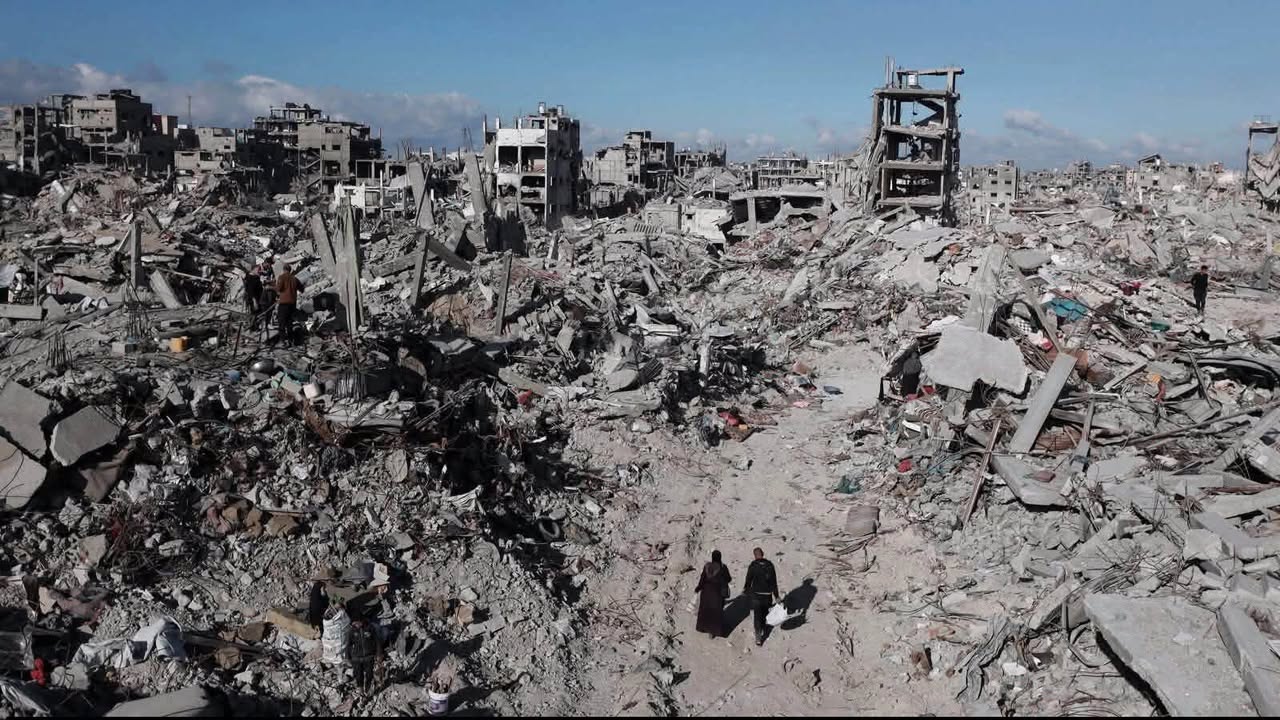
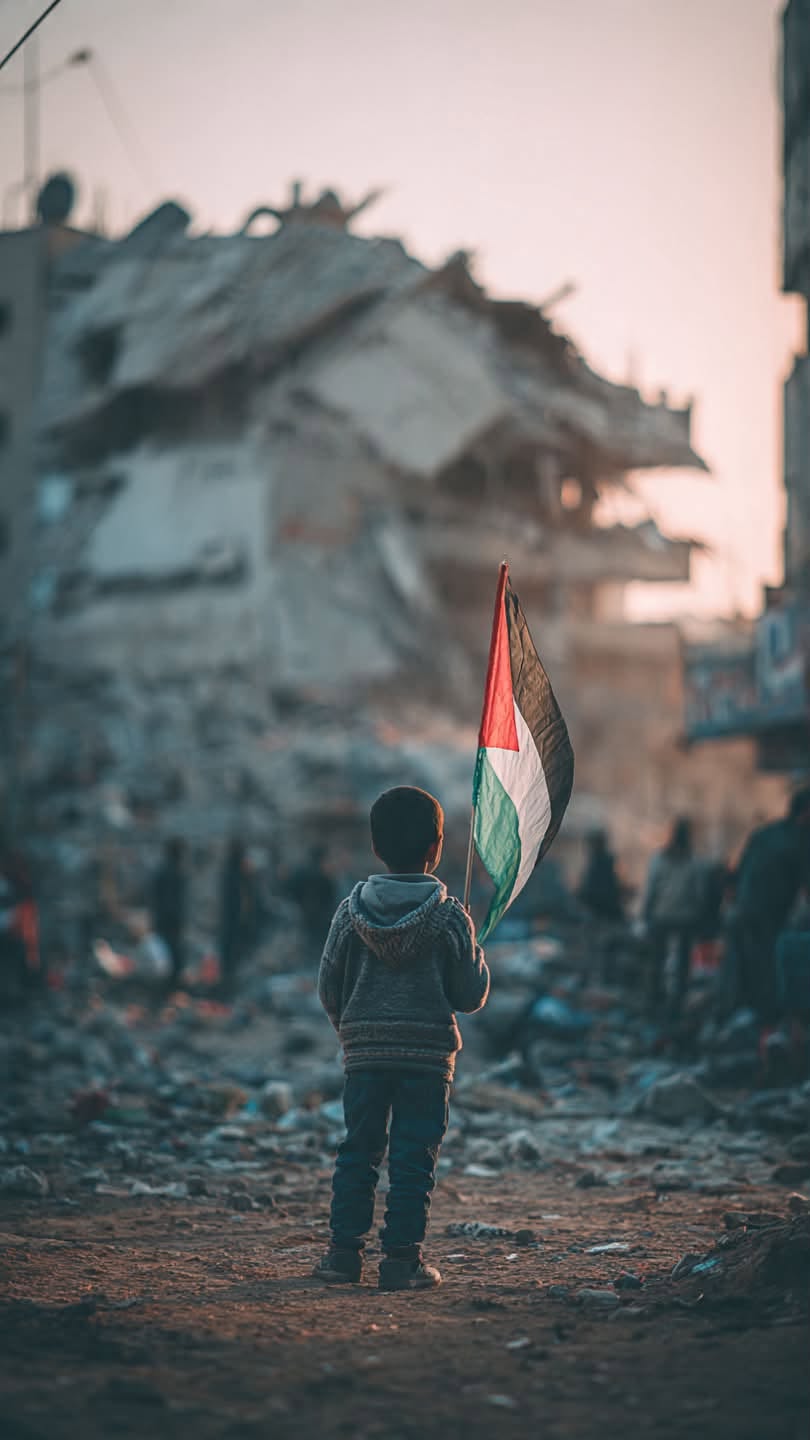
In Gaza, where daily life has become a battle for survival, the stories of Palestinians who lost their homes in the midst of the genocidal war waged by Israel on the Strip 10 months ago come as a mirror-image reflecting the suffering of an entire people, carrying with it bitter human details of what it means for someone to lose their home.

The Al-Sayyid family was living in peace until that fateful night. “The night had fallen, and suddenly, we heard the sound of a huge explosion. Then the voices of the remaining neighbors shouted ‘I had to evacuate the area because there was a threat to blow up the residential tower opposite my house,’” Ahmed, the father, tells the Palestinian Information Center.

At first Ahmed’s family of a wife and seven children moved to a shelter school in the Sheikh Radwan neighborhood south of Gaza City, and as the Israeli ground invasion expanded, they moved to Al-Aqsa University in Khan Younis but when the Israeli army withdrew from the city, they went back.

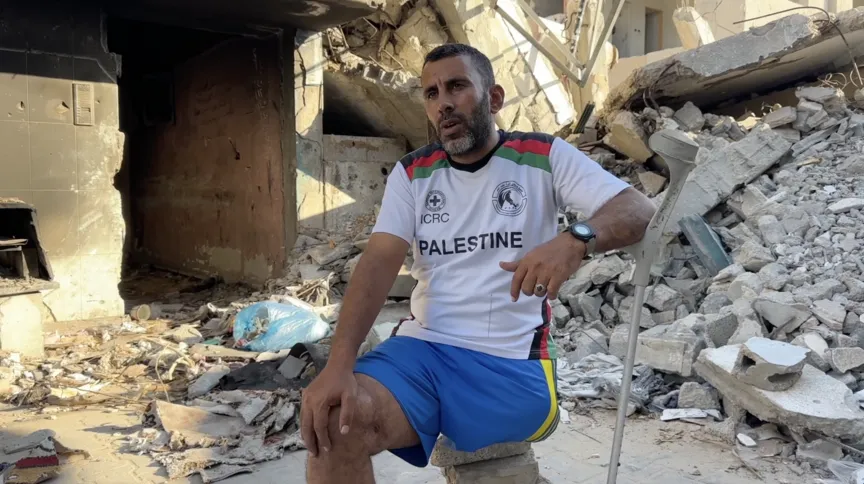
“I did not wait a minute after I learned of the occupation army retreat to the northern parts of Gaza Strip. Me and my brother rushed to inspect our three-story house. As soon as we arrived there, we were shocked by what happened to the place,” Ahmed told the PalestineIn formation Center Tuesday.

“I found a large part of the house destroyed by artillery shells and burning furniture. It was harsh moments. This is the first time I have faced such an experience like thousands of others who repeatedly lost their homes in previous Israeli wars.”

The man, who is in his 50s, stresses “losing a house is not an easy matter. You are not lose stones here. You feel as if someone has token you to a distant world, erasing a lifetime from your memory. In every corner of the house there are memories, feelings, emotions and life experiences.”

Israel has systematically and extensively destroyed homes in Gaza, completely destroying hundreds of thousands of housing units and in just 283 days,  it has turned their owners and residents into homeless people living in tents and shelters.

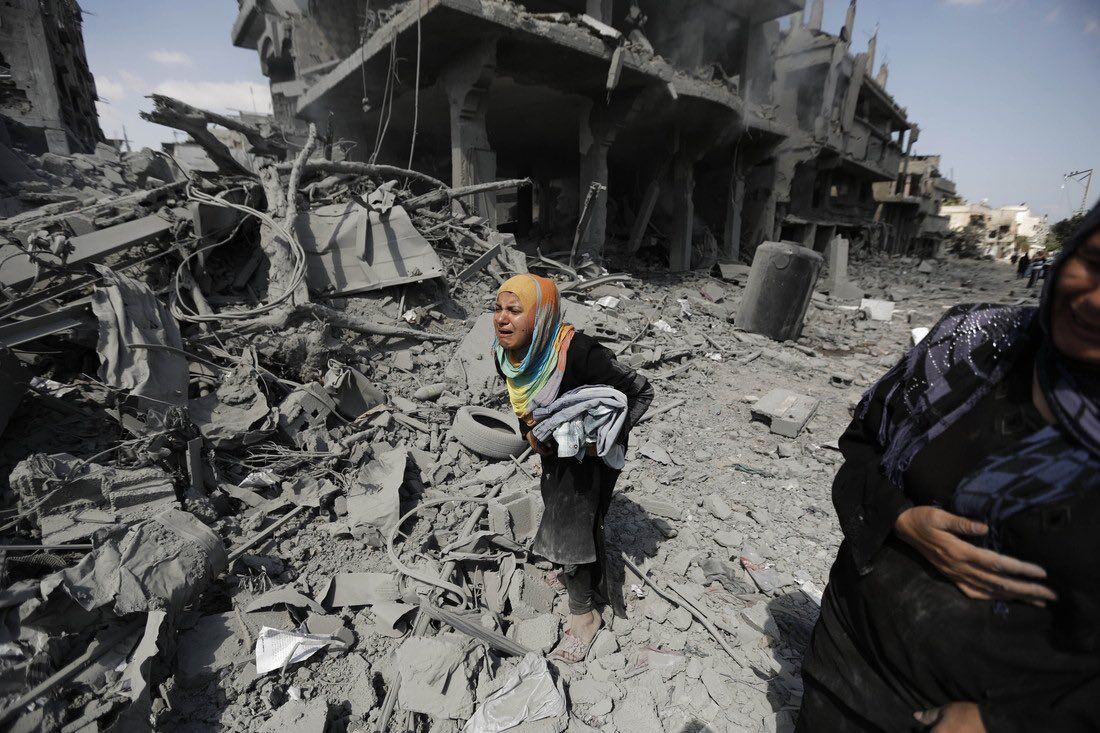
Israel warplanes bomb houses over the heads of their residents resulting in their instant deaths. In many times the people mostly women and children are deeply buried in the rubble of these homes. This is not to forget the aerial bombardment of blowing up residential blocks.

Residents ask why is this happening to us? There is no need for it. International organizations protest and condemn but to no avail.

Ahmed points out the psychological and social pain is more severe than the material loss. “Many a time, my tongue twists and turns when my children ask ‘we are going to get back to our house, how long will it take to repair it, how long do we have to stay here?,” Ahmad waves his hands at a loss.

 “How can children feel safe in a temporary shelter? They have lost everything, even their small toys.”

Satellite images by the United Nations Satellite Center show 35% of all buildings in the Gaza Strip are either completely destroyed or extensively damaged due to this Israeli war of annihilation. This means the number of buildings razed to the ground is 88,868.

In its last March assessment, the center used high-resolution images taken by satellites and collected on 29 February, and compared them with images taken before and after the outbreak of the war.

Dreams crushed

Whenever she remembers her home and her memories there, Aya Ahmad, is reduced to tears.  “I had a private room and/or a suite. All my memories, books, and office are gone now.”

“I am a medical student at the beginning of my third year, and at the beginning of my university studies, my father prepared the second floor of our house, bought me a large collection of medical books, and prepared a special room for me with an office, on the walls of which I wrote my hopes and ambitions,” Aya told the Palestinian Center

The 23-year-old girl lives in the city of Khan Yunis, and she has never been forced to move in previous Israeli wars on Gaza, as in this war.

“This is the first time I have been displaced, and when we were forced to do so at the beginning of December 2023, we cried a lot then. We took a few of the house’s belongings in the hope that we will get back.

But this wasn’t so, its been 10 months now since the war started, it hasn’t stopped, we were not able to return to our house which we lost subsequently due to the bombing, and we lost most of our personal belongings there. We moved between tents, and we lost many loved ones, and then the destruction of the house increased our pain. My certificates, my clothes, and my memories were all crushed, and with them many dreams were lost too.”

The garden of the house was Aya’s refuge after the rigors of a long university day. She had pleasant evenings with her parents under the palm and lemon trees on summer nights. But no more, for all of the family now are sheltering in tents of those that were forcefully displaced.

“My wish was to return home, I even wanted to return to it after the occupation forces retreated from our area. At the time, it was still standing and was only partially damaged, but the occupation army returned months later and bombed.”

Aya is still confident about rebuilding her house and whatever

the occupation destroyed, despite the pain she experiences whenever she looks at pictures of her former home and the social memories of each moment there.

A UN assessment found it would need a fleet of more than 100 trucks working for 15 years to remove the 40 million tons of rubble in Gaza. Such an operation could between $500 and $600 million.

According to the assessment by the UN Environment Programme, last month, 137,297 buildings were damaged in Gaza alone not to say anything about the destroyed buildings.

Not stones!

As for Abeer Abu Salem, resident in the Beit Lahia Project in the north Gaza, the smell of gunpowder still haunts her, as if it had just happened. “I will never forget what I experienced that evening, and it cannot be erased from my memory. I cannot describe the scene because of the horror of what I saw.”

Abeer recounts what happened: “I heard the sound of an explosion and saw the walls collapsing and columns flying. I tried to escape but could not, and with the air closing in, I found myself in the second room. I cannot imagine that I am still alive. It all happened in seconds, turning my life upside down.”

Abeer stayed in the Indonesian hospital for about a month, before the occupation army forced them to flee to the south of the Gaza Strip. When asked about what it means to lose a house, she answers:

“It is not easy to lose your house you grew up in. The house is full of precious memories. We worked hard for many years so that my father could build it for us as an apartment above the family home.”

She points out the fear she experiences is not related to their ability to rebuild the house that was leveled, as much as it is to the emotional feelings of seeing what happened to the family home.

 “We are now displaced. We do not know the fate that awaits us after the end of this cursed war. We cannot think about whether we will truly return to Beit Lahia or whether we will live what our ancestors lived when they forcibly left their homes 76 years ago in the Nakba of 1948 and died on “I hope to return,” she laments.

CrossFireArabia

CrossFireArabia
Dr. Marwan Asmar holds a PhD from Leeds University and is a freelance writer specializing on the Middle East. He has worked as a journalist since the early 1990s in Jordan and the Gulf countries, and been widely published, including at Albawaba, Gulf News, Al Ghad, World Press Review and others.

Related Posts

In The Grip of Starvation: Israel Will Not Let Gaza Rest!

Gaza Government Media Office Advisor Taysir Muhaysin warned of a gradual return to famine in the Gaza Strip as a result of continued Israeli policies restricting aid entry and other basic necessities.

He told the Sanad News Agency the amount of aid entering Gaza by truck does not exceed 27% of that stipulated in the last ceasefire agreement.

Muhaysin stated the Israeli policy of reducing aid is not limited to food and humanitarian supplies, but extends to fuel, including diesel, gasoline, and cooking gas, which is an essential commodity for Palestinian families to manage their daily lives and prepare whatever food they can find under the difficult living conditions.

Read also: Al-Hayek: Gaza sounds the alarm of famine due to declining aid

Government institutions in the Strip continue to perform their duties at the minimum level possible, given the available resources and the exceptional circumstances Gaza is experiencing, whilst Muhaysin denying an administrative vacuum in the enclave.

He affirmed that Gaza government institutions continue to function and maintain a minimum level of stability and essential services essential to the population.

The Media Office Advisor indicated different government bodies expressed their full readiness to hand over their administrative and executive responsibilities to the “technocratic committee” as soon as it arrives in the Strip to begin its work, in accordance with the ceasefire agreement signed in 10 October, 2025. He stressed however, there are real obstacles as procedure and conditions is imposed by the Israel occupation that prevent this.

A Complex Humanitarian Crisis…

Muhaysin warned the living conditions in Gaza are really a “complex humanitarian crisis” affecting all aspects of life.

“Hundreds of thousands of citizens are still living in tents amidst the spread of epidemics and diseases,” whilst pointing to the decline in the capabilities of the health system and municipal services in addition to the severe shortage of food and essential shelter supplies.

The health sector faces increasing risks due to the ongoing shortage of fuel and medical supplies. Muhaysin noted the administration of the Al-Aqsa Hospital were forced to shutdown about 50% of its power generators, and this threatens the lives of patients, especially kidney patients, premature infants, and those in operating rooms and intensive care units.

“What Gaza is witnessing today represents an ongoing humanitarian catastrophe, caused by the decisions and measures imposed by the Israeli occupation, which has led to an unprecedented deterioration in living, health, and humanitarian conditions.”

He pointed out that the technocratic committee that is yet to enter the Gaza Strip needs to assuming its responsibilities across the entire enclave, and this needs to happen with the concurrent withdrawal of the Israeli occupation forces from the areas they reoccupied in Gaza and the commencement of international forces operations tasked with monitoring and security separation under the terms of the ceasefire.

Muhaysin accuses the Israeli occupation of attempting to impose new realities on the ground through excluding areas east of what is known as the “yellow line” from the committee’s administrative responsibility. He said these go against the principles agreed upon in the proposals put forward to end the ongoing crisis.

He concluded by saying the occupation continues to impose its own vision on the future of the Gaza Strip by repeatedly introducing new conditions and ideas, contradicting the fundamental understandings and initiatives discussed over the past months. This, he asserted, obstructs any genuine efforts to alleviate the suffering of the population and end the escalating humanitarian crisis.

The specter of famine is returning to haunt the Gaza Strip, and is coinciding with the tightening of military measures at the crossings controlled by the Israeli occupation. Such prevents the entry of humanitarian and relief aid, and allows militias affiliated with the occupation to steal the incoming aid.

At the end of May, the Palestinian Council of Ministers warned of the severity of UN reports that indicate that about 1.6 million Palestinians in the Gaza Strip, nearly 77% of the population, face the immediate threat of famine due to declining humanitarian funding and reduced aid flow.

In a previous statement to Sanad News Agency, Ali al-Hayek, head of the Palestinian Businessmen Association, warned of the deteriorating humanitarian situation in the Gaza Strip. He emphasized that famine indicators are becoming increasingly apparent amid the continued decline in humanitarian aid and the curtailment of relief organizations’ operations. He noted the Gaza situation “threatens the onset of an unprecedented humanitarian catastrophe.”

This article is based on an extended interview by Advisor Taysir Muhaysin published in Arabic by the Sanad News Agency and republished crossfirearabia.com

Continue reading
Jordan 2007! Elections and Hiccups: Looking Backwards

EDITOR’S NOTE: This article was written more than 18 years again in October 2007 for the 7iber.com online portal and is reprinted her

Its election time! As a good non-totalitarian democrat I love the elections, when they happen that is. What I really love about the elections is the time leading up to their finale when voters go up to the polling stations and vote. Although I’ve never voted in my life, I’ve always carefully watched election campaigns, right from start to finish. They are exciting days, of banners hoisted, constituency meets, mini-rallies and all the rest of it.

Prospective candidates, some running for the very first time and of which we are expected to know and vote for, hoist their banners across streets and roundabouts, screaming at the electorate to vote for them because they are the best candidates.

This is the 15th elections for the 15th Lower House, and parliament in Jordan has consistently been in session since 1989, after a long absence of parliamentary life in the country. I am proud to say I covered the 1993 elections, the 1997 ones, and just about missed the 2003 elections because of being away from Jordan.

In all these years, the excitement never faded. Islamic Action Front candidates continuously stood under the IAF banner, but this was never the case with the other political parties, such as the nationalists, the leftists, the middle-of-the-roaders and the tribalists. Although a lot of parties came on the scene after 1993, like Al Ahad, Al Yaqatha and Al Risala and still many others, for some reason or another, many of their candidates preferred to stand as independents arguing they are known for their own independent political personalities rather than as representatives of their parties.

Is this a wrong attitude? Well, maybe. However, once some of them were elected to the Lower House of Parliament, they revealed their true political colors and supposedly argued on party-political lines. Ironically, most of the electorate never knew what those lines were when the MP was just a candidate running for a seat. Many of these parliamentarians argued that they stood a better chance of getting into parliament as individuals rather than under the banner of their political parties. This is due to the belief that such organizations were still seen as relatively new and unknown, despite the fact that many, including leftists, Arab nationalists and Baathists parties, had existed in the 1960s and 1970s, but many of which were effectively banned.

They may of course have been right in their assumptions as political parties were just made legal in the early 1990s, and have thus needed time to be nurtured. As independents, the negative connotations of belonging to political parties would wither away among the electorates who needed to get used to voting for candidates on party political platforms. But the problem with running on independent tickets is that it actually perpetuated individualism, parochialism and depended on the appeal to family, kinship and tribal relations. In past Jordanian parliamentary elections, and even today, the tribal bloc vote has been very important in deciding who wins and who loses.

The effect of this frustrates the process of developing political parties, which, except for the Islamic Action Front, remains weak, ineffective and are no more than talking shop. They have even been used by established politicians to further their own individual political ends and causes. This stands contrary to the need for building modern, strong political parties designed to make democracy and the democratic experiment effective.

Realizing that there is a lot to say about the tribal vote, sometimes political candidates, even Islamists, have been known to appeal to kinship and family relationships as a means of getting into parliament. Once they do, they start the usual game of political party meandering under the parliamentary dome.

That may also be why election banners and slogans on roads are no more than hackneyed, clichéd phrases emptied from their political content. They are read for what they are: brief formulaic statements, lacking the resonance of strong, vibrant agendas and political manifestos that promise change and development, as is the case with elections in more mature democracies around the world.

Political parties in Europe, for instance, are big machines with national and local clout. Everyone, especially the main personalities, know who they are, what they stand for, and what they hope to do once they form the government, or become the party in the majority. In this part of the world, the political culture, machinations and value systems are different and have to be treated differently.

However, in the final analysis, a political party is a political party in which ever part of the world it belongs to; sharing little differences with its counterparts. That’s why such parties have to be strong, come out of their closed shops and enclosures, and appeal to the masses; become broad-based with clout in order to be listened to by decision-makers.

In all fairness however, we have to be gentle with our political parties by understanding the history and the context of where they came from. It took political parties in the western world, centuries to develop and become the national institutions they are today.
They emerged through political struggles and a great deal of pushing and shoving.

But does that mean we have to take that long? Not necessarily, the element of transition from one era to another can take place quickly, but it has to be supported by the state and government. There has to be a political will for democracy, where parties are nurtured rather than left alone.

Jordan is doing well despite different hiccups, but the Arab world in general has to pull itself by the bootstraps if it is to enter into a meaningful political era where representation, democracy and political pluralism is seen as healthy for a society. Our problem now is to move faster in order to catch up with the rest of the world, and develop politically.

In the meantime, let’s for a minute stop and enjoy the political actions of the electoral campaign.

Continue reading

You Missed

Children of Gaza in Danger

Children of Gaza in Danger

Israeli Violates The ‘Gaza Ceasefire’ 10 Times

Israeli Violates The ‘Gaza Ceasefire’ 10 Times

Price of Israel’s War in Lebanon

Price of Israel’s War in Lebanon

Gaza’s Dead Mounts Despite Ceasefire

Gaza’s Dead Mounts Despite Ceasefire

In The Grip of Starvation: Israel Will Not Let Gaza Rest!

In The Grip of Starvation: Israel Will Not Let Gaza Rest!

Trump to Netanyahu: ‘You’re crazy. If it weren’t for me, you’d be in jail’ – Axios

Trump to Netanyahu: ‘You’re crazy. If it weren’t for me, you’d be in jail’ – Axios