Israeli Source: Tel Aviv Talks For The 1st Time to Hamas

An Israeli political source familiar with negotiations on a ceasefire in the Gaza Strip said Saturday that Tel Aviv is, for the first time, conducting talks with Hamas on the possibility of ending the war, said a media report.

“This negotiation is different than the ones that brought about the previous deals,” said the source, according to the Haaretz newspaper.

“While the previous deals dealt with the release of the hostages … this deal touches on the issue of ending the war. Therefore, everything is interconnected. This is a very complex deal,” he said.

The source added that a proposed agreement includes a 60-day ceasefire during which 10 living Israeli hostages would be released, and intensive negotiations on ending the war would begin, according to Anadolu.

He said the talks “touches on issues of how the war will end or continue, what will happen in Gaza and how all the hostages will be returned. Within the framework of the deal, there is an entire clause that deals with issues to be discussed regarding the end of the war. Both parties can add topics, and they will be discussed within the 60-day cease-fire.”

The source claimed that “the Israeli delegation embarked to Doha with a broad scope of action and a satisfactory mandate. There is enough flexibility to reach an agreement, without compromising on issues such as Israel’s security needs.”

Israeli media outlets, including the public broadcaster, KAN, reported Friday that Israel is considering sending a second delegation to Doha if the Palestinian side agrees to discuss the deal’s details, amid mediation by Qatar, Egypt and the US.

The proposals reportedly include a 60-day ceasefire, during which 10 living hostages and 18 bodies would be released, with final negotiations on ending the war to resume during the truce.

Despite gaps on issues such as the mechanism for aid delivery and Israeli troop deployment, Israeli sources still see the deal as possible, according to the Israeli broadcaster.

US President Donald Trump announced late Friday that 10 hostages in Gaza would be released soon.

Trump, whose administration offers unconditional support for Israel in its war on Gaza, did not provide details.

During the last 21 months, multiple rounds of indirect negotiations have been held between Israel and the Palestine resistance group, Hamas, to reach a ceasefire and carry out prisoner exchanges.

Two partial agreements were reached in November 2023 and in January.

Israeli Prime Minister Benjamin Netanyahu, who is wanted by the International Criminal Court, avoided finalizing the latest agreement and resumed the war on March 18.

Hamas has repeatedly stated its willingness to release all Israeli hostages “in one batch” in exchange for ending the genocide and a full Israeli military withdrawal from Gaza.

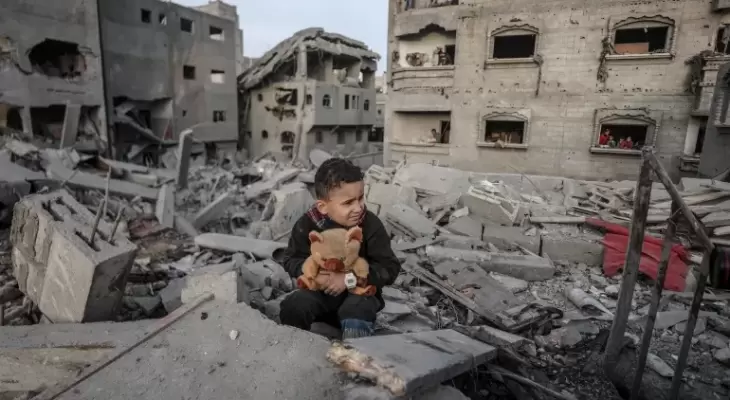
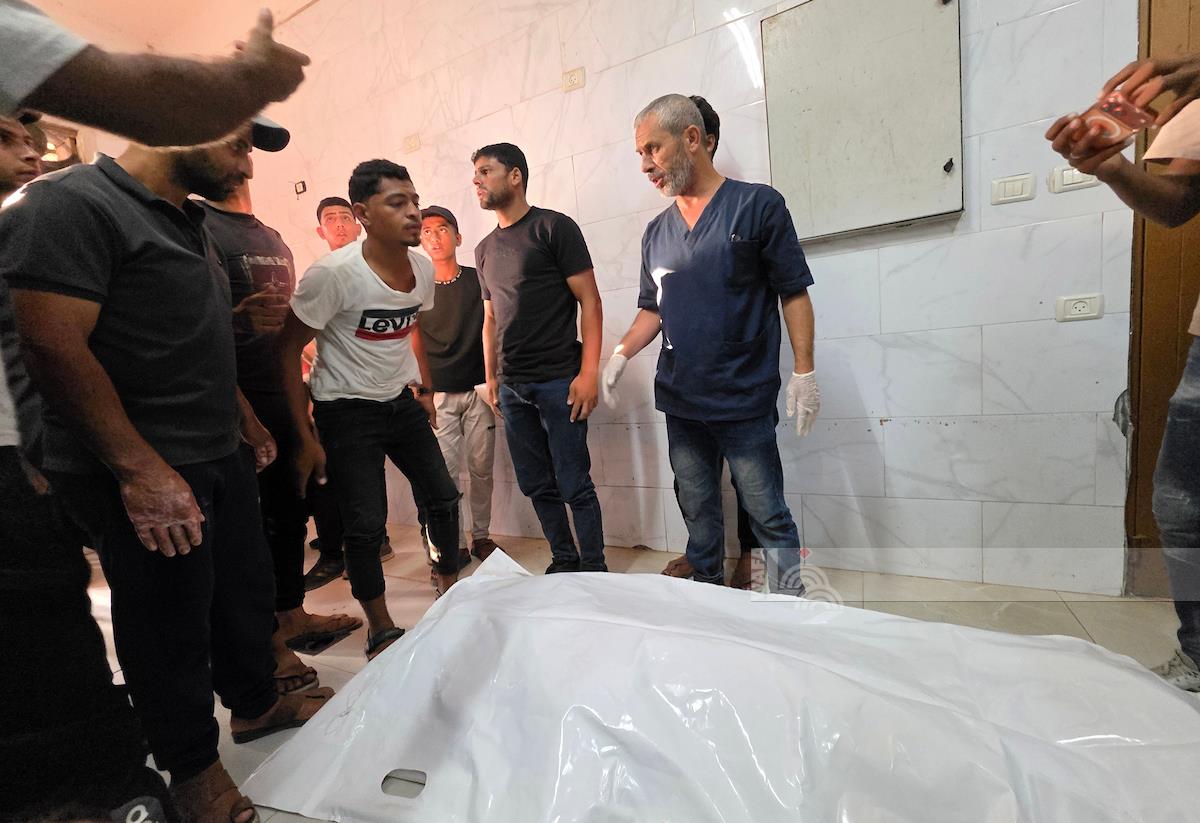
Rejecting international calls for a ceasefire, the Israeli army has pursued a brutal offensive on Gaza since the end of 2023, killing nearly 59,000 Palestinians, most of them women and children.

The relentless bombardment has destroyed the enclave and led to food shortages and the spread of diseases.

Last November, the International Criminal Court issued arrest warrants for Netanyahu and his former Defense Minister Yoav Gallant for war crimes and crimes against humanity in Gaza.

Israel also faces a genocide case at the International Court of Justice for its war on the enclave.

  • CrossFireArabia

    CrossFireArabia
    Dr. Marwan Asmar holds a PhD from Leeds University and is a freelance writer specializing on the Middle East. He has worked as a journalist since the early 1990s in Jordan and the Gulf countries, and been widely published, including at Albawaba, Gulf News, Al Ghad, World Press Review and others.

    Related Posts

    US/Israel Used 3000 Missiles in First 36 Hours of War

    More than 3,000 precision-guided munitions and interceptors were used in the first 36 hours of the US-Israeli offensive against Iran, revealing a major weakness in the supply chain.

    Estimates by the Payne Institute indicated that Iran launched over 1,000 weapons across the region, including around 380 ballistic missiles, 700 Shahed drones, and 50 air defense missiles, prompting large-scale interception attempts by the US, Israel, and Gulf countries that have been targets of Iranian retaliatory attacks.

    During the opening phase of the campaign, US forces used a wide range of offensive weapons, including 210 JDAM precision-guided bombs, 120 Tomahawk cruise missiles, 120 low-cost drones, and 90 AGM-88 anti-radiation missiles targeting Iranian radar systems.

    Israeli forces also conducted extensive strikes, using about 280 Spice-guided bombs, 140 smart bomb kits, 70 Rampage supersonic missiles, and 50 Delilah cruise or loitering missiles, according to the estimates.

    Defensive systems were also heavily used to intercept Iranian attacks. The US fired approximately 180 SM-2/SM-3/SM-6 naval interceptors, 90 Patriot PAC-2/PAC-3 missiles, and 40 THAAD interceptors, while Israel deployed 70 Iron Dome Tamir interceptors, 40 Arrow missiles, and 35 David’s Sling interceptors.

    Regional partners also participated in air defense efforts, with Gulf states launching about 250 Patriot PAC-3 interceptors and 30 THAAD missiles, the estimates showed.

    The intense exchange of missiles and drones underscored a broader strategic challenge, according to media reports. While defensive systems have largely intercepted incoming attacks, the cost and volume of munitions used are placing significant strain on Western supply chains.

    Replenishing these arsenals is not only a financial challenge but also a supply-chain issue tied to critical minerals, including cobalt, tungsten, and rare earth elements that are essential for guidance systems, electronics, and rocket motors.

    Many of these materials are sourced from limited suppliers, with China dominating several key mineral markets, raising concerns that prolonged conflict could expose vulnerabilities in Western defense manufacturing capacity. Anadolu

    Continue reading

    You Missed

    Israeli army: We dropped 7500 bombs in Iran since the start of the war

    Israeli army: We dropped 7500 bombs in Iran since the start of the war

    Ali Larijani: The US doesn’t know us and… it won’t be able to recreate the Venezula scenario with us’

    Ali Larijani: The US doesn’t know us and… it won’t be able to recreate the Venezula scenario with us’

    IRGC says Iran started its Operation True Promise 26 by launching missiles and drones against Israel

    IRGC says Iran started its Operation True Promise  26 by launching missiles and drones against Israel

    Iran Halts Attacks on Neighboring States Unless…

    Iran Halts Attacks on Neighboring States Unless…

    Iranian govt spokesman: 30% of victims are children; 165 of them killed among 1300 civilians who died by US/Israeli bombing

    Iranian govt spokesman: 30% of victims are children; 165 of them killed among 1300 civilians who died by US/Israeli bombing

    White House: ‘We destroyed more than 30 Iranian ships and are moving to destroying the navy completely’

    White House: ‘We destroyed more than 30 Iranian ships and are moving to destroying the navy completely’