Under Israeli Guns: People of Khan Younis Told to Move

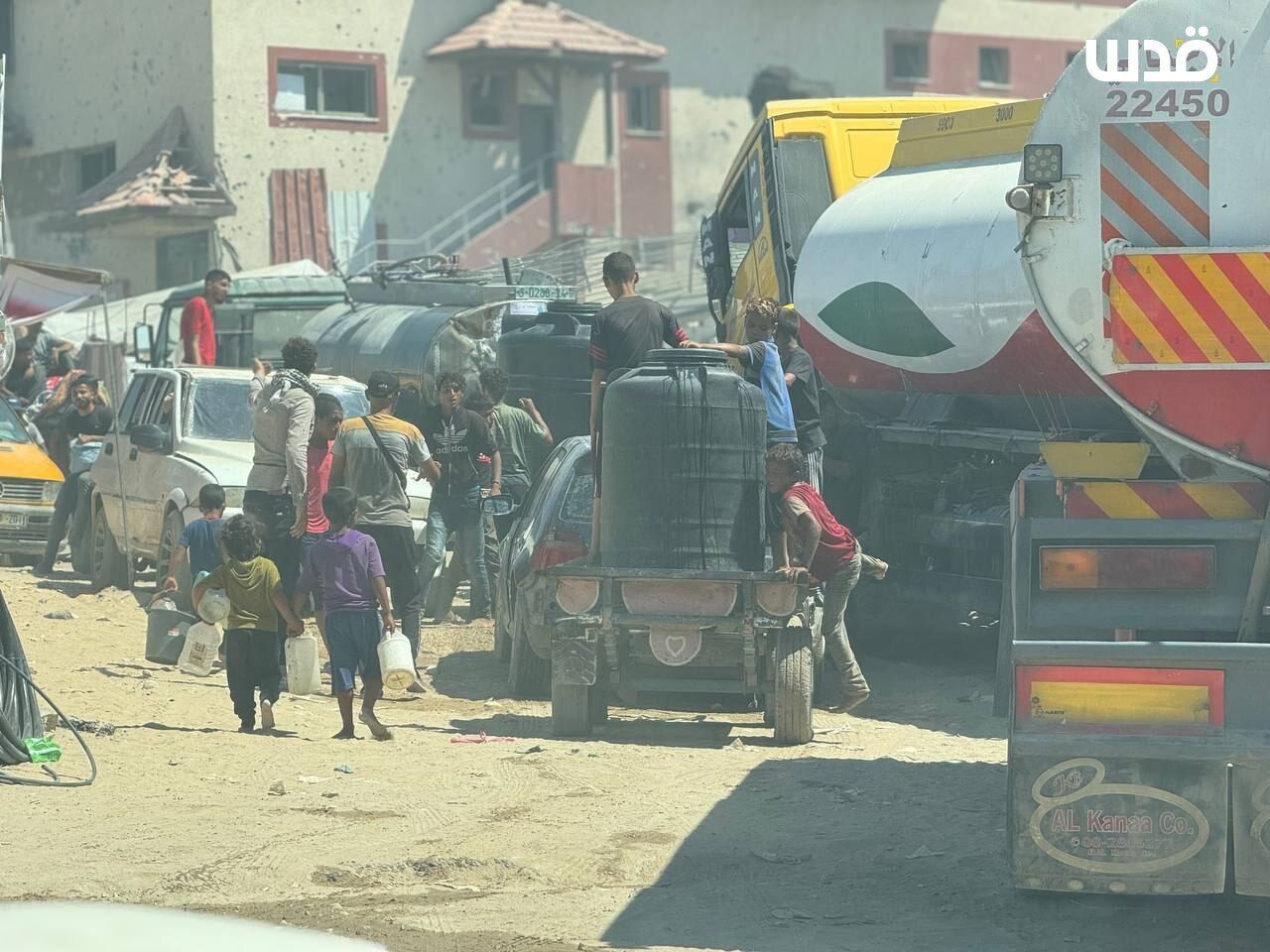
The Israeli army has killed more than 70 Palestinians and wounded 200 others, mostly children and women, in less than 12 hours in Khan Yunis, in the southern Gaza Strip. Meanwhile, hundreds of thousands of civilians have received new evacuation orders in the area.

These latest crimes come as part of Israel’s genocidal war against the Palestinian people in the Gaza Strip, ongoing since 7 October 2023.

The atrocities committed by the Israeli army against civilians in the Strip over the past nine months are well-documented and carried out consistently. These crimes include killing, mass murder, starvation, blocking the entry of humanitarian aid, forced evacuation, destruction of civilian objects, and the denial of any kind of stability, as has been the case in Khan Yunis since this morning (22 July 2024). Such actions indicate that the occupation army is essentially destroying the Palestinian people in the Gaza Strip in every way that it can.

Every time there is talk of returning to the negotiating table to reach a truce and an exchange agreement, the Israeli army purposefully increases the number of massacres and mass killings of Palestinian civilians. This raises concerns that Israel is engaging in political blackmail by using the killing and displacement of civilians as a tool of pressure, as it has done repeatedly in recent weeks.

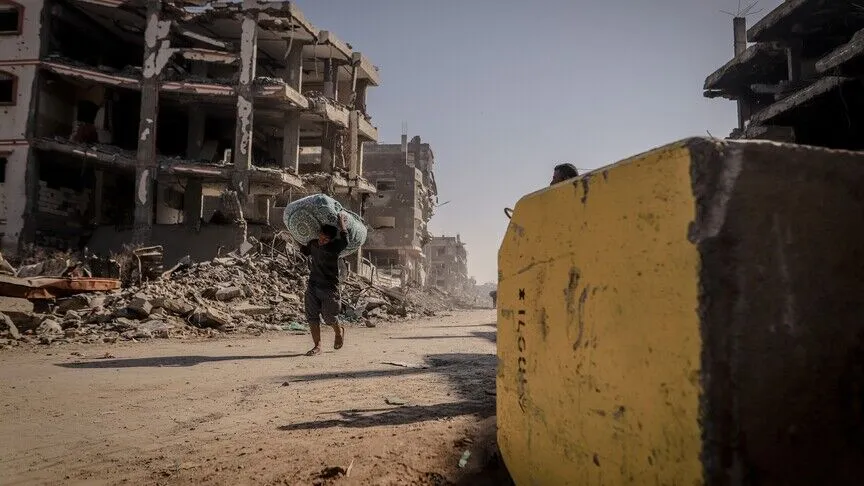
After carrying out a premeditated mass murder this morning, the Israeli army launched dozens of raids, fire belts, and artillery shelling on homes, streets, and gatherings of displaced people. Thousands of these people fled into the streets in a panic, looking for a safe place that did not exist.

Residents and displaced people sheltering in the following towns were given evacuation orders from the Israeli army: Bani Suhaila and its surroundings; Abasan al-Kabira and al-Jadidah and its surroundings; al-Qarara and its surroundings; al-Fukhari and its surroundings; Khuza’a and its surroundings; al-Qurain; al-Manara; al-Salam; Jurat al-Lot; Qizan al-Najjar; Sheikh Nasser; al-Mahatta; al-Satar; and al-Katiba. This coincided with the Israeli army’s declaration that the so-called “humanitarian zone” in Al-Mawasi would be reduced. This was all part of Israel’s media disinformation campaign and psychological warfare tactics, since military assaults on forcibly displaced people and their tents have occurred continually in this area for several weeks now, resulting in hundreds of deaths and injuries.

Out of the 10 residences for which preliminary information was available since the 7:30 a.m. start of the Israeli military operation on Khan Yunis, the Euro-Med Monitor field team recorded the Israeli army bombing six homes on the heads of their occupants. Seventy citizens were killed and over 200 others were injured, many of whom were women and children, as a result of the Israeli bombing. Two of the deceased victims were infants, while several families were taken off the civil registry, including the Jabour and Harb families.

In addition to aerial bombardment and shooting from quadcopter aircraft, the Israeli army employs direct and indiscriminate artillery shelling against civilians. This has resulted in a high death toll, with many victims remaining trapped under the rubble and in the streets, where rescue workers have not been able to retrieve their bodies. Israel also deliberately targeted two civil defence paramedics, who were injured while ambulance crews in Bani Suhaila were attempting to evacuate other injured people.

Israeli forces entered the town of Bani Suhaila amid very violent bombardment, even though the Israeli army had said in its orders that the displacement was going to be temporary. This constitutes a kind of deception of the residents—large numbers of whom were not able to evacuate as a result of the bombing, or had not attempted to before it began because they estimated that the attack was a series of air strikes as opposed to a ground incursion. (On the first of this month, the Israeli army issued similar displacement orders but only carried out intense air strikes without a ground incursion).

Two Palestinian Red Crescent clinics were forced to close due to the aerial bombardment, and several health centres experienced disruptions as a result of the forced displacement orders.

Given these facts, all nations must fulfil their international obligations by enacting strong sanctions against Israel and severing all political, financial, and military support and cooperation with it. This should include immediately halting arms transfers to Israel, including export permits and military aid; otherwise, these nations will be held accountable for the crimes that have been committed in the Gaza Strip, including genocide.

Furthermore, accountability must be established at the local, regional, and global levels. Working diligently and cooperatively to pave the way for universal jurisdiction will enable national courts to hold accountable the perpetrators of the egregious crimes being committed against Palestinian civilians.

Additionally, the International Criminal Court must continue to investigate any and all crimes committed by Israel in the Gaza Strip; broaden its investigation into the criminal responsibility of all parties, including Israeli Prime Minister Benjamin Netanyahu and Defense Minister Yoav Galant, in order to hold all perpetrators accountable; issue arrest warrants for those responsible; and acknowledge and address Israel’s crimes in the Strip as international crimes that fall under the purview of the International Criminal Court, and are clearly crimes of genocide.

This article is reprinted from the Euro-Med Human Rights Monitor website.

CrossFireArabia

CrossFireArabia
Dr. Marwan Asmar holds a PhD from Leeds University and is a freelance writer specializing on the Middle East. He has worked as a journalist since the early 1990s in Jordan and the Gulf countries, and been widely published, including at Albawaba, Gulf News, Al Ghad, World Press Review and others.

Related Posts

Fatima Cates: First British Muslim in Liverpool

A Briton who embraced Islam in the late 1880s, is described as the first woman to convert to Islam in Liverpool. This is despite facing fierce opposition from her Christian family and social circle.

Her journey with Islam began during her involvement with the “Temperance Movement”, which advocated alcohol prohibition. There, she first heard the name of Abdullah Henry Quilliam who speak about Prophet Muhammad (peace be upon him), describing him as “the great Arab who abstained from intoxicants.” This sparked her curiosity and prompted her to learn more about Islam.

When she expressed interest in Islam, Quilliam advised her to begin reading the Quran and presented her a translated copy. Few weeks later she embraced Islam. Shortly after that, she, with Quilliam and another convert, Ali Hamilton, founded the Liverpool Islamic Society in 1887.

Despite the personal challenges she faced, as well as the campaigns of incitement and hostility directed at the Society, Fatima steadfastly continued her missionary work.

The Society contributed to introducing Islam to a growing number of Britons, and Fatima played a prominent role in inviting women to Islam, including her sisters Clara and Annie, along with other women who became prominent Muslim women in Liverpool society.

Early Life:

Frances Elizabeth Murray was born on January 5, 1865, in Birkenhead, England, into a strict Christian working-class family. Her father, of Irish descent, worked as a porter.

Despite modest living conditions, Frances was able to receive an education, benefiting from the compulsory education law passed in 1870, making her one of the first students to benefit from this educational transformation.

From her early childhood, she displayed an independent personality and an inquisitive mind, and was known for her courage in acting according to her convictions and defending them without hesitation.

In her early twenties, Frances became involved with the Temperance Movement, a social movement that sought to reduce alcohol consumption and ultimately prohibit it altogether. She served as secretary of the movement’s Liverpool branch.

During her Temperance Movement activism, she first met Abdullah Henry Quilliam, a preacher of Islam in Britain. She listened to him deliver a sermon in which he spoke of “the great Arab who abstained from intoxicants,” in reference to Prophet Muhammad (peace be upon him).

From that moment, her curiosity about Islam began. Quilliam advised her to start by reading the Quran, giving her a translated copy and saying, “Don’t believe what I or others say about Islam. It’s better to discover it for yourself. Read the Quran.”

Within weeks, in June 1887, Frances declared her conversion to Islam, taking the name Fatima, despite fierce opposition from her family. Her mother even tried to take the Quran from her to burn it, and her family forced her into marriage, considering her a burden. She also faced severe social rejection; her home was pelted with stones, and its windows were repeatedly broken. However, this did not deter her from her decision.

The Liverpool Muslim Society was founded in July 1887 by Fatima, along with Quilliam and Ali Hamilton. Its aim was to spread the message of Islam and explain its teachings. Members met every Friday in a rented building to pray, recite the Quran, and study religious matters.

From its inception, the society faced significant challenges. Troublemakers and instigators would disrupt the meetings, even going so far as to smear Fatima’s face with horse dung on several occasions. Despite these obstacles, she remained steadfast. Within its first two years, the society attracted 11 new converts to Islam.

As the pressure mounted, they were forced to vacate their premises and moved in 1889 to a more spacious and attractive location on Brougham Terrace.

With the relaunch of the association as the Liverpool Islamic Institute, Fatima became its most prominent figure, representing it both nationally and internationally, especially as its presence grew outside Britain, particularly in British India at the time, where Fatima’s poetry and prose were published in the Allahabad Review.

Marriage and Later Years of Activism:

Fatima married Hubert Henry Cates and successfully converted him to Islam, along with her sisters Clara and Annie. Several other women also embraced Islam through her efforts, including Alice “Amina” Bertha Bowman, Hannah “Fatima” Rogda Robinson, Leah “Zuleikha” Banks, and Amy “Amina” Mukish.

Amidst this success, her marriage marked a turbulent period in her life. Although sources mention her husband’s conversion to Islam, this marriage did not end her suffering but rather added new challenges. She endured various forms of abuse at his hands, including an attempt on her life.

When she filed for divorce in December 1891, she encountered legal restrictions dating back to 1857 that denied women the right to divorce, and she was only able to obtain a legal separation for one year. However, their marriage was effectively over, and the couple lived separately until Keats’s death in 1895.

During this time, Fatima reduced her activity at the institute and spent periods away from Liverpool, traveling to the East and devoting some of her time to her hobby of landscape photography in southern England.

In 1900, Fatima contracted influenza, which developed into pneumonia and led to her death. She was given an Islamic burial at Anfield Cemetery, but her grave remained neglected for a long time until a Muslim man named Hamid Mahmood tracked it down and rebuilt it. A Muslim woman from Liverpool named Amira Scarsbrick raised the necessary funds, and the grave was rebuilt on November 4, 2022.

The marble headstone bears a verse from Fatima Keats’s poetry: “Let us always heed the warning God has given, so that we may walk safely on the path that leads to heaven.”

 Aljazeera.net

Continue reading
Jordan Footballers Delighted For World Cup Matches

The qualification of Jordan’s national football team for the FIFA World Cup for the first time has sparked ambitions far beyond mere participation, with many Jordanians expressing confidence that the team can make a deep run in the tournament.

The World Cup will be hosted by the US, Canada and Mexico from June 11 to July 19, with Jordan drawn in Group J alongside Argentina, Algeria and Austria.

In interviews conducted by Anadolu in the Jordanian capital, citizens voiced optimism that the team can achieve unprecedented success on the global stage.

“When I see Jordan’s flag flying among the flags of nations around the world, it fills me with pride to be Jordanian,” said taxi driver Ahmad Al-Khalayleh. “Jordan is strong everywhere and will always remain at the forefront, and its flag will continue to fly high, God willing.”

Al-Khalayleh said the national team had faced unfair treatment in previous tournaments but was ready to meet expectations.

“I promise you that Jordan will leave a distinctive mark in its opening match against Austria, and the players will compete with one spirit and one heart,” he said.

Wadie Al-Qaisi, a young supporter, said he hoped the tournament would showcase Jordan’s growing football stature.

“We want the entire world to recognize Jordan’s value and the strength of its national team, and how capable it is of breaking records and achieving the ambitions of the Jordanian people,” he said. “We hope to reach the highest levels at the World Cup.”

Another fan, Aboud Al-Deek, said Jordanians were celebrating a historic achievement.

“We are very optimistic about the national team players reaching this advanced stage and qualifying for the World Cup finals for the first time,” he said. “The entire Jordanian people are happy about this achievement, and we look forward to seeing an outstanding and impressive performance.”

Haitham Al-Dajaah said the team’s success should encourage greater investment in youth football development.

“As fans and members of the sporting community, we hope to see greater attention given to youth and junior development programs so that we can compete in the advanced stages of future World Cups,” he said. “With ambition, determination and perseverance, we will be a formidable force at the World Cup, God willing.”

Young supporter Hamza Salah expressed the highest hopes of all.

“There is a sense of optimism that the national team will advance to the later stages, such as the quarterfinals or semifinals, and even win the trophy, God willing,” he said. “Jordan is capable of achieving that.” Anadolu

Continue reading

You Missed

Taleb Al-Rifai No Longer a Kuwaiti

Taleb Al-Rifai No Longer a Kuwaiti

Ceasefire And Defeat: Iran Won The War  

Ceasefire And Defeat: Iran Won The War  

Breaking: Trump Announces Reopening of Hormuz Strait

Breaking: Trump Announces Reopening of Hormuz Strait

Breaking: Iran-US Reach a Deal

Breaking: Iran-US Reach a Deal

The First Palestinian Filmmaker

The First Palestinian Filmmaker

The Nation Story…

The Nation Story…