Cobwebs and Impotence! 

By Dr Khairi Janbek

A few personal reflections which certainly don’t resolve the Middle East puzzle, and one hopes don’t add to the already existing puzzle.

In any case, the Arabs tend to be a vocal people of tradition, consequently, all that can be done, is limited to the terms of providing the best description to circumstances rather than providing practicable and working solutions.

One can’t say that at times there are in fact idealistic solutions which can work only in the imagination, and indeed there is plenty of that, but to face other nations’ aggression; specifically Israel’s self-proclaimed defense of its national security, Arabs tend to counter that with competition between themselves as who is the most eloquent electronically.

Essentially and apparently, the Rabs are currently in a weak state, and weakness does corrupt, and if the current circumstances persist, will lead to absolute impotence. 

For generations the Arabs have followed the so-called western path to development, while some, in order to spite the West, followed the socialist path to development, the mirage was the same, and failure no different, and with international relations, the policy has been habitually leaning on the Americans to fend off Iranian threat, leaning on Russia to fend off American threat, and leaning on Israel to fend of the threat coming from each other, which prompts the logical question: Why don’t they lean on each other?

Well, part of the answer comes from an incident from my pre-retirement days, as one was looking out of the window of the airplane passing over an area in Turkey full of dams, the VIP I had the honor of accompanying said the prophetic words which stayed with me “good luck to them, all what we did, we conspired against each other.” 

The fact remains, that a form of catharsis is needed in inter-Arab relations, which probably requires more of psychological analysis than political, because the phenomenon of seeking allies from the presumed enemy lines, as opposed to allies from the so called brethren camp, requires plenty of reflection. The ethos of common culture, religion, geography are nothing but folklore the doesn’t have the idea of common interest in its composition.

Alas, a folkloric nation that derives its strength from rhetoric can only remain a reactive nation, and in order to become an active nation, it has to clean up from its mind, the cobwebs of memory and start acting to the basis of common Arab interests.

Dr Janbek is a Jordanian writer based in Paris, France

  • Related Posts

    Battle of Wills: Resistance V. Israeli Settlements

    By Najla M. Shahwan|

    As a part of its broader policy push to increase Israeli settlement presence in the occupied West Bank, Israel has approved recently the construction of more than 2,000 new housing units distributed across several strategic locations.

    Pushing to annex more and more of the Palestinian territory Far-right Israeli Finance Minister Bezalel Smotrich has announced a major expansion of illegal settlements in the occupied West Bank.

    Smotrich, who holds authority over parts of Israel’s civilian administration in the West Bank, said on 3 June that a planning committee had approved the construction of 2,162 new Jewish homes, of which 1,006 units will be in a new illegal settlement near Jerusalem, 922 near the city of Nablus and 234 near Hebron.

    “We are continuing to build the Land of Israel in practice,” Smotrich said in a statement.

    The new homes would “strengthen our hold on the land, reinforce Israel’s security, and establish clear facts on the ground that prevent the creation of an Arab terror state in the heart of the country”, he added.

    Smotrich has been sanctioned by the United Kingdom, France, and other states, which accuse him of inciting violence against Palestinians.

    The minister has denounced the sanctions and said they would not change Israeli policy.

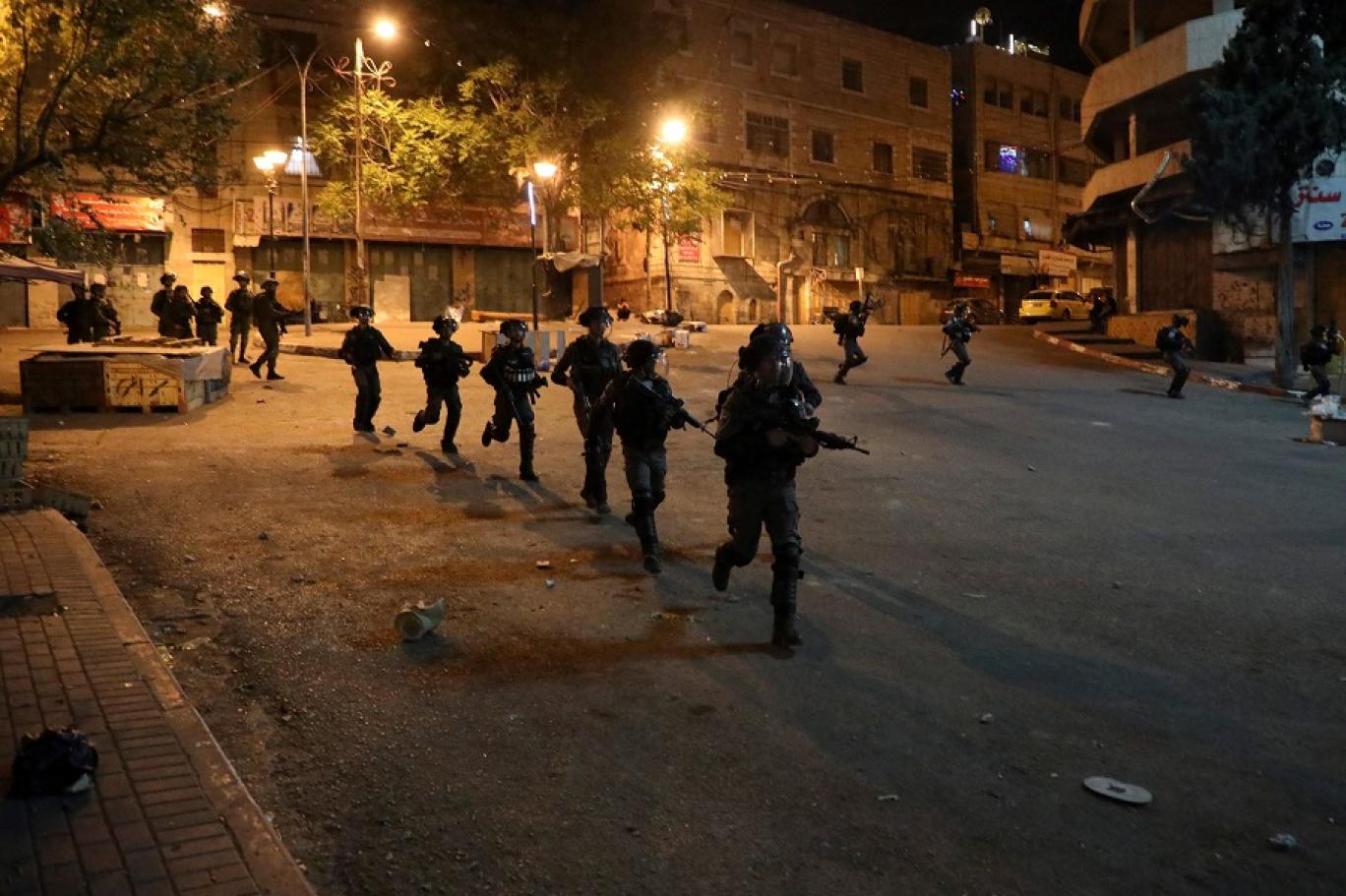
    Besides, on June 4, Israeli forces had delivered demolition notices to a number of shops at the intersection of the town of Bazariya, northwest of Nablus, to make way for a colonial road.

    Meanwhile, some settlers stormed the village of Deir Sudan, northwest of Ramallah, accompanied by bulldozers, to seize it.

    The developments come months after the Israeli government approved a land registration process in February that allowed Israel to take territory as “state property” if Palestinians could not prove ownership.

    Palestinians seek the West Bank, including East Jerusalem and Gaza, as part of a future independent state.

    Israel, meanwhile, maintains military and administrative control over large parts of the territory, while expanding illegal settlements in several areas.

    The settlement expansion comes amid ongoing debate within Israel’s political leadership over the future of the occupied territories.

    The Israeli Knesset gave on June 4 final approval to legislation granting tax exemptions to dozens of illegal settlements in the occupied West Bank.

    In a statement, the Knesset said lawmakers approved the bill on its final reading, granting tax benefits to illegal settlements located in what it called the “eastern confrontation line zone.”

    The legislation was sponsored by Knesset members Zvi Sukkot, from the Religious Zionism party led by Finance Minister

    Bezalel Smotrich, and Limor Son Har-Melech, from the far-right Jewish Power party led by National Security Minister Itamar Ben-Gvir, along with other lawmakers.

    The bill passed by 32-23 votes. Under the law, occupants will be entitled to tax exemptions throughout the tax year and may choose among available tax benefits if they qualify for more than one exemption.

    The legislation is set to take effect in January 2027 and remain in force through Dec. 31, 2027. It also authorizes the finance minister, with approval from the Knesset Finance Committee, to extend its validity for additional periods of up to two years each.

    In a report published at the end of May, the Israeli anti-settlement group Peace Now said the law would classify dozens of illegal settlements as areas whose residents are eligible for substantial tax benefits.

    The group noted that the original bill sought to extend tax benefits to all settlements but was narrowed due to its high cost and professional objections, ultimately applying to 58 illegal settlements.

    According to Peace Now, the updated version primarily includes illegal settlements where support for the Religious Zionism party is particularly strong.

    The international community considers settlements built in the occupied Palestinian territory illegal under international law and a major obstacle to a two-state solution.

    Netanyahu’s government has openly championed a significant expansion of illegal settlement activity since taking office at the end of 2022. According to Peace Now estimates, more than 750,000 Israeli occupiers live in the occupied West Bank including East Jerusalem.

    While some international actors have warned against further annexation or expansion, enforcement measures remain limited.

    The United States has historically expressed opposition to settlement expansion, although its positions have varied in intensity depending on administration policy.

    On its part US President Donald Trump ‘s administration has been far less critical of the fast-expanding Israeli settlements.

    The approval of thousands of new settlement homes further entrenches Israeli presence in the West Bank and complicates already fragile prospects for a negotiated political settlement.

    Additionally, settlement expansion changes demographic and geographic realities on the ground, making territorial compromise increasingly difficult and it reinforces perceptions that a viable independent state is becoming harder to achieve.

    For Israel, supporters of settlement growth argue it strengthens security and consolidates control over strategically important areas while critics, , say it increases friction with Palestinian communities and fuels long term instability.

    However, with diplomatic efforts largely stalled, continued expansion is likely to remain a central flashpoint in the conflict and a key issue in deepening regional tensions.

    Najla M. Shahwan is a Palestinian author, researcher and freelance journalist and published this article in the Jordan Times

    Continue reading
    World Cup: Trump, Political Footballing and Iran – A View From Amman

    This summer promises to be unlike any previous or future summers in the history of mankind. It will witness an unprecedented convergence of two big, unrelated in substance, events that will be the focus of attention of all nations around the globe. One of those events might and indeed, should tip the balance!

    On the battle grounds of these two big events, tears will be shed, hearts will be broken and plans flopped! On both occasions, the crucial component of vanity in the human brain would develop into a dubious concept that in each game you play or a confrontation you get involved in, you must be the winner, no matter what!

    What would the other side be saying?

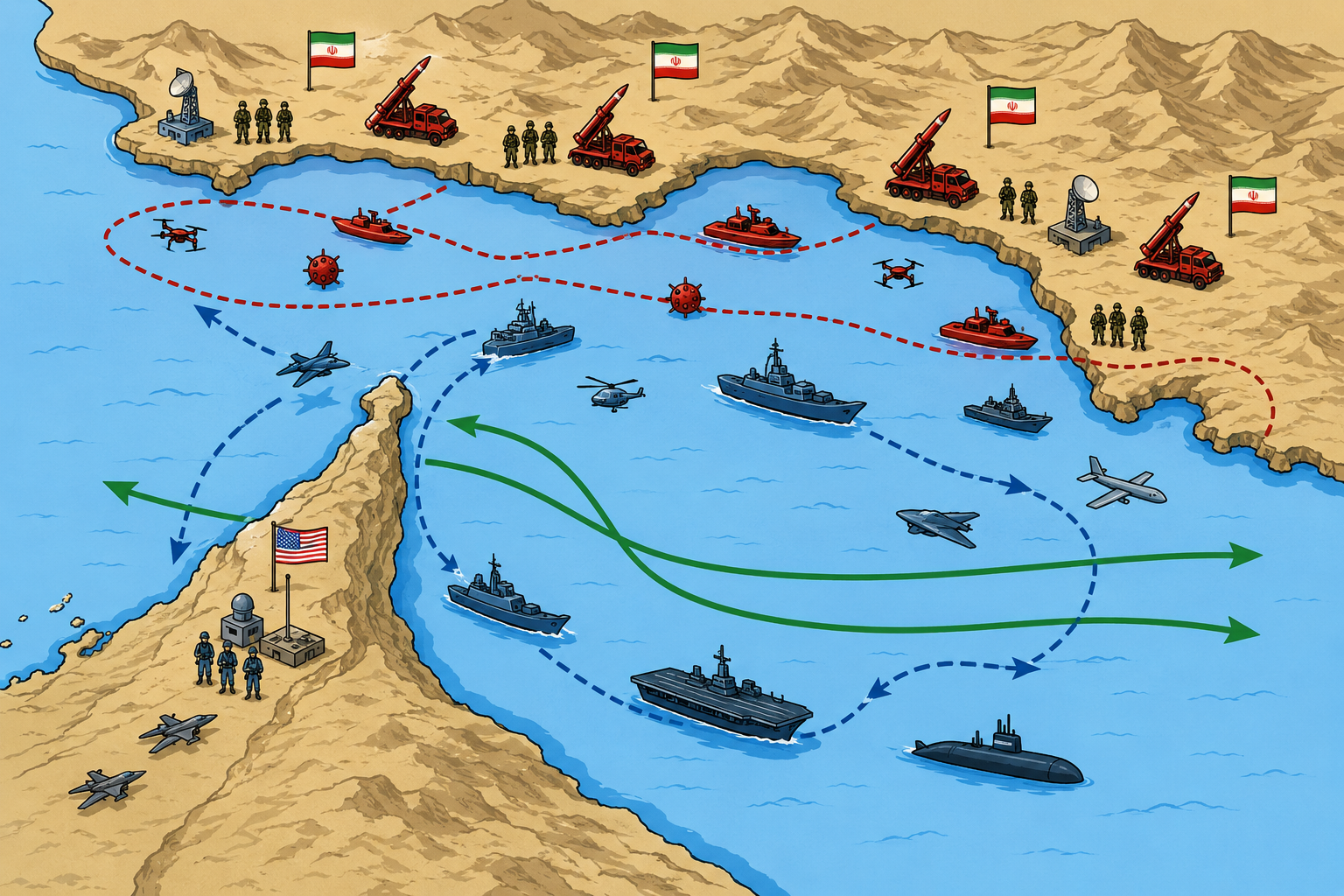
    As the clock ticks forward, the hostilities in the Middle East or more precisely the off-and-on-rounds of ‘war of choice’ by the US and Israel against Iran’s plans for itself and the region, bounce up and down in a blurred fashion; making it difficult, to see whether those hostilities will continue, as the Israeli Prime Minister wants them to, or whether they will be ordered by Donald Trump to stop, even temporarily, but for completely different reasons.

    President Trump’s interest and role in this affair is central and crucial, not only because his country, along with Mexico and Canada, will host the football tournaments matches and because his army is stuck in the quagmire he helped to create in the Middle East since June 2025.

    Now and in these final hours before the big sports event kicks off next week, the political ball is also being played, openly bouncing back and forth by Benjamin Netanyahu, Trump and Iran, each according to a specific domestic political agenda and in a dramatic fashion. Indeed, it could threaten the destiny of FIFA’s well-planned agenda, at the expense of letting Israel  continue its quasi-impossible crusade against Iran!

    Trump on the other hand, and besides the other signs he gave, might opt for a peaceful outcome to his quarrel with Iran. He has few other concerns at home such as the 250th anniversary of his country’s independence, his own birthday party to celebrate, rising prices of gas and inflation to curb, local partisan elections and opinion polls to worry about; lastly off course, he has to guarantee the smooth running of the world cup matches in his country for a whole month.

    Now let’s dig deeper in this business of political footballing. 

    The US and Iran according to the FIFA program belong to two different groups: Fourth and seventh. To qualify for the second level of the tournament, each has to play three matches and win. The US against Paraguay, Australia and Turkey. Iran against New Zealand, Belgium and Egypt. 

    Both teams have reasonable chances to pass through this first stage.

    Let’s imagine that after a month-long matches between the 48-competing nations, Iran and the US end up facing each other in the final match for the world trophy.

    In such a case, heads of states whose teams were playing, are supposed to be present watching and cheering their teams from the premium seating area. Whoever the winner might be, the players, coaches and political leaders would be approaching each other and shaking hands. One saying: “Congratulation” and the other: “Hard luck”! 

    One more time, picture Donald Trump and Mojtaba Khamenei shaking hands and exchanging these words live, while the whole world is watching!

    At such a moment, the real war back on the grounds of the Middle East, would not be more than a fading ripple on the surface of a remote lake!     

    Continue reading

    You Missed

    Layali Al Khatib: First Palestinian Contender Into Space

    Layali Al Khatib: First Palestinian Contender Into Space

    Eisenkot: Netanyahu Fails in His Wars on Gaza, Lebanon and Iran

    Eisenkot: Netanyahu Fails in His Wars on Gaza, Lebanon and Iran

    Anadolu Launches ‘Gaza Trilogy’ Website

    Anadolu Launches ‘Gaza Trilogy’ Website

    Imprisoned For Refusing to Leave His Patients

    Imprisoned For Refusing to Leave His Patients

    Suleiman Mansour: A Painter For Palestine

    Suleiman Mansour: A Painter For Palestine

    Francesca Albanese Picks Olives For Palestine

    Francesca Albanese Picks Olives For Palestine