CrossFireArabia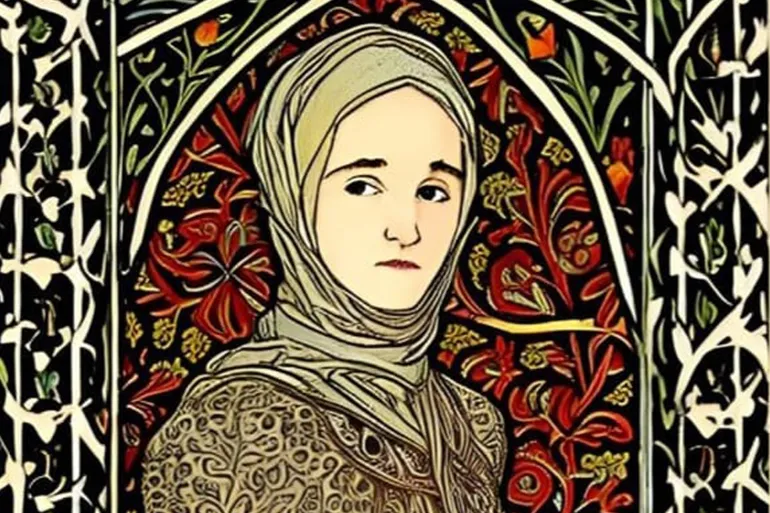
A Briton who embraced Islam in the late 1880s, is described as the first woman to convert to Islam in Liverpool. This is despite facing fierce opposition from her Christian family and social circle.
Her journey with Islam began during her involvement with the “Temperance Movement”, which advocated alcohol prohibition. There, she first heard the name of Abdullah Henry Quilliam who speak about Prophet Muhammad (peace be upon him), describing him as “the great Arab who abstained from intoxicants.” This sparked her curiosity and prompted her to learn more about Islam.
When she expressed interest in Islam, Quilliam advised her to begin reading the Quran and presented her a translated copy. Few weeks later she embraced Islam. Shortly after that, she, with Quilliam and another convert, Ali Hamilton, founded the Liverpool Islamic Society in 1887.
Despite the personal challenges she faced, as well as the campaigns of incitement and hostility directed at the Society, Fatima steadfastly continued her missionary work.
The Society contributed to introducing Islam to a growing number of Britons, and Fatima played a prominent role in inviting women to Islam, including her sisters Clara and Annie, along with other women who became prominent Muslim women in Liverpool society.
Early Life:
Frances Elizabeth Murray was born on January 5, 1865, in Birkenhead, England, into a strict Christian working-class family. Her father, of Irish descent, worked as a porter.
Despite modest living conditions, Frances was able to receive an education, benefiting from the compulsory education law passed in 1870, making her one of the first students to benefit from this educational transformation.
From her early childhood, she displayed an independent personality and an inquisitive mind, and was known for her courage in acting according to her convictions and defending them without hesitation.
In her early twenties, Frances became involved with the Temperance Movement, a social movement that sought to reduce alcohol consumption and ultimately prohibit it altogether. She served as secretary of the movement’s Liverpool branch.
During her Temperance Movement activism, she first met Abdullah Henry Quilliam, a preacher of Islam in Britain. She listened to him deliver a sermon in which he spoke of “the great Arab who abstained from intoxicants,” in reference to Prophet Muhammad (peace be upon him).
From that moment, her curiosity about Islam began. Quilliam advised her to start by reading the Quran, giving her a translated copy and saying, “Don’t believe what I or others say about Islam. It’s better to discover it for yourself. Read the Quran.”
Within weeks, in June 1887, Frances declared her conversion to Islam, taking the name Fatima, despite fierce opposition from her family. Her mother even tried to take the Quran from her to burn it, and her family forced her into marriage, considering her a burden. She also faced severe social rejection; her home was pelted with stones, and its windows were repeatedly broken. However, this did not deter her from her decision.
The Liverpool Muslim Society was founded in July 1887 by Fatima, along with Quilliam and Ali Hamilton. Its aim was to spread the message of Islam and explain its teachings. Members met every Friday in a rented building to pray, recite the Quran, and study religious matters.
From its inception, the society faced significant challenges. Troublemakers and instigators would disrupt the meetings, even going so far as to smear Fatima’s face with horse dung on several occasions. Despite these obstacles, she remained steadfast. Within its first two years, the society attracted 11 new converts to Islam.
As the pressure mounted, they were forced to vacate their premises and moved in 1889 to a more spacious and attractive location on Brougham Terrace.
With the relaunch of the association as the Liverpool Islamic Institute, Fatima became its most prominent figure, representing it both nationally and internationally, especially as its presence grew outside Britain, particularly in British India at the time, where Fatima’s poetry and prose were published in the Allahabad Review.
Marriage and Later Years of Activism:
Fatima married Hubert Henry Cates and successfully converted him to Islam, along with her sisters Clara and Annie. Several other women also embraced Islam through her efforts, including Alice “Amina” Bertha Bowman, Hannah “Fatima” Rogda Robinson, Leah “Zuleikha” Banks, and Amy “Amina” Mukish.
Amidst this success, her marriage marked a turbulent period in her life. Although sources mention her husband’s conversion to Islam, this marriage did not end her suffering but rather added new challenges. She endured various forms of abuse at his hands, including an attempt on her life.
When she filed for divorce in December 1891, she encountered legal restrictions dating back to 1857 that denied women the right to divorce, and she was only able to obtain a legal separation for one year. However, their marriage was effectively over, and the couple lived separately until Keats’s death in 1895.
During this time, Fatima reduced her activity at the institute and spent periods away from Liverpool, traveling to the East and devoting some of her time to her hobby of landscape photography in southern England.
In 1900, Fatima contracted influenza, which developed into pneumonia and led to her death. She was given an Islamic burial at Anfield Cemetery, but her grave remained neglected for a long time until a Muslim man named Hamid Mahmood tracked it down and rebuilt it. A Muslim woman from Liverpool named Amira Scarsbrick raised the necessary funds, and the grave was rebuilt on November 4, 2022.
The marble headstone bears a verse from Fatima Keats’s poetry: “Let us always heed the warning God has given, so that we may walk safely on the path that leads to heaven.”