Trending News:Woman From BethlehemFree PalestineWoman of The VineyardsTrumpaplooza! View from AmmanNAZA: When Israel’s Killing Machine Speaks in Its Own VoiceTents by The Sea!Pain…Israel Punishes Britain, a State that Led to its CreationBattle for Hormuz: How Iran Found America’s Achilles HeelPalestinians Slam Adidas For Pro-Israel PR CampaignThe Other Exodus: How War, Politics and Insecurity Are Driving Israelis AbroadIsrael Strikes at House, Kills Family of FourA Morning WhisperFares Odeh: Come on!Keys of Return and HopeA Palestinian Hospital in Yafa, 1933Gaza Underground – A NovelSilhouettes: On The BeachThe Dove, Woman and The Orange TreeAscend to The SkiesKilling Happiness!Israel Kills Schoolgirl, Her Dad in Gaza on First Day of SchoolIbrahimi Mosque Without ‘Call to Prayer’ For 76 DaysIsrael Orders Closure of The UK Consulate in East JerusalemPalestinian Ladies, Nazareth 1940‘Stolen Childhood’‘I am Still Alive’Soul of GazaWith Many Men Killed, 86,000 of Gaza Households Are Headed by Women – UN EstimatesPain, Dreams and HopeLost Kids of Gaza!Smotrich Calls For Expulsion of UK Ambassador in Tel AvivIn Gaza, Even the Tent Is Temporary: Families Who Have Fled 5, 10, 15 TimesGaza’s Widows: When Grief Becomes the Family’s Only BreadwinnerAutumn Papers: Palestinians Must Sieze The MomentHRF Files Criminal Complaint Against Israeli FM in SloveniaEx-Israeli PM: Burning Homes With Arabs Inside is “Terrorism”‘When Will They be Buried’? Families Search For Their Loved Ones Under The RubbleIraqi Book Fair: 600 Publishers From 28 CountriesKeeping The Palestinian Narrative Alive Via Its GenerationsExodus: 94% of Israeli Doctors Are LeavingSea Secrets: Water Among The RuinsMass Funeral: Gaza Buries 100 Martyrs76 Killed: 2026 Deadliest Year in The West BankBeautiful Tulkarem: Dreams Not For Dying‘Why Did You Kill Our Daughter’Children of JeninIsraeli Soldiers Tell Kindergarten Teacher ‘No School For You’Good Morning From The Sea of GazaIsraeli Forces Raid Two West Bank SchoolsAnother School Year: 846,000 West Bank Students Sit at Their Desks Again!Good Morning to The Toilers of Our Land!Miserable Year: Gaza Pupils Simply Have No Schools to Go to Thanks to IsraelKites Flown in 11 Dutch Cities For Kids in GazaHuckabee in Turmus Ayya, Calls Settler Attacks ‘Terrorism’Israel Forcibly Displaced Three Camps – UNIsraeli Officials Snub Trump’s Plan For GazaThe Firewood GathererThe Gaza Curse? Israel’s Water Crisis and the Pollution That Refuses to Respect BordersIsraeli Kills 5, Injures 24 in Strikes on LebanonPupils in Safad, 1944Searching For Water Amid The Rubble‘Every Face is a Story’So Many Kids, So Many Expressions!”1000 Martyrs Cup: Palestinian Football Back on The PitchPalestinian Women, Makers of HistoryAya Isleem: ‘We Are Tired of The War’‘These Are Your Israeli Soldiers’Welcome to Gaza: ‘We Are Not Leaving’A Woman From GazaBalcony of LifeWho is Afraid of Palestinian Revolutionary Art?In The Past: Za’atar Coffee Shop in JerusalemSweet Tooth in Damascus GateA Life After The War!Beit Sahour Family, 1930Civil Defense Recovers 55 Bodies Under Debris of Gaza BuildingGideon Levy on 7 OctoberJordan Appoints New Army ChiefKey of ReturnScene From GazaFighting For Water!A Tribute to a CartoonistMom, Kids in CharcoalHussam Abu Safiya: The Doctor HostageThe Girl, The Smile and The SlipperBlair Asked PA to Remove Palestine From TextbooksTeacher’s Cartoon Not to ForgetThe Broom SellerSummer MadnessMartyred After Engaging An Israeli ForceKids of The SeaPalestinian Dresses & HeritageYoussef Heikal: Last Mayor of YafaA Traditional Dress TributeIsrael’s War: Lebanese Deaths Spikes to 4354 With 12325 Injured26 Raids on Al Aqsa, Ban on Athan in Ibrahimi Mosques 155 TimesIsrael Arrest 500 Palestinians in AugustA Child From GazaGaza Death Toll Spikes to 73,470, Israel Kills 8, Injures 31 in 24 Hours
Trending News:Woman From BethlehemFree PalestineWoman of The VineyardsTrumpaplooza! View from AmmanNAZA: When Israel’s Killing Machine Speaks in Its Own VoiceTents by The Sea!Pain…Israel Punishes Britain, a State that Led to its CreationBattle for Hormuz: How Iran Found America’s Achilles HeelPalestinians Slam Adidas For Pro-Israel PR CampaignThe Other Exodus: How War, Politics and Insecurity Are Driving Israelis AbroadIsrael Strikes at House, Kills Family of FourA Morning WhisperFares Odeh: Come on!Keys of Return and HopeA Palestinian Hospital in Yafa, 1933Gaza Underground – A NovelSilhouettes: On The BeachThe Dove, Woman and The Orange TreeAscend to The SkiesKilling Happiness!Israel Kills Schoolgirl, Her Dad in Gaza on First Day of SchoolIbrahimi Mosque Without ‘Call to Prayer’ For 76 DaysIsrael Orders Closure of The UK Consulate in East JerusalemPalestinian Ladies, Nazareth 1940‘Stolen Childhood’‘I am Still Alive’Soul of GazaWith Many Men Killed, 86,000 of Gaza Households Are Headed by Women – UN EstimatesPain, Dreams and HopeLost Kids of Gaza!Smotrich Calls For Expulsion of UK Ambassador in Tel AvivIn Gaza, Even the Tent Is Temporary: Families Who Have Fled 5, 10, 15 TimesGaza’s Widows: When Grief Becomes the Family’s Only BreadwinnerAutumn Papers: Palestinians Must Sieze The MomentHRF Files Criminal Complaint Against Israeli FM in SloveniaEx-Israeli PM: Burning Homes With Arabs Inside is “Terrorism”‘When Will They be Buried’? Families Search For Their Loved Ones Under The RubbleIraqi Book Fair: 600 Publishers From 28 CountriesKeeping The Palestinian Narrative Alive Via Its GenerationsExodus: 94% of Israeli Doctors Are LeavingSea Secrets: Water Among The RuinsMass Funeral: Gaza Buries 100 Martyrs76 Killed: 2026 Deadliest Year in The West BankBeautiful Tulkarem: Dreams Not For Dying‘Why Did You Kill Our Daughter’Children of JeninIsraeli Soldiers Tell Kindergarten Teacher ‘No School For You’Good Morning From The Sea of GazaIsraeli Forces Raid Two West Bank SchoolsAnother School Year: 846,000 West Bank Students Sit at Their Desks Again!Good Morning to The Toilers of Our Land!Miserable Year: Gaza Pupils Simply Have No Schools to Go to Thanks to IsraelKites Flown in 11 Dutch Cities For Kids in GazaHuckabee in Turmus Ayya, Calls Settler Attacks ‘Terrorism’Israel Forcibly Displaced Three Camps – UNIsraeli Officials Snub Trump’s Plan For GazaThe Firewood GathererThe Gaza Curse? Israel’s Water Crisis and the Pollution That Refuses to Respect BordersIsraeli Kills 5, Injures 24 in Strikes on LebanonPupils in Safad, 1944Searching For Water Amid The Rubble‘Every Face is a Story’So Many Kids, So Many Expressions!”1000 Martyrs Cup: Palestinian Football Back on The PitchPalestinian Women, Makers of HistoryAya Isleem: ‘We Are Tired of The War’‘These Are Your Israeli Soldiers’Welcome to Gaza: ‘We Are Not Leaving’A Woman From GazaBalcony of LifeWho is Afraid of Palestinian Revolutionary Art?In The Past: Za’atar Coffee Shop in JerusalemSweet Tooth in Damascus GateA Life After The War!Beit Sahour Family, 1930Civil Defense Recovers 55 Bodies Under Debris of Gaza BuildingGideon Levy on 7 OctoberJordan Appoints New Army ChiefKey of ReturnScene From GazaFighting For Water!A Tribute to a CartoonistMom, Kids in CharcoalHussam Abu Safiya: The Doctor HostageThe Girl, The Smile and The SlipperBlair Asked PA to Remove Palestine From TextbooksTeacher’s Cartoon Not to ForgetThe Broom SellerSummer MadnessMartyred After Engaging An Israeli ForceKids of The SeaPalestinian Dresses & HeritageYoussef Heikal: Last Mayor of YafaA Traditional Dress TributeIsrael’s War: Lebanese Deaths Spikes to 4354 With 12325 Injured26 Raids on Al Aqsa, Ban on Athan in Ibrahimi Mosques 155 TimesIsrael Arrest 500 Palestinians in AugustA Child From GazaGaza Death Toll Spikes to 73,470, Israel Kills 8, Injures 31 in 24 Hours
A Briton who embraced Islam in the late 1880s, is described as the first woman to convert to Islam in Liverpool. This is despite facing fierce opposition from her Christian family and social circle.
Her journey with Islam began during her involvement with the “Temperance Movement”, which advocated alcohol prohibition. There, she first heard the name of Abdullah Henry Quilliam who speak about Prophet Muhammad (peace be upon him), describing him as “the great Arab who abstained from intoxicants.” This sparked her curiosity and prompted her to learn more about Islam.
When she expressed interest in Islam, Quilliam advised her to begin reading the Quran and presented her a translated copy. Few weeks later she embraced Islam. Shortly after that, she, with Quilliam and another convert, Ali Hamilton, founded the Liverpool Islamic Society in 1887.
Despite the personal challenges she faced, as well as the campaigns of incitement and hostility directed at the Society, Fatima steadfastly continued her missionary work.
The Society contributed to introducing Islam to a growing number of Britons, and Fatima played a prominent role in inviting women to Islam, including her sisters Clara and Annie, along with other women who became prominent Muslim women in Liverpool society.
Early Life:
Frances Elizabeth Murray was born on January 5, 1865, in Birkenhead, England, into a strict Christian working-class family. Her father, of Irish descent, worked as a porter.
Despite modest living conditions, Frances was able to receive an education, benefiting from the compulsory education law passed in 1870, making her one of the first students to benefit from this educational transformation.
From her early childhood, she displayed an independent personality and an inquisitive mind, and was known for her courage in acting according to her convictions and defending them without hesitation.
In her early twenties, Frances became involved with the Temperance Movement, a social movement that sought to reduce alcohol consumption and ultimately prohibit it altogether. She served as secretary of the movement’s Liverpool branch.
During her Temperance Movement activism, she first met Abdullah Henry Quilliam, a preacher of Islam in Britain. She listened to him deliver a sermon in which he spoke of “the great Arab who abstained from intoxicants,” in reference to Prophet Muhammad (peace be upon him).
From that moment, her curiosity about Islam began. Quilliam advised her to start by reading the Quran, giving her a translated copy and saying, “Don’t believe what I or others say about Islam. It’s better to discover it for yourself. Read the Quran.”
Within weeks, in June 1887, Frances declared her conversion to Islam, taking the name Fatima, despite fierce opposition from her family. Her mother even tried to take the Quran from her to burn it, and her family forced her into marriage, considering her a burden. She also faced severe social rejection; her home was pelted with stones, and its windows were repeatedly broken. However, this did not deter her from her decision.
The Liverpool Muslim Society was founded in July 1887 by Fatima, along with Quilliam and Ali Hamilton. Its aim was to spread the message of Islam and explain its teachings. Members met every Friday in a rented building to pray, recite the Quran, and study religious matters.
From its inception, the society faced significant challenges. Troublemakers and instigators would disrupt the meetings, even going so far as to smear Fatima’s face with horse dung on several occasions. Despite these obstacles, she remained steadfast. Within its first two years, the society attracted 11 new converts to Islam.
As the pressure mounted, they were forced to vacate their premises and moved in 1889 to a more spacious and attractive location on Brougham Terrace.
With the relaunch of the association as the Liverpool Islamic Institute, Fatima became its most prominent figure, representing it both nationally and internationally, especially as its presence grew outside Britain, particularly in British India at the time, where Fatima’s poetry and prose were published in the Allahabad Review.
Marriage and Later Years of Activism:
Fatima married Hubert Henry Cates and successfully converted him to Islam, along with her sisters Clara and Annie. Several other women also embraced Islam through her efforts, including Alice “Amina” Bertha Bowman, Hannah “Fatima” Rogda Robinson, Leah “Zuleikha” Banks, and Amy “Amina” Mukish.
Amidst this success, her marriage marked a turbulent period in her life. Although sources mention her husband’s conversion to Islam, this marriage did not end her suffering but rather added new challenges. She endured various forms of abuse at his hands, including an attempt on her life.
When she filed for divorce in December 1891, she encountered legal restrictions dating back to 1857 that denied women the right to divorce, and she was only able to obtain a legal separation for one year. However, their marriage was effectively over, and the couple lived separately until Keats’s death in 1895.
During this time, Fatima reduced her activity at the institute and spent periods away from Liverpool, traveling to the East and devoting some of her time to her hobby of landscape photography in southern England.
In 1900, Fatima contracted influenza, which developed into pneumonia and led to her death. She was given an Islamic burial at Anfield Cemetery, but her grave remained neglected for a long time until a Muslim man named Hamid Mahmood tracked it down and rebuilt it. A Muslim woman from Liverpool named Amira Scarsbrick raised the necessary funds, and the grave was rebuilt on November 4, 2022.
The marble headstone bears a verse from Fatima Keats’s poetry: “Let us always heed the warning God has given, so that we may walk safely on the path that leads to heaven.”
Dr. Marwan Asmar holds a PhD from Leeds University and is a freelance writer specializing on the Middle East. He has worked as a journalist since the early 1990s in Jordan and the Gulf countries, and been widely published, including at Albawaba, Gulf News, Al Ghad, World Press Review and others.
CROSSFIREARABIA – There are documentaries that expose a war by showing its victims, and there are films that attempt something altogether different: Entering the machinery that produces those victims.
NAZA, the disturbing new documentary by Israeli filmmakers Yuval Abraham and Rachel Szor, belongs firmly to the second category.
Premiered at the Venice International Film Festival on 10 September, NAZA does not principally take its cameras into Gaza’s shattered streets, hospitals or tent camps. Instead, Abraham and Szor turn their cameras towards Israel — specifically towards 24 Israeli intelligence officers and soldiers who participated in the systems of surveillance, target selection and killing that have shaped Israel’s war in Gaza.
It is this inversion that makes NAZA potentially one of the most consequential films yet made about the Gaza war.
The Palestinians are overwhelmingly the people who die. But for most of the film, the camera remains on the other side of the border, among people who helped determine who would be targeted and how.
The result, according to Peter Bradshaw’s review in The Guardian, is a profoundly unsettling film that casts a “chilling light” on what has happened in Gaza. The Guardian is not merely reviewing the documentary: it produced NAZA, which grew out of investigations undertaken by the newspaper together with the Israeli-Palestinian publication +972 Magazine and the Hebrew-language Local Call between 2023 and 2025.
A word that turns civilians into numbers
The horror begins with the title.
“NAZA” is described by the filmmakers as an Israeli military term for the civilian casualties expected in an attack.
Before a bomb falls, in other words, civilians may already exist inside the targeting calculation as a number.
This is perhaps the film’s most disturbing proposition because it moves the argument beyond the familiar dispute over whether civilians were accidentally killed during attacks on Hamas targets. NAZA asks a more uncomfortable question: What happens when civilian deaths become incorporated into the architecture of targeting itself?
The Israeli witnesses describe systems in which intelligence, artificial intelligence, mass surveillance and enormous quantities of personal data are combined to identify suspected targets.
According to testimony presented in the film, computer systems analysed telephone behaviour and other information to identify people suspected of connections to Hamas. Targets could then be attacked at their homes, sometimes at night, despite the presence of their families.
One witness refers to an error rate of around 15 percent. Another describes an expected “Naza” figure of roughly 20 civilians for an operation.
Other testimony goes considerably further.
The Guardian’s investigation accompanying the film reports accounts of neighbourhoods being destroyed even when Israeli forces estimated that significant numbers of residents remained inside, civilian homes being systematically burned and Palestinians being killed around food-distribution areas.
The effect is to transform the vocabulary of “collateral damage.” Collateral damage ordinarily suggests something unintended. NAZA suggests calculation.
The horror is 60 kilometres away
Abraham and Szor make an inspired visual decision.
The interviews take place at night on rooftops in Tel Aviv.
The witnesses’ identities must be protected. Faces remain largely in darkness and appearances and voices are digitally altered. Yet behind these anonymous figures another character gradually emerges: Tel Aviv itself.
Apartments glow.
Traffic moves.
People continue their ordinary lives.
And Gaza is only about 60 kilometres away.
Bradshaw draws particular attention to this juxtaposition in his Guardian review. The camera periodically leaves the intelligence officers and wanders across Tel Aviv’s illuminated apartment buildings, observing fragments of comfortable civilian existence while another civilian population, almost within geographical touching distance, has been subjected to extraordinary destruction.
This distance is central to NAZA.
Modern warfare permits killing without proximity.
The person gathering intelligence does not necessarily see the family beneath the bomb. The analyst studies a screen. An algorithm produces possibilities. Someone approves a target. Someone else presses another button.
Each individual performs one function. The system performs the killing.
It is therefore significant that Abraham and Szor say their film is not primarily concerned with individual “rogue soldiers.” Their subject is something larger: the orders, procedures, assumptions and language through which extraordinary violence becomes ordinary institutional activity.
They call it the story of “the system and its cogs.”
That may ultimately be the most important sentence attached to the film.
Not monsters, but technicians
One of NAZA’s unsettling qualities appears to be the ordinariness of the people speaking.
These are not cinematic villains.
They are technicians, intelligence officers and educated professionals. Some appear troubled by what they participated in. Others describe operations with a detachment that is arguably more disturbing than anger or hatred would have been.
One interviewee describes the experience as resembling a video game. Another recalls surveillance of two young sisters used to determine when their father, a suspected Hamas operative, was home. According to Screen Daily’s account of the film, an attack subsequently killed the girls and other members of the family — while the intended target was apparently not there. (Screen DailyError! Filename not specified.)
This is where NAZA enters territory familiar from Jonathan Glazer’s The Zone of Interest.
The connection is not accidental: Glazer is an executive producer of NAZA, alongside a production team associated with that Oscar-winning film.
The Zone of Interest explored horror through normality: Auschwitz existed beside a family home in which people gardened, ate meals and raised children.
NAZA constructs a contemporary and inevitably controversial echo.
Tel Aviv sleeps.
Screens glow.
Analysts work.
Gaza burns.
The significance of Israeli testimony
There is another reason this documentary matters.
Palestinians have described the destruction of Gaza since October 2023 in extraordinary detail. Palestinian journalists have filmed dead children, flattened neighbourhoods, destroyed hospitals, displaced families and mass graves.
Palestinian testimony has never been absent.
The uncomfortable question is why another form of testimony — that of Israelis participating in the system — may carry greater weight with Western audiences.
Abraham and Szor themselves appear conscious of the contradiction.
They do not claim Israelis are required to reveal what Palestinians have somehow failed to reveal. The destruction is already visible. Instead, NAZA tries to document the institutional mechanisms behind what everyone can see.
This distinction matters.
The film is less concerned with proving that Gaza was destroyed than explaining how destruction became administratively possible.
The 24 witnesses describe the infrastructure behind the explosion: intelligence databases, surveillance, algorithms, targeting procedures, permissible civilian casualty calculations and the bureaucratic division of responsibility.
It is the anatomy of remote warfare.
From
No Other Land to NAZA
Abraham and Szor are particularly interesting filmmakers because NAZA follows directly from No Other Land, which they made with Palestinian filmmakers Basel Adra and Hamdan Ballal.
That film documented the destruction and displacement confronting Palestinian communities in Masafer Yatta in the occupied West Bank and won the 2025 Academy Award for best documentary.
The directors themselves see continuity between the two works.
In No Other Land, they have said, the filmmakers documented individual demolitions and acts of violence in order to reveal the larger structure behind them. In NAZA, the approach is similar: collect individual testimonies until the architecture of the system becomes visible.
But NAZA goes somewhere darker.
The West Bank film largely observed what occupation does to people.
The Gaza film asks the people operating the machinery to explain how it works.
The film’s weakness
Bradshaw nevertheless identifies an important problem.
All 24 witnesses are anonymous.
There are compelling reasons for this. They could face serious professional, legal and personal consequences. The filmmakers reportedly spent considerable effort technologically disguising their identities, and completion of that anonymisation process was one reason the film was announced unusually late for Venice.
Yet anonymity inevitably weakens testimony.
The viewer cannot independently judge who these people are, what positions they held or how much direct knowledge they possessed.
Bradshaw argues that having nobody prepared to attach a name and face to the allegations reduces their evidentiary impact, even while acknowledging the danger they would face by doing so.
It is a legitimate criticism.
Yet the cumulative nature of the film appears designed partly to answer it. There is not one anonymous voice but two dozen of them, while many of the systems they describe were previously investigated journalistically.
The film therefore asks to be judged not as a collection of isolated confessions but as a mosaic.
Where the Guardian review becomes debatable
There is one element of Bradshaw’s otherwise powerful review that deserves scrutiny.
When one of the Israeli interviewees reaches for an analogy with Nazism, Bradshaw resists it. Gaza, he argues, should not be equated with the Holocaust, suggesting Dresden as a more historically appropriate comparison.
His caution is understandable. Historical analogies can illuminate, but they can also flatten fundamentally different events. Yet perhaps the more interesting point is not whether Gaza “is” Auschwitz, Dresden or anything else.
It is who raises the comparison.
The discomfort comes from an Israeli participant in the military system looking back at European history and then looking at his own actions.
The film need not settle that comparison. The fact that an insider feels compelled to ask the question is itself part of the testimony.
A documentary about distance
Ultimately, NAZA appears to be about several kinds of distance. There is the physical distance between Tel Aviv and Gaza. There is technological distance between the person operating a computer and the human being beneath an aircraft. There is bureaucratic distance between collecting intelligence and dropping a bomb.
There is linguistic distance between saying “civilian” and saying “Naza.”
And there is moral distance — the extraordinary ability of a modern society to continue eating dinner, watching television and going to work while devastating violence is being inflicted only kilometres away.
That is why the nighttime Tel Aviv setting may be the film’s most effective image. The lights continue burning in the apartments. The intelligence officers sit in darkness. And beyond the horizon lies Gaza.
When the perpetrators provide the evidence
NAZA will inevitably generate political controversy. Some will challenge the testimony. Others will challenge the filmmakers’ terminology and conclusions. Israel has consistently argued that it targets Hamas rather than civilians and that Hamas’s operations within populated areas place civilians in danger.
But NAZA changes the nature of that debate.
Its central witnesses are not Hamas officials, Palestinian activists or foreign campaigners. They are Israelis who say they participated in the system.
And Abraham and Szor’s achievement is apparently not to force these people into dramatic confessions but simply to allow them to describe their work.
That may explain why the film sounds so disturbing. There are no screaming interrogations.
No theatrical confrontations. No need for them. The men and women behind the screens explain the algorithms, surveillance, intelligence and calculations.
Gradually the vocabulary of technology gives way to something painfully simple.
Every “Naza” was a person. Someone’s daughter. Someone’s father. Someone asleep inside an apartment.
Someone waiting for food.
And perhaps that is the lasting importance of NAZA. After nearly three years in which Gaza’s destruction has repeatedly been presented through arguments over numbers, military necessity and proportionality, Abraham and Szor take the audience behind those numbers.
They show us the people who calculated them.
And they ask what happens to a society when human beings can first be converted into numbers — and then those numbers become acceptable.
NAZA does not merely document the devastation of Gaza. It documents the bureaucracy that made devastation possible.

 CrossFireArabia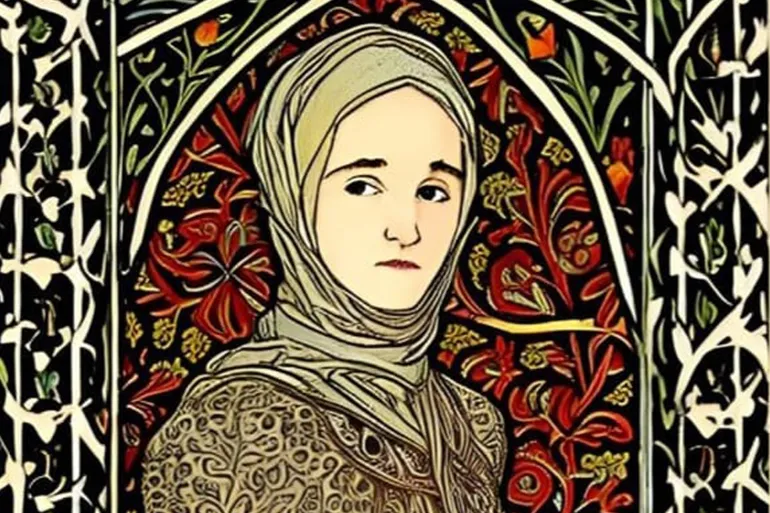


 marwan