Fatima Cates: First British Muslim in Liverpool

A Briton who embraced Islam in the late 1880s, is described as the first woman to convert to Islam in Liverpool. This is despite facing fierce opposition from her Christian family and social circle.

Her journey with Islam began during her involvement with the “Temperance Movement”, which advocated alcohol prohibition. There, she first heard the name of Abdullah Henry Quilliam who speak about Prophet Muhammad (peace be upon him), describing him as “the great Arab who abstained from intoxicants.” This sparked her curiosity and prompted her to learn more about Islam.

When she expressed interest in Islam, Quilliam advised her to begin reading the Quran and presented her a translated copy. Few weeks later she embraced Islam. Shortly after that, she, with Quilliam and another convert, Ali Hamilton, founded the Liverpool Islamic Society in 1887.

Despite the personal challenges she faced, as well as the campaigns of incitement and hostility directed at the Society, Fatima steadfastly continued her missionary work.

The Society contributed to introducing Islam to a growing number of Britons, and Fatima played a prominent role in inviting women to Islam, including her sisters Clara and Annie, along with other women who became prominent Muslim women in Liverpool society.

Early Life:

Frances Elizabeth Murray was born on January 5, 1865, in Birkenhead, England, into a strict Christian working-class family. Her father, of Irish descent, worked as a porter.

Despite modest living conditions, Frances was able to receive an education, benefiting from the compulsory education law passed in 1870, making her one of the first students to benefit from this educational transformation.

From her early childhood, she displayed an independent personality and an inquisitive mind, and was known for her courage in acting according to her convictions and defending them without hesitation.

In her early twenties, Frances became involved with the Temperance Movement, a social movement that sought to reduce alcohol consumption and ultimately prohibit it altogether. She served as secretary of the movement’s Liverpool branch.

During her Temperance Movement activism, she first met Abdullah Henry Quilliam, a preacher of Islam in Britain. She listened to him deliver a sermon in which he spoke of “the great Arab who abstained from intoxicants,” in reference to Prophet Muhammad (peace be upon him).

From that moment, her curiosity about Islam began. Quilliam advised her to start by reading the Quran, giving her a translated copy and saying, “Don’t believe what I or others say about Islam. It’s better to discover it for yourself. Read the Quran.”

Within weeks, in June 1887, Frances declared her conversion to Islam, taking the name Fatima, despite fierce opposition from her family. Her mother even tried to take the Quran from her to burn it, and her family forced her into marriage, considering her a burden. She also faced severe social rejection; her home was pelted with stones, and its windows were repeatedly broken. However, this did not deter her from her decision.

The Liverpool Muslim Society was founded in July 1887 by Fatima, along with Quilliam and Ali Hamilton. Its aim was to spread the message of Islam and explain its teachings. Members met every Friday in a rented building to pray, recite the Quran, and study religious matters.

From its inception, the society faced significant challenges. Troublemakers and instigators would disrupt the meetings, even going so far as to smear Fatima’s face with horse dung on several occasions. Despite these obstacles, she remained steadfast. Within its first two years, the society attracted 11 new converts to Islam.

As the pressure mounted, they were forced to vacate their premises and moved in 1889 to a more spacious and attractive location on Brougham Terrace.

With the relaunch of the association as the Liverpool Islamic Institute, Fatima became its most prominent figure, representing it both nationally and internationally, especially as its presence grew outside Britain, particularly in British India at the time, where Fatima’s poetry and prose were published in the Allahabad Review.

Marriage and Later Years of Activism:

Fatima married Hubert Henry Cates and successfully converted him to Islam, along with her sisters Clara and Annie. Several other women also embraced Islam through her efforts, including Alice “Amina” Bertha Bowman, Hannah “Fatima” Rogda Robinson, Leah “Zuleikha” Banks, and Amy “Amina” Mukish.

Amidst this success, her marriage marked a turbulent period in her life. Although sources mention her husband’s conversion to Islam, this marriage did not end her suffering but rather added new challenges. She endured various forms of abuse at his hands, including an attempt on her life.

When she filed for divorce in December 1891, she encountered legal restrictions dating back to 1857 that denied women the right to divorce, and she was only able to obtain a legal separation for one year. However, their marriage was effectively over, and the couple lived separately until Keats’s death in 1895.

During this time, Fatima reduced her activity at the institute and spent periods away from Liverpool, traveling to the East and devoting some of her time to her hobby of landscape photography in southern England.

In 1900, Fatima contracted influenza, which developed into pneumonia and led to her death. She was given an Islamic burial at Anfield Cemetery, but her grave remained neglected for a long time until a Muslim man named Hamid Mahmood tracked it down and rebuilt it. A Muslim woman from Liverpool named Amira Scarsbrick raised the necessary funds, and the grave was rebuilt on November 4, 2022.

The marble headstone bears a verse from Fatima Keats’s poetry: “Let us always heed the warning God has given, so that we may walk safely on the path that leads to heaven.”

 Aljazeera.net

Continue reading
Priest Converts To Islam

An Australian priest, identified as David Gould, has announced his conversion to Islam after serving for 45 years in the Australian Church. ​Following his decision, he has adopted the name Abdul Rahman, describing the move as a personal spiritual journey.

Continue reading
Paris Exhibit Itches Out GAZA

As Israel’s continues its devastating war and relentless humanitarian blockade, the ancient Gaza Strip – once a radiant Mediterranean hub of commerce, culture, and religious coexistence – now faces a deeper erasure: not just from maps, but from the world’s collective memory.

A new exhibition at the Institut du Monde Arabe in Paris, titled ‘Gaza’s Saved Treasures: 5,000 Years of History,’ seeks to resist that disappearance. Running from April to November this year, the show presents around 100 archaeological masterpieces that illuminate Gaza’s extraordinary legacy as a crossroads of civilizations – from the Bronze Age to modern times.

The exhibition is both a celebration and a lament: a tribute to Gaza’s millennia-old cultural wealth, and a sober reckoning with what has been lost to Israel’s deadly occupation.

Gaza’s strategic location has always made it a coveted prize for empires – Egyptian, Persian, Roman, and Ottoman – but it was also a channel for connection, where cultures and religions converged.

The exhibit – with amphorae, oil lamps, coins, statuettes, and mosaics on display – tells the story of Gaza as a vital Mediterranean port and cultural meeting point.

Its history – shaped by Canaanite, Egyptian, Philistine, Neo-Assyrian, Babylonian, Persian, Greek, Roman, Byzantine, Islamic, and Crusader influences – reveals a city that flourished at the heart of ancient trade and intellectual exchange.

Among the most striking items is a dazzling Byzantine mosaic from Jabaliya, part of an ecclesiastical complex reflecting Gaza’s early Christian heritage.

Nearby, amphorae once used in the wine trade testify to the city’s crucial role in Mediterranean commerce, while figurines blend Egyptian motifs with Hellenistic gods, echoing a world of syncretism and porous cultural boundaries.

Race against oblivion

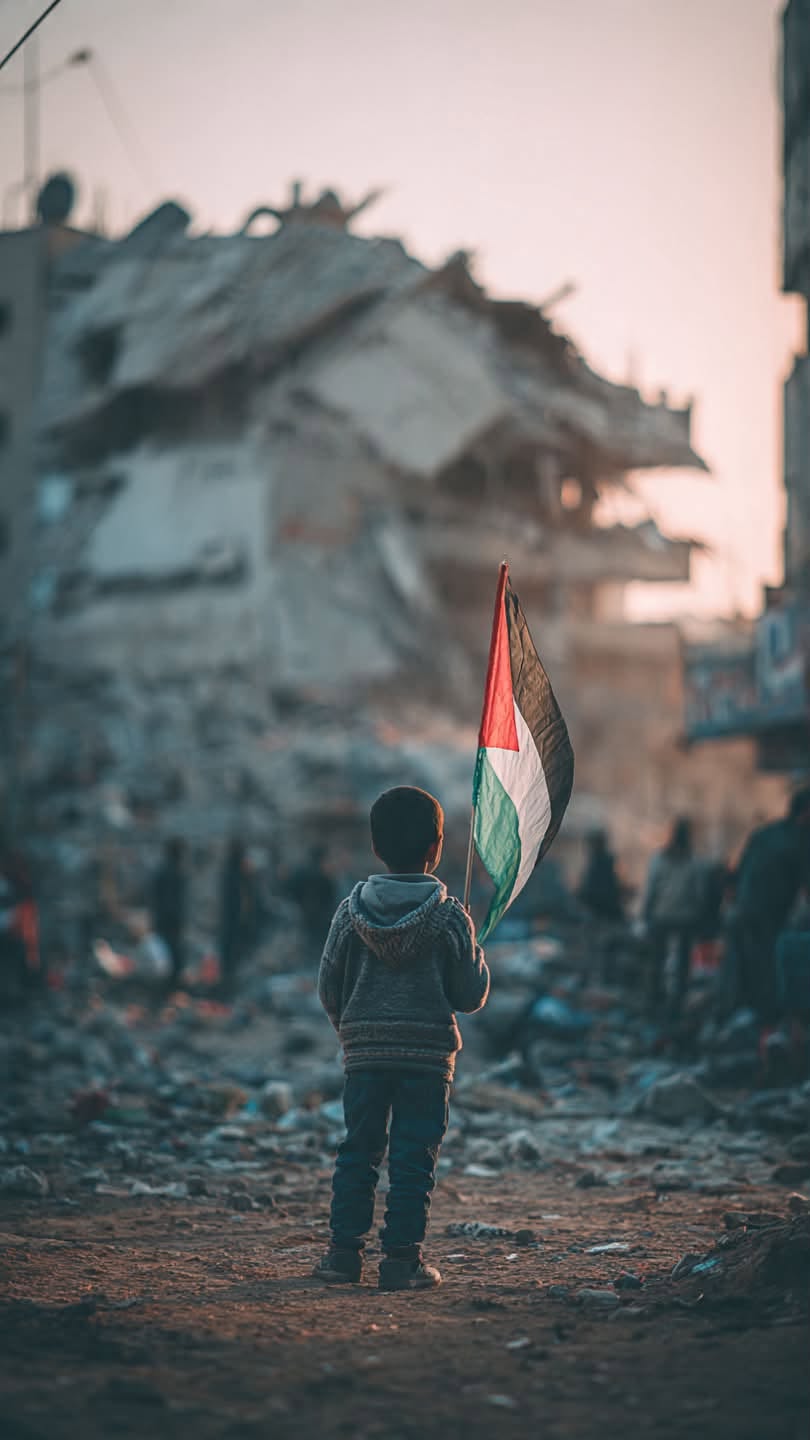
Since the start of Israel’s war on Gaza in October 2023, the territory’s cultural heritage has suffered catastrophic damage.

According to UNESCO, nearly 70 cultural sites have been destroyed or severely damaged, including the historic Greek Orthodox Church of Saint Porphyry – one of the oldest active churches in the world.

Where once stood mosaics, temples, and centuries-old tombs, there are now craters and rubble due to Israel’s ongoing bombardment. In this context, the exhibition in Paris becomes something urgent and defiant: a safeguard for memory, a museum in exile.

Much of the exhibition’s content is drawn from a trove of over 500 artifacts housed since 2007 at Geneva’s Museum of Art and History, entrusted to Switzerland by the Palestinian National Authority for safekeeping.

Many of the works stem from Franco-Palestinian excavations launched in 1995, supplemented by pieces from private collections – some of which are being shown publicly for the first time.

The curators have taken care not to separate Gaza’s ancient grandeur from the present-day suffering inflicted by Israel.

One dedicated section of the exhibition uses satellite imagery and field reports to map the devastation inflicted on cultural heritage since 2023.

French, Swiss, and Palestinian scholars have contributed rare documentation – including early 20th-century photographs of Gaza – that provide a visual archive of what once was and what may never return.

The exhibition makes no attempt to hide the political context. It explicitly refers to the destruction as part of “Israel’s brutal genocide,” anchoring the cultural annihilation in a broader system of occupation, blockade, and war.

By doing so, the Paris exhibition challenges the silence often surrounding cultural loss in war zones, raising questions about the responsibilities of international institutions and the politics of preservation as reported in Anadolu.

Continue reading
Religion, Nationalism, Middle East Style!

Dr Khairi Janbek 

When you consider yourself as a member of the greatest group in existence, irrespective of its characteristics, it is only natural to assume that the values of this group are the greatest, and consequently, the only valid values which are permissible to hold.

However, we must not delude ourselves, because religion cannot be neatly put in the pigeonhole as a moral, or personal spiritual force, for the very ancient nature of organised religion has given it a powerful role in defining peoples personal and group identities, 

in other words, religion plays a national as well as personal, moral, and spiritual roles.

Nationalist and religious identities are both manifestations of the need for belonging, as people have the basic need to belong, a need which can be expressed in inclusive or an exclusive way leading to serious consequences.  

Dualism

In the context of the Arab world, dualism has ruled supreme, the choice has always been, either religion or nationalism, but Iran, Israel and Turkey, have managed to fuse religion into nationalism.  Each one of those countries, reflecting on themselves individually, thought of themselves as great nations, consequently, this meant that great nations require great religions, and not only that, but their own perspective of their own faiths can only be the true path.

The Arab world till now, shows that religion and nationalism remain irreconcilable, which makes it difficult for the Arab individual to understand Iranian, Israeli, and Turkish societies.  

In fairness however, one must say that, the reluctance of any Arab state to claim representation of Islam is very likely to bring severe opposition from both Islamists and nationalists. 

Therefore by separating Islam from nationalism, the individual Arab state strengthens its own brand of legitimacy, and as we see, every Arab state is comfortable with the abstract notion of an Islamic Umma (greater nation) in as much as it is comfortable with the abstract notion  of Arab Umma (greater nation).

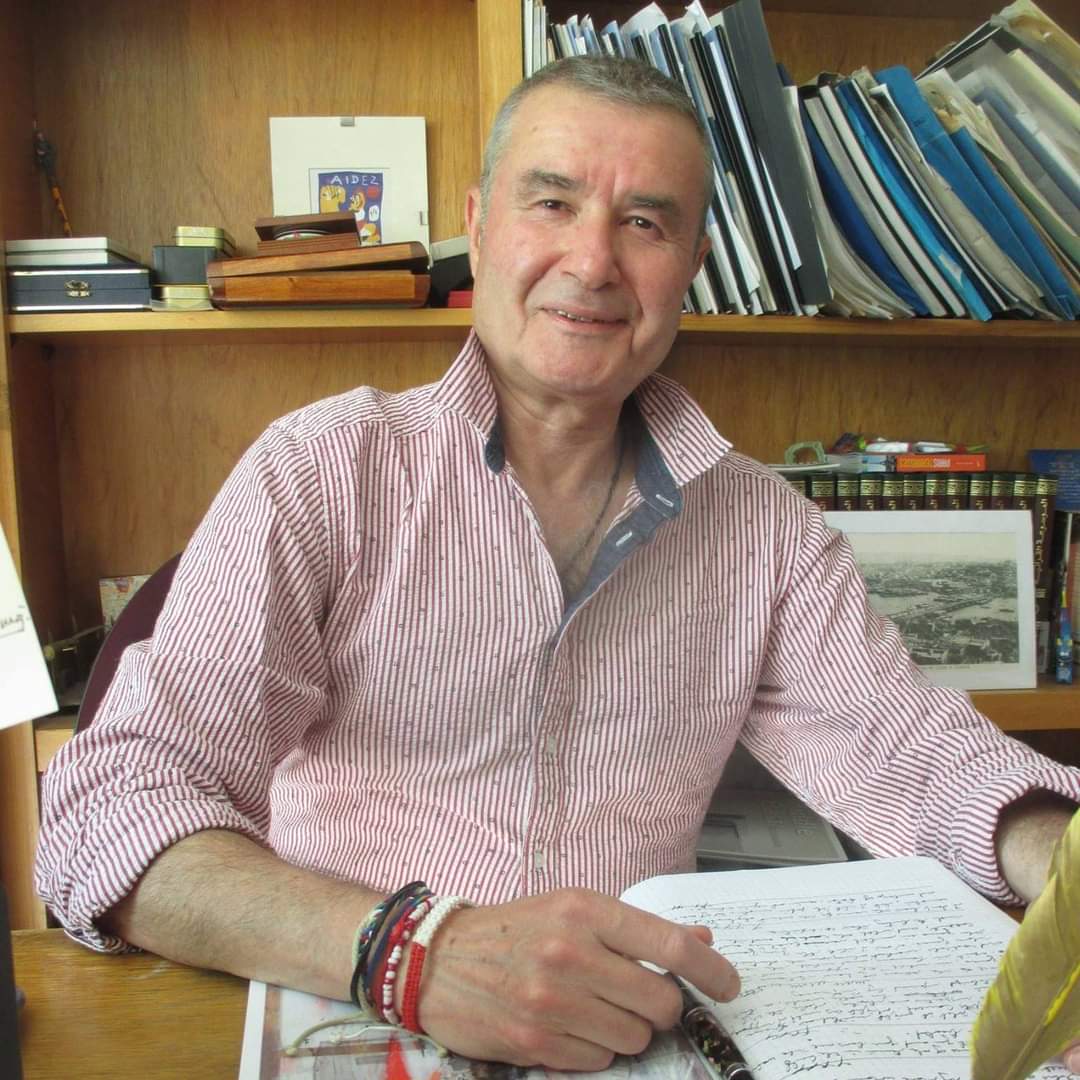
Dr Khairi Janbek is a Jordanian writer based in Paris and the above opinion is that of the author and doesn’t reflect crossfirearabia.com. 

Continue reading