marwan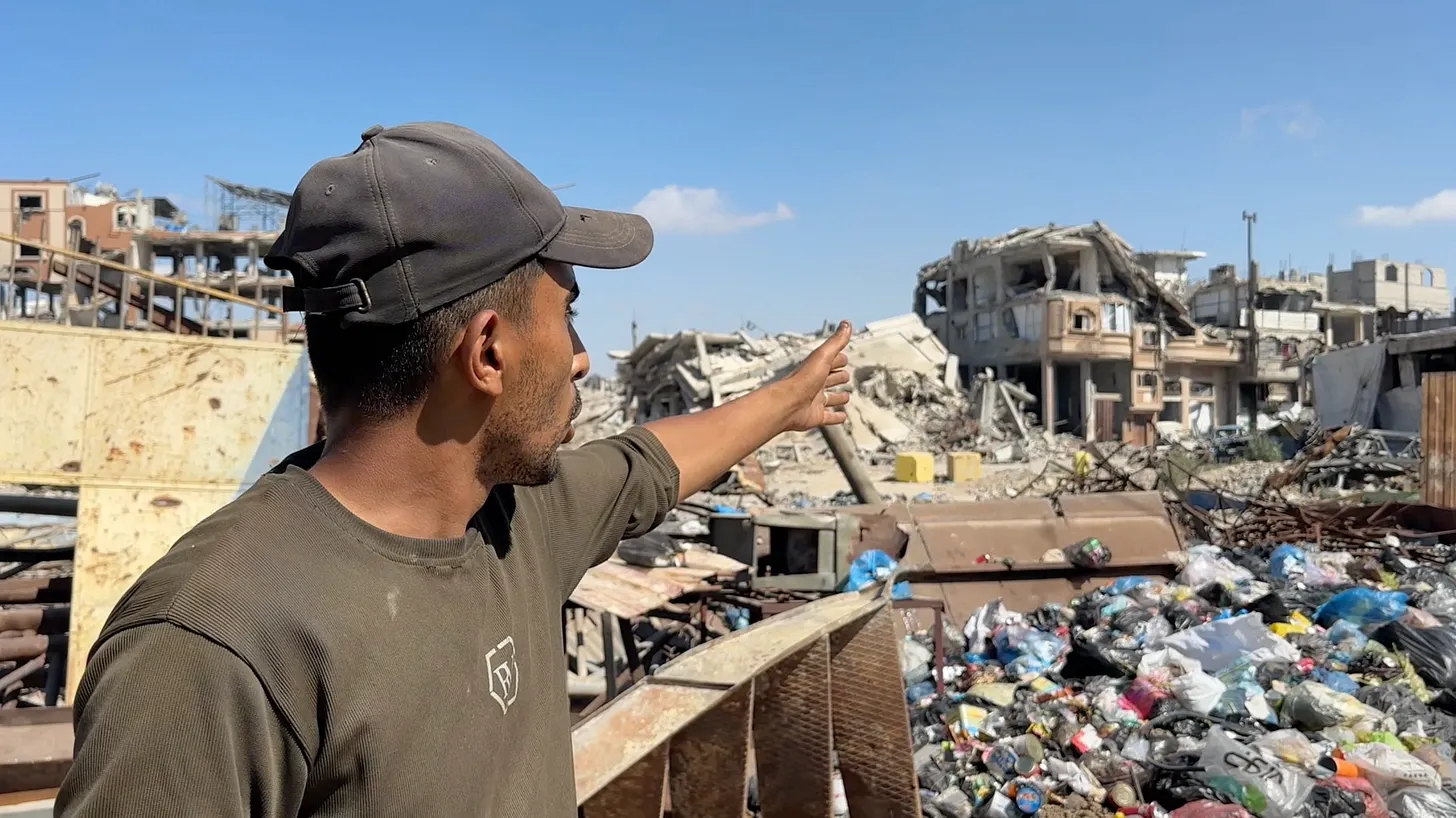
Story by Mohamed Ahmed and Abdel Qader Sabbah
GAZA CITY—Mustafa Al-Shawa awoke at 2:30 a.m. on Monday to the sound of gunfire and the rumble of tanks in Al-Tuffah neighborhood of Gaza City. When he was finally able to go outside a few hours later, he found two yellow concrete blocks placed in the middle of the street—the Israeli military had moved them at least one hundred meters further west into Gaza where they now lay close to his home.
“They moved the yellow line forward to the Sanafour Junction. It used to be up by Al-Shaaaf Street,” Al-Shawa told Drop Site News. “This is the yellow line,” he said, pointing to the blocks. “There is another yellow line along Salah Al-Din Street that they have moved closer. Enough of what is happening to us. Enough of this suffering.”
Israel has been steadily encroaching further into Gaza, moving the “yellow line” that demarcates its area of control from 53% of the enclave since the start of the so-called ceasefire in October to well over 60%, in violation of the agreement. Prime Minister Benjamin Netanyahu recently ordered the army to take 70%.
“We can’t leave the neighborhood because there is nowhere to go,” Al-Shawa said. “If we leave the area we’re in now, we’ll end up sleeping in the streets, in filth. There is no place left. Where are we supposed to go?”
Along certain parts of Gaza, Israeli troops have placed yellow concrete blocks to delineate the new border. Their placement of the blocks further west into the Al-Tuffah neighborhood on Friday accompanied by gunfire, tanks, and quadcopter attacks caused dozens of Palestinians in the area to pack up their belongings and flee later that day.
Families crammed their scant belongings into open cardboard boxes and plastic bags. Trucks were piled up with thin mattresses, furniture, cookware and plastic bins waiting to be carried away. “The yellow line has destroyed us,” one resident yelled as he walked by.
Like nearly all of Gaza, the Al-Tuffah neighborhood is barely standing. Every building is badly damaged or completely destroyed. Residents traverse dirt roads instead of paved streets, flanked by mounds of rubble and twisted steel.

Palestinians in Al-Tuffah neighborhood in Gaza City are forcibly displaced after Israel attacked and moved yellow blocks into the area on June 15, 2026. Video by Mohamed Ahmed.
“Last night was very, very bad,” Nafiz Al-Ghaz, another resident of Al-Tuffah, told Drop Site. “It was a difficult day and an even more difficult night: tanks, quadcopters, gunfire. All night they were telling us, ‘Run, run.’ People are fleeing, taking whatever furniture, cupboards, and beds they can carry. We are on the yellow line. They placed the yellow line right at the traffic junction. …Where are we supposed to go? They might as well throw us into the sea and be done with us.”
Before the genocide began over two and a half years ago, the Gaza Strip was already one of the most densely populated places on earth. Since the “ceasefire” in October, Israel has steadily seized more land, corralling the nearly two million Palestinians in Gaza into an ever shrinking area. Every inhabitable structure is crammed full of people while hundreds of thousands are living in tents and flimsy tarp shacks pitched close together wherever there is room—on the streets and public squares, in stadiums, and on the coastline.
“No one is paying attention to us,” Mohammed Khalil told Drop Site as he gathered up his belongings along the side of a building in Al-Tuffah. “Every day we wish for death,” he said, his voice trembling as he spoke. “Every day we wish to die, to be done with this life.”
Israel has violated the “ceasefire” on a daily basis since it went into effect in October, killing over 1,000 Palestinians in routine attacks and wounding over 3,100, severely restricting the amount of aid agreed upon in the deal, and seizing more land.
“Despite the ceasefire announced eight months ago, Gaza still faces profound uncertainty and immense human suffering,” UN Secretary-General António Guterres said in remarks to the Security Council last week. “Violence is on the rise, with civilians killed on a daily basis. Humanitarian operations remain heavily constrained. Basic human needs—for clean water, sanitation, food, shelter, health care, and more—are going unmet. And the Israeli Government is declaring its intent to control 70% of the Strip.”
The Security Council voted in November to authorize President Donald Trump’s “Board of Peace” to monitor the ceasefire. In a statement on Sunday, Hamas said it delivered its response in coordination with other Palestinian factions to a proposal it received in April from Nickolay Mladenov, the High Representative of the Board of Peace. Mladenov has turned a blind eye to Israel’s violations and instead called on Hamas to fully disarm despite that not being a part of the phase one deal that Hamas signed in October.
“To the world, there is a ceasefire agreement, but in practical terms on the ground, Israel has moved toward a pattern of gradual escalation that reshapes the aggression and reshapes the genocide in the Gaza Strip through multiple forms,” Ahmed Al-Tannani, a writer and political analyst in Gaza, told Drop Site. “Part of this is the daily killing around the yellow line, in addition to expanding control. Another part is linked to the continuation of assassinations and the bombing of civilians in their homes. In addition to that, it has returned to the policy of evacuating neighborhoods and then bombing them, including in areas west of the yellow line.”
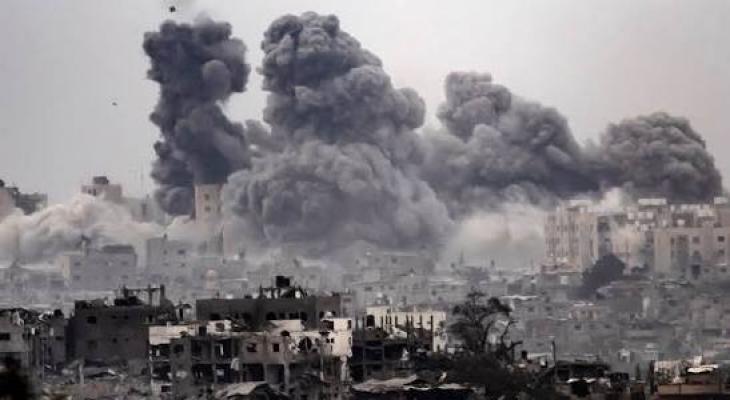
Earlier this month, Israel bombed Al-Jawazat displacement camp west of Gaza City, killing six Palestinians and wounding 20 others, just one of many attacks on areas far from the “yellow line.”
“Attacks are still taking place around us. Here in the Al-Jawazat camp, there have been multiple strikes on tents,” Raed Hajjaj, who lives in a tent within the crowded displacement camp, told Drop Site. “It’s not like before, when massacres were happening continuously and the world’s attention was focused on Gaza. Now, with one or two attacks every day or two, or several times a week, the world is occupied with other issues. We all know what they are—the U.S.-Iran war, the closure of the Strait of Hormuz, and other developments. These things have distracted the world from us.”
Attacks From Israeli Military Bases
Mohammad Al-Zaghl pointed to the bullet holes that ripped through the fabric of his makeshift bathroom on Monday morning. He constructed the small shed out of tarp and wood close to his tent in the Halawa displacement camp in Jabaliya, northern Gaza.
The most frequent Israeli attacks target Palestinians living close to the yellow line in places where the military has built 25 kilometers of massive earth berms to physically divide Gaza. Newly constructed military bases atop the berms appear as elevated colonial forts overlooking a displaced and devastated Palestinian population.
The Halawa camp lies just a few hundred meters from an Israeli base atop one section of the berm—an imposing wall of earth lined with spotlights facing outward and an Israeli flag hanging from a flagpole inside the base alongside several towers.
“The Israelis are about 500 meters away from us,” Al-Zaghl told Drop Site. “There is not just one tower—there are one, two, three. From all three directions, we cannot escape the gunfire. Every day there is shooting. Everyone stays in their place, in their tents.”

Palestinians in Halawa displacement camp in Jabaliya recount Israeli attacks from military bases that overlook the camp on June 15, 2026. Video by Abdel Qader Sabbah.
Like thousands of others, Al-Zaghl has been living in Halawa ever since he was forcibly displaced from the Jabaliya refugee camp. In January, as he was sitting at the entrance of his tent, he heard a burst of gunfire before realizing he had been shot in the abdomen. An angry scar runs along his lower back and a smaller entry wound is visible on the left side of his stomach.
“Today it is worse than before. You hear constant gunfire, explosions, and noise,” he said.
Youssef Shaman, 15, was also shot from the Israeli military base overlooking Halawa. He said it happened in March, as he was going to collect water for his family. “While I was on my way, there was a crowd gathered around the water, and they started shooting at us from the tower,” Shaman told Drop Site. “People were hit, and I was shot in my leg. They kept firing at us from the tower. We could see the Israelis shooting at us.”
Shaman shows the bullet wound on the inside of his thigh just above the knee. An older scar runs along the top of his ankle where he was hit by shrapnel in an earlier airstrike that killed his brother. Along with other eyewitnesses, Shaman said the shooting attacks from the nearby base have steadily increased over the past few months.
“We can see them, and they can see us,” he said. “They look for someone to snipe and open fire on them. They deliberately watch and shoot us. They climb up the hill where we can see them, in their military vehicles and tanks, and then they start shooting at us. …The shooting has increased. They fire at us all day long.”
Israel has not faced any consequences for its wholesale abandonment of the ceasefire over the past eight months, with the violations becoming more acute and attacks intensifying to drive Palestinians further inward, seize more land, and continue the genocide.
“The Israeli occupation still considers the war to be ongoing, and the objectives of the war—linked primarily to achieving the strategic goal of displacing the Palestinian people—are still in place,” Al-Tannani said. “The ceasefire agreement has not brought about any change for the Israeli government.” Drop Site
Sharif Abdel Kouddous and Jawa Ahmad contributed to this report. Sami Vanderlip edited the video.

 CrossFireArabia