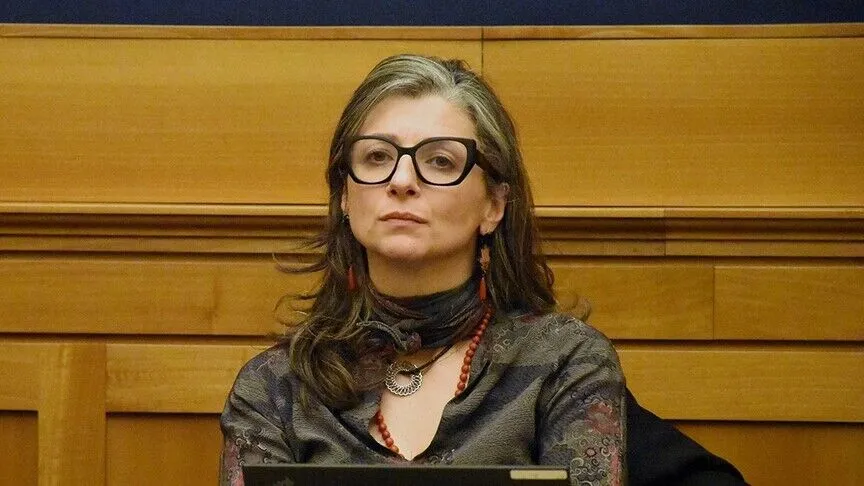
UN Special Rapporteur Francesca Albanese called Sunday for an “international protection presence” in the occupied West Bank, East Jerusalem and Gaza, saying such a deployment was “absolutely urgent.”
“Third states have an obligation, per the ICJ, to act to end Israel’s unlawful occupation,” Albanese wrote on the US social media platform X, referring to a July 2024 advisory opinion by the International Court of Justice that deemed Israel’s occupation of Palestinian territory unlawful and said states must not assist in maintaining it.
Albanese also questioned whether UN Secretary-General Antonio Guterres’ diplomatic efforts and the General Assembly’s “Uniting for Peace” mechanism could overcome the Security Council’s deadlock on the conflict.
The mechanism allows the General Assembly to consider international peace and security issues when the Security Council cannot act because of a lack of unanimity among its permanent members. The council has repeatedly been unable to take action on Gaza and the West Bank amid vetoes by the US. Anadolu
Syria has an opportunity not only to recover from conflict but to build “a future that is more stable, more inclusive and more prosperous for all Syrians”, UN Secretary-General António Guterres said in Damascus on Saturday as he began a landmark visit to the country.
Calling Syria “today the pillar of stability of the Middle East”, the UN chief said the country “stands at a moment of possibility” and urged the international community to seize the opportunity to help rebuild a nation emerging from more than a decade of conflict.
Addressing reporters alongside Foreign Minister Asaad al‑Shaibani, Mr. Guterres described his visit as “an extremely meaningful” one, rooted in decades of engagement with Syrians as former UN High Commissioner for Refugees and later as Secretary-General.
“For years, long before becoming Secretary-General, I worked closely with Syrians,” he said, recalling communities that welcomed refugees fleeing conflict and persecution, as well as Syrian families later forced to flee their own country.
“I met young Syrians whose hopes were simple and universal: to learn, to work, to contribute, and to live in peace.”
Those experiences, he said, remained with him and helped explain why it was important for him to be in Damascus now.
“Indeed, I made a conscious decision not to come to Syria since the beginning of the brutal repression of the Syrian people in 2011 until the fall of the regime.”
A chance to build a new future
The Secretary-General said Syrians had endured years of “hardship, loss and uncertainty” but had never lost the resilience, talent and creativity that define the country.
“Today, Syria stands at a moment of possibility.
“The opportunity now is not only to recover from conflict, but to lay the foundations for a future that is more stable, more inclusive and more prosperous for all Syrians.”
He stressed that rebuilding the country would require leadership and trust, while ensuring that all Syrians see themselves reflected in the nation’s future.
“Above all, it will require that every Syrian sees a place for themselves in the future of their country.
“And it is for Syrians to define their path forward and shape the institutions that will serve future generations.”
A ‘moment for partnership and solidarity’
The UN chief warned that no country emerging from more than a decade of conflict could rebuild alone and appealed for stronger international engagement.
“This is a moment that requires the international community to support Syria with determination and foresight,” he said.
“Syria’s recovery is a humanitarian imperative – and it is also an investment in development, in peace and regional stability.”
He said the international community should help create conditions for economic recovery, restore essential services and infrastructure, expand livelihoods and employment opportunities, and support the safe, voluntary and dignified return of refugees and displaced people.
“International financial institutions and development partners also have an important role to play in helping Syria reconnect with regional and global economic opportunities.”
“This is the moment for partnership and solidarity.”
Emphasizing the UN’s role, he said the Organization stood ready to accompany Syria through its transition.
“We are ready to support your political transition, including your efforts to ensure transitional justice, draft a permanent constitution, and hold free and fair elections.”
“We have no UN agenda for Syria. Our agenda is the agenda of the Syrian government and the Syrian people.”
Sovereignty and territorial integrity
Mr. Guterres also reiterated the UN’s support for Syria’s sovereignty, independence and territorial integrity.
“We underscore the importance of fully respecting Syria’s sovereignty, independence, unity, and territorial integrity.”
“Violations of Syria’s sovereignty and territorial integrity are unacceptable and must cease.”
Referring to developments around the Golan Heights, he added: “What is happening in the region around the Golan Heights is totally unacceptable.”
“I’d like to remind the international community that the Golan Heights are Syrian territory.”
The Secretary-General said the UN would continue working with Syrians and international partners in support of “a future defined by peace, dignity and opportunity by the Syrians themselves.”
Pressed on Israel’s actions in Syria
Taking questions from journalists, the UN chief reiterated his call for an end to violations of Syrian territorial integrity and said the international community needed to take a more active role.
“We consider that the present situation is intolerable and that that situation needs to stop,” he said, while noting that UN personnel on the ground were working to mitigate the impact of ongoing developments.
While acknowledging divisions within the UN Security Council, he pledged continued advocacy on the issue, insisting that “what is Syrian is Syrian and cannot be taken away.”
Visit continues
The visit marks the Secretary-General’s first trip to Syria since the fall of the former regime. During his stay, he is expected to meet President Ahmed al‑Sharaa and other senior officials, and meet women’s groups, civil society representatives and members of diverse communities.
On Monday, Mr. Guterres is scheduled to address the new People’s Assembly of the Syrian Arab Republic before travelling onward to Cyprus. UN News
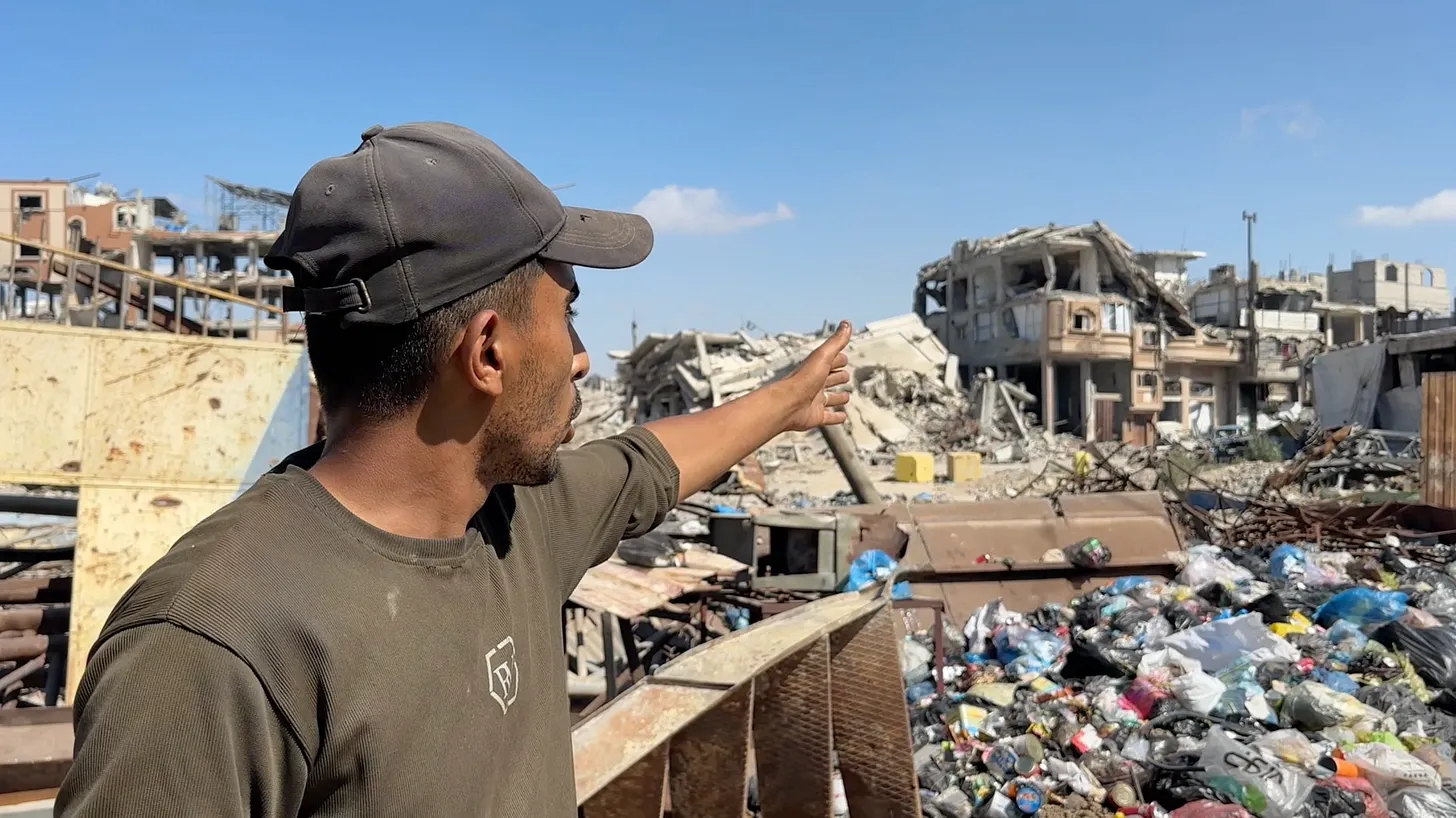
GAZA CITY—Mustafa Al-Shawa awoke at 2:30 a.m. on Monday to the sound of gunfire and the rumble of tanks in Al-Tuffah neighborhood of Gaza City. When he was finally able to go outside a few hours later, he found two yellow concrete blocks placed in the middle of the street—the Israeli military had moved them at least one hundred meters further west into Gaza where they now lay close to his home.
“They moved the yellow line forward to the Sanafour Junction. It used to be up by Al-Shaaaf Street,” Al-Shawa told Drop Site News. “This is the yellow line,” he said, pointing to the blocks. “There is another yellow line along Salah Al-Din Street that they have moved closer. Enough of what is happening to us. Enough of this suffering.”
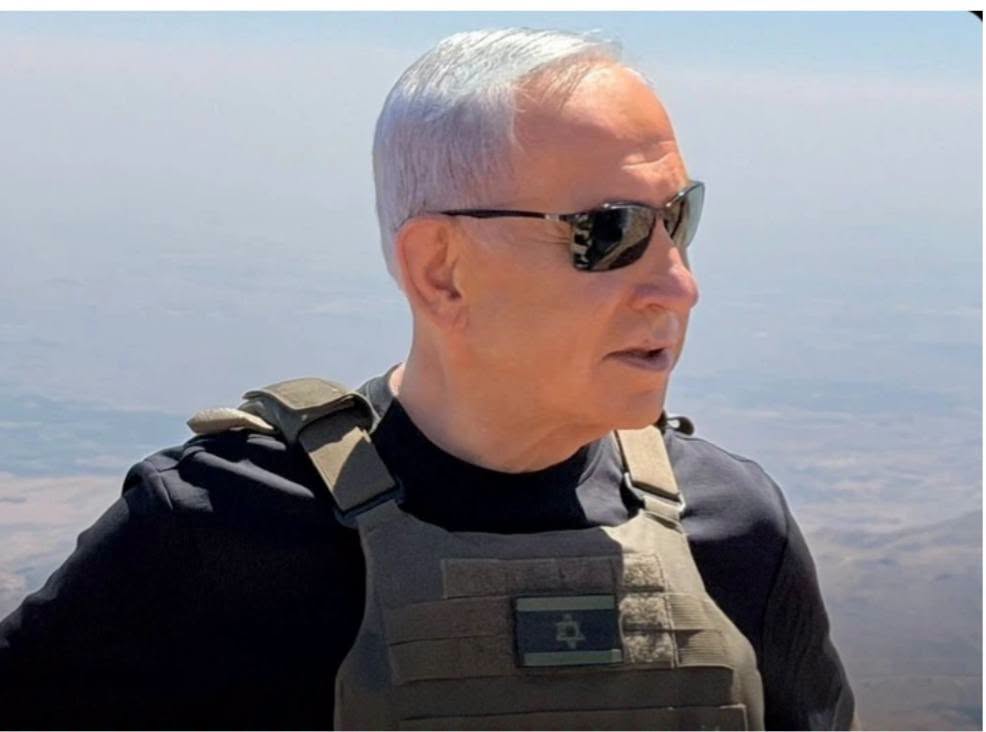
Israel has been steadily encroaching further into Gaza, moving the “yellow line” that demarcates its area of control from 53% of the enclave since the start of the so-called ceasefire in October to well over 60%, in violation of the agreement. Prime Minister Benjamin Netanyahu recently ordered the army to take 70%.
“We can’t leave the neighborhood because there is nowhere to go,” Al-Shawa said. “If we leave the area we’re in now, we’ll end up sleeping in the streets, in filth. There is no place left. Where are we supposed to go?”
Along certain parts of Gaza, Israeli troops have placed yellow concrete blocks to delineate the new border. Their placement of the blocks further west into the Al-Tuffah neighborhood on Friday accompanied by gunfire, tanks, and quadcopter attacks caused dozens of Palestinians in the area to pack up their belongings and flee later that day.
Families crammed their scant belongings into open cardboard boxes and plastic bags. Trucks were piled up with thin mattresses, furniture, cookware and plastic bins waiting to be carried away. “The yellow line has destroyed us,” one resident yelled as he walked by.
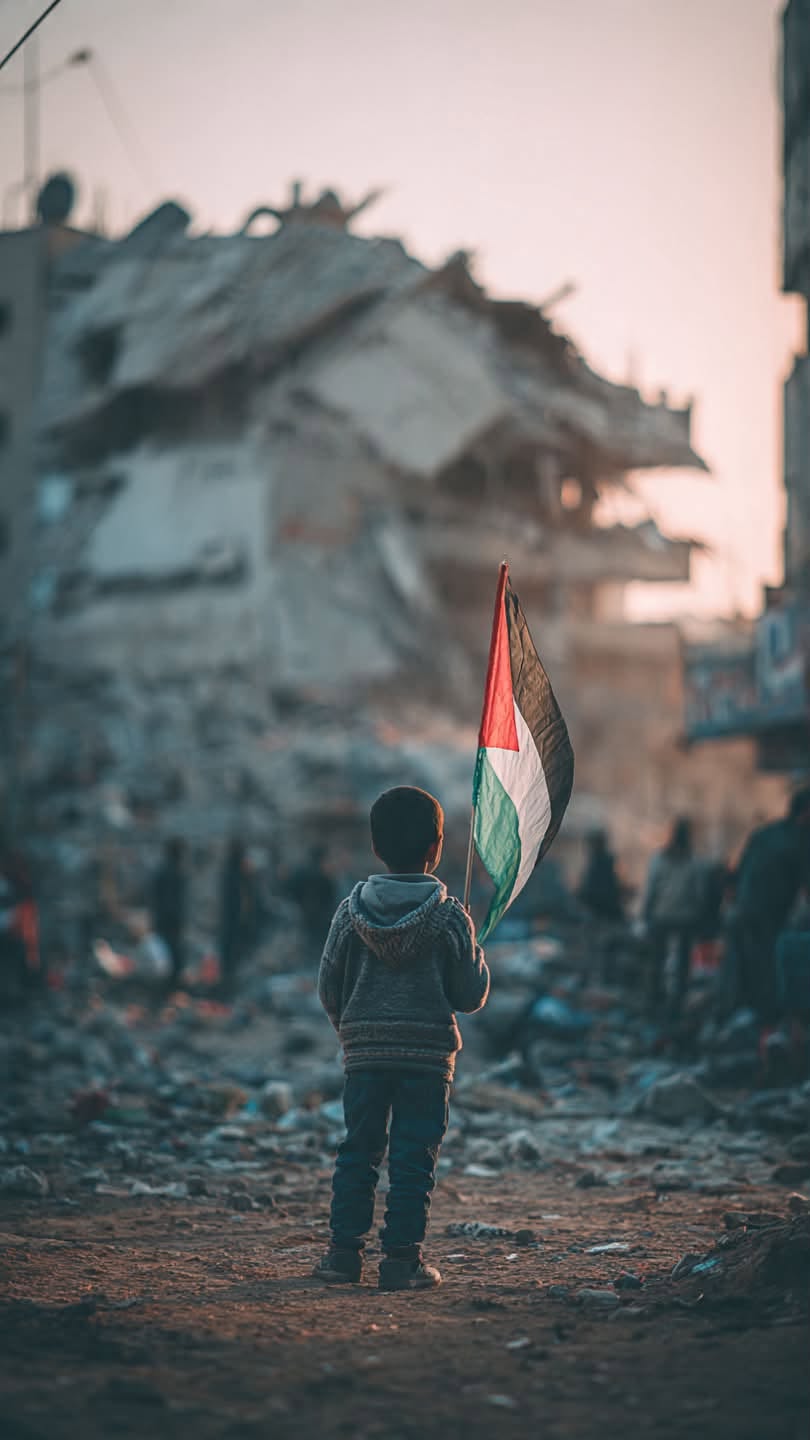
Like nearly all of Gaza, the Al-Tuffah neighborhood is barely standing. Every building is badly damaged or completely destroyed. Residents traverse dirt roads instead of paved streets, flanked by mounds of rubble and twisted steel.
Palestinians in Al-Tuffah neighborhood in Gaza City are forcibly displaced after Israel attacked and moved yellow blocks into the area on June 15, 2026. Video by Mohamed Ahmed.
“Last night was very, very bad,” Nafiz Al-Ghaz, another resident of Al-Tuffah, told Drop Site. “It was a difficult day and an even more difficult night: tanks, quadcopters, gunfire. All night they were telling us, ‘Run, run.’ People are fleeing, taking whatever furniture, cupboards, and beds they can carry. We are on the yellow line. They placed the yellow line right at the traffic junction. …Where are we supposed to go? They might as well throw us into the sea and be done with us.”
Before the genocide began over two and a half years ago, the Gaza Strip was already one of the most densely populated places on earth. Since the “ceasefire” in October, Israel has steadily seized more land, corralling the nearly two million Palestinians in Gaza into an ever shrinking area. Every inhabitable structure is crammed full of people while hundreds of thousands are living in tents and flimsy tarp shacks pitched close together wherever there is room—on the streets and public squares, in stadiums, and on the coastline.
“No one is paying attention to us,” Mohammed Khalil told Drop Site as he gathered up his belongings along the side of a building in Al-Tuffah. “Every day we wish for death,” he said, his voice trembling as he spoke. “Every day we wish to die, to be done with this life.”
Israel has violated the “ceasefire” on a daily basis since it went into effect in October, killing over 1,000 Palestinians in routine attacks and wounding over 3,100, severely restricting the amount of aid agreed upon in the deal, and seizing more land.
“Despite the ceasefire announced eight months ago, Gaza still faces profound uncertainty and immense human suffering,” UN Secretary-General António Guterres said in remarks to the Security Council last week. “Violence is on the rise, with civilians killed on a daily basis. Humanitarian operations remain heavily constrained. Basic human needs—for clean water, sanitation, food, shelter, health care, and more—are going unmet. And the Israeli Government is declaring its intent to control 70% of the Strip.”
The Security Council voted in November to authorize President Donald Trump’s “Board of Peace” to monitor the ceasefire. In a statement on Sunday, Hamas said it delivered its response in coordination with other Palestinian factions to a proposal it received in April from Nickolay Mladenov, the High Representative of the Board of Peace. Mladenov has turned a blind eye to Israel’s violations and instead called on Hamas to fully disarm despite that not being a part of the phase one deal that Hamas signed in October.
“To the world, there is a ceasefire agreement, but in practical terms on the ground, Israel has moved toward a pattern of gradual escalation that reshapes the aggression and reshapes the genocide in the Gaza Strip through multiple forms,” Ahmed Al-Tannani, a writer and political analyst in Gaza, told Drop Site. “Part of this is the daily killing around the yellow line, in addition to expanding control. Another part is linked to the continuation of assassinations and the bombing of civilians in their homes. In addition to that, it has returned to the policy of evacuating neighborhoods and then bombing them, including in areas west of the yellow line.”
Earlier this month, Israel bombed Al-Jawazat displacement camp west of Gaza City, killing six Palestinians and wounding 20 others, just one of many attacks on areas far from the “yellow line.”
“Attacks are still taking place around us. Here in the Al-Jawazat camp, there have been multiple strikes on tents,” Raed Hajjaj, who lives in a tent within the crowded displacement camp, told Drop Site. “It’s not like before, when massacres were happening continuously and the world’s attention was focused on Gaza. Now, with one or two attacks every day or two, or several times a week, the world is occupied with other issues. We all know what they are—the U.S.-Iran war, the closure of the Strait of Hormuz, and other developments. These things have distracted the world from us.”
Attacks From Israeli Military Bases
Mohammad Al-Zaghl pointed to the bullet holes that ripped through the fabric of his makeshift bathroom on Monday morning. He constructed the small shed out of tarp and wood close to his tent in the Halawa displacement camp in Jabaliya, northern Gaza.
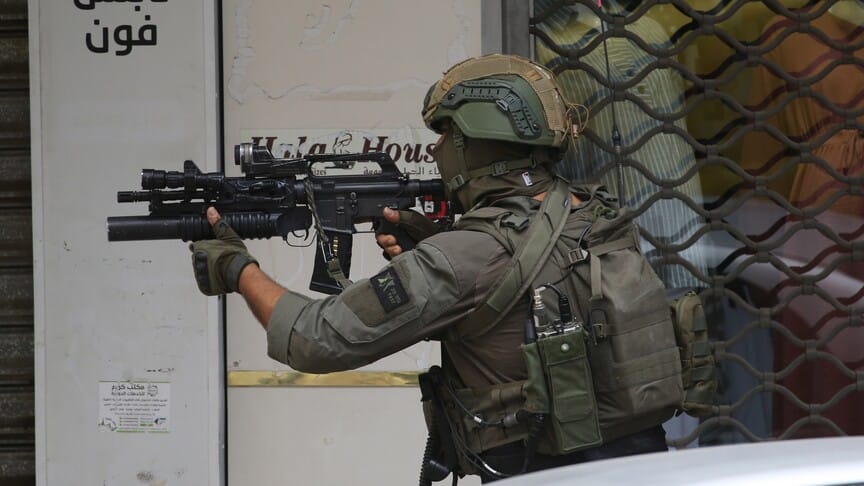
The most frequent Israeli attacks target Palestinians living close to the yellow line in places where the military has built 25 kilometers of massive earth berms to physically divide Gaza. Newly constructed military bases atop the berms appear as elevated colonial forts overlooking a displaced and devastated Palestinian population.
The Halawa camp lies just a few hundred meters from an Israeli base atop one section of the berm—an imposing wall of earth lined with spotlights facing outward and an Israeli flag hanging from a flagpole inside the base alongside several towers.
“The Israelis are about 500 meters away from us,” Al-Zaghl told Drop Site. “There is not just one tower—there are one, two, three. From all three directions, we cannot escape the gunfire. Every day there is shooting. Everyone stays in their place, in their tents.”
Palestinians in Halawa displacement camp in Jabaliya recount Israeli attacks from military bases that overlook the camp on June 15, 2026. Video by Abdel Qader Sabbah.
Like thousands of others, Al-Zaghl has been living in Halawa ever since he was forcibly displaced from the Jabaliya refugee camp. In January, as he was sitting at the entrance of his tent, he heard a burst of gunfire before realizing he had been shot in the abdomen. An angry scar runs along his lower back and a smaller entry wound is visible on the left side of his stomach.
“Today it is worse than before. You hear constant gunfire, explosions, and noise,” he said.
Youssef Shaman, 15, was also shot from the Israeli military base overlooking Halawa. He said it happened in March, as he was going to collect water for his family. “While I was on my way, there was a crowd gathered around the water, and they started shooting at us from the tower,” Shaman told Drop Site. “People were hit, and I was shot in my leg. They kept firing at us from the tower. We could see the Israelis shooting at us.”
Shaman shows the bullet wound on the inside of his thigh just above the knee. An older scar runs along the top of his ankle where he was hit by shrapnel in an earlier airstrike that killed his brother. Along with other eyewitnesses, Shaman said the shooting attacks from the nearby base have steadily increased over the past few months.
“We can see them, and they can see us,” he said. “They look for someone to snipe and open fire on them. They deliberately watch and shoot us. They climb up the hill where we can see them, in their military vehicles and tanks, and then they start shooting at us. …The shooting has increased. They fire at us all day long.”
Israel has not faced any consequences for its wholesale abandonment of the ceasefire over the past eight months, with the violations becoming more acute and attacks intensifying to drive Palestinians further inward, seize more land, and continue the genocide.
“The Israeli occupation still considers the war to be ongoing, and the objectives of the war—linked primarily to achieving the strategic goal of displacing the Palestinian people—are still in place,” Al-Tannani said. “The ceasefire agreement has not brought about any change for the Israeli government.” Drop Site
Sharif Abdel Kouddous and Jawa Ahmad contributed to this report. Sami Vanderlip edited the video.
The Palestinian Authority on Saturday welcomed the inclusion of Israel on the UN blacklist for sexual violence in conflict, calling the move “realistic and objective.”
“UN inclusion of Israel on the ‘List of Shame’ for Perpetrators of Sexual Violence in Conflict Zones is a scientific and logical outcome,” a Palestinian Foreign Ministry statement said.
The ministry expressed support for UN Secretary-General Antonio Guterres amid what it described as Israeli attempts to influence the UN report that placed Israel on the list.
It said that Israel and its “official and unofficial institutions have practiced torture, sexual violence, and rape against our people in the occupied Palestinian territory, especially in detention centers.”
Israel “has used sexual violence as a weapon of war, which constitutes a war crime and a crime against humanity,” it added.
The statement said that Israel has employed a “systematic and widespread policy” over the past years to “intimidate our people and create conditions of forced displacement.”
It added that including Israel to the UN sexual violence blacklist is “an objective, realistic, and scientific outcome of diplomatic efforts, especially in light of the illegal occupation of the Palestinian territory, including East Jerusalem.”
It noted that the designation came as a result of “irrefutable Palestinian and international documentation, numerous international reports, and testimonies submitted by the State of Palestine and Palestinian victims who have been subjected to various forms of sexual violence, torture, and other violations against Palestinian prisoners and detainees during arrest, interrogation, and detention.”
Palestine called on the international community “to act today in light of all these international reports issued by the United Nations, credible and independent bodies, and to activate mechanisms for the protection of the Palestinian people, as well as accountability and prosecution,” according to Anadolu.
On Thursday, Israel’s ambassador to the UN Danny Danon announced the decision to end contacts with Guterres’ office in a pre-recorded video message, calling Israel’s addition “outrageous” while alleging the decision is part of a “campaign against Israel.”
The decision to add Israel to the blacklist comes after multiple reports from the media and human rights groups accused Israel’s military of engaging in sexual violence.
An opinion piece published in the New York Times by columnist Nicholas Kristof earlier this month alleged Palestinian detainees had been subjected to widespread sexual violence by Israeli prison guards, soldiers, settlers and interrogators.
Kristof said he interviewed 14 Palestinian men and women who described sexual assaults and other abuse during detention, or attacks perpetrated by Israeli forces and settlers.
The columnist wrote that there was “no evidence that Israeli leaders order rapes,” but argued that Israeli authorities had created “a security apparatus where sexual violence has become,” citing a UN report, one of Israel’s “standard operating procedures.”
The article included testimonies alleging rape with objects, beatings targeting genitals, threats of sexual violence and humiliation during imprisonment.
Kristof cited reports by organizations including Euro-Med Human Rights Monitor, Save the Children, B’Tselem and the Committee to Protect Journalists documenting allegations of sexual abuse and mistreatment of Palestinian detainees.
He also referenced a UN report published last year accusing Israel of “systematically” subjecting Palestinians to “sexualized torture.”
Around $70 billion will be needed to reconstruct Gaza and make it safe after two years of war, UN development experts said on Tuesday, while aid agencies reported that far too little aid is getting in to meet the needs of desperate Palestinians.
At just 41 kilometres long (25.4 miles) and two to five kilometres wide (1.2 to 3.1 miles), few places in the Gaza Strip had been left unscathed by the constant Israeli bombardment before the latest ceasefire came into effect haltingly last Friday.
According to the UN Development Programme Special Representative for the Palestinians, Jaco Cilliers, destruction across the enclave “is now in the region of 84 per cent. In certain parts of Gaza, like in Gaza City, it’s even up to 92 per cent.”
$20 billion needed now
Speaking from Jerusalem, the UNDP’s Mr. Cilliers highlighted the findings of the latest Interim Rapid Damage and Needs Assessment (IRDNA) on Gaza by the UN, the European Union and the World Bank, which estimated the damage at $70 billion.
To kickstart the massive operation, some $20 billion will be required in the next three years alone, he told journalists in Geneva.
The UN development agency is present in Gaza alongside humanitarian partners to provide immediate support to the enclave’s 2.1 million people.
This includes providing clean water, emergency employment, medical supplies, solid waste removal and making homes and public spaces safe by clearing rubble potentially hiding unexploded ordnance or the many thousands of missing Palestinians.
“We’ve already removed about 81,000 tonnes. That is about…3,100 truckloads,” Mr. Cilliers explained. “The majority of the debris removal is to provide access to humanitarian actors so that they can provide the much-needed aid and support to the people in Gaza. But we also help with hospitals and other social services that need to be cleared of debris.”
The UNDP official pointed to “very good indications” from potential donors in support of reconstruction from Arab States, but also from European nations and the United States “which has also indicated that they are going to be coming in supporting some of the early recovery efforts”.
Immediate aid essential
Important as reconstruction is for Gaza’s long-term future, UN humanitarians once again clamoured for the Israeli authorities to open all access points into Gaza, after the remaining 20 living Israeli hostages were freed on Monday and Palestinian prisoners were released from Israel.
The development followed the signing of a ceasefire deal between Hamas and Israel signed on Monday evening in Sharm El-Sheikh by US President Donald Trump, and the leaders of Egypt, Qatar and Turkïye.
Earlier on Monday, UN Secretary-General António Guterres welcomed the release of all living hostages from Gaza, two years since they were among some 250 taken during Hamas-led terror attacks in Israel on 7 October 2023.
Gaza City testimony
Speaking to UN News from Gaza, UN Children’s Fund (UNICEF) aid worker Tess Ingram described the story of one family displaced five times by the war:
“I met a family today, Mustafa and Syeda and their children, and they told me that they were among the lucky ones because while Mustafa was pulling rubble out from the building, that is their home, at least he said, we have a home.”
The family was relieved on Monday at the appearance of a water truck, Ms. Imgram told us: “But they live in fear that truck might not turn up today or tomorrow. She also can’t get the medicine she needs and her sons had to walk a really long way today just to buy the basics that she needed to make some bread.
“Families need absolutely everything right now. We need the hundreds of trucks a day that were promised to get into the Gaza Strip.”
On Tuesday, the focus shifted to the transfer from Gaza of all deceased hostages, an extremely difficult process overseen by the International Committee of the Red Cross (ICRC). It remains unclear how many deceased hostages will be transferred by Hamas.
“When it comes to the living hostages or Palestinian detainees – and believe me that’s a big issue for us – we actually don’t know, we know that we have to be ready,” said ICRC spokesperson Christian Cardon, adding that the complex search is getting underway today.
In the meantime, needs in Gaza remain enormous and “fluid”, aid teams report, with more than 300,000 Palestinians heading north to Gaza City since Friday, as the ceasefire agreement seemed to hold.
“The enthusiasm that came from the international community, from people on the ground that this was the beginning of the end of all the suffering and things would change rapidly, is just not being reflected on the ground, day in and day out. We are not getting enough aid in,” said UN Children’s Fund (UNICEF) spokesperson Ricardo Pires.
The Israeli authorities have agreed to allow 190,000 tonnes of relief supplies into Gaza and UN agencies and their partners are scaling up operations rapidly, but a far greater amount is needed overall, humanitarian agencies including the UN aid office, OCHA, have said repeatedly.
“Of course, we are advocating with everyone, and we were there in Sharm El- Sheikh yesterday as well, with 22 heads of state of government, who we are asking to help us push all buttons you can to get this up and running as soon as possible,” said OCHA spokesperson Jens Laerke.
Aid hub carnage
Aid teams continue to insist that there needs to be a move away from handing out lifesaving supplies from remote areas including non-UN aid hubs that are difficult to reach and where hundreds of Palestinians have been shot or injured.
“Most of the actors – ICRC included – were not able to organize sufficient distribution of aid inside Gaza,” said Mr. Cardon. “And what we’ve seen instead, it’s people coming back from distribution sites being wounded, if not killed, in many instances…It’s about aid coming to the people and not any more people going to the aid,” as reported by UN News.

 CrossFireArabia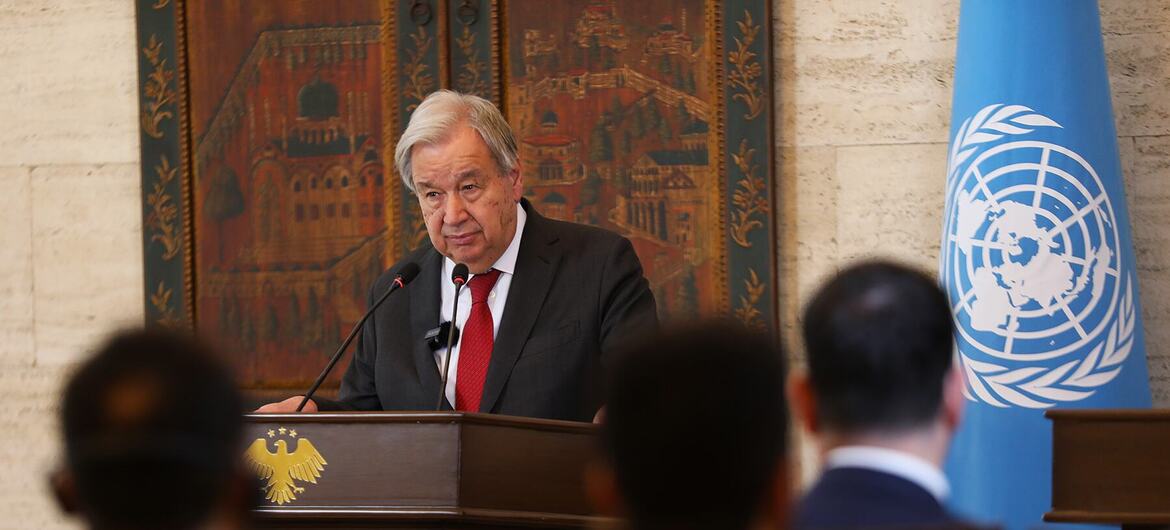
 marwan