Trending News:In Memory of Shireen Abu AklehIsrael Tells 22 Palestinian Families to Vacate For DemolitionShireen Abu Akleh…Never ForgetHolocaust Survivors Against The Gaza GenocidePalestine EnigmaticFree Hussam Abu Safieh: 600 Days in Israeli JailPalestine Stands With SpainWorld Cup, Evil WarUnprecedented: More Israelis Targeted in World Than EverIsrael Violates The Gaza Ceasefire 3795 TimesPalestinian Family Says Cheese For The CameraBuilding Among Destruction: UN Aids Gaza FarmersKiller of Shireen Abu Akleh IdentifiedWho was Gaza’s Mayor in 1939?John Esposito: Explained Islam With CompassionThe Key of ReturnThree DancersSad Woman of PalestineIsraeli Settlers Torch a Mosque Near Hebron, Burn 2 HomesPalestinian Woman Dies Waiting For an Ambulance at Israeli CheckpointPottery Jug Quenches Thirst of GazansJournalist Account of Gaza Destroyed But Refused to be Beaten‘Dad, What’s a Ballistic Missile?’A Freedom Fighter, NOT a TerroristDr Mitri Raheb: ‘…Where is The Arab World…’Remembering Edward SaidNetanyahu Could be Arrested if he Steps in New YorkJewish Settlers Set a Home on Fire Near NablusIsrael Kills 19, Injures 60 in Gaza in 24 HoursLebanese Media in The Age of Political ConspiraciesDon’t Forget Palestine!Israeli Settlements Shoot up!Mahmoud Darwish: I will live, even if life betrays me and I will dream, even if dreams abandon meMargot Saba Abdo: A Photo Pioneer in JerusalemMustapha Barghouti: ‘Repression Will Not Deter The Palestinian People’Gaza: Thousands For The Egyptian Aid Worker Who Organized World Cup ScreeningsMan Behind An Arab Media Giant2.2m Gazans Forced Into 100 Square KilometersGaza Pays Tribute to Late Arab PrinceFaces From GazaPro-Israel Supporter Lindsey Graham Dead at 71Shakespeare and PalestineOutrage: Israel Kills 4 Sisters in Al MawasiHonoring The Lost SoulsNGO Documents 48 Resistance Acts Against Israel70,000 Attend The Friday Prayers in Al AqsaIsrael Targets a Hospital in Gaza With a Quadcopter BombGhasan Kanfani: The Novelist, Activist, Fighter, Marxist and MusicianPalestine in ColorIsrael Demolishes Palestinian SchoolStitching PalestinePitfalls of HormuzGaza: 35,000 People in Every Square KilometerFrance: Free Dr. Hussam Abu Safiye!Poll: 3 in 10 Americans Believe Israel Committed Genocide in GazaIsrael Forces Man, His Son to Tear Down Their HomesWorld Cup, Wimbledon Kicks: Flags, Nepotism, Red Cards and a Watermelon!Ghassan Kanafani: Israel Feared His Pen, And Assassinated HimIn Defense of Dr Mustafa Al BarghoutiGaza Lives Without ElectricityHow Israel Destroyed Education in GazaIreland Passes Bill to Ban Imports From Israeli SettlementsThe Art of MutilationPeace Now: 2025 Worst ‘Terror’ Year For Israeli Settlements Israeli Drone Kills Egyptian Committee Official in GazaBride of HaifaNew York: AIPAC Stranglehold No More !Reserve Officer: The Israeli Army is in ‘Moral Deterioration’‘When Will I Bury My Sister’Gaza, Srebrenica: Two Genocides Years ApartThe Gaza Holocaust25 Palestinians Spent a Quarter-Century in Israeli PrisonsIsraeli Bulldozers Demolish Two Homes in Palestinian TownGaza Death Toll Tops 73,000 With 173,571 InjuredGaza City: 8 Bodies Recovered From The RubbleHorror‘No Date Set For US Visit’: Netanyahu Hints at Differences With TrumpIn June Israeli Settlers Violate Al Aqsa Sanctity 540 TimesMalak Mattar: An Artist From GazaRevisited: The ‘Miracle Baby’ StoryShukri Badr Qutaina: A Journalist Fighting The British MandateWomen From The Past: Sulafa Hassan Taher HijjawiBaby Dies as Israeli Army Refuses to Allow Him to Cross Barrier125 Israeli Settlers Raid Al Aqsa MosqueWhat is Sejjil?Netanyahu Has Lost Against Iran and He Knows it!Hebrew Media: 90,000 Wounded Soldiers Amid Funding CrisisAfter Spending 40 Years in Israeli Jails….Maher Younis DiesMona Saudi: A Sculptor Once Accused of Seeking to Kill David Ben-GurionPalestineDr. Hussam Abu Safiya: His Life Teetering on DeathUS Tried to War Iran Israel May Try to Kill its NegotiatorsTen Years Since the Palestinian RevolutionFrom The WreckageIsrael Kills 560 Palestinian Footballers, Trainers – Sports OfficialSo History Doesn’t Forget: Israel Killed 21,500 Children in its War on GazaRemains of Orieb Al Rayes Finally Uncovered From The Rubble of Her HomeFrench City Grants Marwan Barghouti Honorary CitizenshipIsrael Chips at The Arab Face of Jerusalem‘I Haven’t Forgotten Gaza’
Trending News:In Memory of Shireen Abu AklehIsrael Tells 22 Palestinian Families to Vacate For DemolitionShireen Abu Akleh…Never ForgetHolocaust Survivors Against The Gaza GenocidePalestine EnigmaticFree Hussam Abu Safieh: 600 Days in Israeli JailPalestine Stands With SpainWorld Cup, Evil WarUnprecedented: More Israelis Targeted in World Than EverIsrael Violates The Gaza Ceasefire 3795 TimesPalestinian Family Says Cheese For The CameraBuilding Among Destruction: UN Aids Gaza FarmersKiller of Shireen Abu Akleh IdentifiedWho was Gaza’s Mayor in 1939?John Esposito: Explained Islam With CompassionThe Key of ReturnThree DancersSad Woman of PalestineIsraeli Settlers Torch a Mosque Near Hebron, Burn 2 HomesPalestinian Woman Dies Waiting For an Ambulance at Israeli CheckpointPottery Jug Quenches Thirst of GazansJournalist Account of Gaza Destroyed But Refused to be Beaten‘Dad, What’s a Ballistic Missile?’A Freedom Fighter, NOT a TerroristDr Mitri Raheb: ‘…Where is The Arab World…’Remembering Edward SaidNetanyahu Could be Arrested if he Steps in New YorkJewish Settlers Set a Home on Fire Near NablusIsrael Kills 19, Injures 60 in Gaza in 24 HoursLebanese Media in The Age of Political ConspiraciesDon’t Forget Palestine!Israeli Settlements Shoot up!Mahmoud Darwish: I will live, even if life betrays me and I will dream, even if dreams abandon meMargot Saba Abdo: A Photo Pioneer in JerusalemMustapha Barghouti: ‘Repression Will Not Deter The Palestinian People’Gaza: Thousands For The Egyptian Aid Worker Who Organized World Cup ScreeningsMan Behind An Arab Media Giant2.2m Gazans Forced Into 100 Square KilometersGaza Pays Tribute to Late Arab PrinceFaces From GazaPro-Israel Supporter Lindsey Graham Dead at 71Shakespeare and PalestineOutrage: Israel Kills 4 Sisters in Al MawasiHonoring The Lost SoulsNGO Documents 48 Resistance Acts Against Israel70,000 Attend The Friday Prayers in Al AqsaIsrael Targets a Hospital in Gaza With a Quadcopter BombGhasan Kanfani: The Novelist, Activist, Fighter, Marxist and MusicianPalestine in ColorIsrael Demolishes Palestinian SchoolStitching PalestinePitfalls of HormuzGaza: 35,000 People in Every Square KilometerFrance: Free Dr. Hussam Abu Safiye!Poll: 3 in 10 Americans Believe Israel Committed Genocide in GazaIsrael Forces Man, His Son to Tear Down Their HomesWorld Cup, Wimbledon Kicks: Flags, Nepotism, Red Cards and a Watermelon!Ghassan Kanafani: Israel Feared His Pen, And Assassinated HimIn Defense of Dr Mustafa Al BarghoutiGaza Lives Without ElectricityHow Israel Destroyed Education in GazaIreland Passes Bill to Ban Imports From Israeli SettlementsThe Art of MutilationPeace Now: 2025 Worst ‘Terror’ Year For Israeli Settlements Israeli Drone Kills Egyptian Committee Official in GazaBride of HaifaNew York: AIPAC Stranglehold No More !Reserve Officer: The Israeli Army is in ‘Moral Deterioration’‘When Will I Bury My Sister’Gaza, Srebrenica: Two Genocides Years ApartThe Gaza Holocaust25 Palestinians Spent a Quarter-Century in Israeli PrisonsIsraeli Bulldozers Demolish Two Homes in Palestinian TownGaza Death Toll Tops 73,000 With 173,571 InjuredGaza City: 8 Bodies Recovered From The RubbleHorror‘No Date Set For US Visit’: Netanyahu Hints at Differences With TrumpIn June Israeli Settlers Violate Al Aqsa Sanctity 540 TimesMalak Mattar: An Artist From GazaRevisited: The ‘Miracle Baby’ StoryShukri Badr Qutaina: A Journalist Fighting The British MandateWomen From The Past: Sulafa Hassan Taher HijjawiBaby Dies as Israeli Army Refuses to Allow Him to Cross Barrier125 Israeli Settlers Raid Al Aqsa MosqueWhat is Sejjil?Netanyahu Has Lost Against Iran and He Knows it!Hebrew Media: 90,000 Wounded Soldiers Amid Funding CrisisAfter Spending 40 Years in Israeli Jails….Maher Younis DiesMona Saudi: A Sculptor Once Accused of Seeking to Kill David Ben-GurionPalestineDr. Hussam Abu Safiya: His Life Teetering on DeathUS Tried to War Iran Israel May Try to Kill its NegotiatorsTen Years Since the Palestinian RevolutionFrom The WreckageIsrael Kills 560 Palestinian Footballers, Trainers – Sports OfficialSo History Doesn’t Forget: Israel Killed 21,500 Children in its War on GazaRemains of Orieb Al Rayes Finally Uncovered From The Rubble of Her HomeFrench City Grants Marwan Barghouti Honorary CitizenshipIsrael Chips at The Arab Face of Jerusalem‘I Haven’t Forgotten Gaza’
Imagine being pregnant and knowing you are three times more likely to miscarry. Imagine being pregnant and knowing you are three times more likely to die in childbirth. Imagine being pregnant and experiencing the fear of death every single day. Imagine being pregnant and feeling like the world has completely forgotten you.
This is the hell pregnant women in Gaza are living through every day.
In the 9 months, or 40 weeks, that the violence in Gaza has now raged on, women there have conceived, miscarried, and birthed their babies. Instead of spending 9 months safely and hopefully preparing for the birth of their baby, these women have spent the entirety of their pregnancy in constant fear.
Pregnant women in #Gaza are living through hell every day. 9 months into this war, the risks of miscarriage and deaths during childbirth have increased threefold. Pregnant women and their babies deserve to live. We need a #CeasefireNow. Read: https://t.co/bZvU94xuuYpic.twitter.com/sWe9eT5wzW
22-year-old Diana discovered she was pregnant shortly after violence escalated last October and gave birth to her son, Yaman, under intense bombing and gunfire late last week.
“I had a difficult labour. I was so frightened as the bombing was intense and didn’t stop even for a minute. My mother was so afraid for me and the baby – she prayed and prayed that we’d still be alive by dawn.
Pregnant women in #Gaza are 3 times more likely to miscarry since the start of the war. Thousands are losing their babies or giving birth in rubble.
We need the new UK Govt to put women & girls at the heart of its Gaza response. #CeasefireNOW
“I gave birth to my son, Yaman at about 2am. There was no special care for the baby when he was born, and he was not fully examined. He has jaundice now which has affected his brain.”
Diana is not alone. Over 50,000 women are currently pregnant in Gaza. Around 180 are due to give birth today, but not all of them will make it that far. Pregnant women in Gaza have experienced so much trauma since October that they are three times more likely to miscarry than they were before.
50,000 women are currently pregnant in #Gaza. 180 are due to give birth today. It's been 9 months of hell.
We need the new UK Government to put women & girls at the heart of its response in Gaza. We need a #CeasefireNOW.
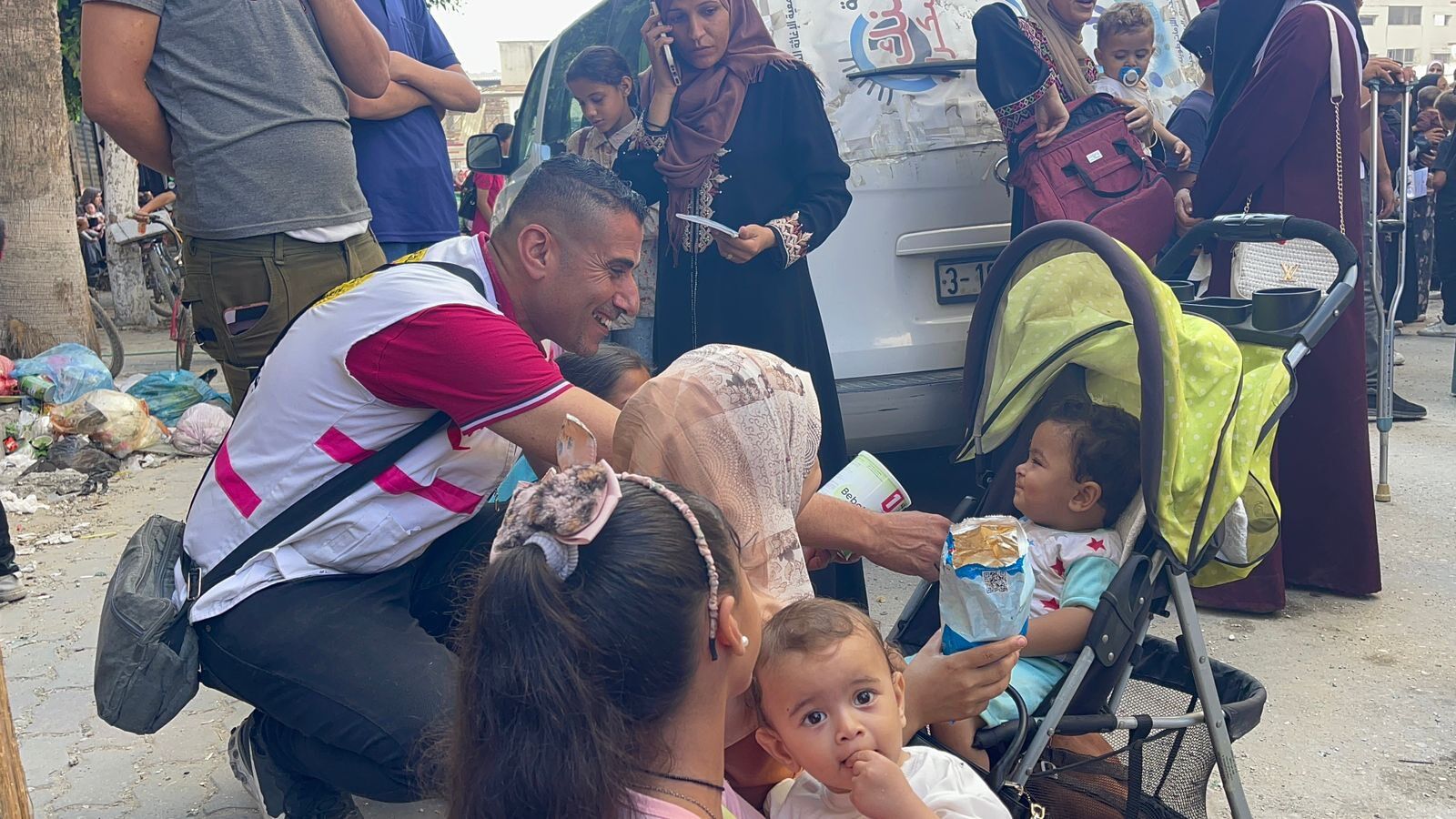
For those who defy the odds and manage to carry their pregnancy to full-term, the likelihood is they will be forced to give birth in a tent, a temporary shelter, or even in the streets amid rubble. They will do this without painkillers, while bombs continue to drop around them, knowing that they are now three times more likely to die giving birth.
Expressing concern on forgetting women and their experiences in this conflict, Hiba Al Hejazi, CARE’s Regional Advocacy Advisor for the MENA Region said: “It’s abhorrent that women, and their experiences in this conflict, have largely been forgotten.
Mudalala was one month pregnant when the war began, nine months ago. She spent her pregnancy on the move, with no safety and in harsh sanitary conditions.
The international community has to step up and put them front and centre. We need a gendered response to this conflict, one that prioritises the needs and experiences of women, and funds the women leading their communities through crisis. We urgently need governments to use their diplomatic powers and bring an end to a conflict that is destroying lives, many that have only just begun.”
CARE International’s Palestinian partner in Gaza, Juzoor, has set up clinics offering ante- and post-natal care, and mobilised volunteers from its network of midwives to assist vulnerable women to deliver births safely in their shelters with specialised equipment. CARE has also distributed 5,500 Baby Kits, containing essential products such as baby clothes and sterilising wipes for pregnant mothers, many of whom have lost everything.
This is an article reproduced CARE International on the situation of pregnant women in Gaza. For media inquiries, please contact[email protected].
Dr. Marwan Asmar holds a PhD from Leeds University and is a freelance writer specializing on the Middle East. He has worked as a journalist since the early 1990s in Jordan and the Gulf countries, and been widely published, including at Albawaba, Gulf News, Al Ghad, World Press Review and others.
With a complete power outage, destruction of water infrastructure, and the sweltering heat of summer, the overcrowded tents and shelters in the Gaza Strip have become veritable ovens.
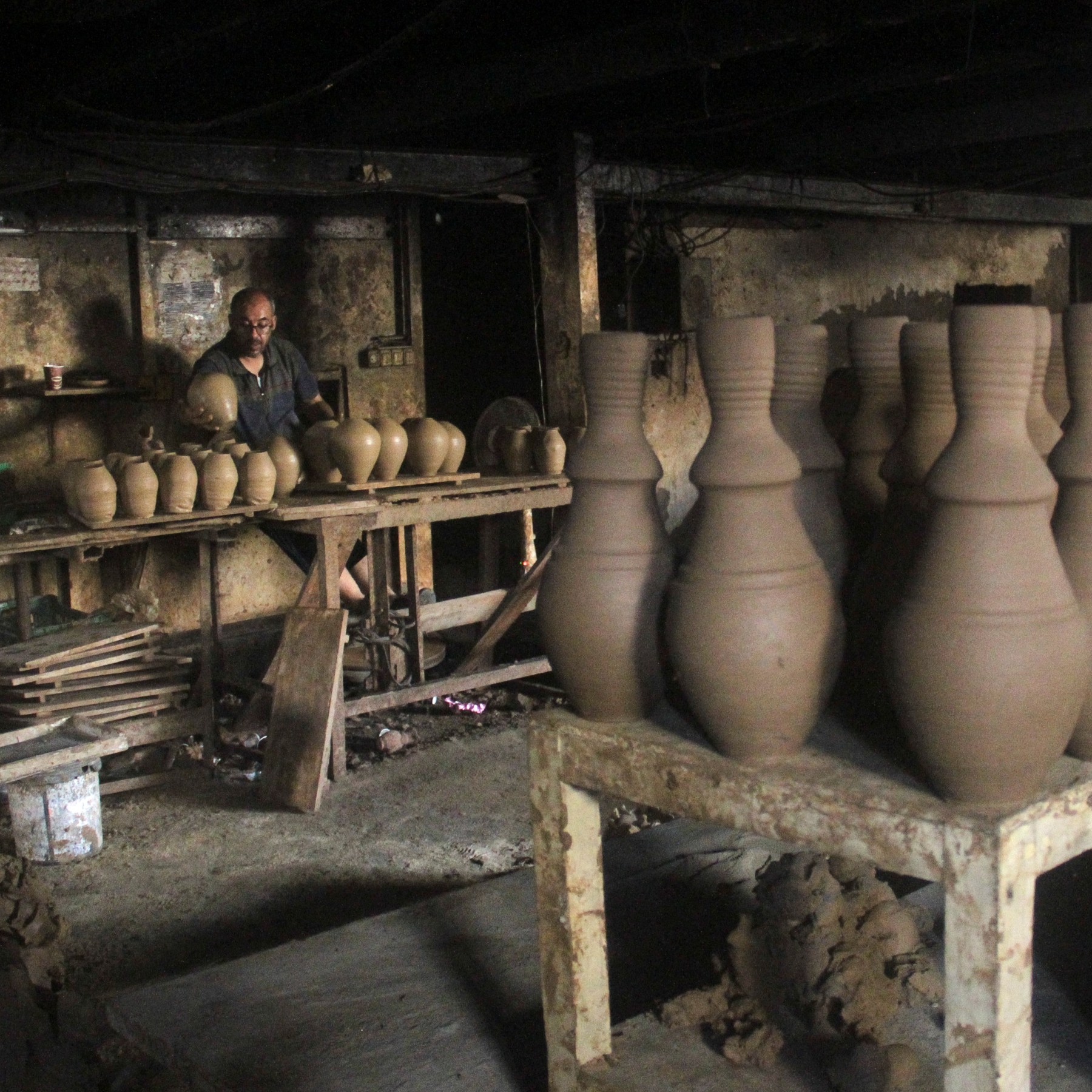
Amid this suffering, the earthenware jug, a product of the siege and displacement, has become a true lifeline, serving as an indispensable “natural refrigerator” for thousands of families searching for a drop of cool water under the burning plastic sheeting.
As temperatures exceed normal levels inside the camps, water stored in plastic containers becomes hot and undrinkable, posing a health risk with prolonged exposure to the sun.
This is where the earthenware jug comes in. The natural porosity of the clay allows water to seep through and evaporate, significantly lowering its temperature and providing displaced people with a refreshing dose of cool water to alleviate the scorching heat.
Craft Resisting Extinction
From the heart of the rubble, this historic craft has been revived. After the ongoing Israeli war destroyed the pottery district in Gaza’s Old City, artisans relocated their makeshift workshops to the central and southern parts of the Gaza Strip, restarting production with rudimentary tools and increased physical effort.
Craftsman Abu Muhammad al-Hissi told Quds Press: “It’s true that the workshops were destroyed by the bombing, and cooking gas is no longer available to power the kilns for drying and firing pottery. However, we now rely on the scorching sun to dry the pottery, then fire it using pieces of wood, cardboard, and whatever rubble we can find from destroyed houses and buildings.”
Despite this revival and increased demand, acquiring a piece of pottery is no longer easy. The scarcity of materials, the difficulty in obtaining firewood, and the complete reliance on primitive transportation via animal-drawn carts or even carrying the pottery by hand have caused a significant price increase, making it an additional financial burden for families who have lost everything.
The price of a 10-liter water jug costs around 80 shekels ($25), while larger jugs, exceeding 15 liters, cost approximately $50.
Faced with this reality, Gazans resort to ingenious methods to maximize the use of these clay pots. They place an ice cube, purchased from the market, inside, allowing the clay’s porous structure to retain cold water for more than 12 hours.
This rudimentary method has become an alternative source of income for some displaced families, who now sell bags of cold water to passersby in markets and at intersections, creating a new space for survival and continuity from clay and thirst.
For 1000 days, Gaza existed between life and death. Our endurance is no longer breaking news; it has become a painful question confronting the world.
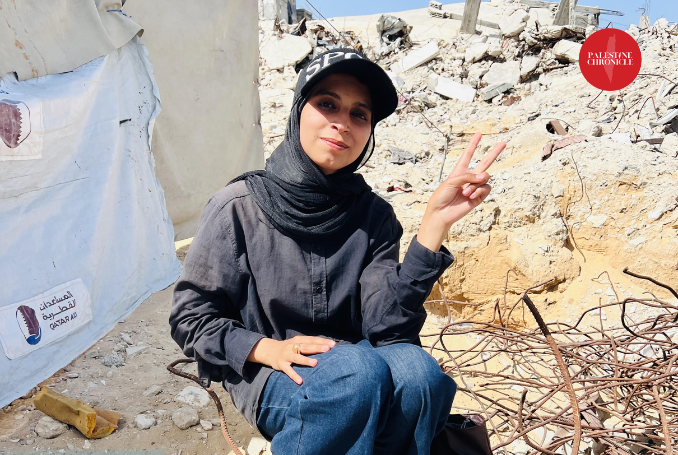
As a journalist from the Gaza Strip, I have lived through the genocide since its very first day. I am still trying to remain strong, not for my own sake, but for the mission I believe I was born in Gaza to fulfill. It is a mission that goes beyond personal pain, becoming a testimony to an entire era in which human beings are being erased before the eyes of the world.
What has happened in Gaza since October 7 cannot be reduced to statistics, news headlines, or even thousands of journalistic reports. It is an entire chapter in the history of humanity unfolding before the world’s eyes. It is a story that must be documented, preserved, and taught to future generations, not only as a record of destruction, but as a testament to what human beings can endure when every essential means of survival is stripped away.
For 1000 days, Gaza has existed between life and death. Our endurance is no longer breaking news; it has become a painful question confronting the world: How much suffering can a human being endure? And how many tragedies can the world witness before deciding that what has happened has crossed every possible line?
This war has touched every family in Gaza. There is not a single home that has been spared grief, fear, displacement, or loss. Families who once believed their homes were the safest places on earth found themselves sleeping in tents, schools, hospitals, or out in the streets. Parents carried their children through the ruins, while children learned the sound of bombs before they ever learned what safety felt like.
We moved from one place to another, not because we wanted to leave, but because survival demanded it. Every time we were told there was a “safer place,” we gathered what little we had left and made our way there, hoping to find temporary shelter. But fear followed us wherever we went. Areas described as humanitarian zones became places of death, and safety became a word that appeared more often in official statements than in reality.
For many people around the world, home is associated with comfort, memories, and a sense of belonging. For Palestinians in Gaza, home has become a memory of what was lost. Entire neighborhoods have disappeared, and streets once filled with families have been reduced to fields of rubble. The places that once held our childhood memories now remind us only of those who are gone.
Yet despite everything, people in Gaza wake up every morning searching for a reason to keep going.
They search for water, struggle to find bread, and try to obtain medicine. They hold their children close throughout the night when the sound of explosions returns, and they rebuild small pieces of their lives again and again, knowing they may lose them once more.
This is what the world must understand: Gaza’s resilience is not a romantic story, nor is it an easy choice. It is the result of people being forced to fight for the most basic of human rights: the right to exist.
What Israel has done to Gaza, in full view of the international community, has forced us to question the very meaning of the principles the world claims to uphold. What does justice mean if those who suffer are left without protection? And what value do international laws have if civilians, hospitals, journalists, and children remain in danger despite the protections those laws are supposed to provide?
In Gaza, these are no longer abstract political or legal questions. They are questions asked every day under bombardment, while standing in line for bread, searching for clean water, and living inside fragile tents that offer protection from neither the weather nor the war.
We are not only searching for an explanation for what is happening to us. We are searching for an explanation for the world itself.
The people of Gaza have learned that no one is outside the circle of danger. Journalists, doctors, paramedics, civil defense crews, children, women, older people, and people with disabilities have all come face to face with the same reality: A life that can be endangered anywhere, at any moment.
Journalists did not simply document the destruction; they lived through it themselves. Many lost their homes, their families, and their colleagues, yet they continued carrying their cameras and documenting what was happening around them. They paid an immense price simply for preserving the memory of a place the world might otherwise have chosen to forget.
On a personal level, I lost 54 members of my family during the genocide. They were all killed, and entire branches of my family were erased from the civil registry. We grieved, we suffered, and we cried out under the weight of such immense loss, but we never abandoned our mission. I continued writing, documenting, and telling the world the truth because I know that every story left untold is another loss, and that bearing witness to what has happened has become a duty no less important than survival itself.
Doctors and healthcare workers faced a similar reality. Hospitals, which should be the safest places during war, became places of fear and destruction. Medical staff continued their work under impossible conditions, treating the wounded with extremely limited resources while facing the same danger that threatened the very patients they were trying to save.
What kind of world turns hospitals into battlefields? What kind of world arrests or targets doctors while they are carrying out their humanitarian duty? And what kind of world kills journalists in their homes, alongside their families, simply because they carried a camera instead of a weapon?
These are not isolated incidents. They are part of a much broader reality in which every line that was supposed to protect civilians has been crossed.
Among the most painful chapters of this war has been hunger.
Before this war, it was rare to hear of children dying from hunger in the modern world. In Gaza, however, hunger became a daily reality. It was no longer simply the absence of food; it became a condition that shaped every aspect of life. It first appeared on the faces of children before it appeared in official reports. It was visible in their frail bodies, in the exhaustion of parents, and in the despair of families searching for something as simple as bread.
We walked through streets where people were too weak from hunger to remain standing. Children cried throughout the night because their bodies could no longer understand why food had disappeared from their lives. Families shared the few crumbs they had, dividing tiny portions among many people and trying to convince themselves that tomorrow might be different.
But tomorrow usually brought the same reality.
We followed evacuation orders and went to areas described as “humanitarian zones.” We believed they might offer us some protection from the violence. Yet even there, people were killed, tents were burned, and families were destroyed.
The very idea of shelter became fragile, and safety became a word repeated in official statements but rarely experienced by those living through the war.
Many people remember the image of the little girl, Warda Jalal al-Sheikh, standing amid flames, smoke, and devastation after her family’s tent was struck and caught fire. Several members of her family were killed as she struggled to stay alive. Her image became a heartbreaking symbol of what it means to be born into a reality where fire surrounds you before you have even had the chance to understand the world.
Many also remember our colleague, journalist Ayman al-Jadi, who was waiting for his wife as she gave birth to their child. It should have been a moment of new beginnings, a moment to welcome new life. Instead, he was killed while waiting to meet his baby.
How can the world comprehend a reality in which death reaches even the moments meant to embody hope?
These stories are not exceptions. They are scenes repeated over and over in a place where simply staying alive has become extraordinary.
Even after the ceasefire was announced, the suffering did not simply disappear.
Across Gaza, a new reality began to take shape with the continued expansion of what has come to be known as the “Yellow Line.” Marked by yellow concrete blocks and military boundaries, these zones have redrawn the map of the Gaza Strip, cutting off access to vast areas of land.
The Yellow Line has continued to consume more territory, approaching nearly 70 percent of Gaza’s total area and separating communities from their homes, farmland, and neighborhoods. For many Palestinians, these yellow concrete barriers are not merely physical obstacles; they represent the continuation of displacement by other means.
Despite the ceasefire announcement, violations continued in full view of international mediators and the world. The nature of the war may have changed, but people’s sense of insecurity has not. The sound of bombardment may have faded in some areas, yet the fear of losing what remains has never left people’s hearts.
The expansion of these boundaries raises a painful question: Can there truly be a ceasefire while the map of Gaza continues to shrink?
For Palestinians, the yellow barriers have become a symbol of an even deeper fear: That the temporary measures imposed during the war will become a permanent reality, reshaping the future of an entire people.
After one thousand days of genocide, Gaza cannot be understood solely through the numbers of those killed, wounded, displaced, or left homeless. Statistics matter because they reveal the scale of the devastation, but behind every number is a human story, a family, a dream, a memory, and a life cut short.
The true story of Gaza is not only a story of destruction. It is also the story of people who refused to disappear.
It is the story of mothers who continued caring for their children despite their grief; fathers who searched for food under impossible circumstances; doctors who kept working despite exhaustion; journalists who continued writing despite the danger; and ordinary people who rebuilt small pieces of their lives even when everything around them had collapsed.
This resilience must not be mistaken for an acceptance of suffering. The ability of Palestinians in Gaza to survive does not make their suffering acceptable, nor does it absolve those who allowed this reality to continue of their responsibility. Survival is not proof that people are well. It is proof of the immense burden they have been forced to endure.
The world should not see Gaza’s resilience as a reason to move on and forget what has happened. It should see it as a reason to ask more difficult questions about justice, accountability, and the value the world places on human life.
One thousand days of genocide are not merely the passage of time. They are the living memory of an entire generation being written in real time. They are children growing up with images of destruction instead of ordinary childhood memories, and families learning how to mourn their loved ones while still struggling to survive.
What has happened in Gaza must not become another chapter that the world reads and then closes. It must remain an open testimony, a reminder of what happens when international principles are ignored and human suffering becomes something people watch from a distance.
Gaza’s resilience after one thousand days cannot be captured in a news report or a headline. It deserves to be written into the history books, not only as a record of pain, but as evidence of a people who continued to live despite every attempt to break them.
Because the story of Gaza is not only about what was done to it. It is also about what remains after everything else has been taken away.
Homes may have been destroyed, streets transformed, and familiar landmarks erased, but the people remain, carrying their memories, their names, their stories, and their determination to be seen and heard.
As a journalist from Gaza, I know there are countless stories that have yet to be told. Behind every destroyed building lies the history of a family. Behind every empty chair is someone we still mourn. Behind every survivor is a story of resilience that deserves to be heard.
In the end, we are still here.
We are still writing.
We are still documenting.
We are still bearing witness.
Because what remains untold about Gaza is far greater than anything the world has heard so far.
– Shaimaa Eid is a Gaza-based writer. She contributed this article to the Palestine Chronicle.

 CrossFireArabia