‘Creeping Colonization’ – An Israeli Blueprint

By Najla M. Shahwan

The Israeli government has initiated a significant expansion of settlements in the occupied West Bank and East Jerusalem , and while 2025 was a year of settlement expansion, 2026 is intended to be a year of “action on the ground” focusing on accelerating construction, retroactively legalizing outposts, and deepening control in strategically sensitive areas.

New construction projects, such as bypass roads and barriers, are actively slicing through the West Bank, creating disconnected “islands” of Palestinian areas and facilitating the expansion of settlements.

This strategy, heavily driven by Israeli far-right coalition members, aims to establish, legalize, and expand numerous settlements and outposts, effectively creating “de facto annexation”.

On his part, Israeli Finance Minister Bezalel Smotrich announced a plan to allocate 2.7 billion shekels in the 2026 state budget to establish 17 new colonies in the West Bank over the next five years.

Plans for 22 new settlements in the West Bank were approved in early 2026, building upon a record number of approvals in 2025, which totaled 41 new settlements.

Israel has moved to start construction on the contentious E1 project, with a tender for 3,401 homes posted in late 2025/ early 2026.

This project aims to connect Maale Adumim settlement with East Jerusalem, which analysts warn will divide the West Bank in two and block the contiguity of a future Palestinian state.

Plans are also advancing for a major new 9,000-unit settlement project in East Jerusalem, at the site of the former Atarot/ Qalandiya airport.

Besides, a new settlement named Mishmar Yehuda (or Givat Adumim) was recently approved, located near Kedar and Ma’ale Adumim.

Reports from May 2025 and January 2026 indicate a surge in the legalization of previously unauthorized settler outposts, transforming them into permanent, legal settlements under Israeli law.

Following the repeal of the 2005 Disengagement Law, plans are underway to rebuild and expand settlements in the northern West Bank, such as Homesh and Sa-Nur.

Settlement activity is heavily concentrated in the East Jerusalem area, the northern West Bank, and the Jordan Valley to sever Palestinian territorial continuity.

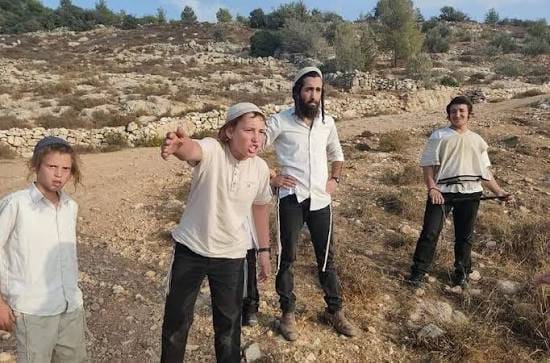
Settlement expansion has been accompanied by increased settler violence and attacks, with over 1,800 incidents documented in 2025, according to the UN.

Settlers have been involved in the killings of Palestinians, including children, and have caused thousands of injuries through physical assaults, shootings, and arson.

In the first weeks of 2026, the UN Office for the Coordination of Humanitarian Affairs (OCHA) recorded at least 55 settler attacks causing injury or property damage and injuring 30 Palestinians. These attacks, often targeted water systems and schools, have directly led to the displacement of over 100 Palestinian Bedouin and herding households.

In the Jericho area community of Ras ‘Ein al ‘Auja, at least 77 households began dismantling their homes following intensified nighttime settler attacks and threats.

Settler attacks have completely displaced 29 Palestinian communities since October 2023, more than one a month on average, UN data showed.

Attacks frequently target Palestinian property, including the burning of homes, destruction of vehicles , poisoning water sources , steeling livestock , devastating agricultural livelihoods and uprooting or chain sawing of olive trees.

Settler violence is a key driver of forced displacement, creating a coercive environment that has forced dozens of Palestinian communities to leave their homes.

Since October 7, 2023, thousands of Palestinians have been displaced due to settler attacks.

The Office of the United Nations High Commissioner for Human Rights (OHCHR) and various UN bodies have reported that the distinction between settler violence and state violence has become increasingly blurred, with settlers wearing uniforms and acting alongside or as part of the Israeli security forces.

The line between settler and state violence has blurred “to a vanishing point,” according to a 2025 UN report.

This is attributed to the involvement of settlers in official “settlement defense squads” and “regional defense battalions,” which are part of the Israeli army’s structure.

The UN has noted a high level of impunity for perpetrators, with very few investigations into settler attacks resulting in convictions.

The European Union, various international bodies, various nations, including the UK, Canada, and Germany, have urged Israel to halt these activities, citing that the settlements are obstacles to peace , illegal under international law and undermine the possibility of a two-state solution.

The UN human rights office has repeatedly called on Israeli authorities to protect Palestinians from these attacks, end the cycle of violence, and hold perpetrators accountable.

However as of January 2026, reports indicate that Israel is disregarding all condemnations and warnings and accelerating its actions in the occupied West Bank, shifting from a “slow creep” of control to a rapid expansion of settlements and infrastructure, which observers characterize as de facto annexation.

This, combined with increased settler violence and military actions, is profoundly altering the landscape of the West Bank.

This ongoing process, which was often referred to as “creeping annexation’’, and now some analysts call it “running annexation’’ aims to permanently incorporate the West Bank into Israel by creating irreversible, on-the-ground facts.

Najla M Shahwan contributed this article to the Jordan Times

CrossFireArabia

CrossFireArabia
Dr. Marwan Asmar holds a PhD from Leeds University and is a freelance writer specializing on the Middle East. He has worked as a journalist since the early 1990s in Jordan and the Gulf countries, and been widely published, including at Albawaba, Gulf News, Al Ghad, World Press Review and others.

Related Posts

An Unholy War!

By Robert Stephen Ford

Presidents and popes have disputed wars in the past. Pope Paul VI criticized the American war in Vietnam, saying that America was losing its moral standing. Pope John Paul II called the American invasion of Iraq in 2003 unjust and illegal. However, the clash between US President Donald Trump and Pope Leo XIV, who are the two most influential Americans in the world, about the war against Iran is without precedent.

The rift that preceded the war

The relations between the Vatican and the Trump administration were difficult even before the Iran war. Before the appointment of Pope Leo, Pope Francis in 2025 criticized Donald Trump’s restrictions against immigration and the treatment of refugees and immigrants in American detention centers. In January 2026, three top Catholic Church leaders in the United States issued a report stating that American foreign policy was immoral. They pointed to reduced assistance to world health programs that have harmed tens of millions of people worldwide.

The American surprise attack on Iran on February 28 sharpened the dispute between the Vatican and the White House. The Trump administration portrays the war as a kind of holy crusade blessed by God. In his April 7 social media message threatening to destroy Iranian civilization, Trump exclaimed, “Glory to God!” while also saying that God ensured the success of the mission to rescue an American pilot whose plane was shot down over Iran. On March 26, US Defense Secretary Pete Hegseth told a press conference that military strikes against Iran enjoyed protection from God, and at a religious service in the Pentagon on April 1, he quoted from the Old Testament, asking God to “break the enemy’s teeth.”

The Pope responded on April 6 that Jesus called for peace and reconciliation, and he rejected politicians using God to justify war. His rebuke generated sharp counterattacks from Trump and some Republican Party leaders. Vice President JD Vance and Speaker of the House of Representatives Mike Johnson said the pope appeared not to understand the Catholic Church theory of just war. Several American bishops close to Pope Leo responded that it was ridiculous to suggest that the pope did not understand the theology and the theory of just war since Leo himself is from the branch of the Catholic Church founded by Augustine, the Christian thinker who, 1,600 years ago, first set down the principles of a just war. The surprise American attack in the middle of negotiations, the American failure to avoid striking civilian targets and the ambiguous American government goals of the Iran war did not meet the standards of a just war, they noted.

Politics dressed as theology

Trump and the Republicans are politicians, not theologians. They portray the war against Iran as holy because they understand that the war is unpopular in the United States and they need the support of Christian conservatives in their political base. Notably, most Catholics, who are about 20% of the American population, voted for Trump in 2024. Opinion polls since late March have shown that most Americans doubt the war is in America’s national interests. After Trump’s threat to destroy Iranian civilian infrastructure and civilization on April 6-7, the pope called the threats “unacceptable” and would violate international law. He even urged American citizens to contact their representatives in Congress to demand that the war stop. It was unprecedented for a pope to urge Americans to mobilize this way, and it directly touched a big part of the Republican Party base. Trump responded five days later with his social media message alleging that the pope appears to accept that Iran can have nuclear weapons and does not understand foreign policy. No American president had attacked a pope so personally. With economic damage from the Iran war and opinion polls indicating Democratic Party victories in the November congressional elections, the White House and Republicans are especially sensitive to criticisms towards their war policy.

The pope enjoys a big advantage over Trump in opinion polls in the United States, and Trump over the past four days has retreated a little. He said on April 16 that while he respected the pope’s right to say what he thinks, Trump insisted that he would continue to say and do what he thinks is right. The pope, meanwhile, said on April 18 that he did not want to debate the president. The pope’s role in the end is not to descend to politics but rather to stay on a high level focused on how people should live according to the principles of Christianity. This round of arguments has been winding down, but the Trump administration’s use of Biblical scripture and symbols to justify controversial policies will trigger new fights with the Catholic Church in the months ahead, especially if the war escalates.

The writer is a former US Ambassador to Algeria and Syria and contributed this article to Anadolu

Continue reading
Can Israel Create A Lebanese Buffer Zone?

By Imad Rizk

Since last Wednesday, the Israeli army has continued targeting the network of roads and bridges that link Lebanon to its south. In addition to pressuring the Lebanese government to make concessions in Lebanon and possibly beyond, the Israeli army claimed that targeting the Qasmiyeh bridge and other bridges is intended to prevent the transfer of military supplies to southern Lebanon. However, military experts questioned this justification, noting that Israeli aircraft maintain intense air dominance over the routes leading to the south, which undermines the credibility of this claim. Sources believe that targeting infrastructure, especially bridges and roads, aims to isolate the southern region in preparation for occupying it and turning it into a “buffer zone”.

After the 1982 invasion, Israel maintained a buffer zone in southern Lebanon for 15 years. It was meant to prevent attacks but instead created local resistance and required constant military presence, ending with a unilateral Israeli withdrawal in 2000.

Buffer zones as a military solution in the region were tested between 1985 and 2000. In the 2006 Lebanon War, Israel avoided re-occupying Lebanon, relying instead on air power and UN peacekeepers (United Nations Interim Force in Lebanon). Now, in 2026, Israel is returning to buffer zone thinking. Current discussions of a 10-15 km buffer zone show that Israel is returning to a doctrine it once abandoned as distancing itself from its enemy is more important than before.

Meanwhile, air raids continue to target the Lebanese capital, Beirut, and its southern suburbs. Residential areas and neighborhoods near Beirut and in the coastal city of Sidon are also being targeted under the pretext of assassinating figures and cadres linked to Iran’s Revolutionary Guard.

On the southern front, the Israeli army has been facing major difficulties in advancing and consolidating its positions since March 2. Hezbollah in Lebanon targeted Israeli troops at dozens of locations.

Ground combat tactics against the Israeli ground maneuver

Hezbollah carried out strikes against concentrations of soldiers and vehicles in different border villages. These attacks were carried out using rockets and artillery shells.

Operations extended beyond the border line, where Hezbollah support units targeted military positions and fixed barracks, as well as newly established sites in Jabal al-Bat and Nimer al-Jamal. Strikes also repeatedly hit the Avivim barracks, as well as Ramot Naftali, Branit, Hounin, Nahal Gershom base, and the Meron Air Surveillance Base.

Both Hezbollah and the Israeli army also carried out psychological and media operations associated with the ground maneuver, including threats, intimidation, low-altitude aircraft flights, and air raids conducted at night or at dawn. Settlers were also used in messaging to suggest that failure to negotiate would expose Lebanon to destruction similar to Gaza, or to incite Lebanese public opinion against a particular sectarian group and the environment that supports confrontation with Israel.

Overall assessment

In summary, the ongoing confrontation since March 2 reveals a gap between Israeli rhetoric and action. Despite statements about deploying three full military divisions, these forces rely heavily on air strikes to flush out Hezbollah fighters positioned inside villages and in the surrounding wooded terrain.

Hezbollah initially responded by targeting troop concentrations with rockets from outside the area south of the Litani River in the early days, and also struck D-9 bulldozers from areas far from the front line, while its special units advanced and seized forward positions. There was also discussion of advances along the Khiam-Marjayoun axis, with the understanding that the advance aimed to encircle the city of Nabatieh in the south and push through the Sahmar axis toward an unspecified town to reach Lake Qaraoun, similar to what Israel did on the Syrian front when it took control of the Yarmouk basin.

A notable development was the use of explosive drones similar to tactics used in Ukraine. On Friday, armed drones were used to strike a rear-area position on the Israeli side. This was considered the second major tactical surprise to enter the battlefield after the previous confrontation in 2024 during the “66-day battle.”

Israeli attacks on Iran and the entry of Iranian missiles targeting Israeli troop concentrations and fortifications around the town of Khiam suggest that the linkage of fronts — from southern Lebanon to Iraq and Iran — indicates that the Khatam al-Anbiya headquarters in Iran is directing a confrontation against Israeli destabilization and US military presence across a theater stretching from the eastern Mediterranean to the Gulf.

The author is the director of the Institute for Strategic and Communication Studies in Lebanon (Isticharia-ISCS). Anadolu

Continue reading

You Missed

Israeli Looters in Lebanon

  • By marwan
  • April 23, 2026
  • 11 views

Ayat, Qamar Bid Farwell to Their Martyr Dad

Ayat, Qamar Bid Farwell to Their Martyr Dad

‘We Killed Our Own Then Blamed Hamas’

‘We Killed Our Own Then Blamed Hamas’

An Unholy War!

An Unholy War!

‘Journalist Khalil Trapped Under Rubble Left to Die’

‘Journalist Khalil Trapped Under Rubble Left to Die’

Israel Kills 38,000 Women, Girls in Gaza

Israel Kills 38,000 Women, Girls in Gaza





