Israeli Settler Violence Reach ‘All Time High’

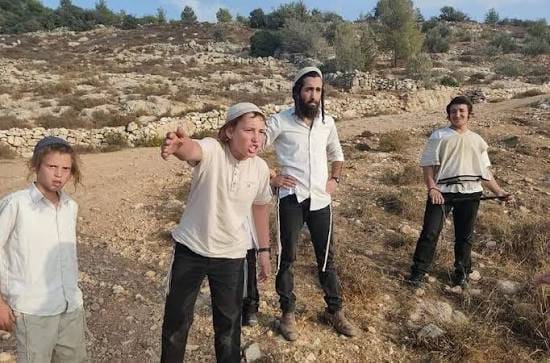
Violence in the occupied West Bank is worsening as the Israeli Government continues to approve new settlements while settlers and Israeli security forces have “often” acted together to attack local Palestinian communities, the UN’s human rights office (OHCHR) warned on Wednesday.

As of 20 July, the agency reports that 18 Palestinians have died this year in attacks involving settlers. Twelve died at the hands of settlers, three by Israeli forces and responsibility for the remaining three deaths is disputed.

Since Friday, eight Palestinians, including a boy, and two members of the Israeli military have also been killed in the region.

The number of settler attacks has increased each year since 2023 following the brutal Hamas attacks on southern Israeli communities, rising to 1,835 last year, according to the UN’s humanitarian aid office (OCHA). 

There were about 190 attacks per month in the first four months of 2026, putting the West Bank on a trajectory to reach more than 2,000 attacks by the end of the year.

Alongside security forces, Israeli settlers in the West Bank, with financial incentives from the government, frequently attack families, burn mosques and destroy and confiscate property, OHCHR reported.

Movement restrictions preventing Palestinians from accessing essential services are now tighter than ever, the office added.

“We are alarmed by the Israeli Government’s announcement to further increase the number of settlements and outposts and open calls by Israeli leaders for revenge and collective punishment against Palestinian communities, accompanied by threats to turn the West Bank into another Gaza,” OHCHR spokesperson Ravina Shamdasani said.

Two-State solution must remain

Speaking from Jerusalem on Friday, UN Deputy Special Coordinator for the Middle East Peace Process Ramiz Alakbarov called the continued loss of life in the West Bank “deeply alarming”, urging Israel to hold perpetrators accountable and all actors to pursue a two-state solution.

There is no military or violent solution to this conflict,” Mr. Alakbarov said.

In September, the General Assembly endorsed the New York Declaration, calling for a two-State solution, though Israel and the US voted against it.

The escalating violence in the West Bank comes two years after the International Court of Justice (ICJ) ruled in an advisory opinion that Israel’s occupation of Gaza, East Jerusalem and the West Bank since 1967 is illegal and that countries should not recognise Israel’s actions related to the occupation. Israel quickly condemned the ruling.

Briefing the Security Council in New York on Tuesday, Mr. Alakbarov noted that Israeli Finance Minister Bezalel Smotrich recently announced the approval of several new settlements, which the peace coordinator called “illegal under international law”.

I call upon all parties to take urgent steps to reverse the dangerous trajectory in the West Bank,” he said.

On Monday, Israeli troops forcibly entered a UN facility in East Jerusalem where hundreds of Palestinian refugees receive free vocational training each year. The UN and its partners in the occupied territories condemned the action, which violates international law.

Call to end occupation

OHCHR’s Ms. Shamdasani reiterated on Wednesday the UN’s call for countries to work together to “bring an end to the Israeli occupation” of the West Bank.

“With attacks by Israeli settlers, and the creation of settlements and outposts hitting an all-time high, third States must act urgently and in unison to halt the continuing killing and dispossession of the Palestinian people,” she said. UN News

Continue reading
‘Creeping Colonization’ – An Israeli Blueprint

By Najla M. Shahwan

The Israeli government has initiated a significant expansion of settlements in the occupied West Bank and East Jerusalem , and while 2025 was a year of settlement expansion, 2026 is intended to be a year of “action on the ground” focusing on accelerating construction, retroactively legalizing outposts, and deepening control in strategically sensitive areas.

New construction projects, such as bypass roads and barriers, are actively slicing through the West Bank, creating disconnected “islands” of Palestinian areas and facilitating the expansion of settlements.

This strategy, heavily driven by Israeli far-right coalition members, aims to establish, legalize, and expand numerous settlements and outposts, effectively creating “de facto annexation”.

On his part, Israeli Finance Minister Bezalel Smotrich announced a plan to allocate 2.7 billion shekels in the 2026 state budget to establish 17 new colonies in the West Bank over the next five years.

Plans for 22 new settlements in the West Bank were approved in early 2026, building upon a record number of approvals in 2025, which totaled 41 new settlements.

Israel has moved to start construction on the contentious E1 project, with a tender for 3,401 homes posted in late 2025/ early 2026.

This project aims to connect Maale Adumim settlement with East Jerusalem, which analysts warn will divide the West Bank in two and block the contiguity of a future Palestinian state.

Plans are also advancing for a major new 9,000-unit settlement project in East Jerusalem, at the site of the former Atarot/ Qalandiya airport.

Besides, a new settlement named Mishmar Yehuda (or Givat Adumim) was recently approved, located near Kedar and Ma’ale Adumim.

Reports from May 2025 and January 2026 indicate a surge in the legalization of previously unauthorized settler outposts, transforming them into permanent, legal settlements under Israeli law.

Following the repeal of the 2005 Disengagement Law, plans are underway to rebuild and expand settlements in the northern West Bank, such as Homesh and Sa-Nur.

Settlement activity is heavily concentrated in the East Jerusalem area, the northern West Bank, and the Jordan Valley to sever Palestinian territorial continuity.

Settlement expansion has been accompanied by increased settler violence and attacks, with over 1,800 incidents documented in 2025, according to the UN.

Settlers have been involved in the killings of Palestinians, including children, and have caused thousands of injuries through physical assaults, shootings, and arson.

In the first weeks of 2026, the UN Office for the Coordination of Humanitarian Affairs (OCHA) recorded at least 55 settler attacks causing injury or property damage and injuring 30 Palestinians. These attacks, often targeted water systems and schools, have directly led to the displacement of over 100 Palestinian Bedouin and herding households.

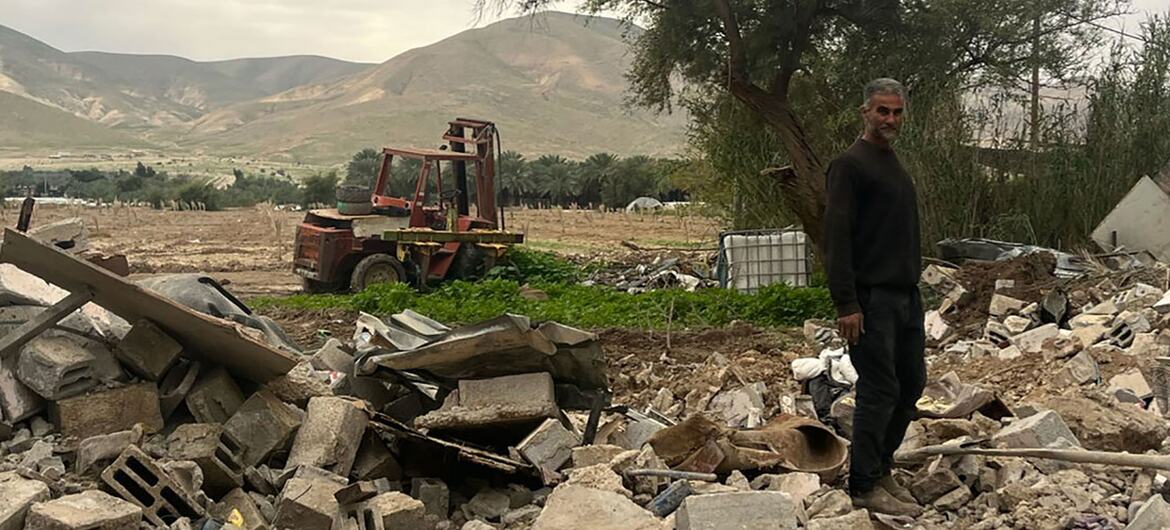
In the Jericho area community of Ras ‘Ein al ‘Auja, at least 77 households began dismantling their homes following intensified nighttime settler attacks and threats.

Settler attacks have completely displaced 29 Palestinian communities since October 2023, more than one a month on average, UN data showed.

Attacks frequently target Palestinian property, including the burning of homes, destruction of vehicles , poisoning water sources , steeling livestock , devastating agricultural livelihoods and uprooting or chain sawing of olive trees.

Settler violence is a key driver of forced displacement, creating a coercive environment that has forced dozens of Palestinian communities to leave their homes.

Since October 7, 2023, thousands of Palestinians have been displaced due to settler attacks.

The Office of the United Nations High Commissioner for Human Rights (OHCHR) and various UN bodies have reported that the distinction between settler violence and state violence has become increasingly blurred, with settlers wearing uniforms and acting alongside or as part of the Israeli security forces.

The line between settler and state violence has blurred “to a vanishing point,” according to a 2025 UN report.

This is attributed to the involvement of settlers in official “settlement defense squads” and “regional defense battalions,” which are part of the Israeli army’s structure.

The UN has noted a high level of impunity for perpetrators, with very few investigations into settler attacks resulting in convictions.

The European Union, various international bodies, various nations, including the UK, Canada, and Germany, have urged Israel to halt these activities, citing that the settlements are obstacles to peace , illegal under international law and undermine the possibility of a two-state solution.

The UN human rights office has repeatedly called on Israeli authorities to protect Palestinians from these attacks, end the cycle of violence, and hold perpetrators accountable.

However as of January 2026, reports indicate that Israel is disregarding all condemnations and warnings and accelerating its actions in the occupied West Bank, shifting from a “slow creep” of control to a rapid expansion of settlements and infrastructure, which observers characterize as de facto annexation.

This, combined with increased settler violence and military actions, is profoundly altering the landscape of the West Bank.

This ongoing process, which was often referred to as “creeping annexation’’, and now some analysts call it “running annexation’’ aims to permanently incorporate the West Bank into Israel by creating irreversible, on-the-ground facts.

Najla M Shahwan contributed this article to the Jordan Times

Continue reading
UN Slams Israel’s ‘Unprecedented Displacement’ on The West Bank

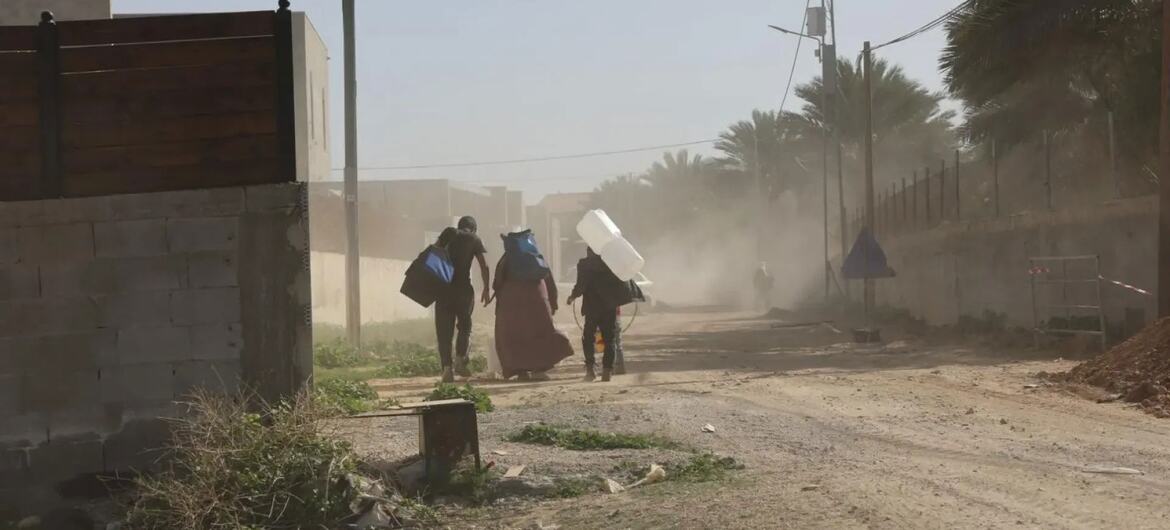
The UN human rights office, OHCHR, on Friday condemned the intensifying Israeli military operation in the northern West Bank, warning that nearly 40,000 Palestinians have been displaced already amid an “alarming wave” of violence and destruction.

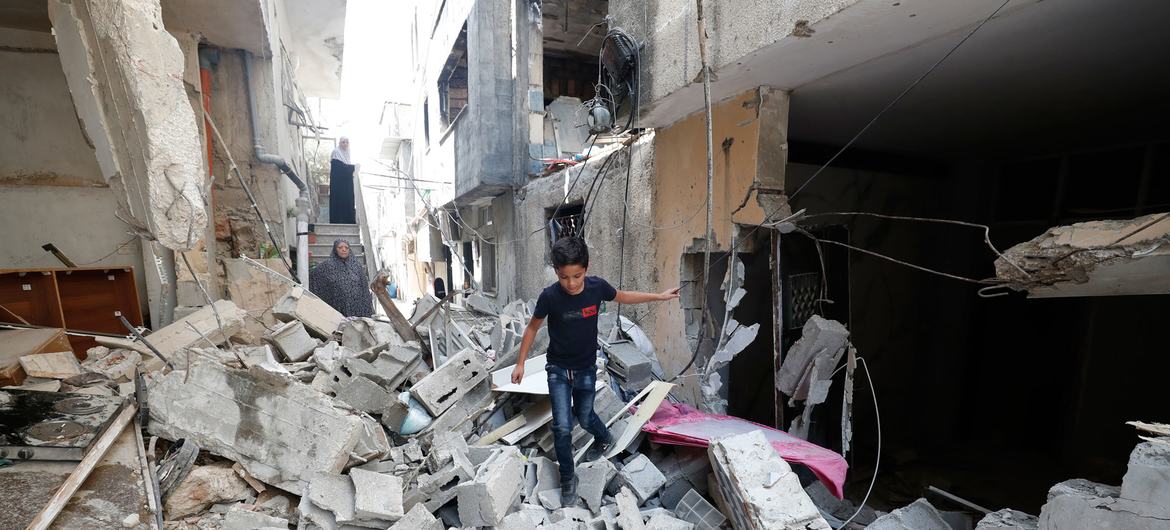
Since the start of the offensive on 21 January, Israeli forces have killed at least 44 Palestinians, including five children and two women, in Jenin, Tulkarem and Tubas governorates, and four refugee camps in those areas, according to OHCHR.

Many of those killed were unarmed and posed no imminent threat, said the UN rights office, calling the killings “part of an expanding pattern of Israel’s unlawful use of force in the West Bank where there are no active hostilities.”

‘Unprecedented’ displacement

OHCHR also highlighted an unprecedented scale of mass displacement not seen in decades in the occupied West Bank.

It cited reports from displaced residents of a pattern where they were led out of their homes by Israeli security forces and drones under the threat of violence.

They are then forced out of their towns with snipers positioned on rooftops around them and houses in their neighbourhoods used as posts by Israeli security forces,” the office said.

Testimonies collected by OHCHR describe Israeli forces threatening residents who were told they would never be allowed to return. One woman, who fled barefoot carrying her two young children, said she was denied permission to retrieve heart medication for her baby.

In Jenin refugee camp, bulldozed roads were photographed with new street signs reportedly now written in Hebrew.

“In this regard, we reiterate that any forcible transfer in or deportation of people from occupied territory is strictly prohibited and amounts to a crime under international law,” OHCHR stated.

Legal obligations

The office stressed that displaced Palestinians must be allowed to return to their homes and called for immediate, transparent investigations into the killings.

“Military commanders and other superiors may be held responsible for the crimes committed by their subordinates if they fail to take all necessary and reasonable measures to prevent or punish unlawful killings,” it stated.

OHCHR also reiterated Israel’s obligations under international law, including ending its unlawful presence in the Occupied Palestinian Territory as rapidly as possible and evacuating all West Bank settlements immediately.

“In the meantime, as the occupying power, Israel must ensure the protection of Palestinians, the provision of basic services and needs, and the respect of Palestinians’ full range of human rights,” the office said.

WFP aid trucks cross into Gaza via the Zikim and Kerem Shalom border crossings.

© WFP

WFP aid trucks cross into Gaza via the Zikim and Kerem Shalom border crossings.

Humanitarian update

Meanwhile in Gaza, the UN World Food Programme (WFP) reported on Friday it had reached more than 860,000 men, women and children with food parcels, hot meals, bread and cash assistance since the start of the fragile ceasefire.

UN Spokesperson Stéphane Dujarric told journalists at a regular news briefing in New York that over 19,000 metric tonnes of WFP food have entered Gaza.

The agency has also distributed nutrition packs to some 85,000 people, including children under five, and pregnant and breastfeeding women, and provided more than 90,000 people with cash assistance in the past two weeks.

Efforts are also underway to establish more food distribution points, especially in North Gaza, to reduce travel distances, transport costs and protection risks for families,” Mr. Dujarric said.

Fuel deliveries, schools reopening

In addition, the World Health Organization (WHO) distributed 100,000 litres of fuel to hospitals in Gaza City on Friday, having delivered about 5,000 litres of fuel to Al Awda Hospital, in North Gaza governorate the day before.

In southern Gaza, education partners in Rafah are preparing for the reopening of at least a dozen schools as displaced families return to their home areas, Mr. Dujarric said.

“As you know, schools across the Strip had been used as shelters for Palestinians displaced during 15 months of hostilities. In Khan Younis and Deir al Balah, partners are providing cleaning materials to restart learning activities,” he added.

UN News

Continue reading