CrossFireArabia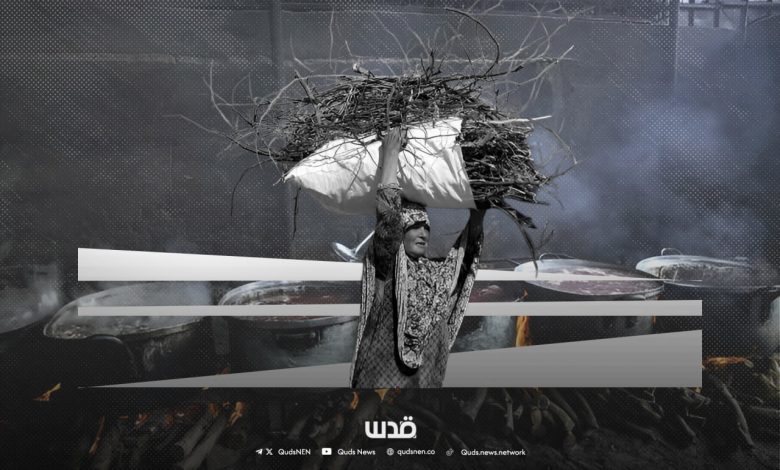
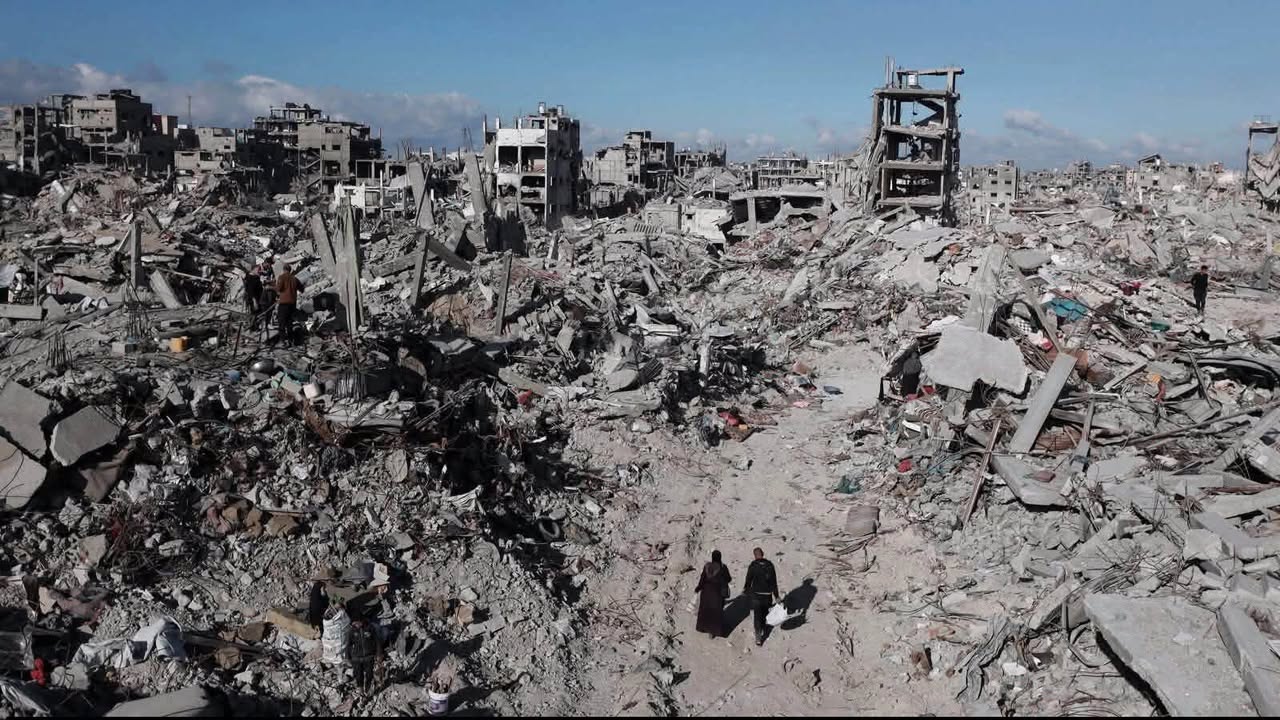
For over a year and five months, the people of Gaza have endured an unrelenting war of extermination—one that has robbed them not only of life’s comforts but of its very essence. Eighteen months of ceaseless suffering, where mere survival has become an act of defiance. The Israeli genocide in Gaza has drained every ounce of their strength—physically, mentally, and emotionally. And for those not granted the mercy of a single, swift death, every moment is a slow, agonizing descent into an unspeakable catastrophe. A never-ending cycle of death inflicted upon them by Israel—where one does not simply perish once, but dies a thousand deaths every day.
Under the relentless barrage of missiles raining down upon us, every passing moment is a gamble with fate. If we escape death today, there is no certainty that it will not claim us tomorrow—for in Israel’s eyes, we are all targets. As if the ceaseless bombardment were not enough, we are also stripped of life’s most basic essentials: food, water, electricity. Existence itself has been reduced to an endless procession of lines—one for a sip of clean water, another for a brief charge of a phone, yet another for a meager ration of humanitarian aid.
But among all these hardships, one of the most crushing has been the loss of cooking gas. With the suffocating blockade and the total closure of border crossings, the last fragile thread connecting us to a semblance of normalcy has been severed. Preparing a meal has become an ordeal, an insurmountable task that drapes every household in Gaza with the weight of exhaustion and despair.
The Cooking Gas Crisis: How It Began
Even before the total closure of Gaza’s crossings during Israel’s war of extermination, access to cooking gas was already scarce, failing to meet the population’s basic needs. Nowhere was this crisis felt more acutely than in the north, where gas barely trickled in—even during the rare moments when Israel allowed limited supplies into the south.
When a brief ceasefire was brokered—only to be swiftly shattered by Israel—residents of northern Gaza were once again left without their share. And the moment the ceasefire ended, the crossings were slammed shut once more, plunging people back into uncertainty, forcing them to navigate survival in the face of the unknown.
Malak Radwan, a resident of northern Gaza, recalls: “The first time we managed to get any cooking gas was after the ceasefire in February, 2025. But it didn’t come from our area—we had to depend on our relatives in the south to share what little they had.”
In southern Gaza, gas distribution operated through a system known as “Gas Lists,” where families were registered in a turn-based queue to receive their cylinders. Even then, the allocated amounts were woefully insufficient to meet the needs of the population. Yet, despite its scarcity and inflated cost, gas was still seen as a rare privilege—one that people clung to with gratitude.

But as the siege tightened and Israel’s total closure of the crossings dragged on, these lists became little more than illusions of hope—long, stagnant lines that might never move. According to the Government Media Office in Gaza, the Israeli occupation has prevented the entry of 18,600 aid trucks and 1,550 fuel trucks, including those carrying cooking gas, further exacerbating the suffering of the Palestinian people. Left stranded in uncertainty, families were forced to seek out alternative ways to cook, even as every other resource around them faded into oblivion.
Alternative Cooking Methods Amidst Catastrophe
They say necessity is the mother of invention, but what happens when all means of invention have vanished? Can the resort to primitive methods still be considered innovation in the face of such overwhelming disaster?
In Gaza, residents have been driven to rely on primitive cooking methods—each effort a dangerous gamble that weighs heavily on their bodies, their souls, and their fragile mental state.
Once, gathering around a coal fire to brew tea on a cold winter’s night was a beloved family ritual, a moment unmatched in its warmth. But now, that same fire has been forced upon us as a way of life—one that ignites not only our stoves but also the anguish in our hearts.
Yet, even firewood has become a distant luxury. Its price has soared, driven by the scarcity of trees, forcing some to scavenge shattered wood from the ruins of bombed homes or burn whatever fragments of furniture they have left. Never did we envision a day when we would be compelled to set our own belongings aflame just to prepare a meal.
“My fingers seem to melt with the fire every time I light it,” my mother sighs.
With firewood becoming prohibitively expensive, many have resorted to standing in yet another queue—this time in front of makeshift clay ovens, hoping to cook whatever food they have left. Umm Mohammad, a displaced woman from northern Gaza, has started her own small business: operating a clay oven where she bakes bread and prepares meals in exchange for a few Shekels.
“I began this work to support myself after losing everything during my displacement to the south. At the same time, I wanted to help those who have no means of cooking in their homes or tents,” she says.

For many families, even a few shekels are out of reach. The only remaining option is to rely on community kitchens—yet another queue to stand in, another obstacle in the endless struggle for survival. These kitchens provide just one meal a day, forcing many to subsist on cold canned food for the rest of their meals. Even the single meal was denied to them by the Israeli occupation. According to a report issued by the Government Media Office in Gaza, the Israeli occupation has directly targeted 60 charity kitchens and aid centers in a ruthless campaign aimed at starving the Palestinian people in Gaza. This has resulted in 80% of Gazan citizens losing their source of food.
The impact has been especially harsh on children and the elderly, who desperately need warm, nutritious food to sustain them.
And this is yet another burden we set aside amid the bleakness of our lives. Here in Gaza, the closure of border crossings is not the only barrier worsening the disaster of cooking gas shortages. As Gazans, we do not have the luxury of choosing our daily meals, nor do we have the privilege of enjoying a well-balanced diet. Every day, we are forced to go to the market, only to face the recurring frustration of missing food supplies. We are compelled to prepare meals we do not desire because no alternatives exist, and to eat unbalanced meals because we cannot afford anything better. Here, every moment we endure is a catastrophe in itself.
The Health and Social Consequences of the Gas Shortage
The crisis extends far beyond the inability to cook—it has dire implications for both health and society. Malnutrition has become rampant due to the lack of proper food preparation, leading to widespread cases of general weakness and anemia, especially among children.
Respiratory illnesses have also surged, as people are forced to burn wood and coal inside their homes, inhaling thick smoke with every breath. This has exacerbated the suffering of the sick and elderly.
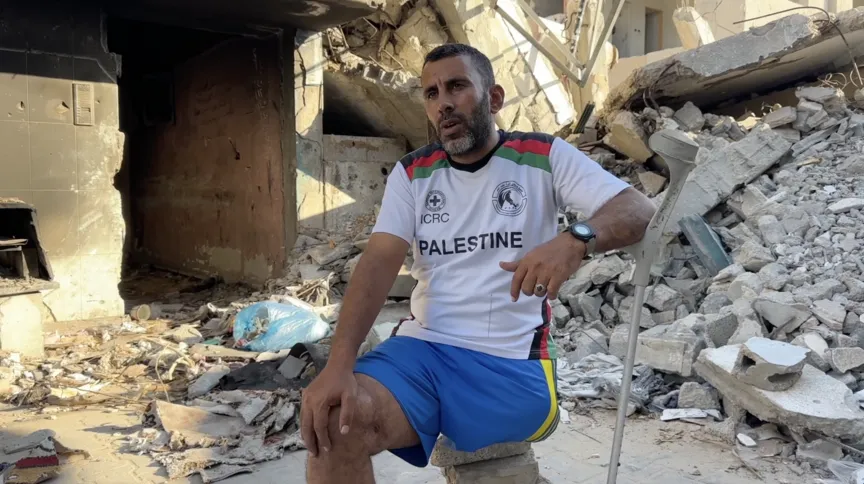
Amani Al-Ghefari, a resident of northern Gaza, recounts her ordeal: “As someone with nearsightedness who wears corrective glasses, the smoke from burning wood has not only worsened my vision but has also caused a constant burning in my eyes, accompanied by migraines and relentless coughing. The most harrowing consequence, however, has been the physical strain—splitting firewood has taken a severe toll on my joints, leading to months of painful physical therapy.”
But the catastrophe is not limited to physical health—it has deeply scarred the psyche of every Gazan. Food is no longer just a means of sustenance; it has become a haunting memory of life before the genocide. The warmth of family gatherings around a meal has been replaced by a daily struggle for mere survival.
One mother confesses in anguish:
“I can no longer cook a warm meal for my children. I feel helpless, unable to provide for their most basic needs.”

Gaza’s Plea for Its Most Basic Rights
Amidst this suffering, numerous humanitarian organizations have made urgent appeals for aid to enter Gaza. The World Food Programme has expressed concern over the closure of 25 bakeries it supports in Gaza, due to a lack of fuel and flour. Yet, Israel continues its punitive policies, blocking fuel and essential supplies. Human rights advocates persist in calling for the immediate reopening of crossings and the unrestricted flow of aid to all areas of the Strip.
What is happening in Gaza is not merely a humanitarian crisis—it is an orchestrated catastrophe. Life as we knew it has been obliterated, and the suffering has surpassed all conceivable limits. Now more than ever, there is an urgent need for decisive international intervention to save the people of Gaza and to lift the inhumane siege that deprives them of even the most basic right—to cook their own food.
Silence is no longer an option. Every passing moment means more hunger, more pain, more devastation. Supporting Gaza is not just a humanitarian duty—it is a moral imperative that the world can no longer afford to ignore.

 marwan
 Heba
Heba