Israeli Attacks on Christians Spike to 88 Cases

By Dr Marwan Asmar

The year 2026 maybe the worst experienced by Christians experienced in the occupied territories as the West Bank, Gaza and Jerusalem.

A latest study by the Religious Freedom Data Center (RFDC) reported there have been 88 reported cases of attacks and harassment on Christians carried out in the Palestinian territories so far this year.

It points out 63 attack cases were carried out in the second quarter of this year alone which would mean 2026 is set to register a new record of abuse against Christians.

This is far higher than that of 2025 which stood at 181 cases.

The violations include spitting incidents and verbal insults, and vandalism of cemeteries, gravestones, statues, and crosses. This is in addition to racist graffiti and desecration of Christian religious sites. Most of these acts are concentrated in the Old City of Jerusalem, Mount Zion, and the vicinity of the Armenian Patriarchate.

https://www.facebook.com/reel/966328405876006

The RFDC was set up 2023 in Jerusalem to combat the growing anti-Christian harassment and violence in Israel, particularly in the Old City of Jerusalem that grew in the last years from extremist rightwing Jewish religious nationalists and settlers who are left free to roam the city under the protection of the Israeli army.

Nun Violently Attacked

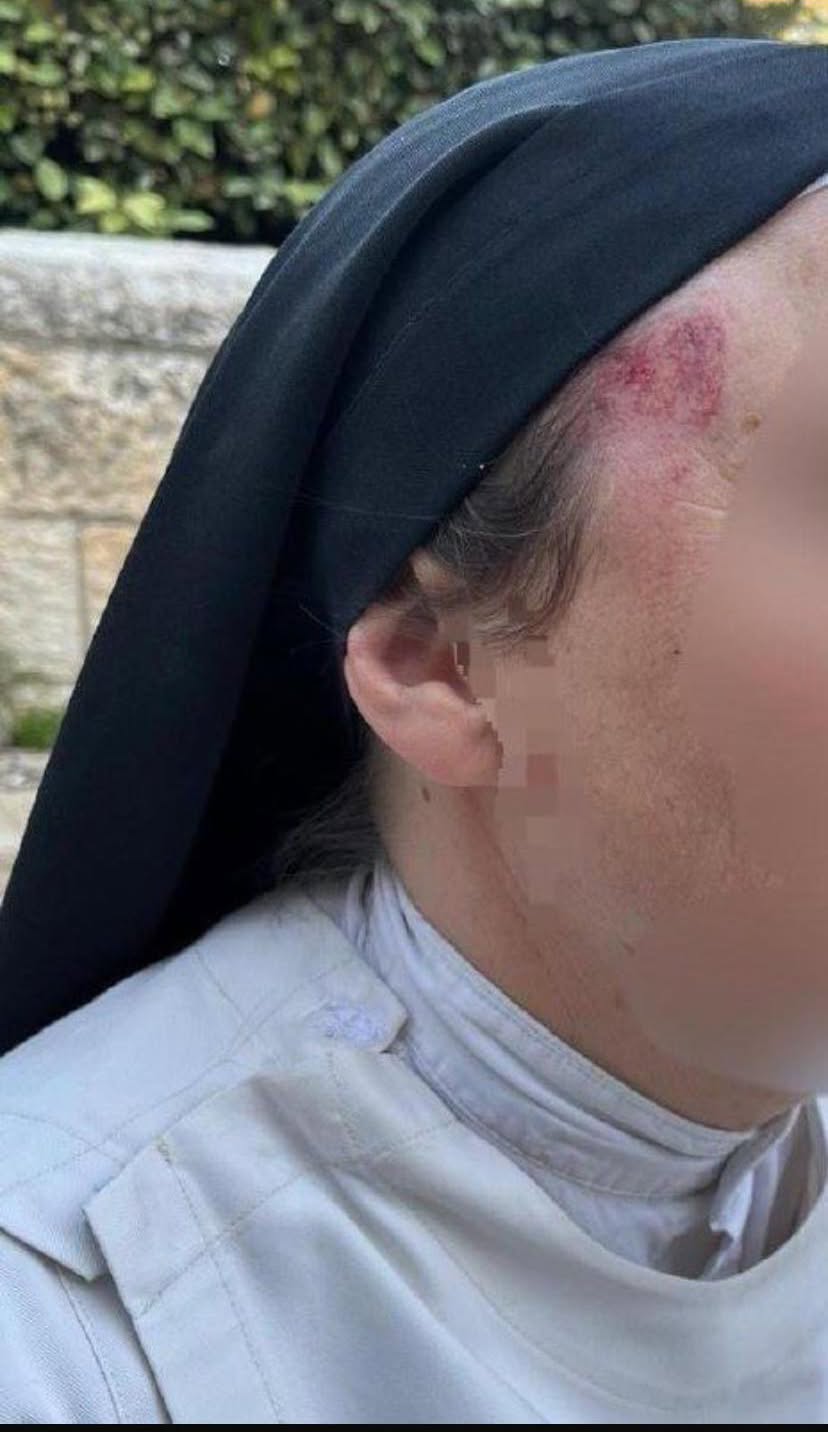
Last April a nun at the French Biblical and Archaeological School in the Old City was violently attacked. As shown by a CCTV camera the attacker came at the nun from behind, shoving her violently to the ground and kicking her.

Two months later a priest from the Latin Patriarchate was attacked outside a restaurant near the Damascus Gate of the Holy City. Eye-witness reports show the priest was cornered, repeatedly spat at, and insulted verbally by three Jewish men.

The incident was reported on the 4th of June by the RFDC. The victim, Father Firas Abedrabbo, a parish priest of the Latin Church in Ein Arik, near Ramallah, was assaulted after his  lunch with friends.

His name was reported in the media unlike the 48-year-old French nun who also worked as a researcher at the Archaeological School. Her name was never released to protect her identity, it was reported.

Dr Marwan Asmar is a writer based in Amman and is the editor of www.crossfirearabia.com

  • CrossFireArabia

    CrossFireArabia
    Dr. Marwan Asmar holds a PhD from Leeds University and is a freelance writer specializing on the Middle East. He has worked as a journalist since the early 1990s in Jordan and the Gulf countries, and been widely published, including at Albawaba, Gulf News, Al Ghad, World Press Review and others.

    Related Posts

    The Dress of Ramallah

    Palestine Heritage:

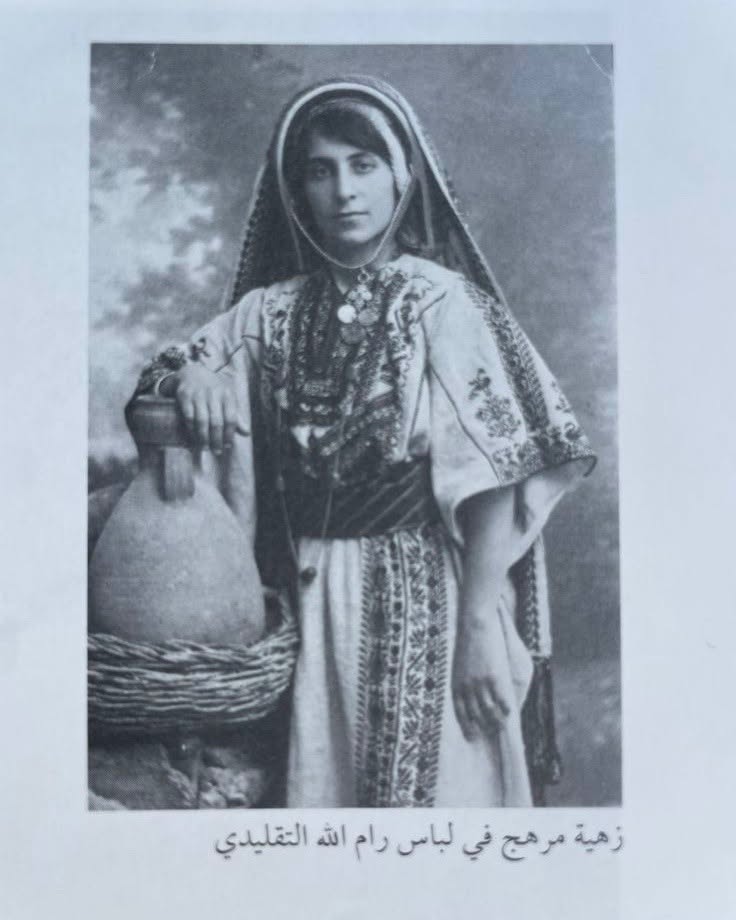
    The image shows Zahia Merhej wearing the traditional Palestinian dress of Ramallah, accompanied by a traditional pottery jar.

    The Embroidered Dress: The dress features intricate hand-embroidery that reflects exceptional craftsmanship and serves as a symbol of Palestinian heritage.

    Headcovering: She wears a shawl or an embellished headcovering that drapes over her shoulders.
    Beside her stands a pottery jar placed inside a basket—items that were once part of daily life.
    #Palestinian_Dress
    Coloring is by Mary Abu Assi | Show less

    Continue reading
    Salman Abu Sitta: Safeguarding Palestinian Memory

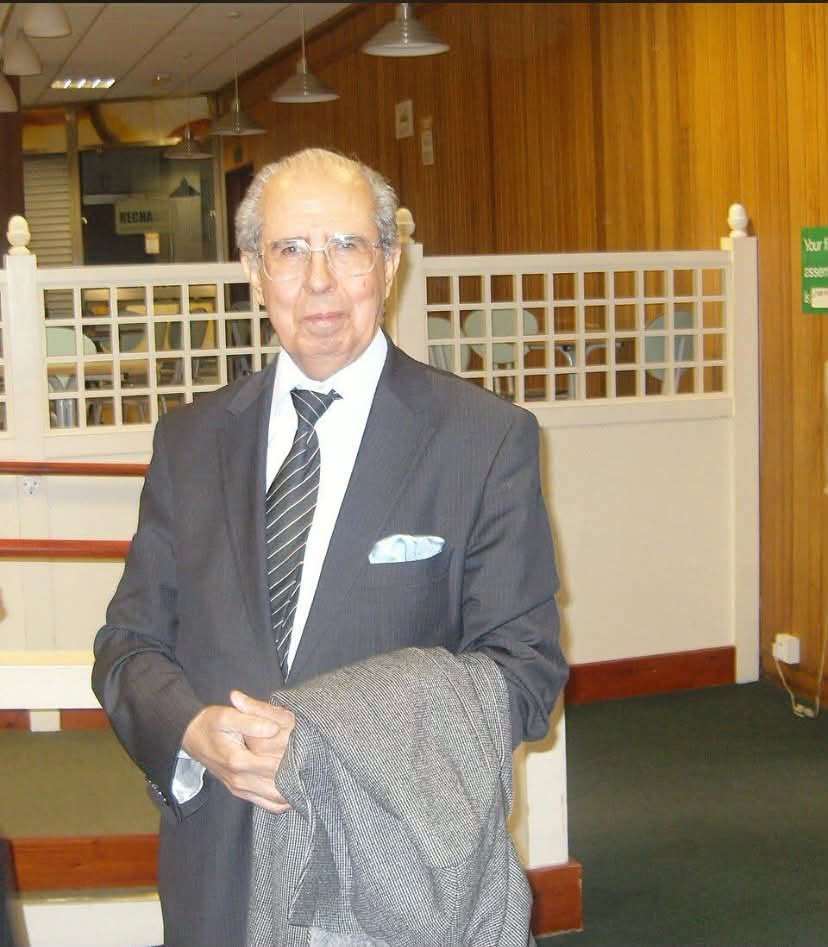
    Salman Abu Sitta (b. 1937) is a Palestinian researcher born in the city of Beersheba; he is considered one of the researchers most deeply engaged with the issues of Palestinian refugees and the right of return.

    Abu Sitta: A Note

    Salman Abu Sitta was born in Beersheba, Palestine, in 1937. He earned a Bachelor’s degree in Civil Engineering from Cairo University in 1959 and a PhD in Civil Engineering from the University of London in 1964. He is a fellow of the Institution of Structural Engineers (UK), the Association of Professional Engineers of Ontario (Canada), and the American Society of Civil Engineers. He is also a former member of the Chartered Institute of Arbitrators (UK), the American committee for energy facility specifications, and the executive council for space structures. He has authored over 30 scientific papers and books on engineering and received multiple awards from the British engineering association.

    He served as a professor at the University of Western Ontario in Canada and was an independent member of the Palestinian National Council from 1974 until the signing of the Oslo Accords in 1993. Additionally, he was a member of the Palestinian Cooperation body in Geneva, where he chaired the committee on refugees and UNRWA. He has authored more than 80 research papers and articles and published four books on the refugee issue in both Arabic and English. He also designed and illustrated a comprehensive map of all the villages and cities of Palestine, with three-quarters of a million copies distributed in both Arabic and English.

    Documenting the Nakba


    Abu Sitta spent over 40 years researching information regarding Palestine—both before and after the establishment of Israel. The mission he undertook went beyond merely chronicling the Nakba and documenting Palestine; he also strove to ensure that “the memories and identity of the homeland would never be lost.” Abu Sitta began his documentation work in his thirties after discovering the memoirs of the Turkish commander of Beersheba—which was under Ottoman rule at the time—a document dating back to the early 19th century. “That is where the research began, and it has never stopped since,” he says. “I have continued to gather every scrap of material regarding every inch of my homeland.”

    Works
    Atlas of Palestine 1917–1966.
    The Right of Return: Sacred, Legal, and Feasible (2001), Arab Institute for Research and Publishing.
    The Road to Return: A Guide to Displaced and Existing Towns and Villages and Holy Sites in Palestine (2007), Palestine Culture Foundation.
    The Nakba Register 1948 (2000), Baheth Center for Studies.
    Sources
    Geographicus Rare Antique Maps biographical dictionary of cartographers | Salman Abu Sitta (in English), QID: Q133842860.
    The Palestinian Return Centre. “Third Return Week” (in English). Archived from the original on 2023-12-12. Retrieved 2023-11-23.
    Al Jazeera: Bila Hudood (Without Borders) – Dr. Salman Abu Sitta, October 10, 2007 [Broken link]; archived copy (March 4, 2016).
    Interview with Al-Ahram newspaper [Broken link]; archived copy (September 24, 2013).


    Continue reading

    You Missed

    The Dress of Ramallah

    The Dress of Ramallah

    Salman Abu Sitta: Safeguarding Palestinian Memory

    Salman Abu Sitta: Safeguarding Palestinian Memory

    Woman From Bethlehem

    Woman From Bethlehem

    Free Palestine

    Free Palestine

    Woman of The Vineyards

    Woman of The Vineyards

    Trumpaplooza! View from Amman

    Trumpaplooza! View from Amman