CrossFireArabia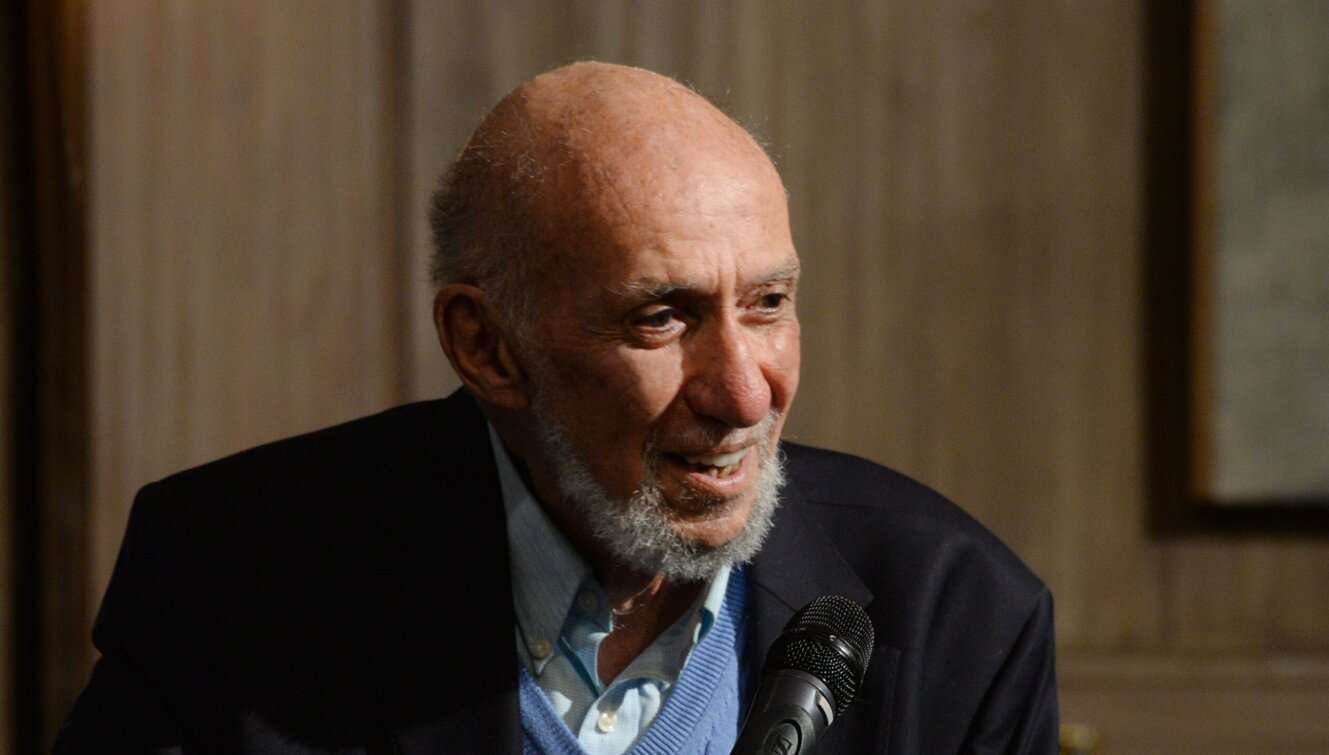
By Richard Falk
My name is Richard Falk, retired professor of international law at Princeton University. I speak here as the Chair of the Board of Trustees of Euro-Med Human Rights Monitor, a civil society organization based in Geneva, that reports on human rights throughout the Middle East and North African region with a special focus on violations of the human rights of the Palestinian people. I am most proud to be associated with Euro-Med due to the fearless dedication it has displayed in its on the ground documenting and reporting upon human rights abuses since 2011 when it was founded by its current inspirational leader Ramy Abdu who has served throughout its existence as its Chair. In all my contacts with Ramy Abdu I have admired how much this civil society initiative has achieved with such a modest budget, heavily depending for the collection of evidence and documentation of allegations on unpaid volunteers from the region, mostly young persons committed to the promotion of human rights.
What has impressed and moved me about Euro-Med is the indispensable work done over the 15 years of its existence under the most difficult circumstances. I make this statement now in response to the intensification of defamatory attacks on Euro-Med as biased and linked to Hamas by the government of Israel and by pro-Israel media and Zionist zealots in Western countries, particularly the United States. These attacks intended to be discrediting have included vicious media diatribes and threats of violence against Euro-Med staff members that have forced the organization to divert attention from its crucial substantive priorities to take prudential measures to protect its staff.
This recent escalation of defamatory attacks on Euro-Med and its leadership has been prompted by the publication of an opinion column written by Nicholas Kristof, a prize-winning regular contributor to the New York Times on May 11, 2026. This carefully reasoned and sourced article explicitly relied on Euro-Med Reports to ground his confirmation of severe forms of sexual violence engaged in by Israeli prison official and IDF soldiers in dealing with Palestinian civilians, and particularly detainees, including women and children. It was not unusual for influential media, NGOs, and activists to rely on Euro-Med reports given its reputation for trustworthy information. In this instance, Kristof’s eminence as a journalist, and even more because the NYT enjoyed had a long record of being a pro-Israeli news source that self-censored itself with respect to the most incriminating abuses by Israel of its legal and moral responsibilities in relation to the Palestinian people.
Kristof’s reference to Euro-Med’s documentation of sexual violence against Palestinians should have enhanced the credibility and demonstrated the effectiveness of Euro-Med instead of serving as a launching pad for a smear campaign that is characteristic Israeli behavior whenever so accused, a practice of shifting the conversation to the credibility of the message as a means of ignoring the message, especially when its veracity is beyond a reasonable doubt.
These charges of sexual violence, shocking as they were, came as no surprise to close observers of Israel’s behavior in the Occupied Palestinian Territories. The surprise was that the NYT had finally broken its habitual silence about Israeli atrocities for so long even when the evidence of systematically and flagrantly violating human rights principles was irrefutable.
This pattern of Israel’s sexual abuse in the aftermath of the October 7 Gaza attack became more extreme and notorious. This development was a major theme of the detailed report in March 2025 by the Commission of Inquiry on the Occupied Palestinian Territory established by the UN Human Rights Council. Additional to the description of instances of human rights abuses was the extremely damning assessment that ‘sexual and gender-based violence’ had become for Israel a ‘method of war.’ It was acknowledged there was lacking convincing evidence that this was explicitly adopted by the Israeli government. Yet the Commission believed this behavior was implicitly endorsed by Israeli officialdom that responded to even the most extreme abuses by granting governmental impunity to the wrongdoers however serious the international crimes.
It is of utmost importance to support the integrity of Euro-Med and other objective human rights organizations and not allow state propaganda and extremist support groups of Israel to shut down or defame courageous efforts to expose human rights abuses. This attack on Euro-Med should be understood as part of a wider campaign of punitive response to truth-tellers (in contrast to impunity for wrongdoers) who are risking not only their reputations but their lives by devoting their efforts to the dissemination of inconvenient truths. United States sanctioning of UN Special Rapporteur of Israeli Violation of Human Rights in Occupied Palestine, Francesca Albanese, is a similar disgraceful attack on an exceptionally brave truth-teller that should be seen as at one with these vicious attacks on Ramy Abdo and Euro-Med.
Voices of global conscience need to accept and act upon the ancient wisdom that when truth prevails, justice is served, human dignity and moral decency upheld. Likewise, when truth is suppressed and evidence of atrocities is filtered or ignored, evil flourishes.