A Public Letter: Stop Smearing Euro-Med

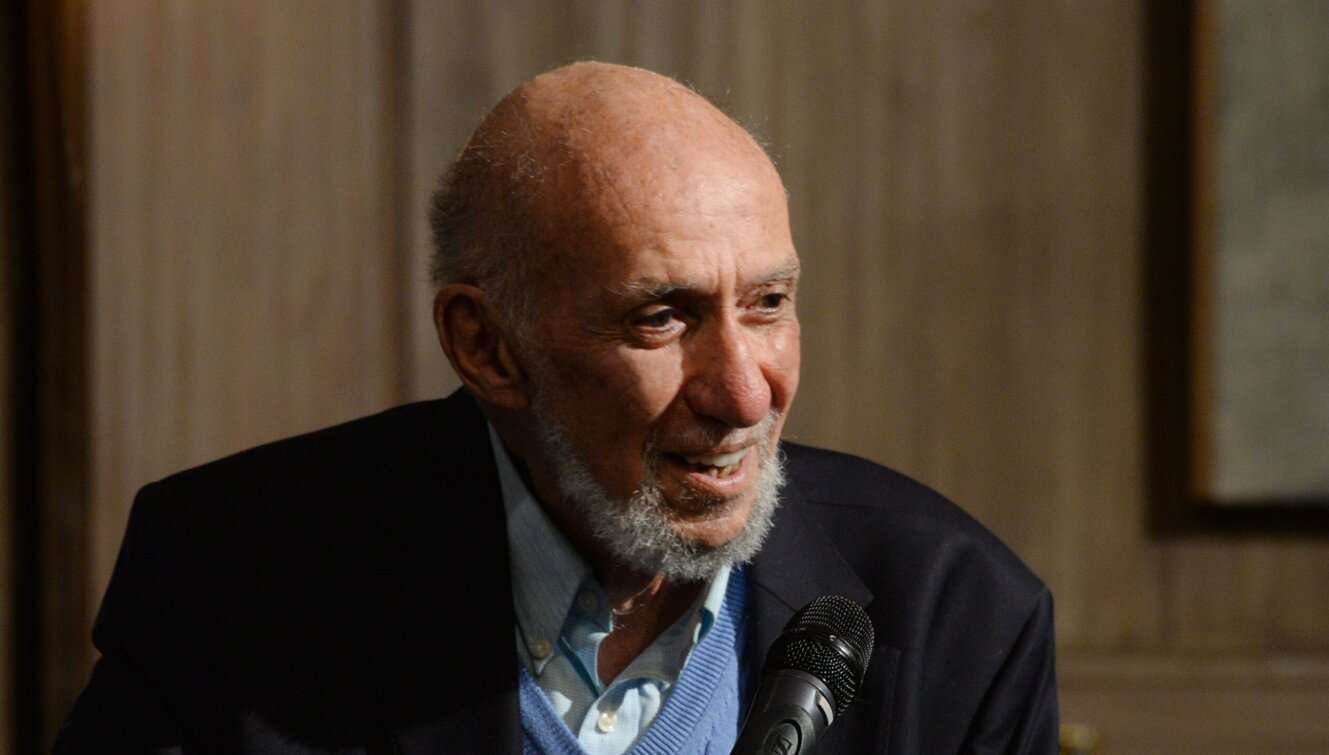
By Richard Falk

My name is Richard Falk, retired professor of international law at Princeton University. I speak here as the Chair of the Board of Trustees of Euro-Med Human Rights Monitor, a civil society organization based in Geneva, that reports on human rights throughout the Middle East and North African region with a special focus on violations of the human rights of the Palestinian people. I am most proud to be associated with Euro-Med due to the fearless dedication it has displayed in its on the ground documenting and reporting upon human rights abuses since 2011 when it was founded by its current inspirational leader Ramy Abdu who has served throughout its existence as its Chair. In all my contacts with Ramy Abdu I have admired how much this civil society initiative has achieved with such a modest budget, heavily depending for the collection of evidence and documentation of allegations on unpaid volunteers from the region, mostly young persons committed to the promotion of human rights.

What has impressed and moved me about Euro-Med is the indispensable work done over the 15 years of its existence under the most difficult circumstances. I make this statement now in response to the intensification of defamatory attacks on Euro-Med as biased and linked to Hamas by the government of Israel and by pro-Israel media and Zionist zealots in Western countries, particularly the United States. These attacks intended to be discrediting have included vicious media diatribes and threats of violence against Euro-Med staff members that have forced the organization to divert attention from its crucial substantive priorities to take prudential measures to protect its staff.

This recent escalation of defamatory attacks on Euro-Med and its leadership has been prompted by the publication of an opinion column written by Nicholas Kristof, a prize-winning regular contributor to the New York Times on May 11, 2026. This carefully reasoned and sourced article explicitly relied on Euro-Med Reports to ground his confirmation of severe forms of sexual violence engaged in by Israeli prison official and IDF soldiers in dealing with Palestinian civilians, and particularly detainees, including women and children. It was not unusual for influential media, NGOs, and activists to rely on Euro-Med reports given its reputation for trustworthy information. In this instance, Kristof’s eminence as a journalist, and even more because the NYT enjoyed had a long record of being a pro-Israeli news source that self-censored itself with respect to the most incriminating abuses by Israel of its legal and moral responsibilities in relation to the Palestinian people.

Kristof’s reference to Euro-Med’s documentation of sexual violence against Palestinians should have enhanced the credibility and demonstrated the effectiveness of Euro-Med instead of serving as a launching pad for a smear campaign that is characteristic Israeli behavior whenever so accused, a practice of shifting the conversation to the credibility of the message as a means of ignoring the message, especially when its veracity is beyond a reasonable doubt.

These charges of sexual violence, shocking as they were, came as no surprise to close observers of Israel’s behavior in the Occupied Palestinian Territories. The surprise was that the NYT had finally broken its habitual silence about Israeli atrocities for so long even when the evidence of systematically and flagrantly violating human rights principles was irrefutable.

This pattern of Israel’s sexual abuse in the aftermath of the October 7 Gaza attack became more extreme and notorious. This development was a major theme of the detailed report in March 2025 by the Commission of Inquiry on the Occupied Palestinian Territory established by the UN Human Rights Council. Additional to the description of instances of human rights abuses was the extremely damning assessment that ‘sexual and gender-based violence’ had become for Israel a ‘method of war.’ It was acknowledged there was lacking convincing evidence that this was explicitly adopted by the Israeli government. Yet the Commission believed this behavior was implicitly endorsed by Israeli officialdom that responded to even the most extreme abuses by granting governmental impunity to the wrongdoers however serious the international crimes.

It is of utmost importance to support the integrity of Euro-Med and other objective human rights organizations and not allow state propaganda and extremist support groups of Israel to shut down or defame courageous efforts to expose human rights abuses. This attack on Euro-Med should be understood as part of a wider campaign of punitive response to truth-tellers (in contrast to impunity for wrongdoers) who are risking not only their reputations but their lives by devoting their efforts to the dissemination of inconvenient truths. United States sanctioning of UN Special Rapporteur of Israeli Violation of Human Rights in Occupied Palestine, Francesca Albanese, is a similar disgraceful attack on an exceptionally brave truth-teller that should be seen as at one with these vicious attacks on Ramy Abdo and Euro-Med.

Voices of global conscience need to accept and act upon the ancient wisdom that when truth prevails, justice is served, human dignity and moral decency upheld. Likewise, when truth is suppressed and evidence of atrocities is filtered or ignored, evil flourishes.

Continue reading
World Media: ‘Beating Hamas is an Illusion’

International newspapers and research centers are openly warning that “the belief in the possibility of quickly eliminating the Islamic Resistance Movement (Hamas) is an illusion and a political and military naiveté. This is coming at a time when the international boycott of Israel is expanding and the humanitarian situation in the Gaza Strip is worsening.

Impossibility

The New York Times quotes Israeli military officers and experts as saying “the complete elimination of Hamas is unrealistic in the near term.” They note that “the movement still possesses a strong presence and combat capabilities that allow it to continue the confrontation for years.”

They maintain: “Betting on eliminating Hamas within a short period reflects an oversimplification of a complex equation.”

Great Civilian Losses

The British newspaper The Guardian states that field reports revealed that Israeli airstrikes are causing large numbers of civilian casualties in Gaza, while Hamas losses remain limited compared to what Israel officially announces.

The newspaper also notes: “The movement is resorting to unconventional tactics such as mines and ambushes, which increases the difficulty of the Israeli mission.”

International Boycott


The British newspaper The Financial Times confirms: “Boycott campaigns against Israel are growing at an unprecedented rate, encompassing the fields of sports, culture, and academia.”

The newspaper highlights a massive advertising campaign in Times Square in New York City, explicitly calling for a boycott of Israel and accusing it of committing “genocide” in Gaza.

In the same context, the Hebrew newspaper Israel Hayom reveals that the Italian authorities have decided to exclude Israel from participating in a tourism exhibition in Rimini, on the grounds that its presence would be “inappropriate” given the ongoing war and humanitarian crisis.

Worsening Humanitarian Tragedy


On the humanitarian front, the Hebrew newspaper Haaretz devotes extensive space to documenting the suffering of women and the most vulnerable groups in Gaza.

It notes the rise in miscarriages, the prevalence of malnutrition among mothers and infants, and a severe shortage of basic health services whilst warning that repeated displacement and poor living conditions are exacerbating the humanitarian catastrophe.

Future Scenarios


International analysts believe Hamas is still capable of reorganizing its ranks and relying on guerrilla warfare and unconventional methods, making it difficult for Israel to resolve the confrontation militarily.

It also predicted the conflict over Gaza would continue for a long time, with the increasing humanitarian and political costs for Israel and the increasing diplomatic and legal pressure on it in international forums.

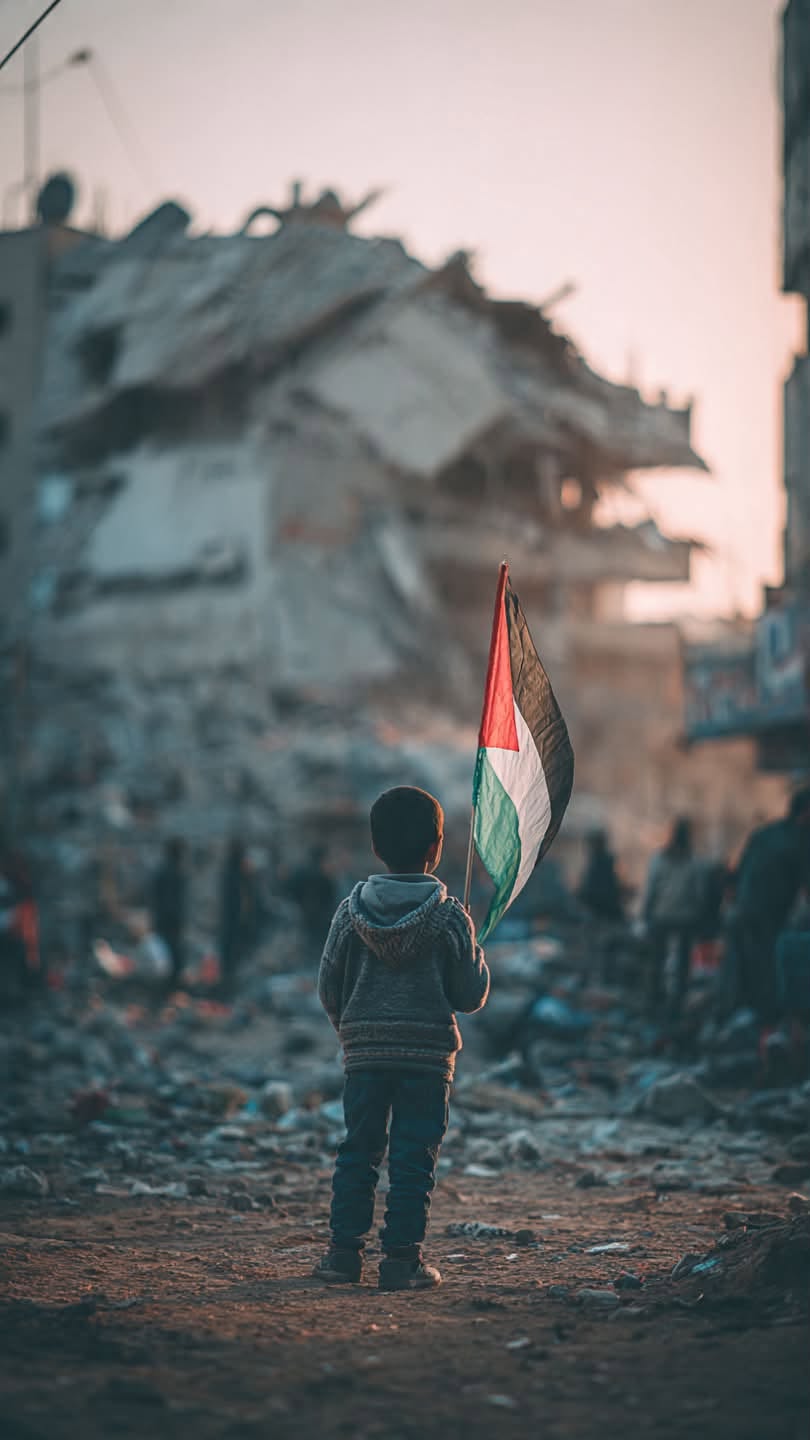
Since October 7, 2023, the occupying forces, with direct support from the United States and Western countries, have continued to wage a devastating war in Gaza, resulting in the death and injury of more than 231,000 Palestinians to date, according to the Palestinian Ministry of Health in the Strip according to JO24.

Continue reading
Israel Cannot Silence Palestinian Words

By Benay Blend

Palestinian journalists seek to document the truth about the Zionists’ brutal siege, while their detractors are working to erase all evidence of the crime scene.

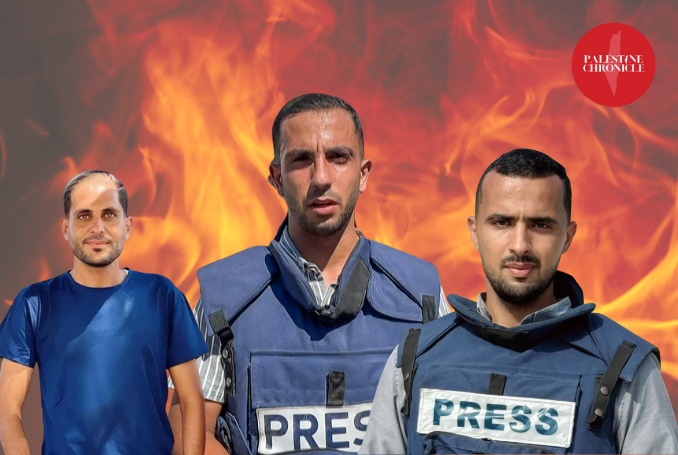
Shortly after the news broke about the Israeli assassination of Palestinian journalist Anas al-Sharif and his five colleagues in Gaza City, a video appeared on my Facebook feed of chef Yotam Ottolenghi making baked haloumi cheese with fennel syrup.

In real time, the two events have nothing to do with each other. However, delving deeper into the realm of the imagination, both represent long-held Israeli efforts to erase the Palestinian presence on the land.

In a statement on the social media platform X, journalist Ramzy Baroud explained Israel’s motives for the murder of  at least 200 journalists in Gaza since October 7, 2023: “silence the truth by murdering those who report it.”

Afterward, they justify these deaths by claiming that the journalists were members of the resistance movement, a claim that is problematic for several reasons.

In a timely excerpt from Perfect Victims: And the Politics of Appeal (2025), Mohammed El-Kurd contends that allies often unwittingly refute the claim that victims, such as these journalists, were affiliated with Hamas. In this way, the characterization of the civilian as a “neutral figure” has depoliticized the Palestinian cause, rendering it a “humanitarian crisis” where “revolutionaries are not part and parcel of your nation.”

In the U.S., too, police shootings of Black, Brown and poor people are often justified by slandering the victim’s reputation post-mortem. This should come as no surprise, since the institution of policing harks back to its origin as slave catchers, along with its more present-day exchange of training with the Zionist state.

“It is not enough for a Palestinian to be a journalist to be deemed human,” concludes El-Kurd,  “they must be ‘unaffiliated.’”

For “Israelis,” this effort must prove difficult as they are taught to see Hamas everywhere, much like Americans were told to look for communists during the Second Red Scare in the 1950s. The latter were in our bathrooms, under our beds, and if we were not watchful, we might mistakenly marry one.

In “The Hamas are Coming: A View of the Violence from Inside Israel” (2021), Miko Peled writes of this phenomenon that has informed Israeli hasbara (propaganda) for years.

“There are never Palestinians, never people, only ‘The Hamas’ — and ‘The Hamas’ is, by the way, male and singular (in Hebrew),” Peled writes.  “’The Hamas thinks;’ ‘The Hamas believes;’ ‘The Hamas should know;’ ‘When the Hamas understands, he will stop;’ and finally, ‘When The Hamas is hit hard he will never dare to attack Israel again.’”

Not much has changed in Israeli hasbara since Peled wrote that piece nearly four years ago. Indeed, the New York Times, taking its cue, as usual, from Israeli sources, repeated that “Mr. al-Sharif,” whom the Israeli military accused of being a Hamas fighter posing as a reporter, but was really “the head of a terrorist cell,” thus the IDF “had taken steps to mitigate civilian harm,” though which civilians, Palestinians or “Israelis,” it does not say.

Barbs were then thrown back and forth. Al-Jazeera called the killing  “a desperate attempt to silence the voices exposing the impending seizure and occupation of Gaza” while the “Israeli Government” accused “Al Jazeera reporters of serving the interests of Hamas by presenting an exaggerated and distorted picture of conditions in Gaza.”

“The instinct of many defenders of Palestinians is to dispel the connection between the slain Palestinian media workers and their supposed political leanings, as if anywhere in the world these exist in isolation,” El-Kurd explains.

Just as El-Kurd implicates himself in this process, so do I. There have been times when I’ve distanced martyrs from supporting the armed resistance as if this gives us a more legitimate cause to mourn.

When we sanitize the dead in this way, however, “we are inadvertently reifying the colonial rationale that killed them and rendered them killable in the first place,” El-Kurd concludes, so perhaps it is better to just reply “So what?” Indeed, if Zionist soldiers and PR workers can find a place for themselves in global media, why do supporters of Palestine find the need to detach their heroes from armed resistance that occupies a legitimate role in the struggle?

There are many documented reasons as to why Israel targets journalists in the Gaza Strip. Significantly, Palestinian journalists seek to document the truth about the Zionists’ brutal siege, while their detractors are working to erase all evidence of the crime scene.

Moreover, for Western journalists, even those sympathetic to the cause, the only picture they can paint is that of victims who are barely surviving in the rubble.

In an interview with Beacon Press, historian Roxanne Dunbar-Ortiz describes a similar settler colonial narrative that pertains to Indigenous people in the Americas. Asked to explain the most enduring myth pertaining to Native Americans, Dunbar-Ortiz mentions the idea of “eliminationism,” a notion that does away with Native people.

Indeed, at the turn of the 20th century, the myth of the Vanishing Indian was at its zenith, thus allowing the mainstream population to view Native people as noble relics who exist only in the glory days of their past. These same people who at one time they had license to kill Native people are seen now as no longer a threat, subdued as they were in the last Indian massacre at Wounded Knee.

In reality, Native people have survived over 500 years of continual genocide, survival being an “active word,” Dunbar-Ortiz makes clear, involving  “an enormous amount of resistance and cultural continuity.”

On the other hand, “victimry” is a more common version, she concludes, because people can feel sorry about the state of Indian Country but without the requirement that they must do anything about it. “So they’re not really then dealing with the reality that Native people are here,” and like the Palestinians, “they’ve resisted, they’ve survived, they haven’t changed their mind about who they want to be and how they want the future to be.”

In “Sumoud: The Unyielding Heart of the Palestinian Cause in Palestine,” Ramzy Baroud describes a similar trajectory for Palestinians. “The profound and unrelenting struggles endured by Palestinians should, by any rational expectation, have irrevocably concluded the Palestinian cause. Yet, the struggle for freedom in Palestine is at its zenith.”

Like the experience of Native Americans, Zionist attempts to erase the presence of Palestinians goes back many decades. Nevertheless, the Palestinian resistance has endured, Baroud continues, due to the “concept of sumoud,” resilience that is akin to Dunbar-Ortiz’s explanation of “survival,” an active process that involves resistance and cultural endurance.

“Palestinian journalists in Gaza are themselves the story and the storytellers,” writes Ramzy Baroud. “Their success or failure to convey the story with all its factual and emotional details could make the difference between the continuation or the end of the Israeli genocide.”

From Refaat Alareer, the poet/teacher/ journalist who asked before his death that his life become a story to ensure that life goes on, to Anas Al-Sharif’s final testament written shortly before his death, Palestinian journalists have been responsible for conveying the truths of Gaza to the world, but they also leave a legacy that inspires future generations to carry on their work.

“Do not let chains silence you or borders restrain you. Be bridges toward the liberation of the land and its people, until the sun of dignity and freedom rises over our stolen homeland,” Al-Sharif wrote, shortly before his death.

With that last statement, Al-Sharif foretells his own assassination. His message is not one of victimhood, though, but rather a plea that others carry on his work.

On August 11, Dareen Tatour, the Palestinian poet who knew from experience the danger of rebellious words, posted a new poem written to honor the Al-Jazeera team murdered the day before.

Imprisoned for her verse “Resist, My People, Resist Them,” the poet is not so optimistic now that words can stop a bullet. Under the banner Martyrs of the Word and Image—They Left But the Word Remained, Tatour charged that their deaths were the consequence of a world gone silent to their pain.

“They are gone / but the truth remains,” she says, dependent on her to carry it, or “leave it to be bombed again” in the wake of her silence.

Unlike the person that she was ten years ago, Tatour knows now that “the road is longer and harsher,” yet still she is undeterred, for she continues “to write for them [the slain journalists], to be the echo of their voices,” because in this way, the Palestinian narrative will be triumphant.

– Benay Blend earned her doctorate in American Studies from the University of New Mexico. Her scholarly works include Douglas Vakoch and Sam Mickey, Eds. (2017), “’Neither Homeland Nor Exile are Words’: ‘Situated Knowledge’ in the Works of Palestinian and Native American Writers”. She contributed this article to The Palestine Chronicle.

Continue reading
Why Doesn’t Trump Want Netanyahu to Strike Iran?

By Dr Marwan Asmar

CROSSFIREARABIA – United States president Donald Trump seems to be a very happy man these days. He says he is about to reach a deal with Iran on its nuclear file very soon.

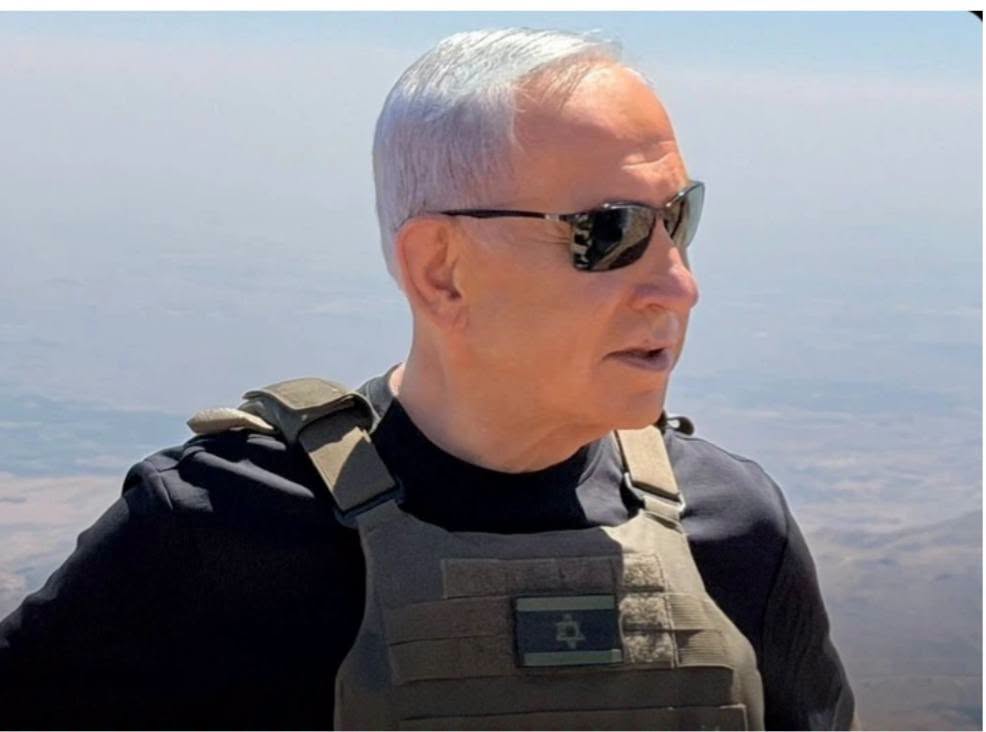
Israeli Prime Minister Benjamin Netanyahu on the other hand is particularly worried, concerned, frustrated and even downhearted. He says ‘we need to strike Iran now before it’s too late and it goes ahead and develops a nuclear bomb’. 

But, and on the contrary, Trump believes that it’s because Iran is still at a weak stage before reaching nuclear  weapons capability, the US can force a deal that would make sure it checks its nuclear arsenal and would submit to the American will.

To prove his point, Trump through his US negotiating team led by Steve Witkoff, is continually talking to the Iranian team through Oman, now in their fifth mediating session about ironing out a new deal that would satisfy the US point of view and give the Iranians peace of mind and something to look forward to like lifting sanctions on the country.

To that extent, and no doubt for public relations, Trump is never short these days on complementing the Iranians with his glowing uttrances on the country and how it can become “great” again.

By their own accord however, both teams who are talking indirectly through the Omanis, say that negotiations is tough and may even going through a rough patch.

The Iranian delegates are sticking to their position, they want a deal but not at any price. They want to continue to pursue their uranium enrichment program believing this is a question of state and national sovereignty. They say they haven’t reached such a local, indegenous breakthrough in order to give it, whilst praising their scentific and technological advancements in this area of power.

The Americans on the other hand insist that Iranian divest itself from this nuclear process for uranium enrichment is a ‘redline’ as it leads to the possession of a nuclear weapon. To the Trump administration, this point is intractable which Iran has to give up on. 

But if this is the case why is the US continuing to talk to Iran? Further still, why should Trump be happy and talk about an impending deal that would lock the hands of the Iranians? Clearly, the American president is happy despite the murky regional waters.

Back to Israel. Netanyahu is deeply worried and wants to frustrate any impending nuclear deal. But he was always frustrated about Iran and argued, well, at least for the last 10 years, against talking to Iran and placating it. It was argued he was the person to convince Trump to leave the international JCPA treaty signed between the five-members of the UN Security Council and Iran in 2018.

Today however, and for Netanyahu, its “horrors” on the horizons. Leaked newspaper reports in The New York Times suggest there is deep tension between Trump and Netanyahu on this issue for the US president doesn’t want the later to embark on any action such as military strikes that would jeopardize any upcoming deal.

That is why Israeli Strategic Affairs Minister Ron Dermer and Mossad Chief David Barnea are being invited to Washington to the White House to impress upon them not to embark on a drastic Israeli action and bomb Iranian military and nuclear sites whilst negotiations are going on.

Many US and European experts however are fearful that Netanyahu wouldn’t be able to be controlled and if he embarks on striking Iran he would do so without consulting the Americans and go it alone and in spite of the ‘talked-about” pressure that is being exercised by the White House on Tel Aviv.

Regardless however, Trump wants a deal come what may for he believes this would be a great achievement for America and would vindicate his earlier action when he got the US out of the deal in 2018 and now in return for a better accord, and moving his own view to create a safer world and enforce his image that he is a man of peace and doesn’t support world wars like his recent attempt to stop the Ukraine War.

If Israel does strike Iran, in theory that would make Trump very unhappy because it would mean the United States is no longer able to control its strategic ally, or it could mean that behind the international and regional diplomatic chit-chat, the US is not too bothered about striking Iran.

But there are also other problems to consider: Wouldn’t a strike on Iran, especially on its nuclear sites, produce a spiral and a slippery-slope in which the latter would surely retaliate and be capable of doing so, with vehement force.

Apart from what that would do to the region, ie, “nuclear catastrophe”, would Netanyahu go along that road and risk annihilation for Israel and its surrounding areas.

These are tough questions to consider and may force Netanyahu to back down and listen to the US.

Continue reading
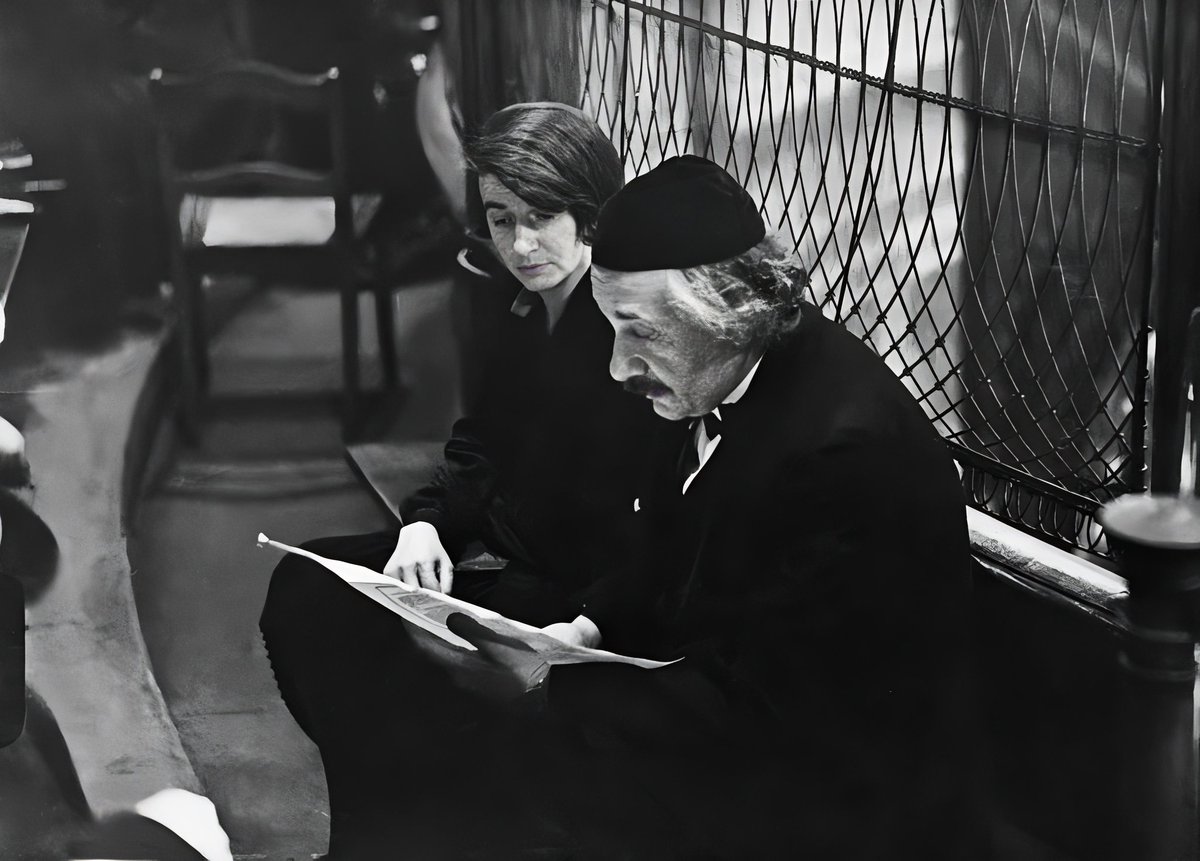
Einstein Says No to Israel

From Voice of Rabbis:

In 1948 Albert Einstein along with 28 other prominent Jewish leaders wrote a letter to the New York Times…

It stated that the Israeli political party resembled the Nazi Party in its ideology and methods.

Einstein went on to say that he opposed the state of Israel and it was against the religion of Judaism.

Albert Einstein passionately argued against the creators and creation of Israel. He called it a terrorist organisation. He likened them to Nazis and fascists.

Continue reading