Israel’s Forgotten Story: Palestinian Women Prisoners

By Raed Mohammed Mahmood Amer 

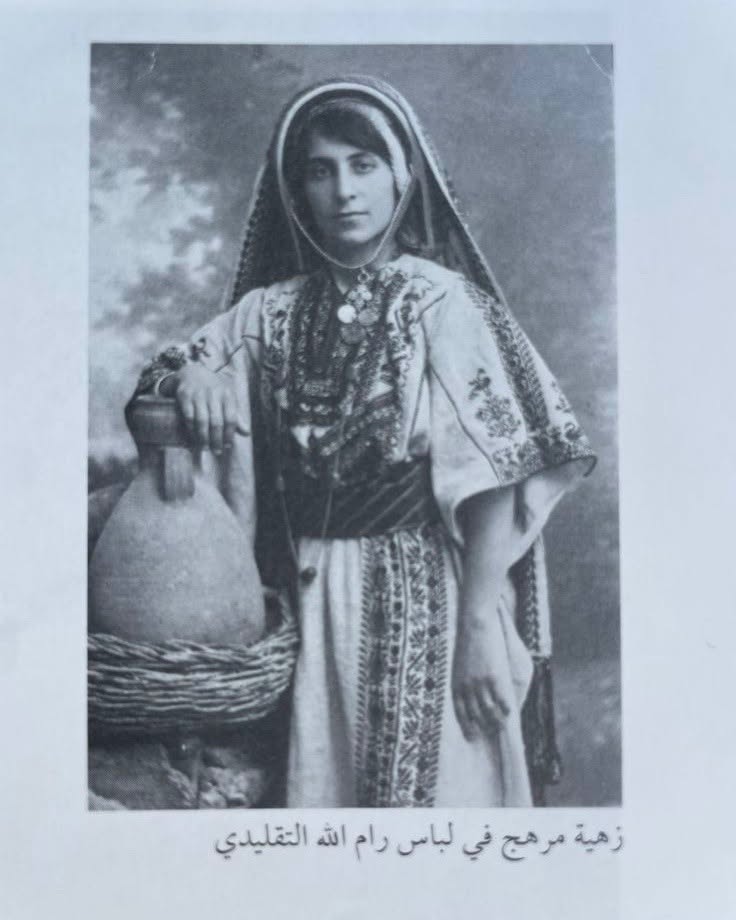
Since the beginning of the Palestinian struggle, women have played a central role alongside men in resisting Israeli occupation. They have played a key role in all aspects, whether in the phase of preparing and building, or in the battle for liberation. This participation was not limited to the more traditional roles, but formed the essence of the Palestinian struggle.

Despite the growing sacrifices they continue to make, Palestinian women continue to bear the cost of this struggle. Since its inception, Israeli occupation has systematically targeted women through killings, torture, arrests, and other forms of oppression.

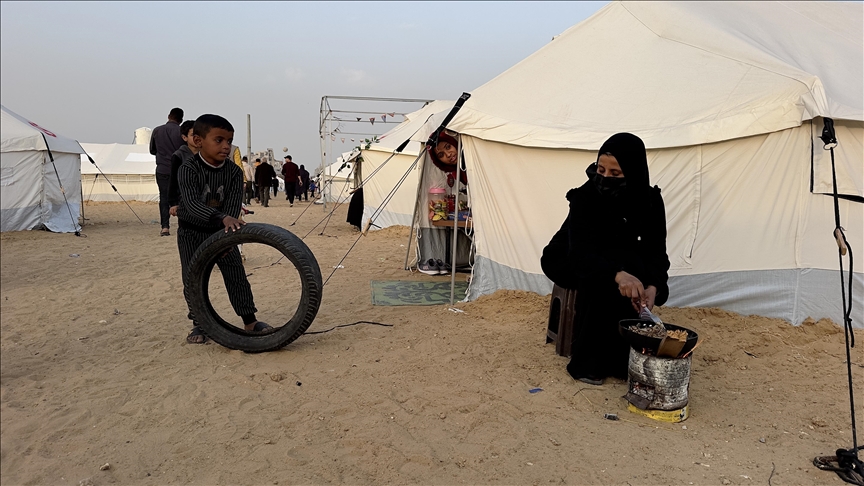
As it pertains to arrest and detention, thousands of Palestinian women have been placed in the occupation’s prisons and military detention camps over the past close to six decades. Women have been used as leverage to pressure armed resistance fighters, particularly those related to them. Arrests of their female family members have been used as a form of blackmail aimed at forcing the men to surrender. This abusive policy has only escalated since Oct. 7, amid Israel’s ongoing assault on the Palestinian people in Gaza, Jerusalem, and the West Bank.

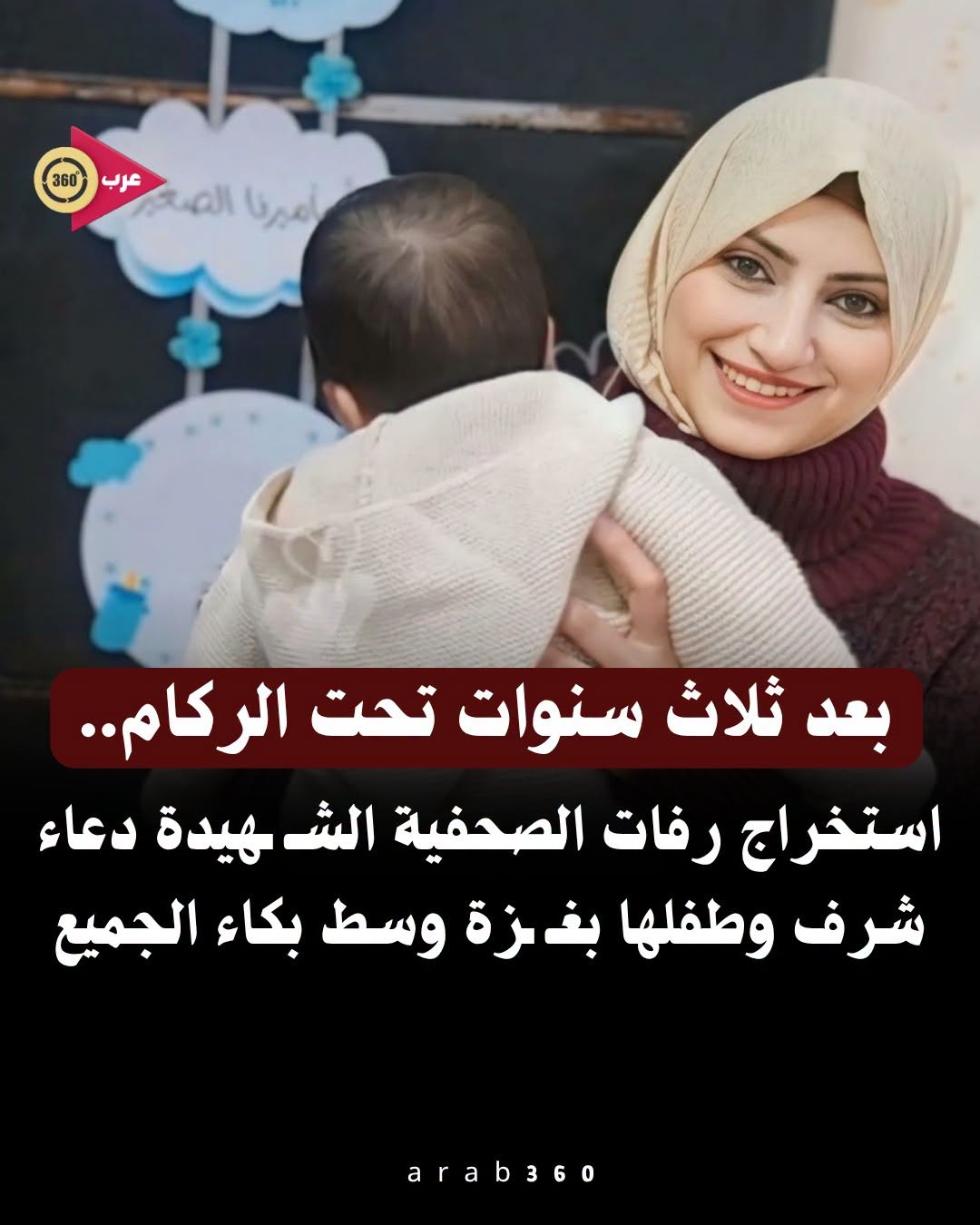
Since the start of the genocide, the arrest and detention of Palestinian women has spiked. According to our own data as prisoner’s defense groups, Israeli occupation forces have since Oct. 2023 arrested at least 490 Palestinian women from Gaza, the West Bank, and Jerusalem. These arrests include women from all walks of life—at least 25 university students, six journalists, lawyers, mothers, wives of martyrs, and public figures such as parliamentarian Khalida Jarrar.

In addition, we have clear indications that there are a large number of female prisoners who were arrested from Gaza, that are being subject to the severe crime of enforced disappearances, with the occupation refusing to disclose their identities, the number of women being held, and the location of where they are being held.

Palestinian women currently in Israeli custody are enduring the most violent and dangerous period in the history of the prisoners’ movement. They are enduring a wide array of severe violations that have also been practiced against men. Knowing that women are among the most vulnerable sectors of Palestinian society, the Israeli occupation has weaponized and used women’s bodies against them in an attempt to inflict the most pain possible. These violations include rape, sexual, physical and psychological assault, forced unnecessary strip searches, enforced starvation, and deprivation of female-related necessities among many other things. While women have historically suffered such violations at the hands of occupation authorities, these practices only became severely more frequent and violent since the start of the genocide in Gaza. Countless testimonies of liberated Palestinian women serve as proof to the widespread abuses taking place inside the Israeli occupation’s prisons. The UN acknowledged reports of sexual violence, particularly against female detainees from Gaza.

Some examples of female prisoners

A prominent example is Khalida Jarrar, a Palestinian Legislative Council member. She has endured all forms of abuse by the occupation, including solitary isolation, torture, starvation, and medical neglect. She was placed in solitary confinement for five consecutive months before her release on Jan. 19, 2025 as part of the first batch of a prisoner exchange and ceasefire deal between the occupation and the Hamas movement. Among the worst violations that Jarrar faced was being denied the chance to attend the funeral of her daughter, who passed away while Khalida was in prison. Israel robbed Jarrar of her ability to bid her daughter farewell, like many other prisoners before and after her.

Another tragic example is the case of Israa Jaabis, who suffered severe burns on her body during her arrest. The Israeli authorities denied her medical treatment, exacerbating her already severe suffering. Additionally, female prisoner Hana Shalabi has been arrested and tortured several times. She went on a 44-day hunger strike in protest of being held without trial or charge, also known as administrative detention, amid the harsh conditions in Israeli prisons. Such cases highlight the magnitude of violations faced by Palestinian female prisoners, where the occupation shows no concern for the lives of these detainees.

Despite these grave violations faced by Palestinian women in Israeli prisons, international human rights organizations and institutions remain silent in the face of these abuses. The international community has not made any serious efforts to hold the Israeli occupation accountable or exert pressure on it to halt these inhumane policies against Palestinian female prisoners. Palestinian female prisoners are enduring an ongoing journey of suffering, and their plight is a part of the unending violations of the occupation. Palestinian women continue to await freedom, hoping justice will prevail.

The writer whose article appeared in Anadolu, is president if the Palestinian Prisoners Association.

CrossFireArabia

CrossFireArabia
Dr. Marwan Asmar holds a PhD from Leeds University and is a freelance writer specializing on the Middle East. He has worked as a journalist since the early 1990s in Jordan and the Gulf countries, and been widely published, including at Albawaba, Gulf News, Al Ghad, World Press Review and others.

Related Posts

Oslo: Strangling The Dove

By Dr Khairi Janbek

When we do a recap of the Oslo Agreements, they were a series of accords between Israel and the PLO signed in 1993. It was a process meant to lead to a permanent settlement of the Palestinian-Israeli conflict within five year, including decisions on borders, refugees, security, Jerusalem and settlements.

But right from the start, voices were divided over the process, while for others, the whole idea had a built-in mechanism for failure from the start. The Palestinians started seeing that the Oslo Agreements were neither ending the establishment of Israeli settlements nor the end to occupation, while for the Israelis it didn’t seem to end their security concerns.

Indeed, it is pointless to think which comes first, the chicken or the egg, because two different fears and logistics persisted from the start.  But also, it is important to think about the circumstances which brought about the idea of launching the process, and which did put the PLO in a tough position for being perceived as supporting the wrong side which lost; Iraq.

The room for manoeuvre for the late Yasser Arafat was very tight as he stood to lose the legitimacy of the PLO.

What one is trying to say is that, right from the start, outside official circles, many on the Palestinian side were against Oslo probably as many as was the case on the Israeli side.

The gradual erosion of Oslo mainly through the continued Israeli actions kept feeding extremism on both sides.  Nevertheless, the concept was not revoked by any Israeli government because of its effect on Arab public opinion, pressure which is likely to block any peace initiative. Moreover, the international atmosphere was not conducive for such an initiative.

Having said that, one cannot claim that the international atmosphere is currently more indifferent to the abrogation of the Oslo, rather Israel seems to have more leeway in undertaking unilateral actions with more impunity.

Of course, it is not international law that can be counted on in this respect but rather, at least for the time being Donald Trump’s disapproval of the idea of annexing the West Bank by Israel. This is despite the fact that all the Israeli actions of dividing the West Bank from north to south first and currently from west to east, goes unnoticed. But the important thing has been till now, and don’t say the magic word, end of Oslo.

However, the recent development is that Israeli political parties, the partners in Netanyahu’s government are all pushing openly, for the abrogation of the Oslo agreements and cancelling out all the Israeli obligations towards it.

One can only say such an open declaration is a matter of principle by the Israeli government, because the changes on the ground are there for all to see. One supposes all parties are playing for time to see the end of the Palestinian national aspirations.

The columnist is a Jordanian writer based in Paris, France

Continue reading
How Trump Burned Western Friendships

By Jassem Al-Azzawi

Something remarkable is happening today in the corridors of western powers. America’s closest allies are no longer whispering their frustrations behind closed doors; they are now shouting them from the podiums of their parliaments and in press conferences. And US president Donald Trump is responding in kind. The transatlantic alliance, painstakingly built over eight decades, is now fracturing in a live broadcast.

The immediate cause is the American-Israeli war on Iran, launched on 28 February, 2026, without consulting NATO partners, United Nations, or even Washington’s closest friends. But the rift runs deeper than a single conflict; it reflects a strategy that is indifferent to its allies, or even openly contemptuous of them.

“The Americans clearly lack a strategy.”

The breaking point was starkly illustrated in the frank remarks made by German Chancellor Friedrich Merz to students in Marsberg, northwest Germany. Merz likened the conflict with Iran to past US failures in Afghanistan and Iraq.

“It’s clear the Americans don’t have a strategic plan,” he said, describing Washington’s approach as “ill-conceived.”

He went even further, suggesting that the US was being “humiliated” by Tehran’s negotiating tactics which is a stunning public accusation from a Chancellor who, until recently, was one of Washington’s most hawkish European allies.

Trump reacted furiously, writing on his TruthSocial platform that Merz “doesn’t know what he’s talking about” and threatening to reduce the number of US troops stationed in Germany, currently at 36,436. He then told the German chancellor to mind his own business:

“The Chancellor of Germany should spend more time ending the war between Russia and Ukraine, where he has been completely ineffective, and fixing his own battered country… rather than meddling in the affairs of those who are eliminating the Iranian nuclear threat.”

This verbal sparring is transcending all diplomatic norms and is shakening the foundations of the US-European axis.

Starmer: “I’m fed up,” he says publicly.

British Prime Minister Keir Starmer invested considerable political capital in cultivating a working relationship with Trump, but that investment has now proven costly. When asked about Trump’s threats to destroy Iran, Starmer told ITV:

“These are not words I would ever use, because I speak from our British values ​​and principles.”

The harshest language came when Starmer placed Trump alongside Vladimir Putin as partners in causing British economic hardship, telling Talking Points:

“I’m fed up with seeing families and businesses across the country struggling with fluctuating energy bills because of Putin’s or Trump’s actions around the world.”

On British military involvement, Starmer was unequivocal: “I will not change my mind, and I will not back down. It is not in our national interest to join this war, and we will not do so.” Trump rewarded this initial stance with a statement to The Sun newspaper: “Starmer has not been cooperative. The relationship is clearly not what it used to be,” he said.

Meanwhile, the International Monetary Fund underscored the scale of the material risks by lowering its 2026 growth forecast for Britain to 0.8 percent. This is a direct consequence of the energy shock Trump’s trade war has inflicted on British households.

Sanchez and Carney: Europe and Canada Draw a Line

Spanish Prime Minister Pedro Sanchez has emerged as the most vocal European leader in his criticism of Trump and his uncompromising stance. After Trump threatened to sever all trade ties with Madrid following Spain’s refusal to allow US troops to use the Rota and Morón air bases, Sanchez did not back down. When the ceasefire was announced, his judgment was scathing:

“A ceasefire is always good news, but this temporary relief cannot make us forget the chaos, destruction, and lives lost. The Spanish government will not applaud those who set the world ablaze just because they have finally appeared with a bucket of water.”

For his part, Canadian Prime Minister Mark Carney offered a broader structural indictment, stating in a speech at the Lowy Institute in Sydney:

“Geostrategically, dominant powers are increasingly acting without restraint or respect for international norms and laws, while others bear the consequences.”

He described the war as “a failure of the international order,” adding that “the United States and Israel acted without engaging the United Nations or consulting allies, including Canada.”

The alarm bells were not only ringing abroad; Senate Democrats launched a fierce campaign to reclaim congressional authority over a war they deemed illegal, unauthorized, and a diplomatic disaster.

Senator Tim Kaine’s diagnosis was accurate: “There was no clear justification, no clear plan, and no effort to engage allies or Congress. When you make diplomacy impossible, you make war inevitable.”

Senator Chris Murphy was even more blunt.

“We have never seen a foreign conflict so publicly mismanaged. We have become a laughingstock around the world, while hurting Americans who are now paying billions more in fuel prices.” Senator Tammy Duckworth linked the current disaster to America’s post-World War II pattern, saying:

“Our duty is to ensure that our nation never again slides into an endless, self-serving war.” Despite this, all six war powers resolutions introduced by the Democrats failed due to Republican loyalty to Trump, even as the war cost the lives of 13 Americans in its first month and the price of a gallon of gasoline reached $4.30.

Time for reckoning has come…

Whether Trump’s antagonism toward allies is a strategic dismantling or simply the impulsiveness of a leader who confuses aggression with strength, the result is the same. He threatened to withdraw from NATO, imposed trade sanctions on Spain, threatened to withdraw troops from Germany, and pushed the “special relationship” with Britain to the brink of collapse. Secretary of State Marco Rubio’s warning also came to light.

Trump will “re-examine” Washington’s commitments to allies who did not support the war, as a declaration of “conditional friendship.”

America’s friends are being pushed away, its adversaries are watching, and the West, for the first time since 1945, is genuinely unsure whether it can rely on Washington.

Jassem Al-Azzawi is an Iraqi writer and journalist who contributed this article to the Arabic website, Al Rai Al Youm and appears in Crossfirearabia.com.

Continue reading

You Missed

An Egyptian House in a German Town

An Egyptian House in a German Town

Nakba Art

Nakba Art

Palestinian Population Tops 15.5 Million

Palestinian Population Tops 15.5 Million

‘All I Want is to Bury My Family in Dignity’  

‘All I Want is to Bury My Family in Dignity’  

Israeli Army: 18 Soldiers Dead, 910 Injured in Lebanon

Israeli Army: 18 Soldiers Dead, 910 Injured in Lebanon

Watch Out: Israel is Secretly Filling The West Bank With Settlements

Watch Out: Israel is Secretly Filling The West Bank With Settlements