How do You Stop Israel’s New War?

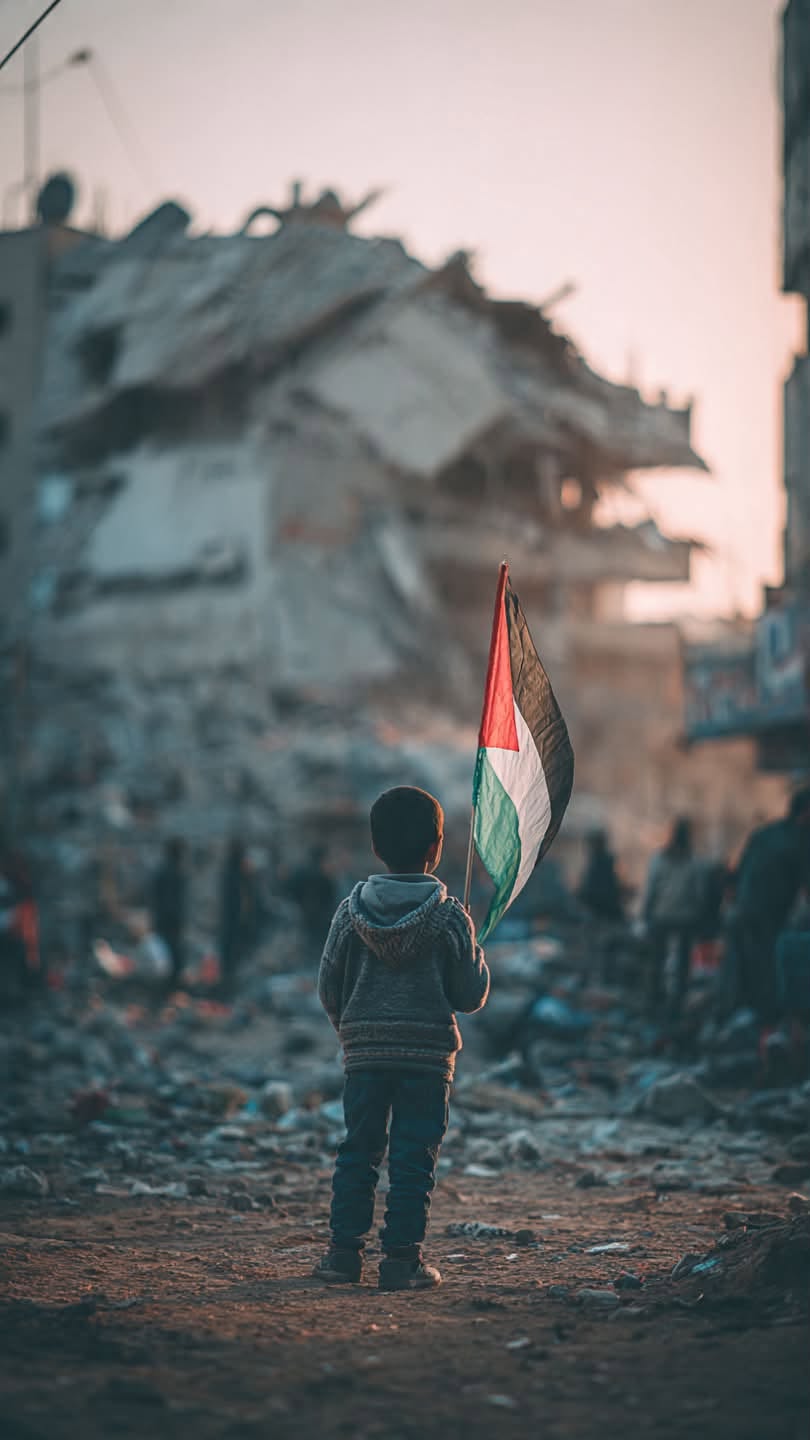
As Israel’s forces intensify their assault on the occupied West Bank, concerns are mounting over its broader objectives, further territorial expansion, forced displacement of Palestinians, and the gradual annexation of the occupied land.

Israel has killed more than 64 Palestinians, arrested at least 365, displaced hundreds of thousands and destroyed scores of homes and properties in the occupied West Bank since it launched its operation, the “Iron Wall,” on January 21, just days after a ceasefire took effect in the Gaza Strip.

For the first time in more than 20 years Israel deployed tanks in the West Bank and Defense Minister Israel Katz said that the army will remain in some refugee camps “for the next year.”

Since the start of the operation by the Israeli forces on January 21, several refugee camps have been nearly emptied of their residentsand over 5,000 Palestinian families have been displaced by the ongoing Israeli attacks in the West Bank according to the Palestinian government.

Starting in Jenin Camp, the operation has expanded to Tulkarm, Nur Shams, and El Far’a refugee camps and led to the displacement of more than 40,000 Palestine refugees. 

As well, the occupation forces stormed several towns, including Idhna, Al-Shuyukh, and Beit Awa in Hebron, as well as the Al-Disha and Aida camps in Bethlehem, the Al-Mughayyir and Birzeit towns in Ramallah.

Israeli troops also raided the Amari camp in Al-Bireh and the Airport Street area in the Kafr Aqab neighborhood, located north of Jerusalem. 

As the operation is spreading across most West Bank cities and refugee camps, analysts say that Israel’s long-standing aim to annex the occupied Palestinian territory is now more evident than ever and that it plans to annex the West Bank, squeeze the Palestinians into the smallest areas possible, particularly to expel them from Area C,referring to the division that makes up some 60 per cent of the Palestinian territory.

The use of air strikes, armored bulldozers, controlled detonations, and advanced weaponry by the Israeli forces has become commonplace, a spillover of the war in Gaza.

Such militarised approaches are inconsistent with the law enforcement context of the occupied West Bank, where there have been at least 38 airstrikes in 2025 alone. 

Jenin Camp stands empty today, evoking memories of the second intifada and this scene stands to be repeated in other camps. 

On the other hand, as the Israeli operation escalates, illegal settlers push further into Palestinian territories as 

Area C -over 60 per cent of the West Bank- is basically what the Israeli settler movement and the Israeli state view as ultimately theirs. 

Besides, they are creeping into Area B, which constitutes approximately 22 per cent of the West Bank. 

The illegal settlers are backed by the Israeli state, which provides them with military, economic, and political support across the political spectrum, not just from right-wing factions.

Since the start of the onslaught against the Gaza Strip on Oct. 7, 2023, at least 927 Palestinians have been killed and nearly 7,000 injured in attacks by the Israeli army and illegal settlers in the West Bank, according to the Palestinian Health Ministry.

In January, the Israeli anti-settlement group Peace Now warned that Israeli authorities were planning to approve the construction of 2,749 new settlement units in the occupied West Bank.

The group said 2025 could see “record numbers” of settlement expansions, an average of 1,800 units per month.

On its part, the International Court of Justice declared in July that Israel’s long-standing occupation of Palestinian territories is “unlawful,” demanding the evacuation of all settlements in the West Bank and East Jerusalem.

The United Nations Relief and Works Agency for Palestine Refugees (UNRWA) reiterates that civilians and civilian infrastructure must be protected at all times and that collective punishment is never acceptable.

However, under the Knesset laws implemented on January 30, UNRWA no longer has any contact with the Israeli authorities, making it impossible to raise concerns about civilian suffering or the urgent need for the delivery of humanitarian assistance. 

UNRWA, the main agency providing humanitarian aid for Palestinians in the refugee camps, has been banned by Israel to operate in East Jerusalem and now in the West Bank which is having a huge impact on the well-being of people, and on the economic situation.

This puts at grave risk the lives of Palestine Refugees and the UNRWA staff that serve them.

 Israel has long tried to eliminate the UN agency, which enshrines the right of Palestinian refugees to return home.

Israel’s aggressive assault on the refugee camps and the UNRWA, aligns with Israeli Prime Minister Benjamin Netanyahu’s goal “to end the concept of a Palestinian refugee”.

Moreover, the ongoing West Bank operation is seen as part of Israel’s plan to establish an exclusively Jewish state and recent reports surface that Israel is preparing to set up a military base in the Jenin camp, a part of its strategy to eliminate the refugee identity. 

All of Israel’s actions and policies throughout the last several decades have been geared toward the ultimate goal of creating a Greater Israel across all of historic Palestine.

Najla M. Shahwan is a Palestinian author, researcher and freelance journalist. Author of 13 books in literature and a children story collection. Chairwoman of the Palestinian Center for Children’s Literature (PCCL). Founder of Jana Woman Cultural Magazine. Recipient of two prizes from the Palestinian Union of Writers. She contributed this article to The Jordan Times.

CrossFireArabia

CrossFireArabia

Dr. Marwan Asmar holds a PhD from Leeds University and is a freelance writer specializing on the Middle East. He has worked as a journalist since the early 1990s in Jordan and the Gulf countries, and been widely published, including at Albawaba, Gulf News, Al Ghad, World Press Review and others.

Related Posts

Oslo: Strangling The Dove

By Dr Khairi Janbek

When we do a recap of the Oslo Agreements, they were a series of accords between Israel and the PLO signed in 1993. It was a process meant to lead to a permanent settlement of the Palestinian-Israeli conflict within five year, including decisions on borders, refugees, security, Jerusalem and settlements.

But right from the start, voices were divided over the process, while for others, the whole idea had a built-in mechanism for failure from the start. The Palestinians started seeing that the Oslo Agreements were neither ending the establishment of Israeli settlements nor the end to occupation, while for the Israelis it didn’t seem to end their security concerns.

Indeed, it is pointless to think which comes first, the chicken or the egg, because two different fears and logistics persisted from the start.  But also, it is important to think about the circumstances which brought about the idea of launching the process, and which did put the PLO in a tough position for being perceived as supporting the wrong side which lost; Iraq.

The room for manoeuvre for the late Yasser Arafat was very tight as he stood to lose the legitimacy of the PLO.

What one is trying to say is that, right from the start, outside official circles, many on the Palestinian side were against Oslo probably as many as was the case on the Israeli side.

The gradual erosion of Oslo mainly through the continued Israeli actions kept feeding extremism on both sides.  Nevertheless, the concept was not revoked by any Israeli government because of its effect on Arab public opinion, pressure which is likely to block any peace initiative. Moreover, the international atmosphere was not conducive for such an initiative.

Having said that, one cannot claim that the international atmosphere is currently more indifferent to the abrogation of the Oslo, rather Israel seems to have more leeway in undertaking unilateral actions with more impunity.

Of course, it is not international law that can be counted on in this respect but rather, at least for the time being Donald Trump’s disapproval of the idea of annexing the West Bank by Israel. This is despite the fact that all the Israeli actions of dividing the West Bank from north to south first and currently from west to east, goes unnoticed. But the important thing has been till now, and don’t say the magic word, end of Oslo.

However, the recent development is that Israeli political parties, the partners in Netanyahu’s government are all pushing openly, for the abrogation of the Oslo agreements and cancelling out all the Israeli obligations towards it.

One can only say such an open declaration is a matter of principle by the Israeli government, because the changes on the ground are there for all to see. One supposes all parties are playing for time to see the end of the Palestinian national aspirations.

The columnist is a Jordanian writer based in Paris, France

Continue reading
How Trump Burned Western Friendships

By Jassem Al-Azzawi

Something remarkable is happening today in the corridors of western powers. America’s closest allies are no longer whispering their frustrations behind closed doors; they are now shouting them from the podiums of their parliaments and in press conferences. And US president Donald Trump is responding in kind. The transatlantic alliance, painstakingly built over eight decades, is now fracturing in a live broadcast.

The immediate cause is the American-Israeli war on Iran, launched on 28 February, 2026, without consulting NATO partners, United Nations, or even Washington’s closest friends. But the rift runs deeper than a single conflict; it reflects a strategy that is indifferent to its allies, or even openly contemptuous of them.

“The Americans clearly lack a strategy.”

The breaking point was starkly illustrated in the frank remarks made by German Chancellor Friedrich Merz to students in Marsberg, northwest Germany. Merz likened the conflict with Iran to past US failures in Afghanistan and Iraq.

“It’s clear the Americans don’t have a strategic plan,” he said, describing Washington’s approach as “ill-conceived.”

He went even further, suggesting that the US was being “humiliated” by Tehran’s negotiating tactics which is a stunning public accusation from a Chancellor who, until recently, was one of Washington’s most hawkish European allies.

Trump reacted furiously, writing on his TruthSocial platform that Merz “doesn’t know what he’s talking about” and threatening to reduce the number of US troops stationed in Germany, currently at 36,436. He then told the German chancellor to mind his own business:

“The Chancellor of Germany should spend more time ending the war between Russia and Ukraine, where he has been completely ineffective, and fixing his own battered country… rather than meddling in the affairs of those who are eliminating the Iranian nuclear threat.”

This verbal sparring is transcending all diplomatic norms and is shakening the foundations of the US-European axis.

Starmer: “I’m fed up,” he says publicly.

British Prime Minister Keir Starmer invested considerable political capital in cultivating a working relationship with Trump, but that investment has now proven costly. When asked about Trump’s threats to destroy Iran, Starmer told ITV:

“These are not words I would ever use, because I speak from our British values ​​and principles.”

The harshest language came when Starmer placed Trump alongside Vladimir Putin as partners in causing British economic hardship, telling Talking Points:

“I’m fed up with seeing families and businesses across the country struggling with fluctuating energy bills because of Putin’s or Trump’s actions around the world.”

On British military involvement, Starmer was unequivocal: “I will not change my mind, and I will not back down. It is not in our national interest to join this war, and we will not do so.” Trump rewarded this initial stance with a statement to The Sun newspaper: “Starmer has not been cooperative. The relationship is clearly not what it used to be,” he said.

Meanwhile, the International Monetary Fund underscored the scale of the material risks by lowering its 2026 growth forecast for Britain to 0.8 percent. This is a direct consequence of the energy shock Trump’s trade war has inflicted on British households.

Sanchez and Carney: Europe and Canada Draw a Line

Spanish Prime Minister Pedro Sanchez has emerged as the most vocal European leader in his criticism of Trump and his uncompromising stance. After Trump threatened to sever all trade ties with Madrid following Spain’s refusal to allow US troops to use the Rota and Morón air bases, Sanchez did not back down. When the ceasefire was announced, his judgment was scathing:

“A ceasefire is always good news, but this temporary relief cannot make us forget the chaos, destruction, and lives lost. The Spanish government will not applaud those who set the world ablaze just because they have finally appeared with a bucket of water.”

For his part, Canadian Prime Minister Mark Carney offered a broader structural indictment, stating in a speech at the Lowy Institute in Sydney:

“Geostrategically, dominant powers are increasingly acting without restraint or respect for international norms and laws, while others bear the consequences.”

He described the war as “a failure of the international order,” adding that “the United States and Israel acted without engaging the United Nations or consulting allies, including Canada.”

The alarm bells were not only ringing abroad; Senate Democrats launched a fierce campaign to reclaim congressional authority over a war they deemed illegal, unauthorized, and a diplomatic disaster.

Senator Tim Kaine’s diagnosis was accurate: “There was no clear justification, no clear plan, and no effort to engage allies or Congress. When you make diplomacy impossible, you make war inevitable.”

Senator Chris Murphy was even more blunt.

“We have never seen a foreign conflict so publicly mismanaged. We have become a laughingstock around the world, while hurting Americans who are now paying billions more in fuel prices.” Senator Tammy Duckworth linked the current disaster to America’s post-World War II pattern, saying:

“Our duty is to ensure that our nation never again slides into an endless, self-serving war.” Despite this, all six war powers resolutions introduced by the Democrats failed due to Republican loyalty to Trump, even as the war cost the lives of 13 Americans in its first month and the price of a gallon of gasoline reached $4.30.

Time for reckoning has come…

Whether Trump’s antagonism toward allies is a strategic dismantling or simply the impulsiveness of a leader who confuses aggression with strength, the result is the same. He threatened to withdraw from NATO, imposed trade sanctions on Spain, threatened to withdraw troops from Germany, and pushed the “special relationship” with Britain to the brink of collapse. Secretary of State Marco Rubio’s warning also came to light.

Trump will “re-examine” Washington’s commitments to allies who did not support the war, as a declaration of “conditional friendship.”

America’s friends are being pushed away, its adversaries are watching, and the West, for the first time since 1945, is genuinely unsure whether it can rely on Washington.

Jassem Al-Azzawi is an Iraqi writer and journalist who contributed this article to the Arabic website, Al Rai Al Youm and appears in Crossfirearabia.com.

Continue reading

You Missed

An Egyptian House in a German Town

An Egyptian House in a German Town

Nakba Art

Nakba Art

Palestinian Population Tops 15.5 Million

Palestinian Population Tops 15.5 Million

‘All I Want is to Bury My Family in Dignity’  

‘All I Want is to Bury My Family in Dignity’  

Israeli Army: 18 Soldiers Dead, 910 Injured in Lebanon

Israeli Army: 18 Soldiers Dead, 910 Injured in Lebanon

Watch Out: Israel is Secretly Filling The West Bank With Settlements

Watch Out: Israel is Secretly Filling The West Bank With Settlements