Will The US-Iran Deal Last?

By Ali Bakir

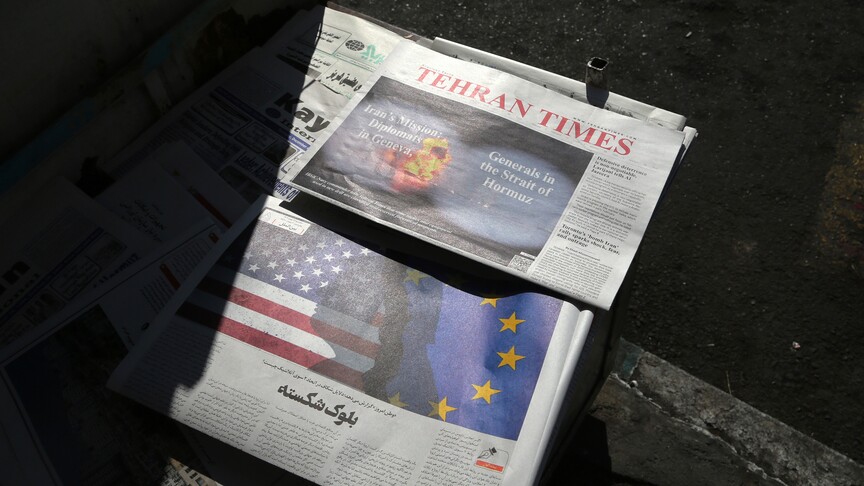
On June 15, Pakistan’s Prime Minister Shehbaz Sharif announced via the US social media platform X that a peace deal between the US and Iran had been reached, following over two months of mediation by his country. Sharif expressed gratitude to Qatar, Saudi Arabia, and Türkiye for their significant contributions, stating that the official signing ceremony would take place on June 19 in Switzerland. Following this announcement, a memorandum of understanding was signed electronically by US President Donald Trump and Vice President JD Vance on the US side, and by Iranian Parliament Speaker Mohammad Bagher Ghalibaf on the Iranian side.

The reported agreement is characterized as a framework peace deal aimed at ending the 2026 Israel/US-Iran war and transitioning the current ceasefire into a broader diplomatic process. Although the text of the agreement has not yet been published, key reported elements include immediate cessation of military operations, reopening of the Strait of Hormuz to international shipping, and a 60-day negotiation period to address unresolved issues, particularly Iran’s nuclear program, alongside discussions on sanctions relief and access to frozen Iranian assets during follow-up negotiations.

This agreement follows two significant developments. First, Israel conducted military strikes on Iranian targets in western and central Iran around a week ago, marking the first such actions since April. Explosions were reported in Tehran, Tabriz, Isfahan, and other cities in response to Iranian missile launches that were highly performative. Second, Trump warned that Iran would “pay the price” for what he described as slow progress in negotiations to end the conflict, indicating that the US could resume strikes against Iranian infrastructure.

5 bullet points on the agreement

Although the agreement does not necessarily mean that the root causes that prompted the war have fully disappeared, a few observations are worth mentioning and analyzing.

First, a lot of narrative spinning is occurring publicly at the moment. While the main parties are trying to sell the agreement as a victory, there are factions within the broader regional camps (such as hardliners in both Iran and Israel) that oppose it. Critics in Iran have labeled the agreement a “humiliating capitulation,” arguing that it involves unjustified concessions. Hardline opponents have publicly criticized the negotiating team, with Iranian MP Mahmoud Nabavian stating that the latest draft is “more damaging” than previous versions. Similarly, Israeli officials emphasized that Israel was not directly involved in negotiating the US–Iran deal and does not necessarily consider itself bound by its provisions. Israeli Defense Minister Israel Katz declared that Israel would not withdraw from territory seized in Lebanon and would continue to act against threats from Hezbollah and Iran if necessary.

Second, the timing of the agreement suggests that Iran was running out of options. As the Islamic Revolutionary Guard Corps (IRGC) focused on messaging and performative measures, the gap between their narrative and reality widened, with Iran’s ability to endure further pressure significantly diminishing. Trump’s counter-blockade against Iran’s restriction of the Strait of Hormuz imposed significant economic costs on Iran, leading to the decision to sign the agreement. It is estimated that the blockade could have cost Iran over $24 billion in just two months — almost equal to Iran’s reported total reserves of foreign currency — leaving the regime with little choice but to agree to the terms or face economic collapse.

Third, despite the negative reactions from hardliners in both Iran and Israel, the agreement highlights Trump’s genuine interest in reaching a resolution with Iran, especially following last year’s swift 12-day war between Israel and Iran. However, radical elements in both Iran and Israel seem intent on using procrastination, escalation, or military actions to sabotage meaningful attempts to achieve peace. Given that there is reportedly a 60-day negotiation period following the signing of the agreement, it is likely that these factions will continue to work against a comprehensive resolution.

Fourth, while Pakistan played a significant role in the mediation process, Qatar’s involvement was also crucial, as acknowledged by American, Pakistani, Saudi, and Turkish officials. Notably, neither the Qatari Foreign Ministry spokesman nor the ministry itself reported any independent measures taken by Qatar, apart from endorsing Pakistan’s mediation efforts. In fact, a Qatari spokesman denied any independent role in the mediation at this stage. Qatar’s involvement appears to have been executed at the request of the United States and had several dimensions.

Primarily, Qatar facilitated technical issues between the US and Iran, such as enabling the transfer of Iranian funds without direct US involvement, thereby avoiding the perception of it being a US initiative or taxpayer-funded. Additionally, Qatar played a role in establishing a communication channel between the United Arab Emirates and Iran, which emerged later in the mediation process. Finally, Qatar aligned itself with Saudi Arabia’s position, providing support for the Pakistani initiative.

Changing actors

Fifth, two awkward positions regarding the agreement can be highlighted. Firstly, the Europeans have been largely inactive in resolving the crisis yet somehow managed to host the official signing ceremony between the Americans and Iranians. Instead of crediting Pakistan, Switzerland offered to host the ceremony, which can be seen as an act of opportunism. Secondly, Oman, historically a favored mediator between the US and Iran, has been notably absent from this current arrangement. Oman’s position during this war was not popular in the Gulf Cooperation Council and beyond. According to a senior US administration official, Oman was removed from its mediation role in negotiations with Iran after the US concluded that Muscat had acted “very duplicitously” during the talks.

Finally, we must approach the prospects of the agreement with caution. It is essential to recognize that this is not a comprehensive peace agreement but rather a transitional framework. The future of the agreement will largely depend on the outcomes of negotiations in the next 60 days. Given that several factions within Iran and Israel are opposed to the agreement, we should not dismiss the possibility of sabotage, particularly from Israel.

Ali Bakir is an assistant professor of international affairs, security, and defense at Qatar University and senior nonresident fellow at the Middle East Council on Global Affairs. Anadolu

Continue reading
Gaza City: At What Cost Occupation?

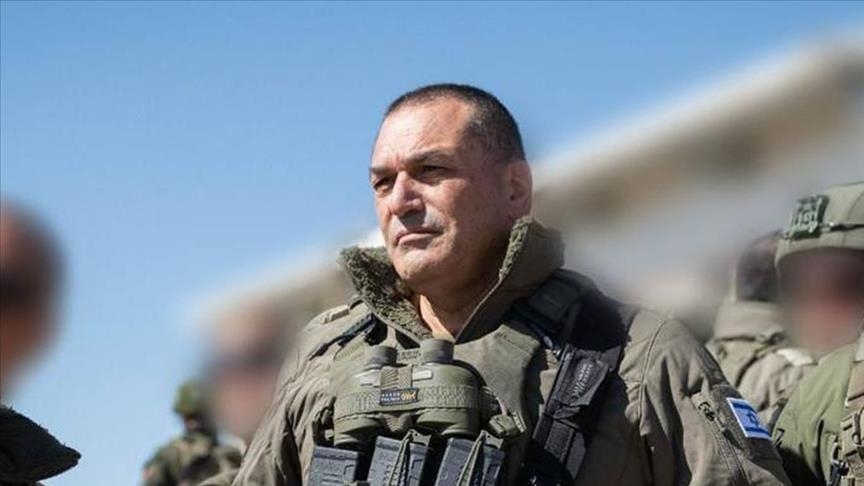
Israeli Chief of Staff Eyal Zamir officially approved a plan on Sunday to occupy Gaza City, local media reported.

Defense Minister Israel Katz is scheduled to formally approve the plan next Tuesday, according to Israel’s official broadcaster, Kan.

The Security and Political Cabinet will meet later this week to approve the plan, Kan said, adding that Nitzan Alon, the army’s official in charge of prisoners and hostages, took part in the discussions that led to the decision.

The plan includes a broad forced evacuation of Palestinians over at least two weeks, beginning with a military operation followed by a gradual entry into the city. Israeli authorities will present the evacuation plan to US officials at their request.

Channel 12 reported that the plan will be ratified by the government before the end of the week.

On Aug. 8, the Israeli Cabinet approved Prime Minister Benjamin Netanyahu’s proposal to gradually occupy the Gaza Strip, beginning with Gaza City.

As part of the plan, on Aug. 11, Israeli forces launched a major attack on the al-Zaytoun neighborhood, including house demolitions using explosive-laden robots, artillery strikes, random gunfire, and forced displacement, witnesses told Anadolu.

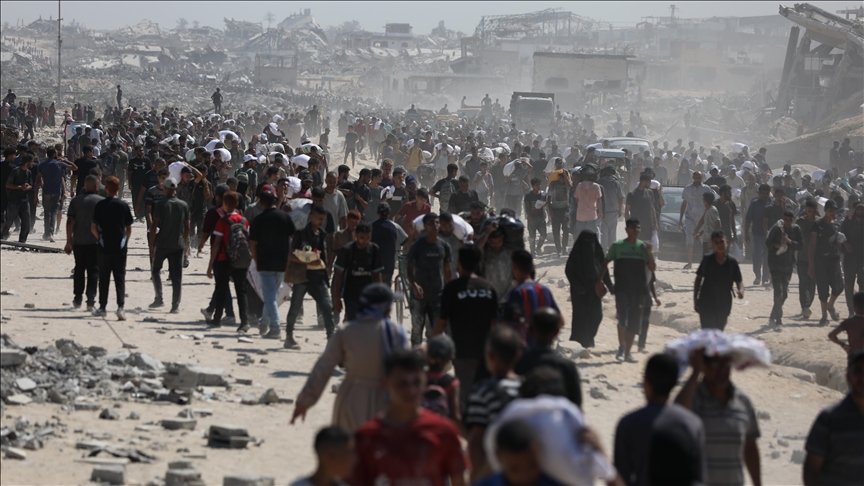
Israel has killed more than 61,900 Palestinians in Gaza since October 2023. The military campaign has devastated the enclave and brought it to the verge of famine.

Last November, the International Criminal Court issued arrest warrants for Netanyahu and Gallant for war crimes and crimes against humanity in Gaza.

Israel also faces a genocide case at the International Court of Justice for its war on the enclave.

Continue reading
Israel’s Top General Fears Reoccupation of Gaza

Israeli Chief of Staff Eyal Zamir described Prime Minister Benjamin Netanyahu’s plan to reoccupy the Gaza Strip as a “strategic trap”. Speaking on Wednesday, he stressed that it will exhaust the army for years to come and endanger the lives of prisoners.

Israel’s Channel 13 reported that a heated discussion took place between Zamir and Netanyahu in a meeting, Tuesday evening, which it described as “difficult and direct,” in light of the latter’s decision to proceed with the occupation of Gaza.

Zamir described the decision as a “strategic trap,” stressing it will exhaust the Israeli army for years later and endanger the lives of the Israeli prisoners in Gaza who are believed to be down to 20.

On Tuesday evening, Netanyahu held a closed-door meeting that lasted three hours, including a limited number of ministers and senior security officials, during which he discussed the plan to encircle Gaza City and the central military bases as the first stage of the occupation of the Strip, according to what the Broadcasting Authority quoted from an unnamed Israeli official.

Channel 13 reported that Zamir “proposed an alternative to the occupation operation, which is to isolate the Gaza Strip and impose a tight siege on Gaza City, along with airstrikes on Hamas positions. However, Netanyahu rejected the proposal and insisted on proceeding with the plan to occupy the Strip.”

Senior military officials, who were not named, quoted Zamir as hinting during the meeting at a threat to resign, saying: “I only have one bullet in my mouth.”

The security cabinet is scheduled to meet tomorrow, Thursday, to discuss the plan to occupy Gaza City and the central Gaza Strip, which Chief of Staff Zamir opposes.

On Tuesday, Netanyahu’s son, Yair, launched a sharp attack on Zamir, accusing him of “leading a rebellion and a military coup.”

On Wednesday, Israeli Defense Minister Yisrael Katz announced his support for Zamir in the face of criticism from Netanyahu’s son, Yair.

Katz said in a post on the X platform that “Major General Zamir is leading the army and adopting a strong and aggressive policy.”

He continued: “It is the right and duty of the Chief of Staff to express his position, and after the political leadership makes decisions, the army will implement them firmly.”

Israel previously occupied the Gaza Strip for 38 years, between 1967 and 2005.

Tel Aviv estimates that there are 50 Israeli prisoners in Gaza, 20 of whom are still alive, while more than 10,800 Palestinians are languishing in its prisons, suffering from torture, starvation, and medical neglect, many of whom have died, according to Palestinian and Israeli human rights and media reports.

On July 24, Israel withdrew from indirect negotiations with Hamas in Doha, following Tel Aviv’s intransigence regarding the withdrawal from Gaza, the end of the war, Palestinian prisoners, and the mechanism for distributing humanitarian aid.

According to a poll published Sunday by the Israeli Institute for National Security Studies, 52 percent of Israelis hold their government fully or partially responsible for the failure to reach an agreement with Hamas.

Hamas has repeatedly declared its willingness to release Israeli prisoners “in one go” in exchange for an end to the war of extermination, the withdrawal of the Israeli army from Gaza, and the release of Palestinian prisoners.

The opposition and the prisoners’ families assert that Netanyahu is seeking partial deals that would allow the continuation of the war while ensuring his continued rule. He fears the collapse of his government if the most extremist faction, which refuses to end the war, withdraws from it.

Domestically, Netanyahu is being tried on corruption charges that would result in his imprisonment if convicted. The International Criminal Court is seeking his arrest on charges of war crimes and crimes against humanity against Palestinians in Gaza.

Since October 7, 2023, Israel has been committing genocide in the Gaza Strip and starving Palestinians. On March 2, it tightened its measures by closing the crossings to humanitarian, relief, and medical aid, causing a famine that has reached “catastrophic” levels.

The US-backed genocide left more than 211,000 Palestinians dead or wounded, most of them children and women, and more than 9,000 missing, in addition to hundreds of thousands of displaced persons and a famine that claimed the lives of many according to Anadolu.

Continue reading
Deflecting Netanyahu’s Problems

By Jonathan Fenton-Harvey 

Just a day before launching airstrikes on Iran, Israeli Prime Minister Benjamin Netanyahu, facing bribery and fraud charges, narrowly survived a Knesset vote that could have collapsed his government. Alongside the legal charges, Netanyahu’s domestic popularity has plummeted over corruption, economic woes and failures to return Israeli hostages from Gaza. But for Netanyahu, the war offered more than military momentum: It has given him a temporary reprieve.

Within days, Israeli airstrikes reportedly weakened Iranian nuclear and military infrastructure, eliminated senior military figures, and killed hundreds of civilians. On X, Israeli Defense Minister Israel Katz claimed “civilians in Tehran will pay a collective price,” signaling a destructive intent. As Iran has hit back, firing missiles at Israeli infrastructure and cities, diplomacy over Iran’s nuclear program has all but collapsed.

Even if a ceasefire occurs, Israeli-Iranian tensions have escalated to near irreversibility as long as both the current Israeli and Iranian governments remain in power. Israel presents the assault on Iran as a necessary move to neutralize its nuclear ambitions, a claim repeated over the years, despite the lack of convincing evidence that Tehran was close to building a nuclear bomb. In reality, the war is driven more by Netanyahu’s personal survival than just Israel’s.

As with Israel’s prolonged onslaught on Gaza, this conflict appears designed to consolidate domestic support – attempting to rally the population around the image of an existential enemy – just as it did with Hamas and the Palestinians in Gaza. That same logic extended into Lebanon, where Israel’s assault weakened Tehran’s ally Hezbollah and coincided with a jump in public approval for Netanyahu’s Likud party. But with neither Gaza nor Lebanon yielding lasting political dividends, Iran has become the next catalyst in Netanyahu’s survival strategy.  

A fragile government

For Netanyahu, projecting external threats has not only been a means of consolidating power, but also unity. His government, already fragile, is also caught between deeply divergent factions – secular versus ultra-Orthodox, nationalist versus technocratic. This internal fragmentation of Israeli civil society raised the specter of a looming civil war, warned of even before the Gaza war. But Israel’s wars and the projection of external enemies aim to unify Israeli society, at least for now.

There is also the international dimension. Netanyahu and other officials are wanted by the International Criminal Court over war crimes in Gaza, while Western backers face domestic pressure to end arms sales to Israel. The Israeli initiated Iran conflict has provided Netanyahu with yet another political lifeline as Western governments have clearly aligned with Israel. The G7 and the EU have expressed support for Israel, while the US, UK, Germany and France had pledged to uphold Israel’s security.

Even though Western public opinion on Israel has shifted recently – including legal cases and political pressure – arms sales are still expected to continue, or even increase. Moreover, the focus on Iran has also taken away spotlight from Israel’s actions in Gaza, which continues to endure Israeli airstrikes and blockade-induced starvation.  

Shielded internationally

Before the escalation, US President Donald Trump, however, had taken an unexpected turn. His truce with Yemen’s Houthis and openness to renewed nuclear talks with Iran suggest a willingness to pursue diplomacy – even if it angers Israel. Trump appears caught between appeasing his pro-Israel support base and his America First-driven MAGA base – the latter of which prompted him to override Israeli objections in favor of US interests, namely economic engagement with Iran. Netanyahu is certainly banking on Trump siding with Israel in the event of a deeper escalation with Iran. Trump’s own “urging” of Iranians to leave Tehran signals an alignment with Tel Aviv, even if he may seek to continue keeping the door open for future diplomacy with Iran. Ultimately, the cost of Netanyahu’s bid to maintain his own grip on power is regional instability.

The war has bought Netanyahu time. Less ideologically hardline voices have resigned from his coalition government over failures in Gaza, allowing him to consolidate power around extremist figures like Bezalel Smotrich, Itamar Ben Gvir and Israel Katz. Yet this hardline government, which Netanyahu has fostered to maintain his own position, is further contributing to Israel’s diplomatic and economic isolation. That’ll undoubtedly add to the economic costs of the war on Gaza, which has cost around 10% of its GDP and scared foreign investors off, creating future fiscal instability in Israel.

However, the Netanyahu-led multi-front offensives in Syria, Lebanon, Yemen and now Iran also reflect a notable historic pattern: regimes tend to lash out when they feel increasingly threatened or cornered. Netanyahu’s calculus, partly driven by a sense that Israel is facing compounding global scrutiny for its military operations, may further harm its global image – even if Western governments continue to support Israel’s actions for the time being.

For his own political survival, Netanyahu will resist efforts to halt the violence, unless sustained international pressure forces Israel to halt its operations. Because he knows that, if he ends the wars, he’ll almost certainly face renewed calls for his indictment in Israel, or be unseated in the next Israeli elections, due by October 2026. As such, he has every incentive to prolong the violence unless international pressure forces a change in course. If Trump or other key powers push for de-escalation and accountability, it could shift the trajectory toward regional stability, especially as Iran weighs withdrawing from the Nuclear Non-Proliferation Treaty. Otherwise, Netanyahu’s own instincts risk plunging the region – and inadvertently Israel – into deeper regional instability that could ultimately harm Israel itself.  

The author is a researcher and journalist focusing on conflict and geopolitics in the Middle East and North Africa, primarily related to the Gulf region. He has contributed this article to Anadolu

Continue reading
How Will Israel Stop The Houthi Missiles!

By Dr Marwan Asmar

Houthis missiles continue to rain down on Israel and that’s not an understatement. Only in this past month of May Israel was subject to 16 ballistic missiles. That’s almost one every two days. Sometimes two missiles were fired in one day.

On Thursday another ballistic missile was fired on Tel Aviv that stopped a football match for at least 10 minutes in a packed stadium of 30,000 people. Among the spectators, who were ordered to lie down, was Israeli president Isaac Herzog who was scurried to safety. 

The incoming missile for Ben Gurion Airport set sirens in over 300 major cities, towns, villages and settlements between Tel Aviv and Jerusalem.

In addition to that, and something that has become normal for Israelis since 7 October, 2023, 3 to 4 million hurried to underground shelters disrupting their lives and work processes.

This is not to say anything about the continuing psychological blows inflicted on them, and on a daily basis. This is the first time they have been subjected to what has become a set of nightmare occurrences first from Hezbollah and now the Houthi missiles travelling over 2000 kilometers north diagonally over the Red Sea to hit Israeli targets.

Thursday’s attack was in response to Wednesday’s Israeli bombing – the second time since 6 May – of the Sanaa International airport. Israeli bombs already destroyed the airport and the last attack made through 10 Israeli warplanes finished off the only aircraft left that belonged to the Yemeni airlines. The plane had just arrived in Sanaa from the Jordan capital of Amman.

And a day before that the Houthis had fired another missile on Tel Aviv. While most of the missiles are fired down by the Israeli forces before they reach their targets they have created tremendous confusion in the Israeli airwaves. Today tens of airlines have stopped flying to Tel Aviv despite the pleadings of the Israeli government that Israeli airports are safe. 

Since January 2025, 35 ballistic missiles have been launched on Israel from different locations in Yemen. Also, since early this year, 14 so-called attack drones were launched from Yemen to strike targets in Israel. 

As well, and only since March 29 missiles and 9 drones were fired from Yemen because Israeli Prime Minister Benjamin Netanyahu relaunched the war on Gaza on 19th March. Despite the Israeli precautions and ground batteries that shot down these missiles, they have created much debris on the ground when they came down to earth.

With the 16 ballistic missiles launched in May, four drones were also fired on different Israeli cities, statistics provided and confirmed by the Israeli army. It further states that  since 7 October 2023 the Houthis launched 70 missiles on Israeli sites, including ports, airports,  the Mossad headquarters in Tel Aviv and many more.

The Israeli army state these exclude the 330 drones that were fired on Israel over the past 19 months of the Israel genocide on Gaza taking the number of Palestinian deaths to 54,321 with the number of injuries at 123,770.

As a result, the Houthis succeeded in imposing an air embargo on Israel in May as their leadership insists. Their projectiles have stopped 10s of international airlines from flying to the Ben Gurion Airport with British Airways and the low-cost Ryanair being the latest to suspend flights.

These are the latest to follow the Lufthansa group which include SWISS, Austrian Airlines, Brussels Airlines and Eurowings. They have already stopped going to Tel Aviv and are watching the situation carefully before they take the step of resetablishing air connections.

Since 4 May other planes that suspended flights to Israel include  Latvian airline, AirBaltic, easyJet, United Airlines, Iberia and Transavia.

However, among the few foreign airlines that recently resumed flight services to Israel are Air France, Delta, Wizz Air, Ethiopian Airlines, Etihad Airways and Greece’s Aegean Airlines states The Times of Israel.

Unprecedented

The Thursday ballistic missile was unprecedented because the Israeli president was watching. The match had to stop while he was rushed away to safety. The Israeli media says the match was stopped twice when the missiles were launched from Yemen and when tens of thousands of people were told to lie on the ground for 20 minutes and a second time when spectators booed Herzog.

The Houthi leadership already warned the Israelis to do “what it will” because it will not stop firing the ballistic missiles on Israel until the latter stops its war on Gaza.

They say that Israel can bomb Yemen as much as it wants but it will not stop the missiles on Tel Aviv and different areas like Eilat.  Despite putting on a strong face Israel is in a quandary. About 30 Israeli warplanes took part in destroying the Sanaa Airport on 5 May but the Yemenis have not flinched.

Now, the Israeli Minister Israel Katz is in a vehement mood and is warning that Israel will continue to bomb and re-bomb existing sites till the end if need be. Truth be told however, the Israelis are bombing indiscriminately as they don’t know and figure out where the Houthis missiles are being fired from in Yemen.

Netanyahu is convinced that Iran is supplying the Houthis with the missiles and that’s why he wants to hit the country but the problem with that is the Trump administration at present is  talking to Tehran about reaching an agreement on its nuclear file and is sending direct messages to Netanyahu to lay off that country and not attempt any foolish act like striking its nuclear facilities.

Thus only time will tell how international relations will unravel especially since Trump reached a deal with the Houthis at the beginning of May that they would stop bombing them if they desist from attacking American ships and planes. The previous months or so the US waged a military campaign on the Houthis that led to nowhere but a costly war of $1 billion.

With the US out of the way, it can be said the Houthis are having a field day on continuing their strikes on Israel. Their message is simple: Stop bombing Gaza and we will stop striking Israel.

Continue reading