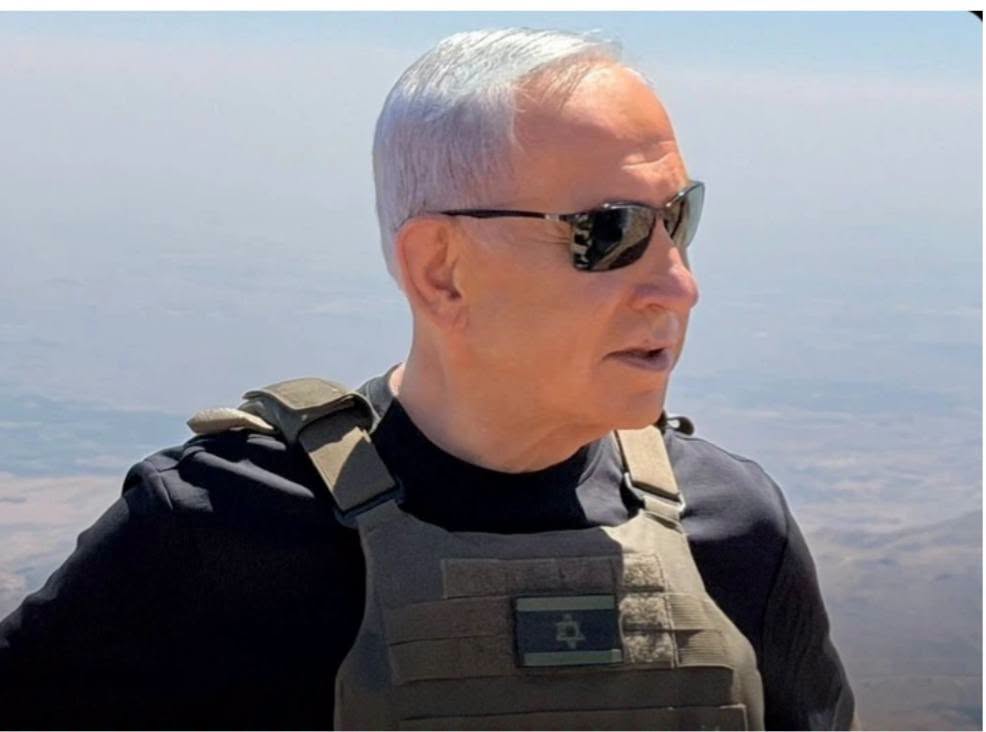
Trump, Netanyahu Rift Hits Rock Bottom: View From Amman

By Saleem Ayoub Quna

The Epic Fury Operation launched by the US against Iran in February 2026, will go down in modern history as the first open military conflict, where a superpower like the United States, has willingly and openly played the role of a war-proxy, on behalf of its smaller ally, Israel.

The difference of attitude between the two close allies, US and Israel, in relation to what they perceived as Iran’s threat, imminent or potential, was a key factor behind the gradual crumbling of the American-Israeli coordinated military and intelligence efforts, to bring down the regime in Tehran.


Israel under Benjamin Netanyahu’s extreme right-wing government, kept saying Iran posed an imminent existential threat to Israel, and therefore it must be brought down by force. While the US position was constrained by its previous international commitments on the issue of Iran’s nuclear ambitions, as stipulated in the 2015 Joint Comprehensive Plan of Action (JCPOA), signed between Iran and the P5+1 powers, during the administration of President Obama.


Since that moment Netanyahu kept vigorously urging, more likely lecturing the US and the West, on the dangers of the JCOPA agreement. When Donald Trump was elected President in 2017, things took an important and completely different turn. In the following year, he took the United States out of that internationally-backed deal as he had promised to do during his election campaign. He also kept his promises of moving the US Embassy to Occupied Jerusalem and recognize the occupied Syrian Golan Heights as part of Israel.


These symbolic and important gestures, whetted Netanyahu’s appetite for more American concessions to Israeli demands.


Netanyahu’s golden opportunity came when Trump was re-elected to his second term in 2023, the same year when Hamas launched its massive assault on the Israeli settlements in the so-called “Gaza enevlope”. Other militias connected and supported by Iran, including the Houthis in north Yemen, Hezbollah in south Lebanon, Syria under the previous regime and Shia factions in Iraq coordinated their efforts to stand by Hamas during that long and unprecedented confrontation with Israel.

For its part, Iran did not shy from making it clear that it helped create this “chain” of resistance factions to encircle Israel from three directions.

The second turning magical point in the US position on the issue of direct military intervention against Iran came about when Israel succeeded in serving Hezbollah, the severest military blow ever, in the pagers’ operation and the subsequent assassination of Hezbollah’s top leaders, including its charismatic Secretary-General Hassan Nasrallah on Sept 27, 2024.


Trump was very impressed with all of that Israeli action and Netanyahu gave himself the full credit for this unexpected success.


Accordingly, Netanyahu’s plan to Trump was simple. Based on the Israeli accumulated intelligence and expertise on the Iranian internal scene and emulating its operation against Hezbollah leaders in Lebanon, accompanied by massive American air strikes would provide both allies with the best chance to finish the Ayatollahs in Tehran once and for all!


But as events unfolded, all of Netanyahu’s plans, personally and strongly endorsed by Trump and his military aides, suddenly started crumbling, one after the other. His relations with Trump slipped into stages of deterioration by the day and week as the closure of the Hormuz Strait by Iran, started hurting the world economy led by the US.


Here new red lights went on and the phone calls between the two men became more intense and vulgar. Then Trump decided to pass on the torch to his deputy, JD Vance, who seemed comfortable to tell Netanyahu what Trump avoided to do!


Conclusion: It is tricky to switch roles of allies in wars. A smaller entity can always stay safe as long as its leaders know the limits of their power and leverage. When people like Netanyahu think they have more power and clout than they actually have, versus their stronger ally, then irritation starts to brew, especially in the case of Trump who likes to show he is always in the driving seat. It also means that the leadership on the side of stronger partner has some problems of its own!


Whether it is a wrangle, rift, collision, divorce or worse between Trump and Netanyahu, we will not know for certain, until the negotiators in Switzerland close their files and head back home!

Continue reading
Hassan Al Karmi: The Dictionary-Maker

EDITOR’S NOTE: This is a tribute article I wrote originally about the Palestinian dictionary-maker who died on 5 May, 2007. It is befitting to reprint now from the hackwriters website because of the enormous contributions this man made to Arabic-English, English-Arabic dictionaries.

I first met Hassan Al Karmi when he was in his 90s. He was still as sharp as a tack. He was living another of his golden ages. He had already 14 Arabic-English, English-Arabic dictionaries under his belt and he was now writing treatises on Islam and the West. After our first meeting to do an article on him that appeared in a local newspaper–not written by me–we became friends and I started to visit him regularly though not as much as I would have liked. He would tell me Marwan keep coming to see me, I want to discuss what is happening in this world that has gone mad!

He first lived alone with only a Sri Lankian maid to look after him although he had numerous old guard friends, part of them his relatives, and part admirers, just happy to be in the company of a man who started to make dictionaries in the 1960s.

Hassan Al Karami made Amman his home in 1990 saying this is where he wanted to spend his retirement and the rest of his life. He came here quite by chance en route to Damascus where his wife wanted to see her original birthplace. Whilst in Amman, she passed away and so Hassan Al Karmi, nom de guerre Abu Zeyad, decided to make his home permanently here. He says he was 87 or there about by then and felt that it was time to come home.

Hassan Al Karmi had lived most of his life in London, and therefore could legitimately be called Anglo-Palestinian as he migrated to Britain in 1948 when Palestine fell to the Zionist occupiers. However, he never forgot his roots.

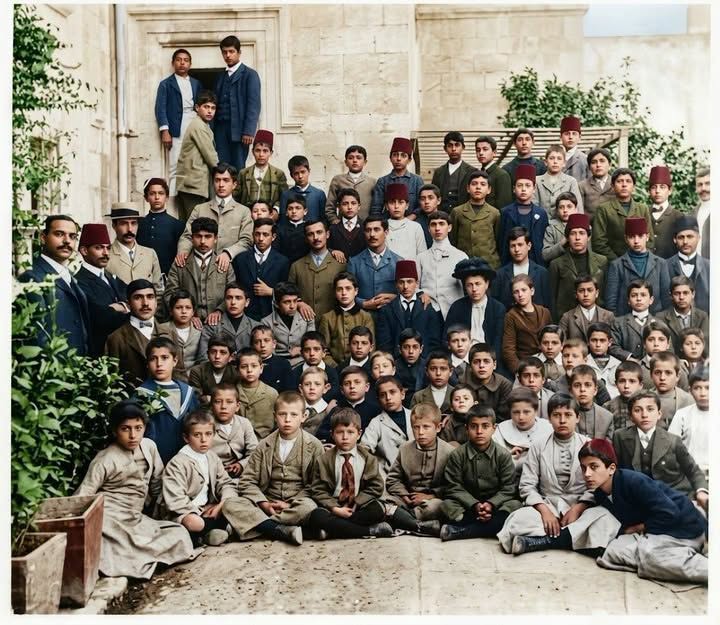
He was a Jerusalemite, born and bred, a teacher and an educational inspector by profession who traveled all over Palestine in the inter-war years from 1918 till 1948. He wasn’t too sure of the exact date of his birth, although he would tell me it was either in 1904 or 1907 but all he would say is he and his family would move at that time freely between Palestine, Syria and Jordan where his father served as chief judge in the 1920s to then Prince Abdallah of Trans-Jordan.

In an unpublished autobiography, Al Karmi vividly describes these years. The information he provides about his life in the various cities of Palestine during the 1920s and 1930s in places like Al Ramleh and Jerusalem are particularly illuminating. The reader receives a sketchy but a clear picture of the educational system in Palestine under the British Mandate with the young Al Karmi moving from one school to another.
From 1948 to 1990 London was to be his home, finding a job at the British Broadcasting Corporation–BBC Arabic–as a language supervisor, checking and correcting the Arabic that was spoken and broadcast to the Arab world. He remained at the BBC till his retirement in 1968, but by then he was known all over the Arab World through his program Qawl al Qawl, “Saying Upon Saying” that started in 1954 and lasted till the 1970s.

This program made him famous, almost a star, heard by many across the Arab world, commoners and kings, intellectuals and princes. He would tell me his presence at the BBC allowed him to meet and interview people like the late Sir Anthony Eden who was British Foreign Secretary at the time of the Suez Crisis in 1956 when Britain, France and Israel attacked Egypt, and he frequently interviewed Glubb Pasha who headed the Arab Legion in Jordan in the early 1950s.

The late King Faisal of Saudi Arabia who was murdered in the early 1970s wouldn’t miss an episode of the program, Karmi told me when they used to meet in the 1960s the king would tell him he was a judicious listener to the program. The late Egyptian President Gamal Abdel Nasser was another admirer, and ordered his own media to emulate the program.

Abu Zeyad was very proud of his BBC series not only because of the many friends he made across the Arab world including the late King Hassan II of Morocco but it helped him to maintain his roots and culture for he would frequently travel to the region to buy books and dissect the knowledge which he would use as quizzes for his program.

And in his London home he built an impressive collection of books, numbering at least 1000, which he left to one of his two daughters, Ghada Karmi, a medical doctor-turned academic, an author, commentator, and now a researcher at Exeter University’s Institute of Middle East Studies. Although the 48-volume collection of “Saying Upon Saying” was brought from London to stay as a cherished prize in his Amman flat.
He only bought a fraction of his books to Amman and some of his dictionaries, a number of which are out of print, but many others still on the market. He used to say to me proudly in actual fact he wrote 14 dictionaries but only eight are published, a great achievement in itself.

His first, Al Manar dictionary, was started in the early 1960s at the height of his career at the BBC, but was published in 1970, it is today long out of print although I managed to see a copy of it in one of the bookshops in downtown Amman.

On occasions I tried to ask him how he actually went about making his dictionaries but at many times his thoughts would seem intellectually scattered and his mind thinking of too many ideas. He was much too concerned with the malaise of the Arab world, arguing there was now another Christian crusade led by the United States against every Arab man and women, young and old.

Words seems to him superfluous if they are not connected to the culture, politics, religion and economics of the region. He looked for social habits and idiosyncrasies, seeing the Arab man as riddled with contradictions that are as much as his own fault as the fault of the globalist culture and the dictation of the outside world, of Bush’s America.

He was an inter-disciplinarian in the way he approached his work. He would always say that making dictionaries was the hardest projects he ever embarked on, but it was one of his priceless projects because it put the course of the Arabic language on a fixed linage and protected it. That’s why an endless amount of reading was required to look at the normative values of Arabic words and phrases, how the Arabic word was used and understood by the ordinary man-in-the street rather than how the intellectual and the pedagogues understood them and handed them down to the plebs.

What made making dictionaries in Arabic harder still he would say is, because unlike English, there is no ready-made references in Arabic and involved looking at words and going back to their origins, dissecting their consonants, or when they were said and come up with modern equivalents but one that ensure consistency and not deviate from the tone, intonation and syntacs.

Of course he had to look at other dictionaries which he brought back to London from his frequent trips to Arabia. Sometimes he would expressly travel to Egypt, Lebanon and Syria to gather what he termed as a book culture which he would ship to his house in London and sift through patiently to understand how one would differ from another and the context in which it is being used.

He thought there was no time to lose, for him time was of the essence, his dictionaries, books and world news was of paramount importance. When he wasn’t preparing one book, he would be seen scribbling in his shaky writing and would at times amusingly say ‘I can’t make head or tail of what I wrote’. On seeing him sign a book for me, his son Zeyad once comment amusingly, ‘take care of the signature, one day it will be very valuable.’

I remember his late 90s, where he would be sitting at his desk or at his favorite armchair with a magnifying glass in one hand and a pen in the other saying I just completed the adding of 10,000 extra words to one of my dictionaries that was to be printed in Beirut, then switching his mind to George W. Bush and his neo-conservatism, curse their politics in Iraq and on Palestine and say ‘why don’t they leave us in peace, we are a peaceful people.

The sum total of all of his printed dictionaries was eight over the span of the 1970s, 1980s and 1990s. They included Al Mughni Al Akbar, (English-Arabic), Al Mughni Al Kbir (English-Arabic), Al Mughni (English-Arabic), Al Mughni Al Waseet (Arabic-English), Al Mughni Al Waseet (American English-Arabic, Al Mughni Al Wajeez (English-Arabic), Al Hadi for Arabic language, Al Hadi Al Waseet, Al Hadi for students).

It was very strange to be in the company of such a man, I never thought of him per se as a dictionary-maker. I suppose I was very privileged to have known a man whose mind was to say the least multi-dexterous, leaping from one idea to another, it simply kept buzzing and enthused with intellectual thought. There was no end to his surprises.

One day I went to see him and out of the blue handed me a book he just published on a cat he had in his inter-war years in Palestine. Would you believe somebody would write a book on his cat, he would tell me, and yet why not, cats are very clever things you know and we should appreciate them more, one day I was trying to get rid of my cat, so I took it 20 kilometers from where I lived and left it there, and when I went back home there it was on my door step, what other animals would have the sense to do that.

He would tell me the story time and again and I would just nod my head and think of his many talents. It was his almost devoutness to knowledge, almost a humbling trait, that would probably stick out as his most basic of his character.

Hassan Al Karmi was not the kind of person who would be sidelined. While many people start becoming peripheral as they enter their octogenarian years, the intellectual caliber of Al Karmi left no room for peripheralism or the sense of being left out on any topic of conversation.

His mind never surrendered to his enfeebled body, and which radiated with sparkles of intellectualism about the moderation and enlightened forces of Islam and the godlessness of the West led by America and George Bush’s version of global domination. Towards his latter years, and through a penetrating historical analysis he came to speak of an embedded alliance between Judaism and Christianity and even supported the coining of the phrase of “Judeo-Christianity” to express an intrinsic relationship between the USA and Israel.

Towards the latter part of his life, his daughter Siham, herself a lady in her 70s and a biology teacher, came all the way from London to be with her father, while the others would try and come as much as possible. He and they shall be remembered as living in two cultures and trying to reconcile themselves with both.

Continue reading
Battle of Wills: Resistance V. Israeli Settlements

By Najla M. Shahwan|

As a part of its broader policy push to increase Israeli settlement presence in the occupied West Bank, Israel has approved recently the construction of more than 2,000 new housing units distributed across several strategic locations.

Pushing to annex more and more of the Palestinian territory Far-right Israeli Finance Minister Bezalel Smotrich has announced a major expansion of illegal settlements in the occupied West Bank.

Smotrich, who holds authority over parts of Israel’s civilian administration in the West Bank, said on 3 June that a planning committee had approved the construction of 2,162 new Jewish homes, of which 1,006 units will be in a new illegal settlement near Jerusalem, 922 near the city of Nablus and 234 near Hebron.

“We are continuing to build the Land of Israel in practice,” Smotrich said in a statement.

The new homes would “strengthen our hold on the land, reinforce Israel’s security, and establish clear facts on the ground that prevent the creation of an Arab terror state in the heart of the country”, he added.

Smotrich has been sanctioned by the United Kingdom, France, and other states, which accuse him of inciting violence against Palestinians.

The minister has denounced the sanctions and said they would not change Israeli policy.

Besides, on June 4, Israeli forces had delivered demolition notices to a number of shops at the intersection of the town of Bazariya, northwest of Nablus, to make way for a colonial road.

Meanwhile, some settlers stormed the village of Deir Sudan, northwest of Ramallah, accompanied by bulldozers, to seize it.

The developments come months after the Israeli government approved a land registration process in February that allowed Israel to take territory as “state property” if Palestinians could not prove ownership.

Palestinians seek the West Bank, including East Jerusalem and Gaza, as part of a future independent state.

Israel, meanwhile, maintains military and administrative control over large parts of the territory, while expanding illegal settlements in several areas.

The settlement expansion comes amid ongoing debate within Israel’s political leadership over the future of the occupied territories.

The Israeli Knesset gave on June 4 final approval to legislation granting tax exemptions to dozens of illegal settlements in the occupied West Bank.

In a statement, the Knesset said lawmakers approved the bill on its final reading, granting tax benefits to illegal settlements located in what it called the “eastern confrontation line zone.”

The legislation was sponsored by Knesset members Zvi Sukkot, from the Religious Zionism party led by Finance Minister

Bezalel Smotrich, and Limor Son Har-Melech, from the far-right Jewish Power party led by National Security Minister Itamar Ben-Gvir, along with other lawmakers.

The bill passed by 32-23 votes. Under the law, occupants will be entitled to tax exemptions throughout the tax year and may choose among available tax benefits if they qualify for more than one exemption.

The legislation is set to take effect in January 2027 and remain in force through Dec. 31, 2027. It also authorizes the finance minister, with approval from the Knesset Finance Committee, to extend its validity for additional periods of up to two years each.

In a report published at the end of May, the Israeli anti-settlement group Peace Now said the law would classify dozens of illegal settlements as areas whose residents are eligible for substantial tax benefits.

The group noted that the original bill sought to extend tax benefits to all settlements but was narrowed due to its high cost and professional objections, ultimately applying to 58 illegal settlements.

According to Peace Now, the updated version primarily includes illegal settlements where support for the Religious Zionism party is particularly strong.

The international community considers settlements built in the occupied Palestinian territory illegal under international law and a major obstacle to a two-state solution.

Netanyahu’s government has openly championed a significant expansion of illegal settlement activity since taking office at the end of 2022. According to Peace Now estimates, more than 750,000 Israeli occupiers live in the occupied West Bank including East Jerusalem.

While some international actors have warned against further annexation or expansion, enforcement measures remain limited.

The United States has historically expressed opposition to settlement expansion, although its positions have varied in intensity depending on administration policy.

On its part US President Donald Trump ‘s administration has been far less critical of the fast-expanding Israeli settlements.

The approval of thousands of new settlement homes further entrenches Israeli presence in the West Bank and complicates already fragile prospects for a negotiated political settlement.

Additionally, settlement expansion changes demographic and geographic realities on the ground, making territorial compromise increasingly difficult and it reinforces perceptions that a viable independent state is becoming harder to achieve.

For Israel, supporters of settlement growth argue it strengthens security and consolidates control over strategically important areas while critics, , say it increases friction with Palestinian communities and fuels long term instability.

However, with diplomatic efforts largely stalled, continued expansion is likely to remain a central flashpoint in the conflict and a key issue in deepening regional tensions.

Najla M. Shahwan is a Palestinian author, researcher and freelance journalist and published this article in the Jordan Times

Continue reading
Oslo: Strangling The Dove

By Dr Khairi Janbek

When we do a recap of the Oslo Agreements, they were a series of accords between Israel and the PLO signed in 1993. It was a process meant to lead to a permanent settlement of the Palestinian-Israeli conflict within five year, including decisions on borders, refugees, security, Jerusalem and settlements.

But right from the start, voices were divided over the process, while for others, the whole idea had a built-in mechanism for failure from the start. The Palestinians started seeing that the Oslo Agreements were neither ending the establishment of Israeli settlements nor the end to occupation, while for the Israelis it didn’t seem to end their security concerns.

Indeed, it is pointless to think which comes first, the chicken or the egg, because two different fears and logistics persisted from the start.  But also, it is important to think about the circumstances which brought about the idea of launching the process, and which did put the PLO in a tough position for being perceived as supporting the wrong side which lost; Iraq.

The room for manoeuvre for the late Yasser Arafat was very tight as he stood to lose the legitimacy of the PLO.

What one is trying to say is that, right from the start, outside official circles, many on the Palestinian side were against Oslo probably as many as was the case on the Israeli side.

The gradual erosion of Oslo mainly through the continued Israeli actions kept feeding extremism on both sides.  Nevertheless, the concept was not revoked by any Israeli government because of its effect on Arab public opinion, pressure which is likely to block any peace initiative. Moreover, the international atmosphere was not conducive for such an initiative.

Having said that, one cannot claim that the international atmosphere is currently more indifferent to the abrogation of the Oslo, rather Israel seems to have more leeway in undertaking unilateral actions with more impunity.

Of course, it is not international law that can be counted on in this respect but rather, at least for the time being Donald Trump’s disapproval of the idea of annexing the West Bank by Israel. This is despite the fact that all the Israeli actions of dividing the West Bank from north to south first and currently from west to east, goes unnoticed. But the important thing has been till now, and don’t say the magic word, end of Oslo.

However, the recent development is that Israeli political parties, the partners in Netanyahu’s government are all pushing openly, for the abrogation of the Oslo agreements and cancelling out all the Israeli obligations towards it.

One can only say such an open declaration is a matter of principle by the Israeli government, because the changes on the ground are there for all to see. One supposes all parties are playing for time to see the end of the Palestinian national aspirations.

The columnist is a Jordanian writer based in Paris, France

Continue reading
100,000 Perform Friday Prayers in Al Aqsa

About 100,000 performed the Salat prayers in Jerusalem’s Al Aqsa Mosque on the second Friday during the holy month of Ramadan. Palestinians from the occupied city of Jerusalem and the West Bank flocked to the mosque compound despite the severe restrictions imposed by the Israeli occupation forces. Despite the checkpoints – Qalandia and the one leading to Bethlehem – 1000s of Palestinians began to assemble in the city since the early morning. Israeli soldiers checked the ID cards of those attempting to enter the city, banning men below the age of 55, and 50 for women from going through the checkpoints. It was reported that anyone below those ages – reportedly 100s of Palestinians – were turned back.

Continue reading