No Israeli Win in Al Shujaiyia!  

The battle for the Al Shujaiyia starts but this will again be a tough fight for the Israeli army who are determined to subdue the area despite high expectations to the contrary.

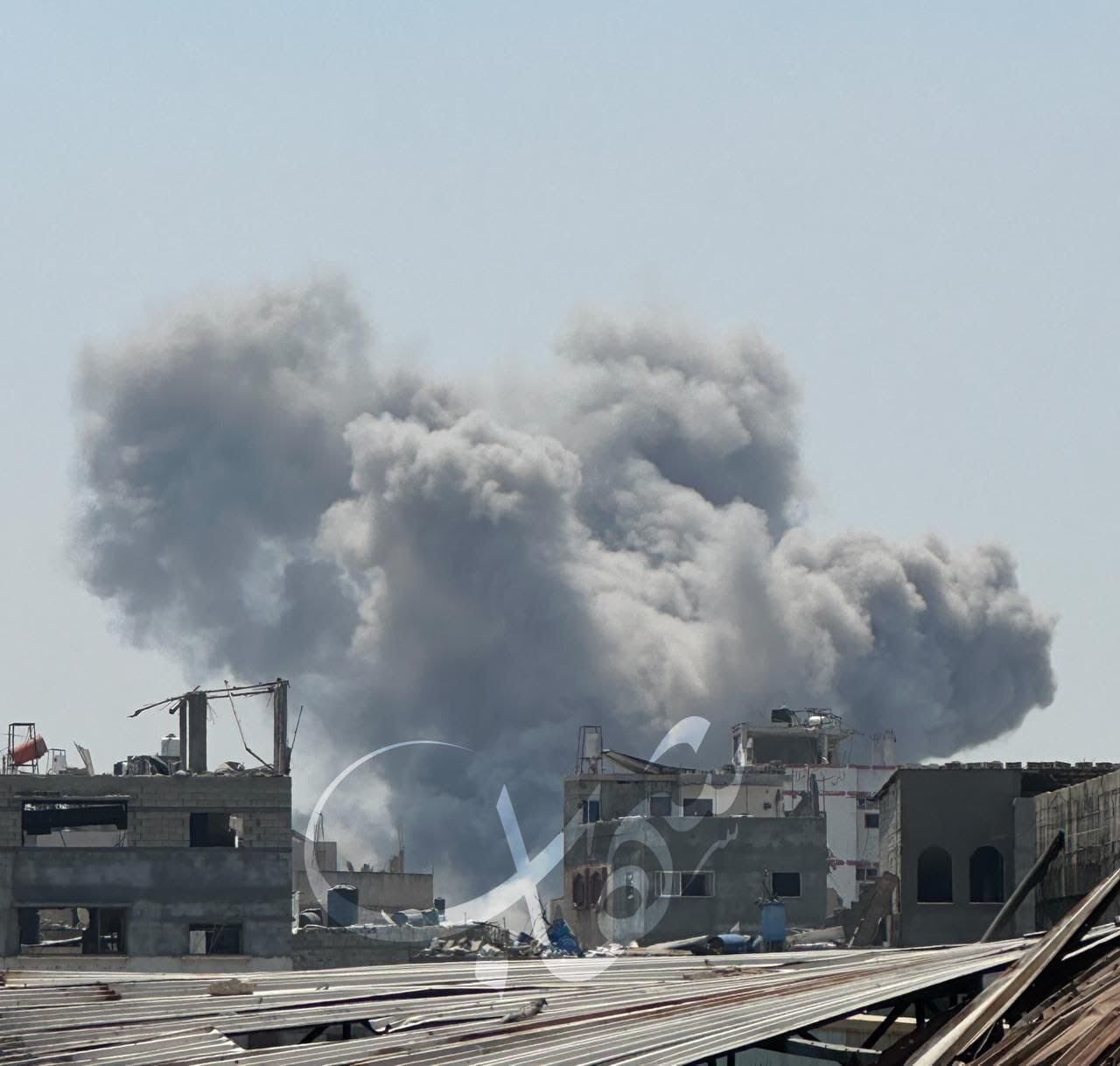
Israeli troops under air-cover and aerial bombardment, are entering the destroyed town for the third time and in as many months but to no apparent success.

For the Israeli army, this neighborhood stands as a sore thumb, and a degrading one. Here, the Palestinian resistance rubbed the noses of the Israeli army despite their high-tech dumb bombs provided by their American backers.

Al Shujaiyia, which lies one kilometer away from the siege into Israel, holds bad memories for the Israeli army. Jewish soldiers know that, so do their superiors but the extreme government of Benjamin Netanyahu does not want to listen.

In Al Shujaiyia the Israeli were marred. Their nervous, trigger-happy soldiers killed three of the Israeli hostages back in December, 2023 under what is euphemistically-termed ‘friendly fire”.  Despite the three opaqually waving white flags and shouting in Hebrew, they were shot point-blank many argue under the Israeli military Hannibal doctrine that states soldiers and hostages should be killed rather than taken alive.

Today Israeli ground troops invade the ruined town yet again, determined to get their pound of flesh and despite the rubble and the wreckage which they instituted.

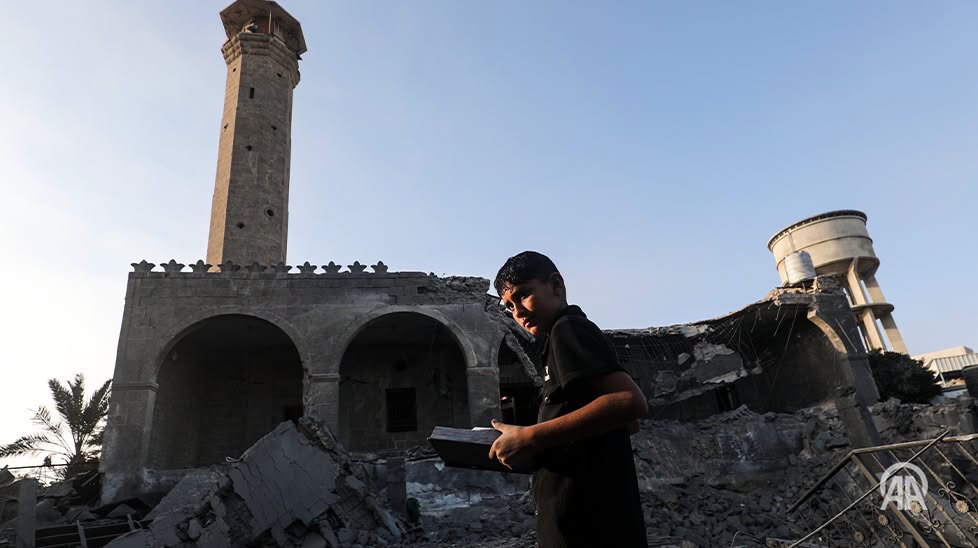
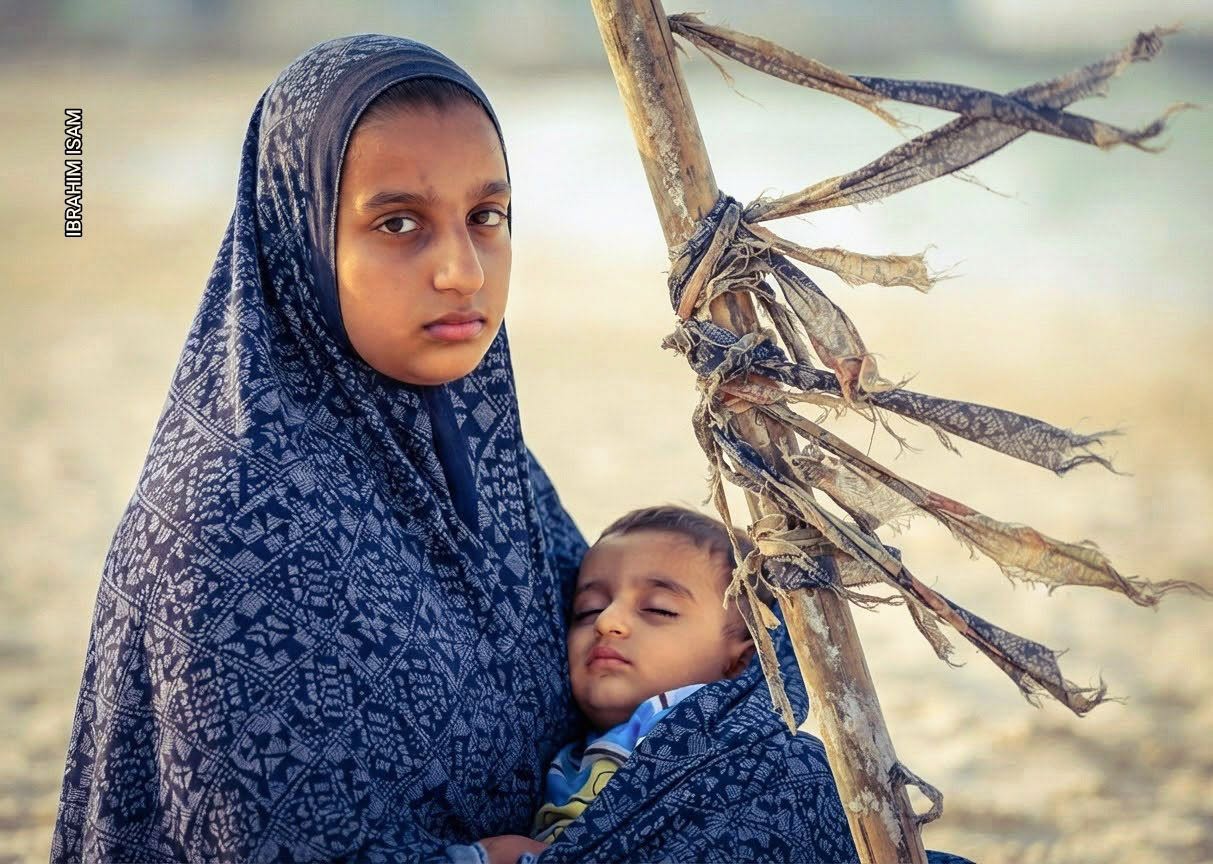
There are no homes here, but people have refused to leave, making do with what they have, living in their bomb-crated homes. But this is another turn story in their “war life”.

 The Israeli army says its invading the beleaguered neighborhood once again because of their intelligence sources saying there are Palestinian resistance fighters here. But this is a surprise. These fighters never left and reformed their strength with maneuverability and slickness.

The Palestinian resistance in Gaza today is a broad movement: They include Al-Quds Brigade, Al-Qassam Brigade, Al-Aqsa Brigade, and the PFLP and are fighting the Israeli occupier in tandem with strategic moves to beat the enemy.

In reality, Al Shujaiyia has always remained resistance territory. It has been the grave of Israeli soldiers. But the Israeli army like to say that as a public relations exercise to give the feeling they are winning. They said that in Jabalia, in Beit Lahia, in Al Zaytoon and in Khan Younis, stressing they entered these places, ended the presence of the Hamas resistance there, and left.

If they quashed the Palestinian resistance there, why would they enter these places many times after?

In the first hours of their entry in Al Shujaiyia, Israeli troops faced at least 10 military operations against them by Hamas and Saraya Al Quds fighters.

The drainage of Israeli troop and hardware losses continued with news of one Merkava 4-tank blown up as well as troop carrier not to say anything about the IED planted bombs on the ashphalt carved Baghdad Road.

Like elsewhere, the army is hoping for victory here, but there seems to be a deluge of Palestinian fighters coming from below grounds to continue the fight against the Israeli occupation invaders. In Al Shujaiyia they will have no respite.

Once historians sit and write the history of this war, they will find Al Shujaiyia has been the toughest for the Israeli army despite the enormous levels of destruction where the fight has been between vastly unequal opponents: Guerilla groups trained in the art of urban warfare versus an unwieldly Israeli army beset by organizational and logistical movements but deadly just the same.

In this war it has been the Palestinian fighters in jeans and home-made missiles from pipe tubes that proved their worthiness over the Israeli enemy.

The entry of Israeli troops however, has caused havoc on the population of Al Shujaiyia which has been a usual affair in this war as civilians have suffered the most. Up till till now they managed to stay in their wrecked homes but no more with reports of hundreds leaving their neighborhood to an even bleaker future.

Its a vicious war machine after nine months of bloody mayhem and conflict. The killings continue, the bombardment never stops and the injured, the lucky few are dragged from under the rubble while thousands are eaten alive by mother earth. At least 15 people were killed in the first few hours of troops entering the neighborhood.

As usual Israeli troops – and they know it – will not be able to get to the resistance fighters. All the Israeli army will be doing – and this is a credit to their already soured professionalism – is create more death, injury, displacement among the civilian population.

  • CrossFireArabia

    CrossFireArabia
    Dr. Marwan Asmar holds a PhD from Leeds University and is a freelance writer specializing on the Middle East. He has worked as a journalist since the early 1990s in Jordan and the Gulf countries, and been widely published, including at Albawaba, Gulf News, Al Ghad, World Press Review and others.

    Related Posts

    World Cup: Trump, Political Footballing and Iran – A View From Amman

    This summer promises to be unlike any previous or future summers in the history of mankind. It will witness an unprecedented convergence of two big, unrelated in substance, events that will be the focus of attention of all nations around the globe. One of those events might and indeed, should tip the balance!

    On the battle grounds of these two big events, tears will be shed, hearts will be broken and plans flopped! On both occasions, the crucial component of vanity in the human brain would develop into a dubious concept that in each game you play or a confrontation you get involved in, you must be the winner, no matter what!

    What would the other side be saying?

    As the clock ticks forward, the hostilities in the Middle East or more precisely the off-and-on-rounds of ‘war of choice’ by the US and Israel against Iran’s plans for itself and the region, bounce up and down in a blurred fashion; making it difficult, to see whether those hostilities will continue, as the Israeli Prime Minister wants them to, or whether they will be ordered by Donald Trump to stop, even temporarily, but for completely different reasons.

    President Trump’s interest and role in this affair is central and crucial, not only because his country, along with Mexico and Canada, will host the football tournaments matches and because his army is stuck in the quagmire he helped to create in the Middle East since June 2025.

    Now and in these final hours before the big sports event kicks off next week, the political ball is also being played, openly bouncing back and forth by Benjamin Netanyahu, Trump and Iran, each according to a specific domestic political agenda and in a dramatic fashion. Indeed, it could threaten the destiny of FIFA’s well-planned agenda, at the expense of letting Israel  continue its quasi-impossible crusade against Iran!

    Trump on the other hand, and besides the other signs he gave, might opt for a peaceful outcome to his quarrel with Iran. He has few other concerns at home such as the 250th anniversary of his country’s independence, his own birthday party to celebrate, rising prices of gas and inflation to curb, local partisan elections and opinion polls to worry about; lastly off course, he has to guarantee the smooth running of the world cup matches in his country for a whole month.

    Now let’s dig deeper in this business of political footballing. 

    The US and Iran according to the FIFA program belong to two different groups: Fourth and seventh. To qualify for the second level of the tournament, each has to play three matches and win. The US against Paraguay, Australia and Turkey. Iran against New Zealand, Belgium and Egypt. 

    Both teams have reasonable chances to pass through this first stage.

    Let’s imagine that after a month-long matches between the 48-competing nations, Iran and the US end up facing each other in the final match for the world trophy.

    In such a case, heads of states whose teams were playing, are supposed to be present watching and cheering their teams from the premium seating area. Whoever the winner might be, the players, coaches and political leaders would be approaching each other and shaking hands. One saying: “Congratulation” and the other: “Hard luck”! 

    One more time, picture Donald Trump and Mojtaba Khamenei shaking hands and exchanging these words live, while the whole world is watching!

    At such a moment, the real war back on the grounds of the Middle East, would not be more than a fading ripple on the surface of a remote lake!     

    Continue reading
    ‘I Hate Israel’

    By Ismail Al Sharif

    On 4 June, the Pew Research Center released a survey titled: “Most People in 36 Countries Have a Negative View of Israel and No Trust in Netanyahu.”

    The study, which polled 44,657 people worldwide, revealed that negative views of Israel have become prevalent in most of the surveyed countries. On average, 67% of respondents hold a negative view of Israel, compared to only 25% who expressed a positive one.

    Notably, the study found only a handful of countries—no more than a handful—where Israel enjoyed a positive view among the majority of their people.

    Perhaps most importantly, this decline is no longer limited to Muslim-majority countries or societies historically known for their negative stance toward Israel. It now extends to Western countries whose people were traditionally considered supporters of Israel.

    In Europe, North America, and Australia, negative views are growing, particularly among young people and those on the political left. The study indicates that young people in several countries hold more negative views of Israel than the older generations there, making the crisis far from a passing phenomenon and giving it a generational character that could have long-lasting effects.

    The study also shows the division over Israel has become clearly ideological. In the United States, for example, liberals hold far more negative views than conservatives, and young Americans are more critical of Israel than the older generations. This pattern is repeated in other Western countries, where the left tends to hold even more anti-Israel positions than the right.

    President Donald Trump was right when he told the war criminal [Benjamin] Netanyahu in a phone call that the world hates him; the world’s hatred for him even surpasses its hatred for Israel. The study found that a majority in most countries do not trust him. In the United States, 59% of respondents do not trust him, compared to only 27% who do. Even among American Jews, although the positive view of Israel remains relatively high, trust in Netanyahu appears to be significantly low.

    The study also indicates that some countries register very high levels of negativity toward Israel, such as in Turkey, where the negative view reached 97%. In the West Bank and East Jerusalem, 85% expressed a negative opinion, compared to only 4% who expressed a positive one. It should be noted that the study did not include Gaza.

    The few remaining points of support are mainly confined to some African countries, such as Kenya and Ghana, due to Zionist influence in them, but they do not amount to a clear majority in support of Israel. As for Netanyahu, he enjoys the trust of a majority of the population in only two countries: Kenya and the Philippines, where he is seen as a strong leader.

    Unfortunately, this study did not include the opinion of Jordanians regarding Israel or the war criminal Netanyahu, an opinion that, in reality, does not require extensive polling. The Jordanian position on Israel and Netanyahu is well-known and consistent, and is confirmed by other studies. 

    A recent Arab Barometer survey revealed that Jordanians’ view of Western policies has sharply declined due to the Gaza war, with 81% believing that the United States defends Zionist interests. A 2023 Washington Institute poll found that 84% of Jordanians oppose establishing trade relations with Israel, even if they bring economic benefits to Jordan, and 76% refuse to accept humanitarian aid from Israel, even in times of disaster.

    A 2025 survey of Jordanian university students showed that 92.6% consider Israel as the “main enemy” of Jordan and the Arab world.

    Besides Jordan, the study omitted the countries surrounding Israel: Egypt, Syria, and Lebanon. This omission is perhaps questionable, as the populations of these countries hold a deeply negative view of Israel and its prime minister. Their figures would have provided conclusive evidence that Israel remains a foreign entity in the region, despite peace agreements and economic interests that have failed to alter public opinion.

    These figures would have raised broader questions among the world’s populations about the very notion of Israel’s acceptance within its surrounding region. If this entity is indeed surrounded by such rejection and hatred, then the logic of history and geography dictates that the region will ultimately reject it.

    This article was first published in the Arabic Addustour daily newspaper and reprinted in crossfirearabia.com

    Continue reading

    You Missed

    Palestinian Journalists Under Attack – 55 Israeli Violations in May

    Palestinian Journalists Under Attack – 55 Israeli Violations in May

    Jordan Footballers Delighted For World Cup Matches

    Jordan Footballers Delighted For World Cup Matches

    World Cup: Trump, Political Footballing and Iran – A View From Amman

    World Cup: Trump, Political Footballing and Iran – A View From Amman

    A Red Flower And a Little Love

    A Red Flower And a Little Love

    Diving in a War Zone

    Diving in a War Zone

    Netanyahu, Iran and The ‘Destructive’ Israeli Personality

    Netanyahu, Iran and The ‘Destructive’ Israeli Personality