Pitfalls of Hormuz

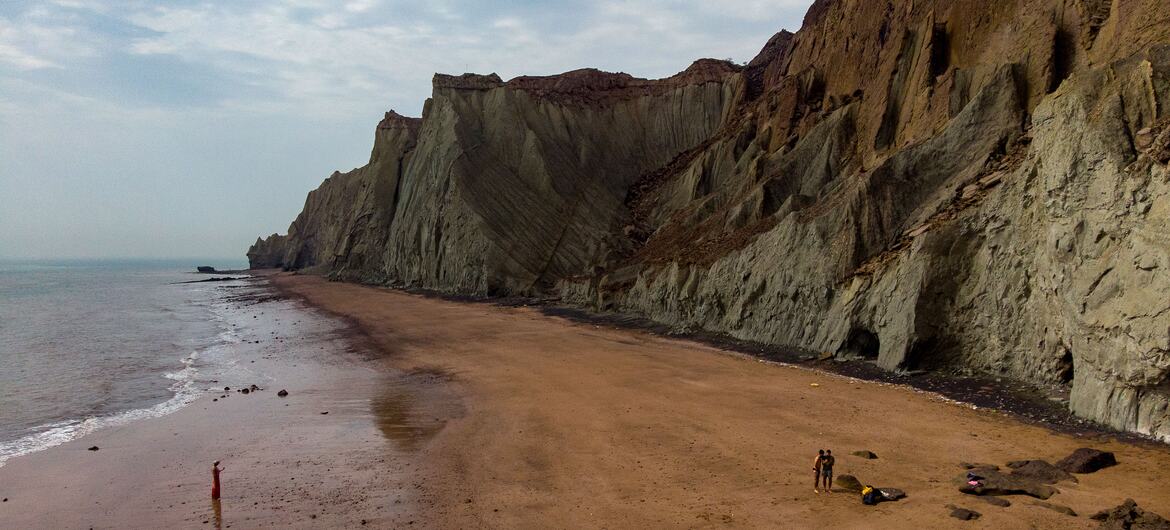
Renewed attacks on shipping in the Strait of Hormuz unsettled energy markets on Wednesday and prompted calls from the UN maritime agency, IMO, for “maximum restraint and de-escalation”.

Amid reports that three merchant vessels were hit along with Iranian targets, IMO Secretary-General Arsenio Dominguez condemned “reckless attacks” in the past two days against several ships transiting the narrow waterway, a vital conduit for a significant proportion of the world’s energy needs.

Huge risk, warns Guterres

UN Secretary-General António Guterres said the resumption of strikes and counterstrikes between the United States and Iran in the past 24 hours were “alarming” and risked derailing diplomatic progress made since a ceasefire framework was agreed in April.

A return to full-scale hostilities would have catastrophic consequences for the peoples of the region, for international peace and security, and for the global economy as a whole,” said UN Spokesperson Stéphane Dujarric.

“These reckless attacks have again placed innocent seafarers in grave danger. No seafarer should have to risk their life simply for doing their job,” Mr. Dominguez said, as he warned flag States, shipowners and operators not to expose seafarers to “unnecessary danger” by transiting the Strait.

Why this matters:

  • Renewed Hormuz attacks trigger global energy security concerns
  • Guterres warns of catastrophic consequences for region and global economy if full blown US-Iran war resumes 
  • Thousands of seafarers remain stranded amid shipping disruptions
  • UN warns prices and supply volatility may worsen
  • Heatwaves could intensify energy demand and infrastructure strain

Some 6,000 seafarers remain stranded in the channel on hundreds of vessels which used to transit at a rate of around 130 a day.

That number is vastly reduced today, although shipping levels picked up before the latest escalation, in line with an agreement on a temporary ceasefire – part of a memorandum of understanding – last month between the United States and Iran.

Responding to the latest escalation, the UN economic commission for Europe, UNECE, said that the already challenging situation for countries which rely on energy from the Gulf was set to continue, after more than 100 days of disruption.

We can expect prices and price volatility to remain high and supply disruptions – especially in local markets – to continue for the months ahead,” said Dario Liguti, Director of Energy, Housing and Land Management Division at the UN Economic Commission for Europe.

The senior UN economist explained that although a global shortage of fuel and fertilizers has been avoided, the effects of this year’s disruption will still be felt “even if the situation normalizes rapidly”. Strategic oil reserves are also at their lowest levels for decades, Mr. Liguti stressed.

If the instability does continue, we should get ready for another rise in prices and a larger-scale raw material shortage,” he told UN News.

Heatwaves fuel uncertainty

A further complication compounding these shocks are this summer’s extreme heatwaves, fuelled by a strong El Niño which is forecast to strengthen in the coming months and “increase energy consumption for cooling, impact energy infrastructure, and affect water availability for power plant cooling”, Mr. Liguti explained

To counter these impacts – including on public transport networks – the UNECE official stressed the need to urgently build resilience to renewed energy shocks, to save energy through efficiency measures, reduce pressure on limited resources by cutting overall energy consumption and stock up on reserves.

“Longer term, we are also seeing renewed interest in many countries in investing in domestic energy production and distribution capacity and renewables,” Mr. Liguti noted. UN News


  • CrossFireArabia

    CrossFireArabia
    Dr. Marwan Asmar holds a PhD from Leeds University and is a freelance writer specializing on the Middle East. He has worked as a journalist since the early 1990s in Jordan and the Gulf countries, and been widely published, including at Albawaba, Gulf News, Al Ghad, World Press Review and others.

    Related Posts

    Gaza: Only 3% of Land Safe to Grow Food

    Amid ongoing deadly hostilities in Gaza, the enclave’s farmers face the increasingly difficult challenge of finding safe land to grow their crops.

    Satellite images published last Tuesday in news analysis from the UN Food and Agriculture Organization (FAO) and UNOSAT, the UN Satellite Centre, indicate that just three per cent (448 hectares) of the shattered enclave’s farmland remains usable. 

    In October 2025, only 601 hectares were accessible and undamaged.

    This latest assessment paints a stark picture of the continued deterioration of Gaza’s agriculture sector,” said Rein Paulsen, Director of FAO’s Office of Emergencies and Resilience. “Without urgent action to restore safe access and provide farmers with the support they need, opportunities to restore local food production will continue to diminish.”

    Bombed out

    For cucumber and tomato grower Taysir Dahdouh, the war between Hamas fighters and Israel sparked by Hamas’s deadly attacks in October 2023 has been marked by overwhelming loss.

    “I had a good income before the war,” he said. “Suddenly, we were left with nothing…Even the steel frames of the greenhouses disappeared, along with our homes, belongings, and irrigation pipes. Nothing was left.”

    After returning from displacement, Mr. Dahdouh tried to restore the land using basic tools, working with his family. “We managed to rehabilitate about one dunum (about one-tenth of a hectare) of our land to bring it back to life,” he explained.

    Another Gaza farmer, Wajiha Dahdouh, highlighted other equally serious problems: “We came back to support ourselves and return to farming so we could survive. Unfortunately, there is not enough water, there are no fertilizers, no seeds, and none of the basic necessities that would allow people to continue their lives.”

    Squeezed out

    The reduced growing space for Gaza’s farmers today is mainly the result of a lack of access, rather than additional damage from the war, which was already massive.

    In June 2026, just over 4,000 hectares of cropland in Gaza – or 27 per cent – could be reached, but approximately 3,600 hectares of this was unfit for planting.

    Farmers in Deir al-Balah and Khan Younis have seen the largest reductions in available land, FAO said. 

    This is primarily because of the “westward expansion” of the so-called ‘Yellow Line’ that separates the ceasefire zone from the Israel Defense Forces’ military-controlled area.

    Rafah in the far south of Gaza has the highest levels of inaccessible cropland and greenhouse growing areas, at 97.2 per cent and 98.4 per cent respectively.

    “The most extensive physical damage remains concentrated in North Gaza and Gaza governorates,” the agency noted. Most damage is in North Gaza and Gaza, satellite images show.

    An infographic showing a map of Gaza and a bar chart illustrating the percentage of cropland that is damaged or accessible in 2025 and projected for 2026.
    Lucica Matei UN News infographic

    The situation for Gazans remains dire. Just this weekend, UN partners reported multiple air strikes and incidents of shelling, gunfire and naval fire, primarily west of the Yellow Line, where most of Gaza’s 2.1 million people are now confined to an area less than half the size of the enclave. UN News

    Continue reading
    Gaza: Lolo Heriz Finally Buried After 975 Days

    After she was killed in an Israeli airstrike, the body of Palestinian bride Lolo Heriz was recovered from beneath the rubble of her family home in Gaza. Lolo was killed on 18 December, 2023, alongside members of her family.

    Continue reading

    You Missed

    Palestine: Heritage, Folklore

    Palestine: Heritage, Folklore

    Gaza: Only 3% of Land Safe to Grow Food

    Gaza: Only 3% of Land Safe to Grow Food

    Gaza: Lolo Heriz Finally Buried After 975 Days

    Gaza: Lolo Heriz Finally Buried After 975 Days

    57th Year of Al Aqsa Burning: ‘The Fire Continues’ Ekrima Sabri Warns

    57th Year of Al Aqsa Burning: ‘The Fire Continues’ Ekrima Sabri Warns

    Remember Hind Rajab

    • By Heba
    • August 20, 2026
    • 16 views
    Remember Hind Rajab

    A ‘Palestinian’ Palace in Jerusalem

    A ‘Palestinian’ Palace in Jerusalem