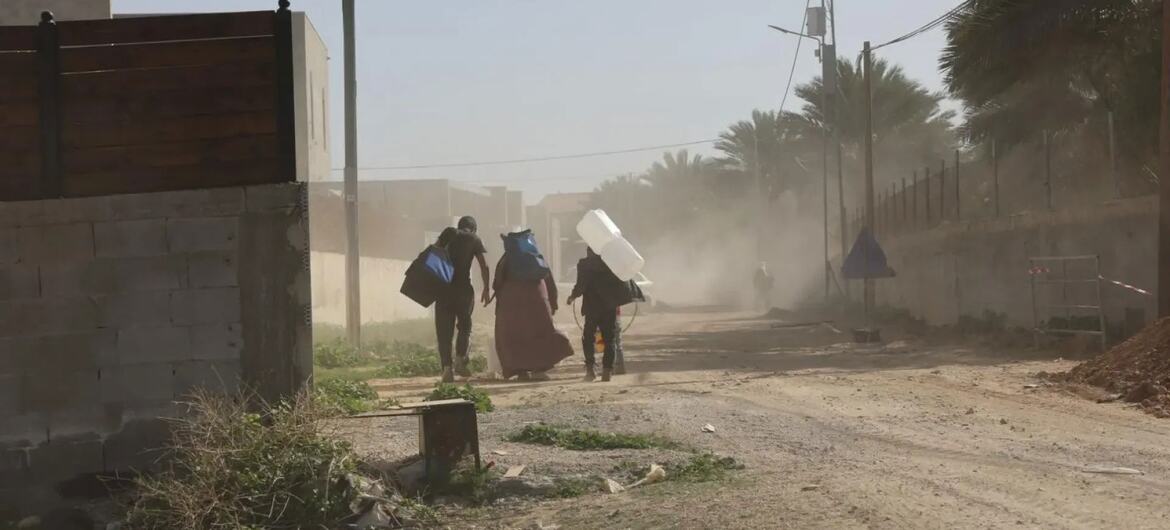
So History Doesn’t Forget: Israel Killed 21,500 Children in its War on Gaza

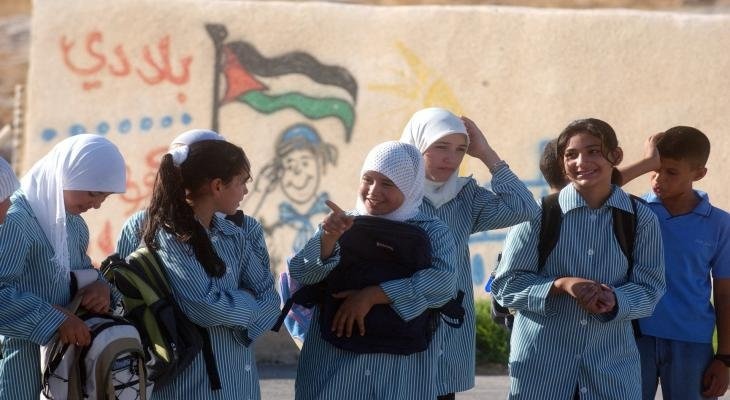
After 1000 days of the Israeli offensive on the Gaza Strip, children face death, injury, hunger, orphanhood, and displacement, amidst a decline in protection, healthcare, and education services.

On June 19, 2026, UNICEF stated that the ceasefire declared in October 2025 had become, for the children of Gaza, a “cruel and deadly illusion,” given the continued killing and injuries, and the restrictions on medical and food supplies.

According to statistics from the Government Media Office in Gaza, Israel has killed 21,500 children since October 8, 2023, up to July of this year.

Among the dead are more than 520 infants born during the Israeli offensive who were killed in it, according to the same source.

Additionally, 1,022 children under the age of one have been killed.

A Generation’s Toll

A report by the Palestinian Central Bureau of Statistics showed that children constituted approximately 30 percent of those killed and 26 percent of those injured up to the end of 2025.

Additionally, 10,500 children suffered life-altering injuries, and more than 1,000 children underwent amputations.

Nearly 4,000 children face the risk of death unless they receive urgent medical evacuation for treatment outside the Gaza Strip, given the shortage of medicines and medical supplies.

Truce Without Protection

The killing of children did not stop with the implementation of the ceasefire agreement on October 10, 2025.

UNICEF stated that on June 19, 265 Palestinian children were killed in the Gaza Strip since the ceasefire was declared, an average of almost one child per day for more than eight months.

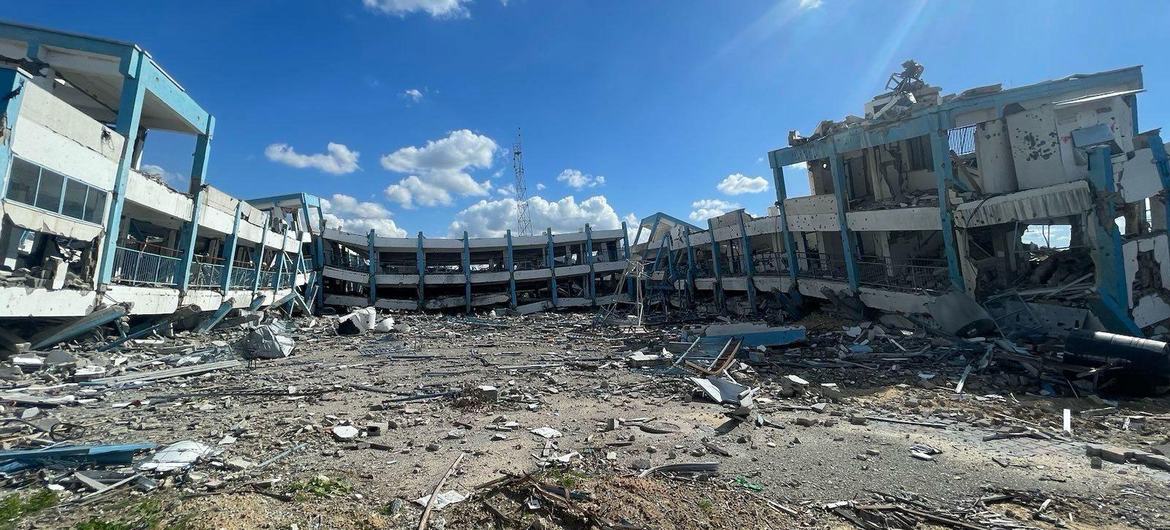
The UN organization added that more than 400 children were injured during the same period, many with life-altering injuries, noting that some were killed inside their homes, tents, schools, and/or while playing.

UNICEF warned against normalizing the levels of child killings and injuries during the ceasefire.

Memory of the Bombing

Among the stories of Gaza’s children:

– Premature Infants: On November 10, 2023, the Israeli army stormed Al-Nasr Children’s Hospital in western Gaza City, forcing medical staff to leave under fire and refusing to evacuate premature babies. This resulted in the deaths of five infants, according to the Gaza Ministry of Health.

After the Israeli army withdrew from the Al-Nasr neighborhood, the bodies of the five infants were found decomposing inside incubators and on hospital beds, having been denied treatment.

– Youssef… “His hair was curly and fair”: On October 21, 2023, Youssef’s mother, whose son was 7 years old, searched for him among the wounded in a Gaza hospital, saying: “His hair was curly and fair, and he was sweet.”

Hours later, she found him dead inside a morgue refrigerator after an Israeli bombing.

– Reem… “The Soul of My Soul”: In November 2023, an Israeli airstrike killed three-year-old Reem and her brother, Tariq. Her grandfather, Khaled Nabhan, famously said, “The soul of my soul,” as he bid her farewell.

– “Is this a dream or reality?”: In December 2023, a child pulled from the rubble asked her doctor, weeping, “Is what’s happening a dream or reality?”

– Hind Rajab… “Please come and get me”: In January 2024, six-year-old Hind Rajab pleaded with the Palestinian Red Crescent to rescue her from a car surrounded by Israeli tanks after her relatives were killed. Twelve days later, her body and the bodies of the two paramedics who went to rescue her were found.

Sidra… A Torn Body Hanging from the Wall: In February 2024, Sidra Hassouna, 7, was killed along with her twin sister, her parents, and several relatives in an Israeli airstrike in Rafah. Her torn body was found hanging from the wall of her home.

Hunger Kills Children

Since the start of the conflict, 157 children have died from hunger and malnutrition, and another 25 have died from the cold and frost inside displacement camps.

The Palestinian Central Bureau of Statistics (PCBS) cited a report by the United Nations Office for the Coordination of Humanitarian Affairs (OCHA), issued on March 18, stating that more than 3,700 children aged between 6 and 59 months were admitted to malnutrition treatment programs during February 2026.

Among them, more than 600 children suffered from severe acute malnutrition, a condition requiring urgent medical and nutritional treatment.

Although the figures were lower than in January, when the number of children admitted for treatment exceeded 4,600, including 890 severe cases, the numbers still indicate the continuation of the food crisis, according to the PCBS.

The data shows that 64 percent of children consume only two or fewer food groups daily, while more than 90 percent do not receive the minimum required dietary diversity.

More than 60 percent of children suffer from acute food insecurity, which threatens their physical and mental development.

Among the children who died due to malnutrition and lack of treatment:

2024:

– February: Two infants died from dehydration and malnutrition; their names were not released.

– March: Yazan al-Kafarna, 10 years old, died.

– May: Fayez Abu Aita, 7 months old, died at Al-Aqsa Martyrs Hospital in the central Gaza Strip.

– July: Hikmat Raad Badir, 6 years old, died at Al-Aqsa Martyrs Hospital, and Ali Anas al-Tatar, 6 years old, died at the Baptist Hospital in Gaza City.

2025:

– May: Jinan al-Sakafi, 4 months old, died at al-Rantisi Hospital, and Muhammad Mustafa Yassin, 4 years old, died.

August: Infant Rania Ghabban died at Al-Rantisi Hospital in Gaza City, along with infants Rasel Abu Masoud (2 months old), Ghadeer Breika (5 months old), Mohammed Zakaria Asfour (1 year and 4 months old), and Roua Mashi (2 years old) at Nasser Hospital in the southern Gaza Strip.

58,000 children lost their parents

The Palestinian Central Bureau of Statistics (PCBS) quoted UNICEF as saying that more than 58,000 children in the Gaza Strip lost one or both parents as a result of the war.

These children face… A thousand days after the Israeli offensive on the Gaza Strip, children face death, injury, hunger, orphanhood, and displacement, amidst a decline in protection, healthcare, and education services. Anadolu

  • CrossFireArabia

    CrossFireArabia
    Dr. Marwan Asmar holds a PhD from Leeds University and is a freelance writer specializing on the Middle East. He has worked as a journalist since the early 1990s in Jordan and the Gulf countries, and been widely published, including at Albawaba, Gulf News, Al Ghad, World Press Review and others.

    Related Posts

    Jabal Al-Weibdeh: An AI Art Story

    EDITOR’S NOTE: This is the story of Jabal Al-Weibdeh generated by AI. Its detailed, historical, imaginative, exciting and well-read, done in no more than few minutes. Bang goes the days when writers and journalists would hark on pencil and paper and computer for hours and tomorrows while screaming and pulling off their hairs to make sure they got their thought in the right order. Here is a perfectly good story with references. Below is the original headline generated by AI.

    Jabal Al-Weibdeh: Where Amman Remembers Itself

    There are neighborhoods one visits for their monuments, and others one remembers for their atmosphere. Jabal Al-Weibdeh belongs firmly to the latter. Its story is not contained in a single building or museum. It is scattered among stone houses and garden walls, old staircases descending toward downtown, galleries hidden behind gates, balconies shaded by trees, and streets bearing the names of poets.

    Perhaps the best way to understand Al-Weibdeh is simply to walk through it. And there is no better place to begin than at its eastern edge, at Darat al Funun – The Khalid Shoman Foundation.

    Where Art Meets the Ancient City

    Darat al Funun seems almost to grow out of the hillside. Below it lies the dense fabric of downtown Amman; above it, Al-Weibdeh begins its gradual climb.

    The setting itself tells several chapters of Amman’s history at once. The art house occupies six historic buildings and warehouses, while archaeological remains in its gardens reach much further back into the city’s past. The main house was built around 1918, beside the remains of a sixth-century Byzantine church built over an earlier Roman site. (Darat al Funun⁠)

    Today, contemporary Arab art inhabits these old rooms. Paintings hang where families once gathered; artists and researchers work in buildings that were originally homes. Architecture, archaeology and contemporary art coexist rather than compete.

    That combination makes Darat al Funun an appropriate doorway into Al-Weibdeh, because the neighborhood itself works in much the same way. It does not erase one period to make room for another. It accumulates them.

    From the terraces of the Darat, downtown appears almost within touching distance. This geographical relationship matters. Al-Weibdeh was part of the moment when Amman began climbing out of its central valley in the early 20th century. As the commercial town below expanded, residential neighborhoods spread onto the surrounding hills, including Jabal Amman and Jabal Al-Weibdeh. (Darat al Funun⁠)

    Walking uphill from Darat al Funun is therefore, and in a sense, walking through the story of Amman’s expansion.

    The Houses as Portraits

    The architecture soon becomes part of the walk.

    Look beyond the apartment buildings and shopfronts, Al-Weibdeh reveals an extraordinary collection of early Ammani houses: Pale limestone façades, arched openings, columned porches, high ceilings and gardens where jasmine, citrus and old trees soften the stone.

    Some of the houses constructed here in the 1920s drew on architectural traditions then fashionable in eastern Mediterranean cities such as Beirut, Haifa and Jaffa. The early houses associated with Darat al Funun, for example, show Venetian influences and typically use a central-hall plan with rooms arranged symmetrically on either side. Darat al Funun’s architectural history notes that at least 30 houses of this period and style were built in Al-Weibdeh alone. (Darat al Funun⁠)

    This helps explain why walking through the hill sometimes feels less like moving through a planned district than through an architectural album.

    Each house has a personality.

    One of the neighborhood’s remarkable surviving residences is the Abdel Badi’ Yash House, remembered particularly for its richly worked stone and architectural detailing. Another is associated with former prime minister Suleiman Al-Nabulsi. Historical accounts of the neighborhood also identify houses connected with poet and statesman Fouad Al-Khatib, while one of the historic buildings incorporated into Darat al Funun became known as the Blue House. (Thaqafat⁠)

    These names matter, but not simply because prominent people lived here. They point toward something larger: Al-Weibdeh was once a residential meeting ground for political figures, writers and artists. This helps explain why walking through Al-Weibdeh sometimes feels less like moving through a planned district than through an architectural album.

    The cultural identity that the neighborhood possesses today did not suddenly arrive when galleries opened. In many ways, the galleries inherited a landscape that was already cultural.

    An Open-Air Gallery

    Continue upward and art begins to appear almost casually. A gallery may occupy an old villa. A studio sits behind an ordinary door. A framed artwork appears in a window. The distinction between residential and cultural space becomes pleasantly uncertain.

    Among the important institutions associated with the neighborhood is Dar Al-Anda Art Gallery, itself housed in a heritage building dating to the 1930s and overlooking old Amman. (Dar Al-Anda Art Gallery⁠)

    There is also Wadi Finan Art Gallery, alongside smaller contemporary spaces and studios such as the Overlooking Al Weibdeh Gallery. The neighborhood has long hosted artists’ studios, cultural associations and institutions connected with writers, visual artists and performers. (Hagzi⁠)

    This concentration has gradually turned Al-Weibdeh into something larger than a district containing galleries.

    The neighborhood itself has become a gallery.

    Its architecture supplies the walls; its gardens provide the installations; its staircases create unexpected perspectives; and the city below becomes the backdrop.

    Paris Square: The Neighborhood’s Living Room

    Eventually the streets lead toward Paris Square, still remembered by many older Ammanis by its earlier name, Hawooz Circle after the water reservoir once associated with the site. (Alghad⁠).

    If Darat al Funun represents Al-Weibdeh’s contemplative side, Paris Square represents its social one.

    Here the neighborhood opens up.

    People sit outside cafés. Residents cross paths with students, artists, expatriates and visitors. Small shops survive alongside newer restaurants and creative businesses. Conversations spill from tables onto pavements.

    Paris Square does not overwhelm which is it precise attraction.

    Unlike the monumental squares of grand capitals, it operates at the scale of a neighborhood. It feels closer to a living room than a civic plaza.

    And around it remains the stone houses that prevent the area from becoming simply another fashionable café district. They remind the visitor that the life visible today is taking place inside a much older urban framework.

    That tension is central to contemporary Al-Weibdeh.

    It is fashionable, but old.

    Cosmopolitan, yet unmistakably Ammani.

    Residential, yet cultural.

    Quiet in one alley and intensely social around the next corner.

    Streets Named for Poets

    Even the street signs participate in Al-Weibdeh’s cultural character.

    Throughout the neighborhood appear the names of poets, writers and thinkers: Ahmad Shawqi, Hafez Ibrahim, Ibrahim Touqan, Al-Akhtal and others. Accounts of Al-Weibdeh have remarked on this unusual concentration of literary names. (Al Arabi⁠)

    There is something wonderfully appropriate about it. In a neighborhood populated by galleries, writers, painters and old houses, one navigates geographically through literature.

    A poet becomes an address.

    A writer becomes a corner.

    Culture becomes part of the map.

    Toward the National Gallery

    From Paris Square, continue westward through the quieter streets toward Muntazah Park and the final cultural landmark of the walk: the Jordan National Gallery of Fine Arts.

    The transition is subtle. The tightly woven residential streets begin opening toward green space until art reappears, this time not inside a converted private home but as a national institution.

    The Gallery’s buildings house its permanent collection as well as visiting and local exhibitions, with a specialized library devoted to art, design and architecture. (nationalgallery.org⁠)

    There is something fitting about ending here.

    The journey began with contemporary Arab art inhabiting historic houses overlooking downtown and ends with a national collection surrounded by the everyday life of Al-Weibdeh.

    Between the two lies the neighborhood itself. And perhaps that is Al-Weibdeh’s greatest artwork.

    A Balcony Over Downtown

    To understand the importance of Jabal Al-Weibdeh, however, one must finally look beyond Al-Weibdeh.

    Look downhill. Downtown Amman is never far away.

    Staircases and steep streets physically connect the neighborhood with the old commercial center below. Historically, this proximity was fundamental: Al-Weibdeh emerged as Amman expanded beyond the valley and climbed onto its surrounding hills. (Darat al Funun⁠)

    So Al-Weibdeh occupies a fascinating position in the geography of the capital.

    Below it lies the older commercial Amman of markets, mosques, churches, cinemas, cafés and crowded streets. Beyond it lies the Amman that continued expanding westward—larger roads, newer neighborhoods, towers and commercial developments.

    Al-Weibdeh sits between these worlds.

    It is close enough to downtown to remain part of old Amman’s memory, yet elevated enough to have developed a quieter residential identity of its own.

    That makes preserving it important for reasons that go beyond nostalgia.

    Cities need places where their different historical periods remain visible at the same time. Without them, urban history becomes something encountered only inside museums.

    In Al-Weibdeh, history remains inhabited.

    People still drink coffee beneath balconies built generations ago. Children pass houses that belonged to politicians and poets. Contemporary artists exhibit inside old villas. Galleries preserve buildings by giving them new lives. Elderly residents remember the Hawooz Circle while younger generations meet their friends at Paris Square.

    And at the edges of the neighborhood, the stairways still descend toward downtown.

    Perhaps this is why Al-Weibdeh occupies such a particular place in Amman’s imagination.

    It is neither a frozen heritage quarter nor simply a fashionable arts district. It is one of the places where Amman can still see the different versions of itself existing together.

    Start at Darat al Funun, climb slowly toward Paris Square, wander among the galleries and old houses, and finish beside the National Gallery.

    Then turn around.

    Look back toward the limestone city spreading across the hills.

    The walk has not merely taken you through Al-Weibdeh. It has taken you through the story of Amman itself.

    Continue reading
    Gaza Begins to Restore Its Mosques

    CROSSFIREARABIA – The Religious Ministry in Gaza has succeeded in rehabilitating tens of mosques affected by the Israeli attacks on the enclave. And this is despite the fact that there is depletion in construction material. All mosques in Gaza – 1275 – were affected, including the Al Omari Great Mosque which is the oldest in Gaza City. Media Officer in the Ministry Ikrami Al Mudalal said the ministry worked, and with limited resources to expand 17 temporary prayer halls, rehabilitated 15 mosques and renovated 51 prayer halls.  Al Mudalal added the occupation has not stopped wanting to destroy mosques, the last one – the Mutaqeen Mosques in west Gaza city –  two weeks ago. He pointed out that of the 1275 mosques in Gaza, 1076 were totally destroyed.

    Continue reading

    You Missed

    Jabal Al-Weibdeh: An AI Art Story

    Jabal Al-Weibdeh: An AI Art Story

    Jaffa Oranges in Jerusalem, 1937

    Jaffa Oranges in Jerusalem, 1937

    Gaza Begins to Restore Its Mosques

    • By marwan
    • August 15, 2026
    • 8 views
    Gaza Begins to Restore Its Mosques

    12 Bodies Uncovered in Gaza City

    12 Bodies Uncovered in Gaza City

    Dr. Mark Perlmutter recounts amputating the leg of a five-year-old girl in Gaza with no anesthesia available beyond an anesthesiologist singing to her.

    Dr. Mark Perlmutter recounts amputating the leg of a five-year-old girl in Gaza with no anesthesia available beyond an anesthesiologist singing to her.

    Herman Melville, Palestine, 1857

    Herman Melville, Palestine, 1857