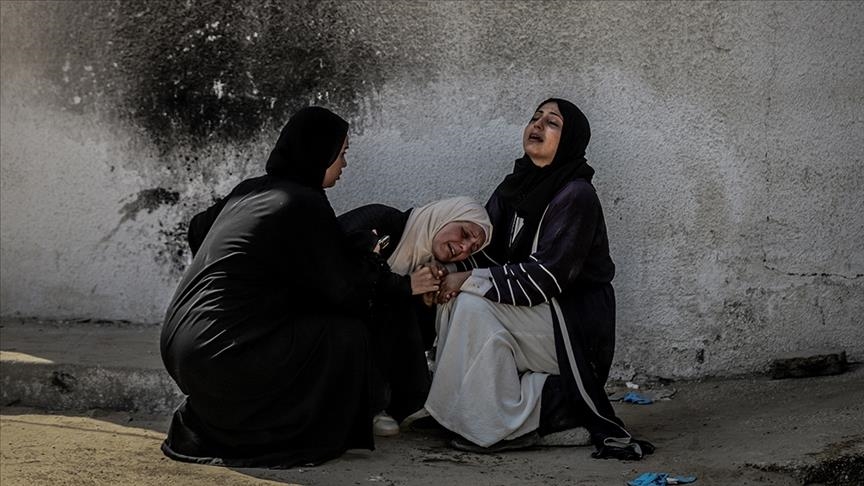
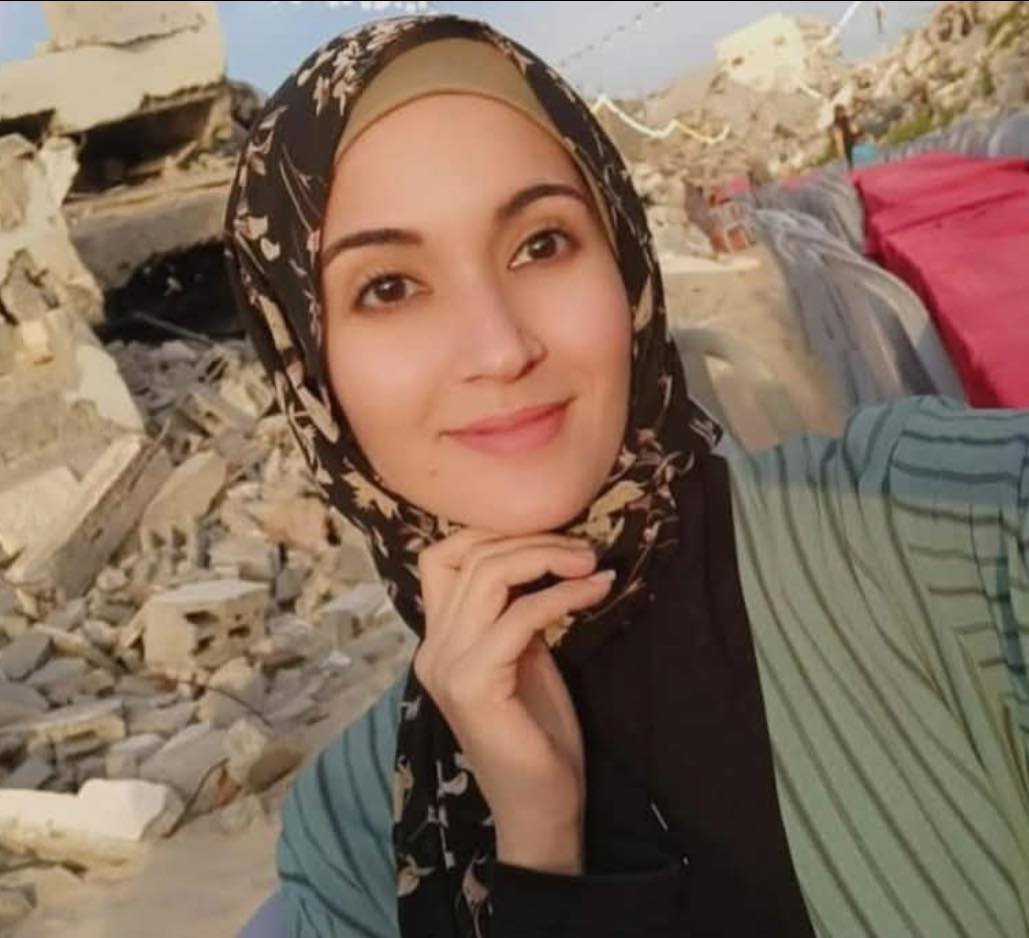
The bodies of journalist Marwa Musallam and her brothers were recovered from under the rubble of their home after 44 days.
Gaza civil defense teams managed to recover three bodies after their house was bombed in Al Tuffah neighborhood in Gaza City 44 days ago.
The intensity of the Israeli strikes and bombing meant the defense teams were not able to recover the bodies tell recently.
It is estimated that over 10,000 bodies lie under the rubble in different areas of Gaza because of the Israeli war on enclave that started soon after 7 October, 2023.
Israeli opposition leader Yair Lapid on Friday sharply criticized the Cabinet’s latest decision on Gaza, calling it “a disaster that will lead to many more disasters.”
In a statement, Lapid accused Prime Minister Benjamin Netanyahu of capitulating to the extremist demands of far-right ministers Itamar Ben-Gvir and Bezalel Smotrich.
The criticism from Lapid, head of the Yesh Atid party, comes after Israel’s Security Cabinet approved a plan by Netanyahu to take control of Gaza City, according to Anadolu.
“In complete contradiction to the opinion of the military and security ranks, without considering the erosion and exhaustion of the fighting forces, Ben Gvir and Smotrich dragged Netanyahu into a move that will take months,” said Lapid.
He added that this will “lead to the death of the hostages, the killing of many soldiers, cost tens of billions to the Israeli taxpayers, and lead to a political collapse.”
He warned that Israel will be “trapped in the field without a goal, without defining the picture of the day after, in a useless occupation that no one understands where it is leading.”
Israel has been facing mounting outrage over its destructive war on Gaza, where more than 61,200 people have been killed since October 2023.
Last November, the International Criminal Court issued arrest warrants for Netanyahu and his former Defense Minister Yoav Gallant for war crimes and crimes against humanity in Gaza.
Israel also faces a genocide case at the International Court of Justice for its war on the enclave.
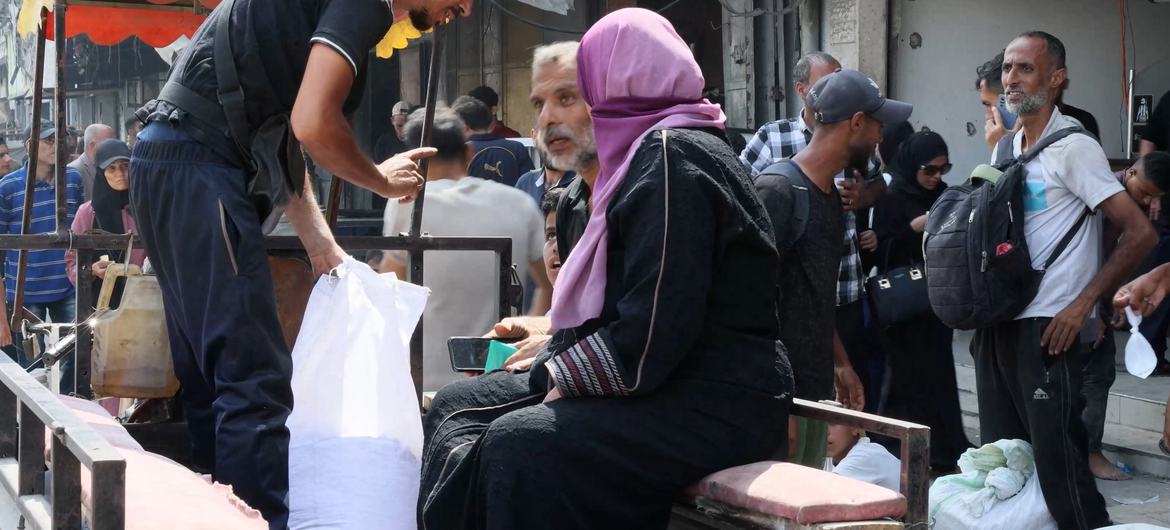
Mohammed Saad sits with others inside a homemade cart pulled by a car carrying several passengers, waiting to travel to Gaza City in one of the “uncomfortable and extremely expensive” means of transportation used to get around the Strip.
Moving around Gaza has become ever more difficult amid the ongoing 21-month-long war.
Mr. Saad, who was displaced from the town of Beit Lahia in the northern Gaza Strip, was waiting for the vehicle pulling the cart he was sitting in to move.
“Transportation is very difficult and unsafe,” he told UN News. “The roads are exhausting. We pray to God to grant us patience and to return home.”
This was on Rashid Street, west of the city, which connects the north and south of the Strip. It is crowded with carts, cars and three-wheeled motorcycles that have also been converted into means of transportation.
The area is interspersed with tents of displaced people, all surrounded by the rubble of buildings destroyed by war on both sides of the road.
UN News
War and evacuation orders have left many in Gaza scrambling for transportation to safety.
A luxury not for everyone
“People can barely find enough to eat, so how will they pay for transportation?” Umm Haytham Al-Kulak asked while waiting in a passenger compartment attached behind a motorcycle,
“We walk mostly; we can’t take public transportation,” she said.
“May God help the drivers. Fuel prices are high, and all the people are exhausted and overwhelmed.”
UN News
In Gaza, many people have no choice but to use risky ways to get around during the ongoing war.
Sky high fuel costs
Drivers are paying skyrocketing prices for fuel, which is a heavy burden, Abdel Karim Abu Asi said as he waited for his car to be fully loaded with passengers.
“The price of a litre of diesel has reached 100 shekels [around $27],” he said. “What should we do? We’re trying to use locally produced fuel, but it causes significant damage to cars and a lot of problems.”
This isn’t the only problem facing drivers. Mr. Abu Asi said the prices of spare parts are very high. A part that used to cost around 100 shekels now sells for around 2,000 shekels, or around $560.
“We also suffer from the destruction of the streets, and no matter how hard the municipalities try to repair them, the problem is not solved because they require a large number of bulldozers to clear them,” he said.
“People must be helped with transportation costs and many other aspects.”
UN News
Fuel vendors sell their products at sharply inflated prices, with a litre of fuel reaching around 100 shekels.
Only option
Despite all the challenges, people there continue to go about their daily lives, even if it takes all day to get from one place to another. That’s what happened to Hussein Al-Hamarneh, who was waiting in a car to travel to the southern Gaza Strip.
Mr. Al-Hamarneh believes that most of these means of transportation are “uncomfortable, such as tuk-tuks [three-wheeled motorcycles] and carts pulled by cars, which are primarily designed to transport goods or animals, not people”.
“This is the only option for those who do not own cars,” he said.
Tayseer Abu Asr, who arranges for passengers to board a cart pulled by a car, stood on the section of the road.
“We’re trying to help people get around,” he said. “These carts have become our only means of transportation after the destruction of buses and taxis.”
On top of these challenges during the ongoing war, the Gaza Strip is facing a fuel crisis.
UN agencies warned earlier this week that the fuel shortage in Gaza has reached critical levels. They said if supplies run out, it will place an unbearable new burden on the population.
For the last four decades, each time a tragic event or another took place in the Middle East, the slogan that gets thrown onto the arena is that of a “new Middle East”. No one is certainly not against a new Middle East per se, but against the one in which someone acts stupidly and then against the stupid acts of someone else to stop the first one from acting stupidly.
Such a series of stupid events makes one think that the notion of the Middle East is supposed to be worse for the peoples of the region except most probably, Israel. Into the fray, is the idea of Israeli Prime Minister Benjamin Netanyahu who wants to change the face of the region, giving the impression this region is the face and Netanyahu is the make-up artist whom to make this “face beautiful” for Israel and probably with those grudging consent of those around it.
Now, considering what has been achieved on the ground as far as Israel is concerned in relation to Netanyahu’s end game may well be too early to tell, but at least one can say that Israel has gained a respite with its seeming regional supremacy.
The start was with crippling the threat capability of Hezbullah and although it has not been destroyed, the responsibility for dealing with this Iranian proxy is now left to the new Lebanese government, which means that the latter will have to bear the new/old responsibility.
Then Syria came along. After the demise of the Assad regime, all Syrian military capabilities became fair game for Israeli bombardement, but in fairness, they were already so during the past Assad regime. Now, however, Israel has gone further, occupying the buffer zone between the two states while expanding its security zone deep inside Syria. Here, the project being pursued is a push for a federal structure to make the country incapable of becoming a future threat to Israel.
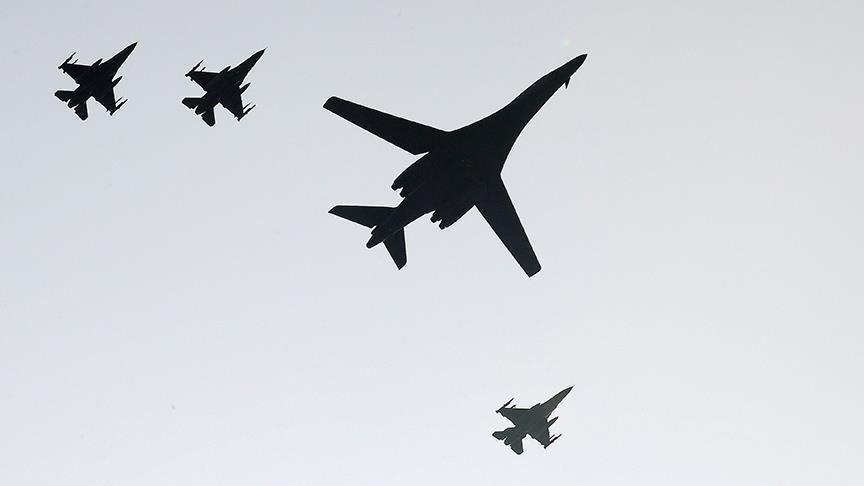
As for the 12-day campaign of bombardment and counter-bombardment by Israel and Iran with US cameo appearance, it is hard to reach any conclusions because of the great damage on both sides that is not really known as it verges on exaggerations, either for seeking international sympathy or as a show of awkward display of power.
Here, the end game was for Iran to be stopped from backing its proxies in Yemen, Iraq, and Lebanon and to eliminate its nuclear capability, if indeed it has reached such a level. Here, again, it is very hard to say to what extent the Iranian nuclear program has been set back, and to what extent Iran will go on the diplomatic path to stop its military support for its regional proxies.
Inevitably, we go back in circles, to the bleeding wound of Gaza, bleeding for the Palestinians, Arabs and Israelis. End game, ideal scenario and possible solution are all lost between the Israeli genocide policy, Arab impotence and naïveté , EU flip-flopping in accordance with the change of wind, and Trumpist absurd proposals and change of mind.
The issue here is far beyond Hamas, it’s Gaza and its people. As things stand the strip is divided into three regions under starvation. A massive refugee camp for people on their own land which for all intents and purposes, will no longer be their land. All in all, Israel is, with the consent of all, will be the supreme power in the region.
Dr Janbek is a Jordanian writer based in Paris, France.
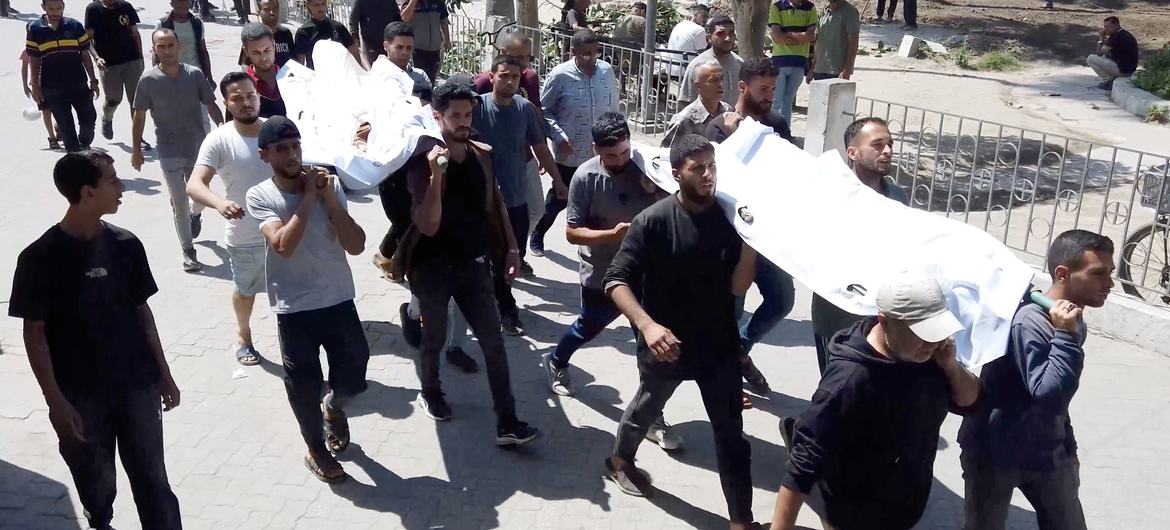
The Israeli army killed at least 32 Palestinians and wounded dozens more in airstrikes and gunfire across Gaza on Wednesday, according to medical sources and witnesses.
Among the dead were 11 Palestinians who had gathered near the Netzarim corridor in southern Gaza City awaiting humanitarian aid, where Israeli forces opened fire, wounding others, some critically.
The Israeli military allows only a limited number of aid trucks into Gaza, prompting large crowds of desperate civilians to gather.
According to Gaza’s Government Media Office, these gatherings have increasingly become targets of Israeli attacks or thefts by armed gangs supported by Israel to sow chaos.
Elsewhere in Gaza City, an Israeli airstrike on a home in the al-Zaytoun neighborhood killed three people, including a child, and wounded several others.
In central Gaza, a strike on a house in the Maghazi refugee camp killed 10 Palestinians and injured others.
Separately, in the southern city of Khan Younis, Israeli forces struck two tents sheltering displaced families in the al-Mawasi area, killing eight civilians, including children.
Rejecting international calls for a ceasefire, the Israeli army has pursued a brutal offensive against Gaza since October 2023, killing nearly 55,400 Palestinians, most of them women and children.
Last November, the International Criminal Court issued arrest warrants for Israeli Prime Minister Benjamin Netanyahu and his former Defense Minister Yoav Gallant for war crimes and crimes against humanity in Gaza.
Israel also faces a genocide case at the International Court of Justice for its war on the enclave.

 CrossFireArabia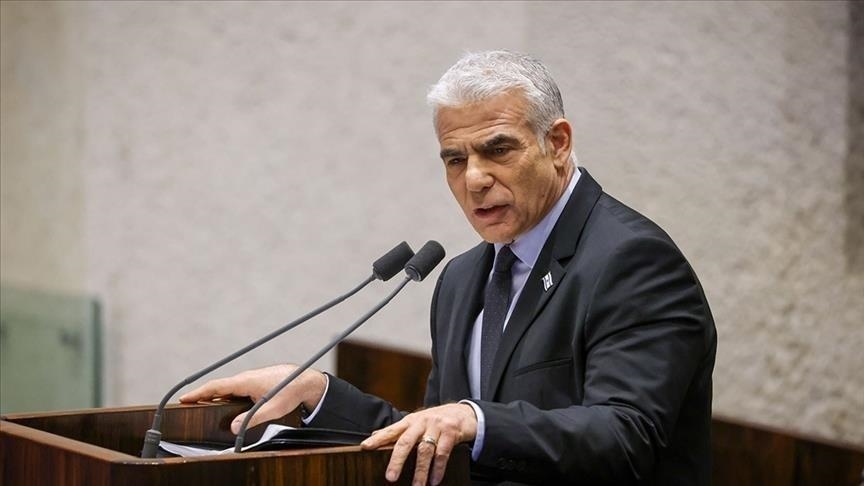


 Dr Khairi Janbek