‘Gaza Madness’

The situation in Gaza is beyond a “catastrophe,” with the enclave left without a functioning health system and widespread famine setting in, a senior official of medical charity Doctors Without Borders (MSF) said Saturday.

“The situation is really beyond being described as a catastrophe anymore. Catastrophe is a very simple word now, soft word. It’s really worse than calling it a catastrophe,” Mohammed Abu Mughaiseeb, MSF’s deputy medical coordinator in Gaza, told Anadolu in an interview.

Stating that the health sector has been systematically dismantled over 22 months of Israeli bombardment, with most hospitals destroyed or out of service, Mughaiseeb added: “I’m not saying now collapsed health system. No, there is no health system anymore in Gaza.”

He also noted that the remaining field clinics and makeshift wards are overflowing with wounded and critically ill patients.

Hospital occupancy rates have soared to 300%, according to Gaza’s Health Ministry, leaving patients on bare floors and halting many surgeries due to shortages. Only 15 of 38 hospitals are partially operational, most heavily damaged by Israeli strikes.

Hunger, medicine shortages

Abu Mughaiseeb said a trickle of recent aid trucks has done little to stem a worsening famine in Gaza.

“There is no food, no medicine, no real humanitarian aid,” he said. “There is no food, no medicine, no humanitarian aid.”

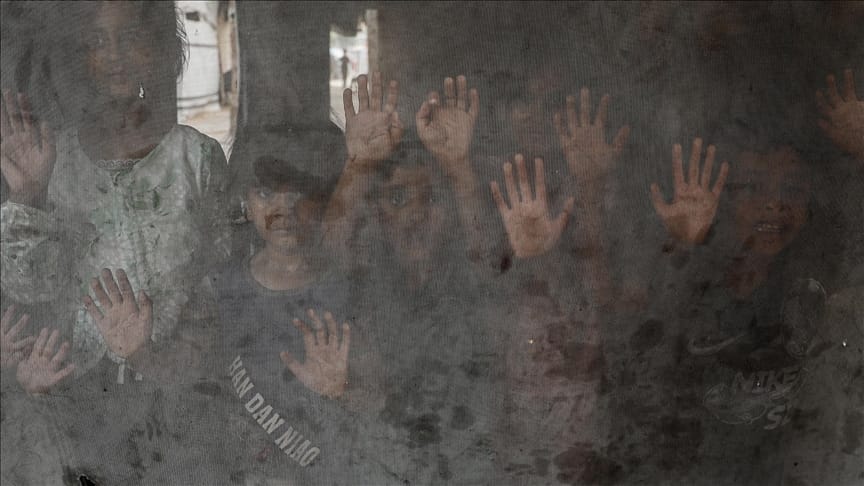
“The children who are dying from starvation, they have underlying disease,” he said.

“They could be treated and they are not supposed to die. I mean if they had food, they will live. If you have the special supplement proteins and milk, they will live,” Mughaiseeb further stated.

A UN-backed food security assessment has already confirmed famine in northern Gaza and expects it to spread further south by the end of September.

‘Death distribution point’

The MSF official also condemned Israeli- and US-backed distribution schemes that replaced UN operations, calling them unsafe.

“It’s not a distribution point, it’s really a death distribution point,” he said, describing how civilians are often attacked near distribution points.

Gaza’s Health Ministry reports more than 2,000 Palestinians have been killed and over 15,000 injured by Israeli army fire while waiting for aid since May.

Reoccupation ‘madness’

On Israel’s plan to reoccupy Gaza City, Abu Mughaiseeb warned it would force nearly two million displaced Palestinians into an unlivable corner of the enclave.

Calling it “a mad plan,” he said: “I mean, there will be a lot of people killed. There will be a lot of blood. Innocent people will die.

“They are speaking about a humanitarian zone. There is no humanitarian zone. I mean, how you can absorb 2 million people, and to build for them tents, and provide them with healthcare and food?”

“I don’t know really, this is really madness.”

Israel’s Defense Minister Israel Katz confirmed Friday that he had approved the military’s operational plan to seize Gaza City – part of a broader government strategy to reoccupy the enclave and disarm Palestinian resistance groups.

Israel has killed over 62,600 Palestinians in a brutal onslaught in Gaza since October 2023. The military campaign has devastated the enclave, which is facing famine.

Last November, the International Criminal Court issued arrest warrants for Israeli Prime Minister Benjamin Netanyahu and his former Defense Minister Yoav Gallant for war crimes and crimes against humanity in Gaza.

Israel also faces a genocide case at the International Court of Justice for its war on the enclave.

Continue reading
Obliterating Al Zeitoun – Israel’s Appetite For Destruction Boundless

“The situation was terrifying. I clutched my daughter as we walked over shattered glass and rubble, surrounded by smoke, flames, and explosions everywhere. I ran without knowing where to go. God help us. Enough, world, enough.”

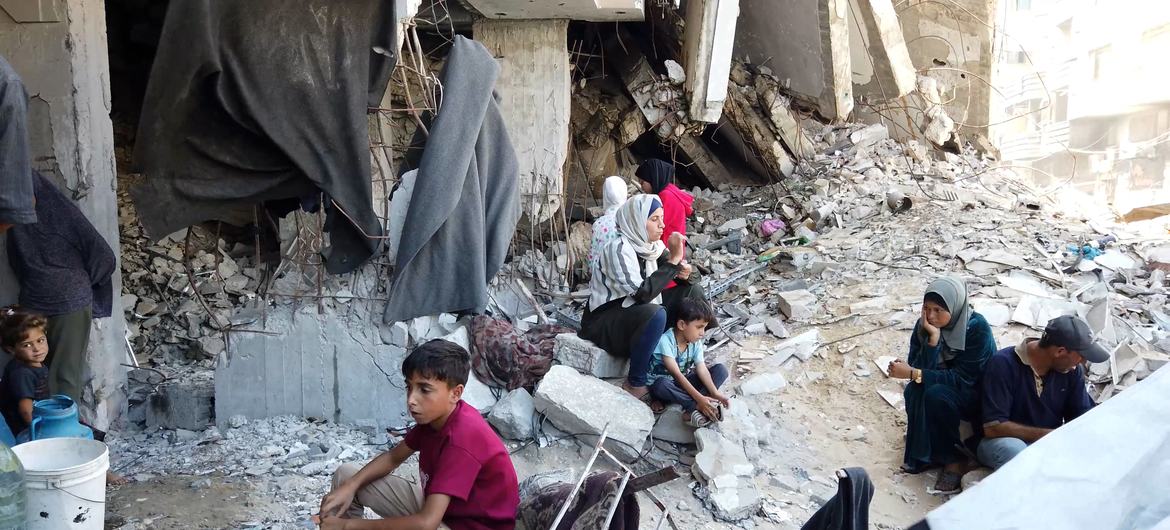
For six days, Israeli occupation forces have been razing the Zeitoun neighbourhood, southeast of Gaza City, flattening approximately 400 homes with explosive-laden robots and aerial bombardment.

This wide-scale military operation mirrors similar assaults in Rafah, Khan Younis, and northern Gaza, aimed at obliterating entire communities and forcibly displacing all who remain. These actions form part of the genocide against Palestinians in the Gaza Strip.

Launched on 11 August, the operation represents Israel’s ongoing push to assume total and unlawful control over Gaza City. The intent is to evacuate long-standing residents and up to one million displaced individuals, most having fled northern Gaza, and confine them to isolated, small areas in the south.

Drones, specifically quadcopters, are being deployed to encircle residential blocks and coerce civilians into fleeing under armed threat. Meanwhile, ground forces advance under heavy cover fire from positions near Street 8, the Dola junction, the Barasi land and the Illiyin areas. This operation has already displaced over 90,000 residents.

Field data from Euro-Med Monitor documents targeted bombings of homes belonging to the Lubbad, al-Aidi, Dader, and Irhayyem families, resulting in nine deaths within the Irhayyem household.

Air raids also hit houses near the Bilal Bin Rabah Mosque, striking the homes of the Dalloul and al-Nassan families, the Bashir Siksik Company premises, and the Kuhail, Shahd, and Siyam residential towers. An attack near Al-Farouq Mosque destroyed the home of the al-Husari family, claiming four lives.

The Israeli forces demolished dozens of homes along Street 8 and at the start of the Hassan al-Banna area. Tents housing displaced members of the Hunaideq family were also bombarded, resulting in seven deaths. Additional structures impacted include those near the University College of Applied Sciences (UCAS), the Al-Falah and Ain Jalut schools, and a charity-run shelter on Albasateen Street, killing eight more civilians. A strike on the Abu Daff family home resulted in 12 fatalities.

Artillery and air strikes continue to pound the areas of Hassan al-Banna, Al-Musalaba, UCAS, Al-Nadeem, and Almadaris Street. Civilians killed near Ain Jalut School and Badr Mosque (not to be confused with the one in Rafah) remain unrecovered due to ongoing bombardment. An airstrike also struck the Al-Huwaiti building in the Old City near Katib al-Wilaya Mosque, killing a mother and her young daughter, and even targeting nearby open ground.

In her testimony to the Euro-Med Monitor, 45-year-old Um Raid said: “We fled before dawn with the children, carrying nothing, as bullets whistled above our heads and bombs shook the ground, leaving behind what remained of our home and all we owned.”

Meanwhile, 33-year-old Mohammad D. described how he had no choice but to flee with his family after a “quadcopter drone” began firing randomly. He said, “I couldn’t even grab my children’s birth certificates. Aircraft roared overhead, armoured vehicles closed in, and I felt we would die if we stayed a minute longer.”

Another resident, 29-year-old Sahar L., who lived near the Bilal Bin Rabah Mosque, recounted, “The situation was terrifying. I clutched my daughter as we walked over shattered glass and rubble, surrounded by smoke, flames, and explosions everywhere. I ran without knowing where to go. God help us. Enough, world, enough.”

Almost half the homes in the Zeitoun neighbourhood were demolished without any documented military necessity, as no fighting had recently taken place there. The destruction was caused by the systematic use of automatic explosives and explosive-laden robots after residents had been forcibly displaced. This pattern shows the intent was not military but to erase infrastructure and force Palestinians into displacement.

The widespread destruction in Zeitoun, the largest neighbourhood in Gaza, is part of a deliberate Israeli policy: completing a campaign of genocide and erasing Palestinian urban life through the total destruction of homes, infrastructure, and access to basic livelihoods.

The international community, including the United Nations and global legal bodies, must intervene urgently to halt the massacres, protect civilians, and hold Israeli leaders accountable for these heinous crimes against the civilian population.

Israel’s ongoing attacks and territorial expansion threaten to unleash unprecedented mass slaughter in Gaza, destroying the already fragile humanitarian response and cementing a new chapter of systemic Israeli genocide. These attacks are not sudden battlefield escalations but calculated policies, and the international community, through its silence, financial backing, and political cover, bears full responsibility for the resulting crimes and tragedies.

States and organisations must exert maximum pressure on Israel to halt the crime of starvation and immediately push for the resumption of humanitarian access by ending the illegal siege of the Gaza Strip. This is the only way to stem the fast-deteriorating humanitarian crisis and ensure the entry of essential aid and supplies amid the looming threat of famine.

Safe humanitarian corridors, under UN supervision, must be established to guarantee the delivery of food, medicine, and fuel to all parts of the Strip, with independent international monitors deployed to ensure compliance. At the same time, rapid rehabilitation of Gaza’s agricultural and livestock sectors must begin as part of both emergency relief and long-term recovery efforts.

All States, individually and collectively, must fulfil their legal obligations and act urgently to stop this genocide in Gaza, taking every feasible measure to protect Palestinian civilians there. They must enforce Israel’s adherence to international law and the rulings of the International Court of Justice and hold Israel accountable for its crimes against Palestinians.

This includes, without waiver, enforcing the arrest warrants issued by the International Criminal Court for the Israeli Prime Minister and former Minister of Defence at the earliest opportunity and surrendering them to international justice, upholding the principle that no one is immune from prosecution for international crimes.

Euromed Human Rights Monitor

Continue reading
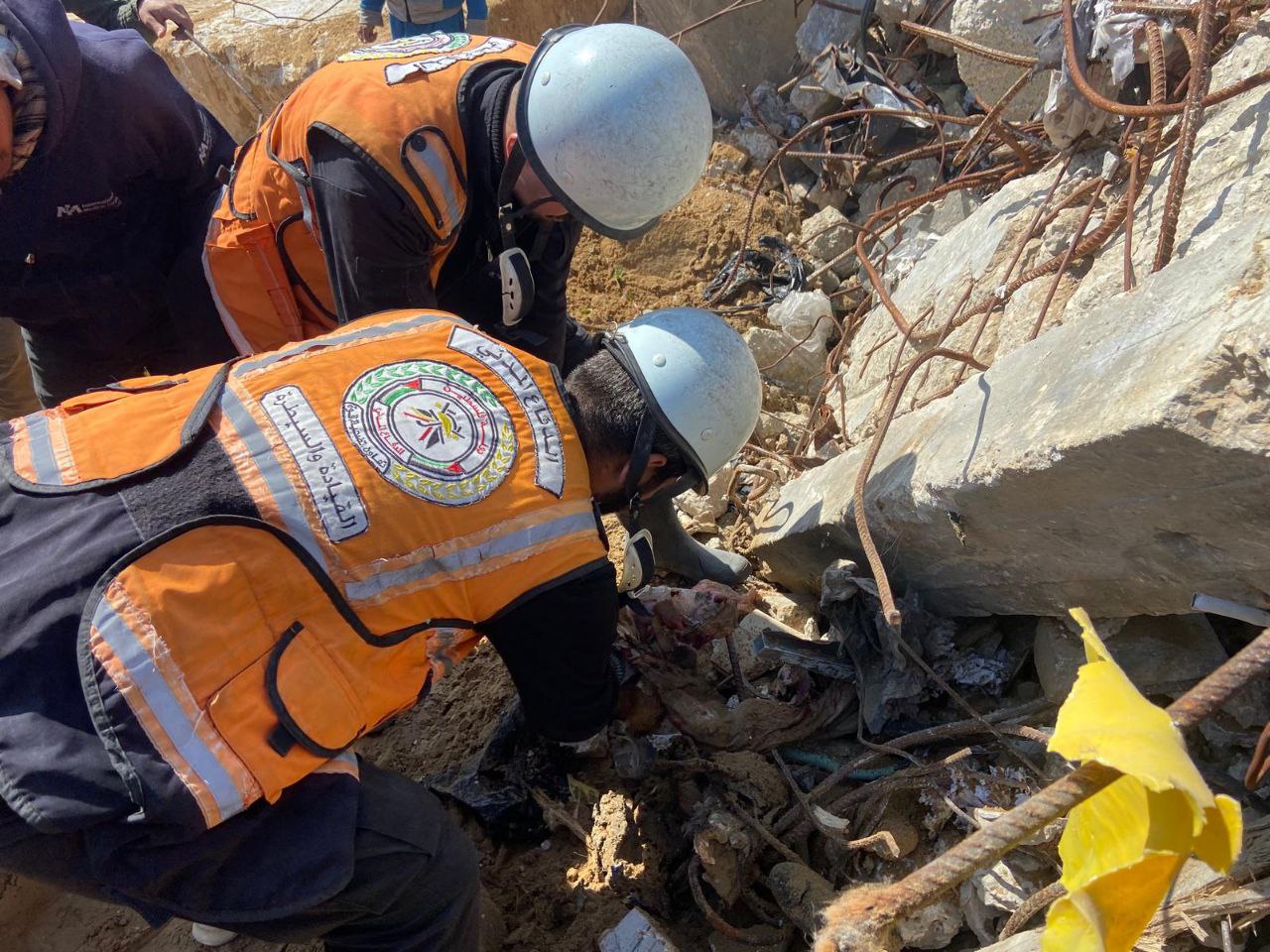
Journalist Body Found After 44 Days Under Rubble

The bodies of journalist Marwa Musallam and her brothers were recovered from under the rubble of their home after 44 days.

Gaza civil defense teams managed to recover three bodies after their house was bombed in Al Tuffah neighborhood in Gaza City 44 days ago.

The intensity of the Israeli strikes and bombing meant the defense teams were not able to recover the bodies tell recently.

It is estimated that over 10,000 bodies lie under the rubble in different areas of Gaza because of the Israeli war on enclave that started soon after 7 October, 2023.

Continue reading
Lapid: Gaza Take Over Disastrous For Israel

Israeli opposition leader Yair Lapid on Friday sharply criticized the Cabinet’s latest decision on Gaza, calling it “a disaster that will lead to many more disasters.”

In a statement, Lapid accused Prime Minister Benjamin Netanyahu of capitulating to the extremist demands of far-right ministers Itamar Ben-Gvir and Bezalel Smotrich.

The criticism from Lapid, head of the Yesh Atid party, comes after Israel’s Security Cabinet approved a plan by Netanyahu to take control of Gaza City, according to Anadolu.

“In complete contradiction to the opinion of the military and security ranks, without considering the erosion and exhaustion of the fighting forces, Ben Gvir and Smotrich dragged Netanyahu into a move that will take months,” said Lapid.

He added that this will “lead to the death of the hostages, the killing of many soldiers, cost tens of billions to the Israeli taxpayers, and lead to a political collapse.”

He warned that Israel will be “trapped in the field without a goal, without defining the picture of the day after, in a useless occupation that no one understands where it is leading.”

Israel has been facing mounting outrage over its destructive war on Gaza, where more than 61,200 people have been killed since October 2023.

Last November, the International Criminal Court issued arrest warrants for Netanyahu and his former Defense Minister Yoav Gallant for war crimes and crimes against humanity in Gaza.

Israel also faces a genocide case at the International Court of Justice for its war on the enclave.

Continue reading
War-torn Gaza: Either Walking or The Cart!

Mohammed Saad sits with others inside a homemade cart pulled by a car carrying several passengers, waiting to travel to Gaza City in one of the “uncomfortable and extremely expensive” means of transportation used to get around the Strip.

Moving around Gaza has become ever more difficult amid the ongoing 21-month-long war.

Mr. Saad, who was displaced from the town of Beit Lahia in the northern Gaza Strip, was waiting for the vehicle pulling the cart he was sitting in to move.

“Transportation is very difficult and unsafe,” he told UN News. “The roads are exhausting. We pray to God to grant us patience and to return home.”

This was on Rashid Street, west of the city, which connects the north and south of the Strip. It is crowded with carts, cars and three-wheeled motorcycles that have also been converted into means of transportation.

The area is interspersed with tents of displaced people, all surrounded by the rubble of buildings destroyed by war on both sides of the road.

War and evacuation orders have left many in Gaza scrambling for transportation to safety.

UN News

War and evacuation orders have left many in Gaza scrambling for transportation to safety.

A luxury not for everyone

“People can barely find enough to eat, so how will they pay for transportation?” Umm Haytham Al-Kulak asked while waiting in a passenger compartment attached behind a motorcycle,

“We walk mostly; we can’t take public transportation,” she said.

“May God help the drivers. Fuel prices are high, and all the people are exhausted and overwhelmed.”

In Gaza, many people have no choice but to use risky ways to get around during the ongoing war.

UN News

In Gaza, many people have no choice but to use risky ways to get around during the ongoing war.

Sky high fuel costs

Drivers are paying skyrocketing prices for fuel, which is a heavy burden, Abdel Karim Abu Asi said as he waited for his car to be fully loaded with passengers.

“The price of a litre of diesel has reached 100 shekels [around $27],” he said. “What should we do? We’re trying to use locally produced fuel, but it causes significant damage to cars and a lot of problems.”

This isn’t the only problem facing drivers. Mr. Abu Asi said the prices of spare parts are very high. A part that used to cost around 100 shekels now sells for around 2,000 shekels, or around $560.

“We also suffer from the destruction of the streets, and no matter how hard the municipalities try to repair them, the problem is not solved because they require a large number of bulldozers to clear them,” he said.

“People must be helped with transportation costs and many other aspects.”

Fuel vendors sell their products at sharply inflated prices, with a litre of fuel reaching around 100 shekels.

UN News

Fuel vendors sell their products at sharply inflated prices, with a litre of fuel reaching around 100 shekels.

Only option

Despite all the challenges, people there continue to go about their daily lives, even if it takes all day to get from one place to another. That’s what happened to Hussein Al-Hamarneh, who was waiting in a car to travel to the southern Gaza Strip.

Mr. Al-Hamarneh believes that most of these means of transportation are “uncomfortable, such as tuk-tuks [three-wheeled motorcycles] and carts pulled by cars, which are primarily designed to transport goods or animals, not people”.

“This is the only option for those who do not own cars,” he said.

Tayseer Abu Asr, who arranges for passengers to board a cart pulled by a car, stood on the section of the road.

“We’re trying to help people get around,” he said. “These carts have become our only means of transportation after the destruction of buses and taxis.”

On top of these challenges during the ongoing war, the Gaza Strip is facing a fuel crisis.

UN agencies warned earlier this week that the fuel shortage in Gaza has reached critical levels. They said if supplies run out, it will place an unbearable new burden on the population.

UN News

Continue reading