Netanyahu’s Middle East Vision
 CrossFireArabia
- December 15, 2025
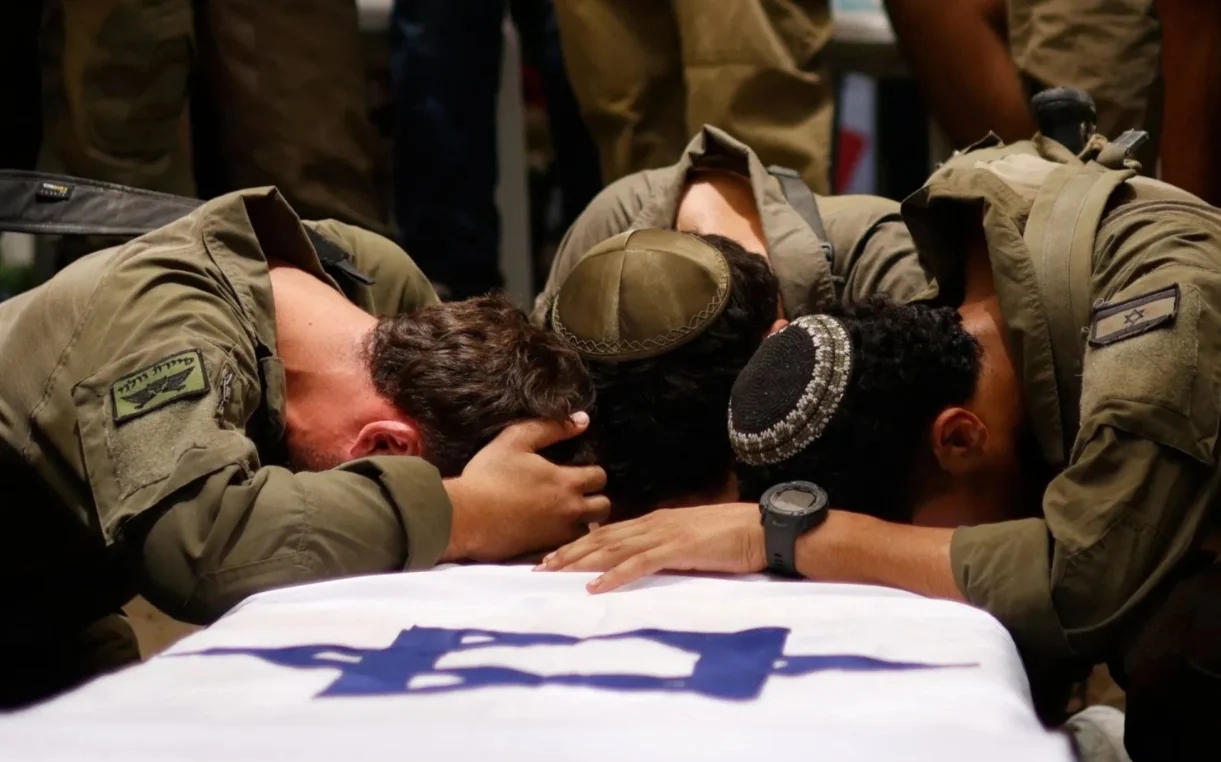
By the end of December, Israeli Prime Minister Benjamin Netanyahu is expected to visit Washington to meet US President Donald Trump, marking his fourth visit in less than a year since Trump assumed office. Unlike previous visits, this one comes after President Trump imposed his vision for ending the war in Gaza and outlined his broader concept of regional peace—giving the visit a distinctly political dimension.
At the core of the discussions will be the transition to the second phase of the Gaza ceasefire agreement, the appointment of an American general and a monitoring center, and the mechanism for administering Gaza ahead of the arrival of an international peace force. The visit is also expected to address Israel’s relations with its regional surroundings, particularly Egypt. Reports suggest the possibility of a simultaneous visit by the Egyptian president to Washington, reflecting a clear American desire to initiate direct engagement and promote the concept of “economic peace,” along with major regional projects that Trump views as the backbone of future relations, especially in the energy and gas sectors.
Yet even as President Trump speaks of a regional peace vision, the days preceding the visit remain open to further escalation. Indicators point toward a qualitative Israeli escalation across four fronts: Gaza, the West Bank, Lebanon, and Syria. These fronts have been deliberately kept open, transformed into continuous theaters of operation where Israel calibrates the level of military activity according to its security assessments.
Lebanon remains the most prominent arena of this escalation. Ongoing discussions about Hezbollah’s efforts to rebuild its capabilities coincide with Israel’s continued direct targeting of the group’s positions and operatives. This comes amid growing American pressure on the Lebanese government and army to take concrete steps toward disarming Hezbollah.
While the group is fully aware of its inability to engage in a comprehensive regional war, and the need to avoid providing direct justifications for escalation, it nevertheless finds itself compelled to use the weapons issue domestically to reshape internal power balances. At the same time, Hezbollah seeks to secure the future framework of its relationship with Syria, particularly if the Syrian-Lebanese border shifts from being merely a site of interdiction to a direct target zone.
This reality severely constrains Hizbollah’s response options while granting Israel continued latitude to strike the group’s infrastructure, capitalising on the absence of a decisive resolution to the weapons issue and on Lebanon’s institutional confusion over how to address it, whether through phased timelines or alternative formulas such as placing weapons under army control. From Israel’s perspective, this ambiguity justifies continued targeting until a decisive moment is reached.
Within this context, Israel’s strategy of imposing a new reality across its border fronts aligns closely with the transition to the second phase of President Trump’s plan. This approach corresponds with Israel’s efforts over the past two years to redraw geographical and security realities in Syria, Gaza, Lebanon, and even the West Bank. While the Trump administration opposed a formal declaration of annexation in the West Bank, it did not object in practice to Israel’s on-the-ground measures, allowing these changes to solidify as irreversible facts.
Security measures taken today may therefore establish realities that will be difficult to reverse in the future. From Washington’s perspective, redrawing borders may be seen as laying the groundwork for what it terms “regional peace,” treating the new border realities as spaces for potential economic or developmental investment.
Netanyahu’s visit to the White House thus represents a pivotal moment. He will seek to position himself as a central actor in the next phase, consolidate new realities along Israel’s immediate borders, and secure U.S. backing in addressing non-adjacent fronts, most notably Iraq, and above all Iran.
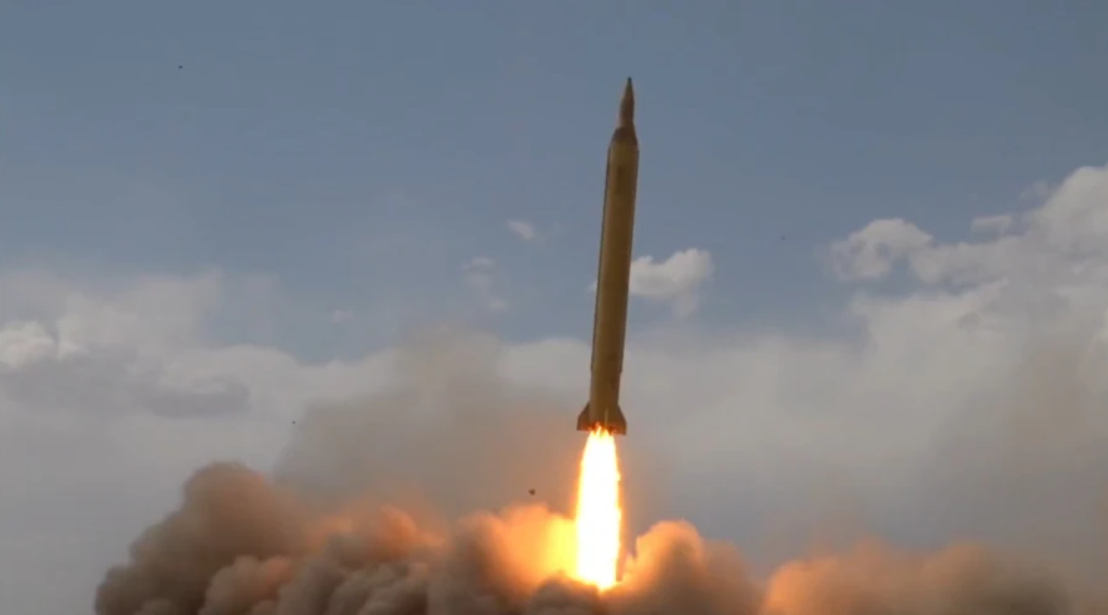
Iran is left to grapple with an increasingly severe internal reality marked by mounting economic, social, service-related, and security challenges, and is simultaneously categorized as part of the camp of “obstructors of regional peace” in Trump’s framework, opening the door to intensified pressure and varied forms of targeting in the period ahead.
Dr Amer Al Sabaileh, a professor in the University of Jordan contributed this analysis to the Jordan Times.

The Olive Tree Defies Israel
- CrossFireArabia
- November 10, 2025
By Ali Osman Karaoglu
A lesser-known dimension of Israel’s ongoing occupation of Palestine since 1967 is the systematic destruction of the Palestinian people’s economic resources and means of livelihood. One of the most important sources of income for Palestinians is olive cultivation – so much so that the olive tree is regarded as one of Palestine’s national symbols. Palestinian poet Mahmoud Darwish captured this symbolism in his famous words: “Here we remain, as long as thyme and olives remain.”
Beyond its symbolic value, the olive tree is the main source of income for nearly 80,000 Palestinian families. According to UN data, about 48% of the agricultural land in the West Bank and Gaza is covered with olive trees. Olive production contributes around 14% to the Palestinian economy. About 93% of harvested olives are used for olive oil production, while the remainder is used to make soap, table olives, and pickles.
Usurpation of olive trees: Israel’s assault on nature and identity
Recently, Israeli settlers in the West Bank prevented Palestinians from harvesting olives, an essential source of livelihood, and destroyed 13,000 olive trees. Such actions, either directly committed or condoned by Israeli authorities, are known and documented as systematic practices.
According to various international reports, Israel has destroyed around 800,000 olive trees over the past 20 years, and more than 2.5 million trees since 1967.
Palestinians face great difficulty in harvesting and protecting their olive trees. Since the Oslo Accords, Israel has exercised full control over 60% of the West Bank and requires Palestinians entering these areas to obtain a “permit issued by Israeli authorities.”
Farmers are therefore forced to secure permission to access their own land, but this permit system is largely arbitrary. There are no clear criteria specifying what conditions Palestinian applicants must meet to obtain a permit.
Even when they provide ownership documents and pass “security” checks, permits are often issued only to the person named on the deed, excluding other family members from entering the land. The permits are typically short-term, and each time they expire, farmers must reapply without any guarantee of renewal.
According to UN data, nearly half of permit applications are rejected on arbitrary grounds, turning the system into a policy of harassment and attrition. The same restrictive policy applies to bringing in agricultural necessities such as tractors, equipment, and fertilizers.
Over time, many Palestinians who once cultivated other crops have converted their land into olive groves, since olive trees can survive even without intensive care.
How Israel’s seizure of olive trees violates international law
The destruction of olive trees in the occupied Palestinian territories occurs almost every year. Thousands of trees are destroyed annually during Israeli military operations or through attacks by settlers. Such incidents are rarely taken seriously or investigated by police or other public authorities.
Israeli soldiers frequently fail to protect Palestinians from settler attacks and, in many cases, act against the Palestinians themselves when they try to defend their land and trees.
In fact, the destruction of Palestinian farmlands and olive trees violates international law. Even Israel’s own Supreme Court has recognized the illegality of arbitrary practices in the “Morar v. IDF Commander” case.
In that case, Palestinian farmers appealed to the Israeli Supreme Court after a military commander denied them access to their farmland. The commander claimed the closure was intended to “protect Palestinian farmers from settler harassment.” The plaintiffs argued, however, that Israeli settlers systematically harass, assault, and damage the property of Palestinian villagers, while the Israeli army fails to intervene to stop this violence or take necessary measures to protect Palestinians and their agricultural products.
The court ruled that the army must take steps to prevent settler violence, stating that the proper way to protect Palestinian farmers from harassment is for Israeli military authorities to implement necessary security measures and impose restrictions on the settlers responsible for unlawful actions. Nevertheless, Israeli authorities continue to disregard their own court’s ruling and persist with arbitrary practices.
Under international humanitarian law, causing environmental damage as a military tactic is prohibited. The law stipulates that “care shall be taken to protect the natural environment against widespread, long-term, and severe damage during armed conflict.” This protection includes prohibiting methods or means of warfare that are intended – or expected – to cause such damage, as these may endanger the health or survival of the population.
Palestinian territories have been under Israeli occupation since 1967. This ongoing occupation constitutes a “continuing act of aggression,” and under the provisions of the 1949 Fourth Geneva Convention, imposes obligations on the occupying power.
The occupying power is responsible for ensuring a secure environment that allows the local population to meet its daily needs, and must protect civilians against looting and destruction of property.
Moreover, the damages caused by Israel – an apartheid regime – to the environment and to olive trees are considered war crimes under Article 8 of the Rome Statute.
UN Security Council resolutions also emphasize that Israel must refrain from harming the environment and is obligated to prevent settler provocations. Israel has repeatedly violated these obligations and continues to act in breach of international law.
It is known that Israel’s policy of destroying olive trees aims both to make its occupation permanent and to clear land for the establishment of future settlements. Therefore, Israel’s environmental crimes should be added to the cases currently being pursued against it at the International Court of Justice (ICJ) and the International Criminal Court (ICC).
The author who contributed this piece to Anadolu, is a faculty member in the Department of International Law at Yalova University’s Faculty of Law.
Trump’s Nightmare Triangle
 Dr Khairi Janbek
- October 26, 2025
By Dr Khairi Janbek
For all intents and purposes, US President Donald Trump is presenting himself as the arbiter of Arab-Israeli relations, and/or Arab-Israeli conflict and showing his presence as the patron for the time being, of the Gaza agreement. Therefore, no one, including Israel will be allowed to make him look bad in this multi-phased accord.
Most likely, his intention to reign in Prime Minister Benjamin Netanyahu and rejecting the Israeli rejection of the West Bank, boils down to keeping the Arabs on board in terms of money and influence for the success of his Gaza plan, as well as keeping his hopes alive for the Abrahamic Accords especially the red apple, Saudi-Israeli normalization.
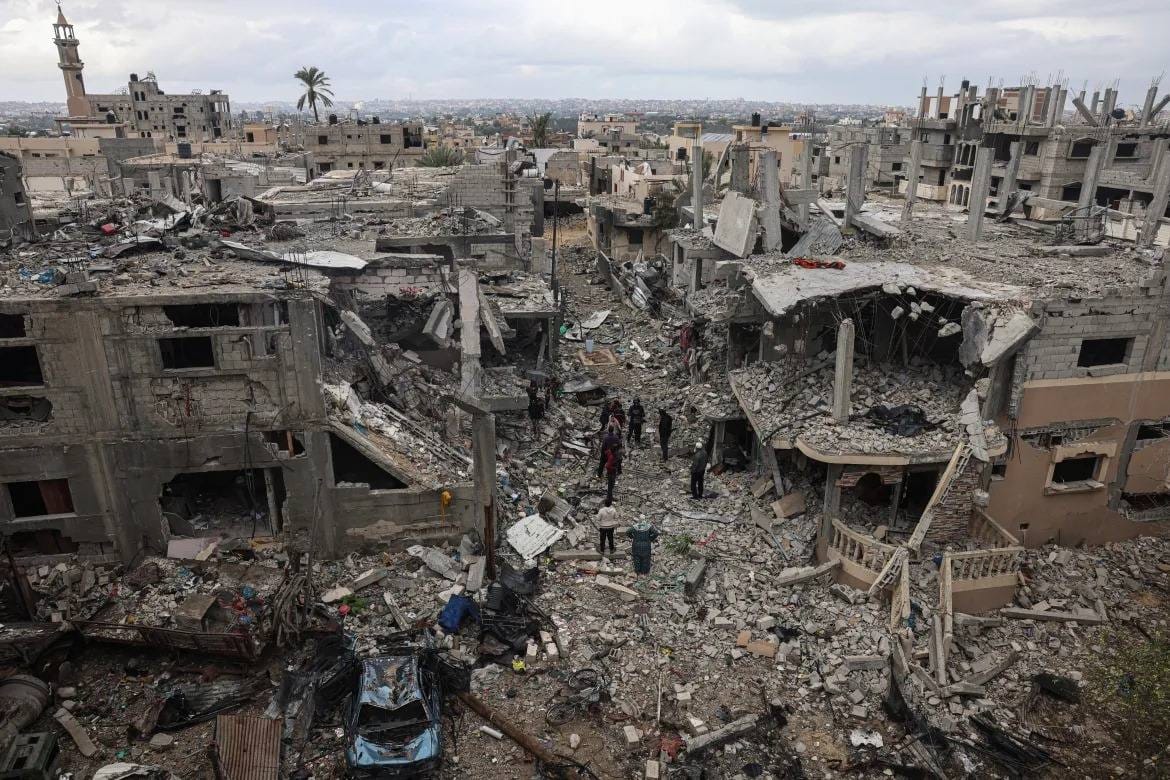
Indeed Trump’s ambiguous stand of rejecting a Palestinian state while at the same time, rejecting Israeli annexation, either means giving the positive nod to Tel Aviv to create facts on the ground and create de facto annexation without the fanfare, and start the gradual population transfer, if we take Gaza as a precedence for his words, to Jordan and probably also to the wider Arab world, or, it could also be, that the future of the West Bank is intended to be united to the East Bank of River Jordan.
In the mean time, the world press talks about the continuous shuttle diplomacy of high-ranking Washington officials to Israel, and Trump’s warnings to Netanyahu, veiled as well explicit not to attempt to jeopardize the Gaza peace, to the extent of saying that Israel would lose all US support.
But what about the other side of this presumed potential rift? Netanyahu after two years of war, has nothing to show for it to the Israelis except barbarism, murder and destruction, in addition to gaining the status of becoming a fullyfledged international war criminal.
The war which he declared to finish off Hamas is increasingly controlled by the American plans, now, face a big failure with him reluctantly having to put up with. However it does not necessarily mean there are no other parties in his government, whose messianic fervour does not override the risk of losing American support, which indeed means, Netanyahu is now stuck between the rock and the hard place.
Indeed one cannot predict his longevity as the prime minister for Israel, but all what can be said is that, the alternative to him, is neither likely to be more peace loving, or more liberal in political outlook.
Dr Janbek is a Jordanian writer based in Paris, France

Who is The ‘True’ Terrorist Here?!
- CrossFireArabia
- September 16, 2025
By Mohammad Abu Rumman
“This is not a geopolitical battle; it is a spiritual battle. A battle of the ages. It is not horizontal. It is not left or right, liberal or conservative. It is a vertical battle… a battle of heaven against hell, good against evil. People must see it in this context, or they will completely fail to understand it.”
With these words, Mike Huckabee, the U.S. ambassador to Israel, described the ongoing war of extermination in Gaza during an interview with NBC. He criticized the move by several European states to recognize Palestine at the United Nations this month, adding: “You do not stand with Israel merely because you agree with its government… but because it defends the traditions of Abraham, Isaac, and Jacob.”
This rhetoric aligns seamlessly with statements made by members of Netanyahu’s government. Finance Minister Bezalel Smotrich, for example, openly called for the “complete destruction of Gaza” and the forced displacement of its residents to other countries, invoking biblical injunctions about “erasing the memory of Israel’s enemies.” What is striking is that such discourse is no longer viewed as fringe or shocking in Western and global media and political circles. It has become commonplace—voiced by ministers, politicians, and even Netanyahu himself—steeped in extremism and religious absolutism toward “the other.” In this case, the “other” is the Palestinians as a whole, along with anyone who dares oppose the Israeli far right.

Here, the urgent question arises: how should terrorism and extremism be redefined today? Who is the true terrorist? And what form of terrorism most threatens regional security and societal peace?
Following the September 11 attacks in 2001, the United States declared its “war on terror,” rallying dozens of states against al-Qaeda and later ISIS. ISIS was undeniably a brutal extremist group that committed massacres, established a so-called caliphate, and tore down borders between Syria and Iraq. Yet it remained an isolated, besieged organization—globally reviled, stripped of legitimacy, and unsupported by institutions or states. What we witness today, by contrast, is state terrorism practiced openly, backed by major powers, and legitimized through religious rhetoric presented as divine will. The irony is palpable: Israel engages in territorial expansion, rejects recognized borders, launches cross-border military strikes, and has a prime minister who frames his mission in explicitly spiritual and historic terms—the realization of Greater Israel.

Skeptics may argue that labeling Israel a terrorist state changes nothing; it clashes with power dynamics and U.S. strategic interests. Perhaps. Yet it remains essential to reshape Arab, Islamic—and indeed universal—awareness of these realities, and to recalibrate the very language and definitions we use. These should form part of today’s Arab political, media, and diplomatic discourse. If an international coalition against terrorism is to exist, the actor most deserving of that designation is Israel’s government—not transient groups like ISIS or al-Qaeda. Huckabee’s words and the declarations of Netanyahu’s ministers are not aberrations; they are clear manifestations of this reality: state terrorism, sanctified by religion and legitimized internationally. If there is a rogue state whose leaders should stand before the International Criminal Court for genocide and mass killings, it is Israel.
This framing is of enormous significance for international, regional, and even domestic debates. Otherwise, Arab political and intellectual circles will continue to be dragged along by narratives that consistently place the blame on extremist movements emerging here or there—movements that are, in truth, the predictable outcomes of political dysfunction. Whether born of Israeli aggression or Arab authoritarianism, such groups are less causes than consequences. To blame them alone is to misread the sequence of cause and effect.
Today, amid the genocidal war on Gaza, a new political generation is coming of age. It witnesses, daily and directly, the starvation, slaughter, and devastation visited upon children, women, and civilians. It also sees the deafening global silence, alongside Arab paralysis and strategic impotence. What reactions can we reasonably expect from such a generation? This is not an attempt at justification, but rather an explanation of what is taking shape: a coming wave of anger among youth, or a wave that others may channel into particular political or religious agendas. That wave is already being born—out of the crucible of Gaza.
The writer is a columnist in The Jordan Times