Israel, Trump and the Latest Bombing of Gaza

Israel relaunched its bloody war on Gaza, with vehemence and callousness and with the blessing of the Donald Trump administration in the White House.

Its back to the “good old bloody days” of murder, mayhem and slaughter of mostly innocent women and children who have no part in the current war waged between Israel and Hamas.

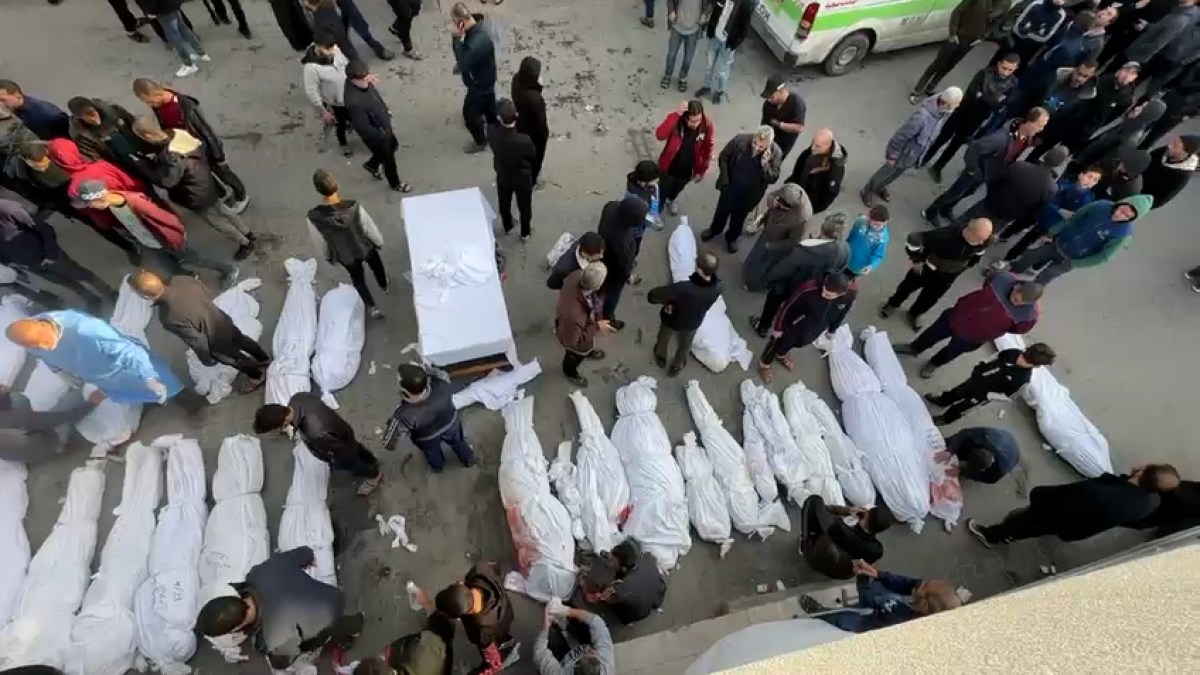
Unwilling to quench its thirst for blood, Israel relaunched its war on the 364-kilometer Gaza Strip by killing over 322 people in the first five hours of early morning Tuesday while everyone was fast asleep.

Up until then it has been a “slight” rest bite reached through a ceasefire on 19 January between Hamas and Israel through US, Qatari and Egyptian mediators bringing an end to the daily killing of Gazans that today stands at 48,500 people.

Everyone is asking if the ceasefire is wrecked and stands in ruin on day 525, the total length of the carnage started on the people of Gaza soon after 7 October 2023, when about 1200 Israelis were killed.

Whatever the politics of the recent war, it has become amply clear the Israel slaughter has not been aimed at Hamas fighters, which it couldn’t eradicate even after 15 months of war on the Islamic organization but resulted in the mass killing of the women and children of Gaza.

The latest spate of dropping bombs on the people of Gaza, facilitated by the United States which stands as complicit in this genocide, sees no end light, but is seen as just the beginning although Gaza and its infrastructure is already annihilated with its people displaced and living in the wild and under the skies.

The world stands and waits to see, if the genocide will continue from this day onwards, or is it just a pressure tool to get Hamas to release the 59 or so Israeli prisoners it currently holds. If the latter is the case however, Hamas has long shown, it has a long breath and will not release the prisoners that originally were around 250 and now stands at the current number through exchange deals with the fact that the Israeli army has killed around 23 of them in failed rescue operations.

The latest bombings, carried from the air starting from the south of the strip on the southern city of Rafah, Nuseirat, Al Shati and Maghazi camps, and Deir Al Balah in the center of the enclave, including Gaza city and the destroyed northern areas, speaks of dark days are expected ahead.

Hamas are yet to respond militarily. There are couple of issues to consider here. Hamas officials have been talking to the Trump administration officials in the last couple of weeks about different paths.

Will that continue, particularly after this bloody debacle. Prime Minister Benjamin Netanyahu, who long wanted to destroy Hamas, and thus the war to continue, said this time around, the latest military operation in Gaza is being carried out “in consultation” with Trump and his associates.

If this is the case, the latest Israeli deadly spate, may not last long, particularly because Trump is on record of stating that he doesn’t want the war to continue but wants to end it which means he will not continue to supply Israel with weapons indefinitely and there will come a time when he will stop.

But that might be a while before that and he may continue to tolerate the mass bombing of Gaza. However, since he is talking to different parties through his envoy Steve Witkoff, he will likely “manage” what Israel continues to militarily do in the Gaza Strip and be involved in a “stop-go” war process.

The problem with Trump is that also he is looking for different objectives in Gaza. He first wanted to displace its 2.2 million people to neighboring countries like Jordan and Egypt. Now, he appears to be retracting from this position because of Arab and world pressure.  

Will he backdown and order Israel for a quick “fix” and or let the war on Gaza continue by which time Hamas, will once again, start fighting Israel again, both in the Strip and through endlessly targeting its major cities, towns, settlements for the past 15 months.

Despite the fact that Trump said that “all hell will break lose” on Gaza if the war doesn’t stop and Hamas is not brought to heed, the US president is choosing to forget the Houthis, despite mass bombing them in the last couple of days. They promised they will continue to strike Israel if it continues to stand as an obstacle to humanitarian and food delivery to Israel and will not be deterred by US and British bombing of Yemen. And to prove their point, a ballistic missile was fired on the same day, Tuesday, after the Israeli bombing of the Strip.

Hence what Trump wants and what he will get on the ground are two different things. His wish to end the Israel-Hamas war and establish a “new Gaza” will not be achieved through parochial thinking.

The Palestinians are on the ground, they have no wish to go anywhere while Hamas continues to have a formidable fighting capability and have no qualms to going back to war. The fact they are talking to the mediating parties, including the US doesn’t mean they are ready to put their guns down and leave the grounds of Gaza.

Netanyahu must realize that unless he wants the whole Middle East region to be engaged in a perpetual long-term war. The question is Trump and the United States military establishment prepared for that?

The above-analysis is written by Dr Marwan Asmar, chief editor of the crossfirearabia.com website.

CrossFireArabia

CrossFireArabia
Dr. Marwan Asmar holds a PhD from Leeds University and is a freelance writer specializing on the Middle East. He has worked as a journalist since the early 1990s in Jordan and the Gulf countries, and been widely published, including at Albawaba, Gulf News, Al Ghad, World Press Review and others.

Related Posts

Iran is Writing The Final Chapter!

By Ziyad Farhan Al-Majali

In major wars, results are not always measured by the ‘noise volume’, number of airstrikes, or the extent of the military maps displayed on TV screens. Sometimes the noise is louder than the decisive action, and the roar is stronger than the ability to end the battle.

From this perspective, the Israeli-American war on Iran can be read as a tumultuous moment in the history of regional conflict. Here however, it was not the final moment which Israel desired and was looking for.

Tel Aviv wanted to present the war as its declaration of its superiority, one that would be final. It wanted to say that its reach could penetrate deep inside Iran, that the old balance of deterrence was broken, and that the aftermath of the strike would not be the same as it was before.

Therefore, Israel’s “lion roar” was to be loud from the very beginning: Threatening rhetoric, painful strikes, psychological warfare — a clear attempt to portray Iran as a state exposed to Israeli and American power.

But the roar by itself, however loud it boomed, was not enough to bring about a political end. True, Iran suffered heavy blows, with sensitive facilities, infrastructure and sites sustained significant damage, finding itself facing a broad economic, military, and psychological siege and pressure.

Yet, despite all this, the war did not topple the Iranian government, nor did it remove the state from the regional equation, nor did it end its nuclear program as a negotiating issue, nor did it break its deterrent and maneuvering capabilities.

Herein lies the central paradox of this war. Israel raised the stakes to their highest points, but it did not achieve a decisive victory. Israel sought to eliminate the so-called Iranian threat with a single strike or a series of blows, only to discover that Iran is not a military site that can be wiped off the map, nor a single facility whose destruction would end the conflict.

Rather, it is a deep-rooted, expansive state with multiple levers of pressure: From the Strait of Hormuz to Lebanon, from missiles to air corridors, from allies to the capacity for long-term patience. Iran is a tough nut!

Perhaps the most dangerous revelation of the war is that it did not produce a definitive answer, but rather raised even greater questions. Can military force alone reshape Iran? Can bombing impose a stable political settlement? Will weakening Tehran lead to its expulsion from the region, or will it push it to rebuild its influence more cautiously and covertly? Was the war the beginning of the end, or the start of a new phase of a postponed conflict?

Iran emerged from the war wounded, but it didn’t exit the negotiating table. It appeared battered, but it did not collapse. Maybe besieged but it is still holding cards. Whilst today Iran might be in a predicament, but it has not lost its ability to negotiate, to threaten, and wait for the next move.

This is precisely is what is making the outcome far more complex than what Israel has tried to portray: The war may have succeeded in inflicting pain on Iran, but it did not  eliminating the Iranian state and its apparatus.

While Israel may have achieved a significant show of force, it did not achieve an outright and decisive victory. The decisive outcome it sought remained incomplete, and the deterrence it aimed to restore remained contingent on what would follow after the war: Would Iran back down? Would it retaliate? Would it accept American terms? Would it open the Strait of Hormuz according to Washington’s wishes? And would the Lebanese front be detached from Tehran’s calculations, or would it remain part of the long-term equation of retaliation?

Therefore, the war does not appear to be the end of the conflict with Iran, but rather a new chapter in a broader, protracted struggle. In this chapter, Israel raised its voice to the maximum, but it could not write the final chapter. States do not fall through mere bluster, regional projects do not end with a single blow, and conflicts that have accumulated over decades are not resolved in days, no matter how intense the fighting is.

In short, Israel’s “roar” was loud, perhaps painful, and perhaps unprecedented in some aspects, but it was not enough to topple Iran or remove it from the scene. The din of war has risen, the region has been shaken, and calculations have shifted, but Iran remains on the precipice, not outside history.

Therefore, the most accurate description of this phase is not a complete Israeli victory, nor an Iranian resistance without cost, but rather a war whose end is not yet in sight: A war in which Israel roared loudly, but was not able to bring down Iran.

This article was reproduced from the Jo24 Arabic website in Jordan and appears in the www.crossfirearabia.com.

Continue reading
Gaza Fishermen Dream of Life Prior to 7 Oct

CROSSFIREARABIA – The fishing industry, once a pillar of the Gaza economy, now stands in total devastation due to Israel’s continuing war on the 364-kilometer Strip that doesn’t seem to stop despite the fact that a ceasefire was signed on 10 October, 2025.

Zakaria Bakr, General-Secretary of the General Union of Workers in Fishing and Marine Production affirmed that the Gaza fishing sector — which for decades has been a primary source of income for thousands of families and a key pillar of food security — is now in ruins because of the more than two and a half years of Israeli bombing on the Gaza Strip, including on its beaches and coastal areas. Its a narrative of devastation. 

Bakr said the systematic targeting of the fishing industry by Israeli occupation forces has lead to its near-total collapse.

Speaking to Quds Press, Bakr said that this targeting has included an almost complete ban on fishermen and preventing them from going a few hundred meters after the shoreline; a situation  made with vehemence soon after 7 October, 2023 when Israel launched a destructive war on the Strip and with no let up.  

Bakr added that lethal force started to be used against fishermen not to step even meters into the Gaza blue shorelines.  They still take the risk because of the miserable economic situation they have been reduced to. But this has proved costly for more than 230 of them have been shot dead at point  blank range.

The union chief says hundreds have been arrested as well, explaining the fishing sector has been subjected to mass destruction affecting up to 95 percent of its infrastructure, with fishing boats ruined and warehouses struck either by Israeli gunboats and/or missiles from the air.

UN figures as well testify to this fact, stating the fishing infrastructure include ice factories, storage facilities, maintenance workshops and wholesale fish markets which have been destroyed over the past two-and-a-half years of slaughter.

This has led to the near-total collapse of the fishing industry, depriving thousands of families of their only source of income. Today, it’s a stark contrast. Prior to October 2023, there were 4200 registered fishermen with 6000 support workers on the boats and the fishing sector sustained around 100,000 people in Gaza but no more.

The destruction of the sector has created an additional food security crisis. Before October 2023, the fish total annual tonnage production stood at 5,410 according to the UN Food and Agriculture Organization. Today, its less than 7.3 percent.

It is indeed a hard life for fishermen.  Before October 2023 Gaza fishermen used to catch between them, 15,000 to 20,000 kilos, daily. Now, it is down to a trickle with UN feeds reporting a mere 2 to 5 kilograms of fish daily, and I dare say, if they can pass the Israeli gunboats and snipers who are waiting near the coast.

Bakr added that what Gaza’s fishermen are going through from the Israeli gunboat harassment is a blatant violation of the Universal Declaration of Human Rights, particularly the rights to work, life, and dignified living. It directly contradicts the core principles established by the International Labour Organization regarding safe working conditions and the protection of workers, he pointed out.

Bakr said despite the hopelessness of the sector, his union continues to be active, recently sending letters to several international organizations to present them with the grim reality facing the fishing sector in Gaza. These organizations included the United Nations, the International Labour Organization, the UN Food and Agriculture Organization (FAO), International Committee of the Red Cross, as well as other international and human rights institutions.

 “We informed these institutions, on behalf of the fishermen of the Gaza Strip, of the scale of the catastrophe facing this labor-intensive sector, which represents one of the oldest and most important economic, social, and cultural components of Palestinian life and society, and which today, is facing one of the harshest humanitarian and professional crises of modern times,” he added.

He noted that the union has called on international institutions to take a number of urgent measures, most notably providing immediate international protection for fishermen while working at sea, pressuring for the lifting of restrictions on access to fishing areas in a safe and unrestricted manner, and halting all forms of targeting against fishermen and their equipment.

He also called for support in rehabilitating the fishing sector, including boats and related infrastructure, providing urgent assistance programs for affected families, and dispatching fact-finding missions to document violations against fishermen and issue official reports on them.

Bakr stressed that what Gaza’s fishermen are enduring today represents “a stain on the conscience of the international community,” which remains powerless in the face of depriving civilian workers of their most basic rights to work and life.

He called on international institutions to assume their legal and humanitarian responsibilities and to take urgent action to put an end to this tragedy, ensuring that Gaza’s fishermen can safely return to the sea and restore their legitimate right to work and live with dignity.

A once proud fishing industry, today, it is not, thanks to the Israeli bombardment that topped over 100,000 tons of explosives and dynamite. Fishermen and their families will never forgive the hateful and vengeful Israelis who today reduced their sector to 50 small boats for the entire 40-kilometer coastline that stretches from Rafah in the south to Israel in the north.  

The Gaza fishing industry once used to have 2000 fishing vessels with more than a 1000 motorized boats and 900 rowboats generating $10-15 million to Gaza’s local economy, 3 percent of the entire Palestinian GDP.

“All my money is gone. Out of my big 17-meter boat and 10 smaller boats, nothing remains but metal sticking out of the water. The sea was an integral part of the Gazan economy; fishermen would feed their families with their catch and could make a good living. Now, everything is in ruins,” says Jamal Al Moodi, a once proud Gaza fisherman.

Dr Asmar is a writer based in Amman and is the editor of www.crossfirearabia.com

Continue reading

You Missed

Israeli Violates The ‘Gaza Ceasefire’ 10 Times

Israeli Violates The ‘Gaza Ceasefire’ 10 Times

Price of Israel’s War in Lebanon

Price of Israel’s War in Lebanon

Gaza’s Dead Mounts Despite Ceasefire

Gaza’s Dead Mounts Despite Ceasefire

In The Grip of Starvation: Israel Will Not Let Gaza Rest!

In The Grip of Starvation: Israel Will Not Let Gaza Rest!

Trump to Netanyahu: ‘You’re crazy. If it weren’t for me, you’d be in jail’ – Axios

Trump to Netanyahu: ‘You’re crazy. If it weren’t for me, you’d be in jail’ – Axios

Israeli Capitan Killed, 7 Soldiers Injured in Lebanon

Israeli Capitan Killed, 7 Soldiers Injured in Lebanon





