Israeli Style: Wiping Out Entire Families in Gaza

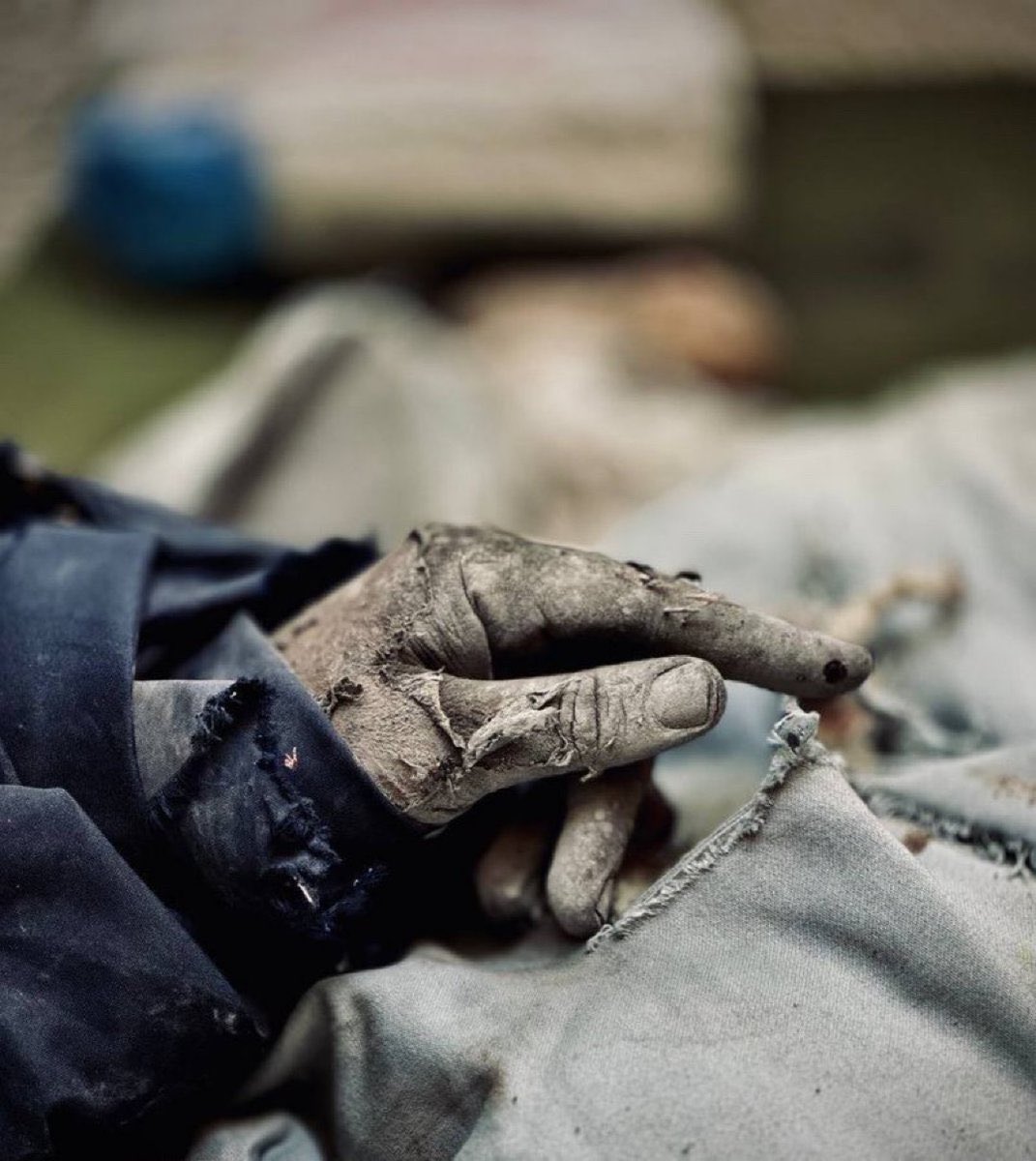
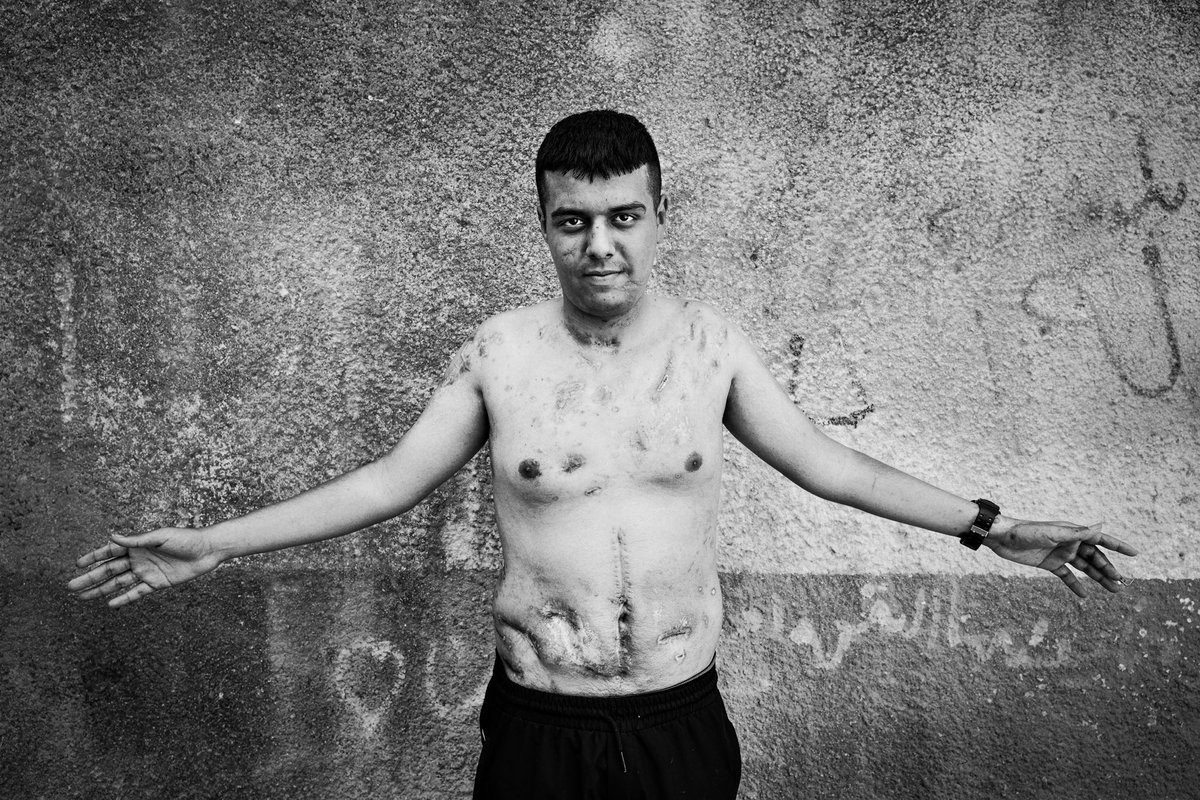
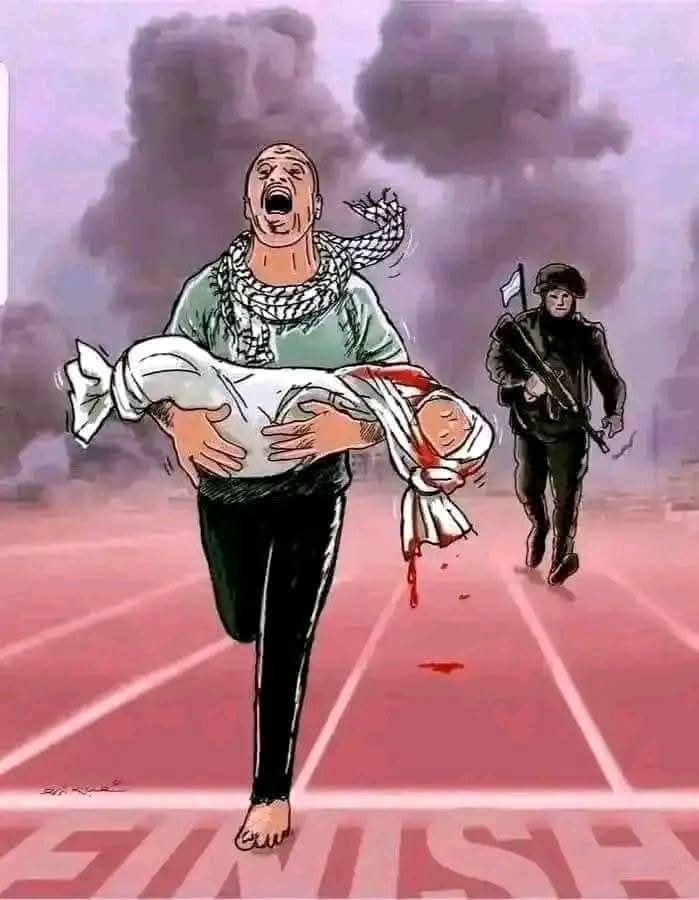
 The sharp escalation in Israel’s targeting of civilians in the Gaza Strip is deeply alarming. Entire families, including women and children, are being killed at horrific rates, as the international community fails to stop the nearly 19-month-long genocide.

While Israeli Prime Minister Benjamin Netanyahu denied to the media that Israel was targeting civilians, military aircraft continued to carry out airstrikes that deliberately killed women and children in the Gaza Strip. These horrific crimes are no longer the exception to the rule; rather, the recurring pattern of such atrocities demonstrates a systematic Israeli policy defying all international laws and norms.

In just one week — between 20 and 26 April — Israel killed 345 Palestinians and injured 770 others, according to field data indicating that at least 94% of the victims were civilians. Children (51%), women (16%), and the elderly (8%) together accounted for 75% of those killed. Among the remaining victims (adult males), field verification confirmed that at least 63 of 81 worked in civilian jobs or independent professions unrelated to any militant or organizational activity, further reinforcing the predominantly civilian nature of the casualties.

There is no evidence indicating that the adult male victims, for whom detailed data was unavailable at the time of this publication, were involved in hostilities or associated with militant activities. Israel has provided no credible proof to the contrary. As such, the general legal presumption of the victims’ civilian status applies in this situation, granting those targeted full protection under international humanitarian law, with the burden on Israel to prove otherwise.

The unprecedented rise in civilian casualties coincides with Netanyahu’s continued false statements denying the targeting of civilians, which is a blatant attempt to mislead international public opinion and cover up Israeli crimes on the ground. Meanwhile, extensive field evidence, live testimonies, photographs, and direct documentation all confirm that womenand children make up the largest proportion of victims, and that the enclave’s remaining buildings, infrastructure, and shelters are being systematically and intensively bombarded. The intention of the ongoing targeting is unquestionably to kill civilians and destroy the foundations of Palestinian life, accelerating their gradual uprooting from their land.

Over the past few weeks, Euro-Med Monitor’s field team has documented repeated instances of entire families being wiped out, as well as the deliberate targeting of specific families in a pattern suggesting a clear intent to annihilate them. The Israeli government’s continued fostering of false narratives, alongside the escalation of these crimes, reaffirms its systematic policy of covering up violations and protecting perpetrators. Israel and its allies are operating within a framework of complete impunity aimed at undermining justice, and are inadvertently revealing to the world the biased foundations of international law.

Civilian lives, including those of children and women, are not collateral damage to be overlooked; these are real people with personal stories, deliberately and systematically killed without the Israeli acknowledgement of any legal or even moral obligations. Protecting civilian lives and holding those responsible accountable is a legal and moral duty the international community must not evade.

Israeli aircraft bombed a house in Khan Yunis, in the southern Gaza Strip, on 28 April at dawn. The strike killed 12 members of the Kaware’ family, including Zainab al-Majayda and her six children. One of al-Majayda’s brothers had been killed by Israel three months earlier.

The Israeli army has recently intensified its use of suicide drones to target the tents and homes of displaced people. These drones are equipped with advanced surveillance cameras and guidance systems, enabling the precise, real-time tracking of targets. This technology, which allows operators to monitor a target up until the last moment and decide whether to strike or refrain, eliminates any margin for error or randomness. It confirms that this type of targeting is being carried out knowingly and deliberately, in clear violation of the rules for civilian protection under international humanitarian law.

In another recent attack, the Israeli army used a suicide drone to target a tent housing displaced people in the al-Mawasi area of Khan Yunis at approximately 1:50 a.m. on Friday 25 April. The attack wiped out an entire family: Ibrahim Khalil Abu Taima (33), his pregnant wife, Hanadi Shaaban Abu Taima (29), and the couple’s three children, Samira (9), Azem (6), and Raafat (4). On the evening of the same day, Israeli jets bombed the home of the Al-Amour family, nearly wiping them out entirely. The couple and their nine children—including three boys and four girls—were killed, with only one child surviving the massacre.

Following the documentation of several attacks by this type of drone, it has become clear that most of the victims have been children, women, and unarmed civilians. This further demonstrates that Israel is deliberately targeting and killing Palestinian civilians en masse as part of the ongoing genocide in the Gaza Strip.

Israel’s deliberate targeting of simple shelters—including makeshift tents and half-destroyed homes—with heavy bombs or suicide drones and without any justified military necessity, reveals a systematic policy aimed at causing the highest possible number of civilian casualties and instilling terror among the Palestinian population. These actions are explicitly prohibited under international law.

Most of Israel’s attacks, which strike purely civilian sites, are not followed by any official attempt to justify the targeting. In some cases, Israeli military sources will claim a member of an armed Palestinian faction was the target. Such flimsy pretexts neither justify the enormous number of civilian deaths nor reflect the scale of the human and material losses caused by theongoing attacks, however.

Israel routinely repeats the same claim whenever international public opinion rises against its crimes, asserting it was targeting “militants” to justify its attacks on civilians without providing concrete, verifiable evidence or allowing any independent party to verify these claims.

Furthermore, the internal investigations Israel announces after committing certain crimes have lacked independence and seriousness. These investigations are obviously not intended to hold perpetrators accountable or achieve justice, and serve mainly to provide formal cover for the soldiers and officers involved. In the rare instances where punitive measures are taken, they are limited to minor administrative actions that in no way reflect the gravity of the crimes committed or the severity of the violations.

Israel’s claims, in and of themselves, do not absolve it of its responsibilities under international law, including the duty to conduct effective investigations, hold perpetrators accountable, and provide redress to victims. Euro-Med Monitor strongly condemns the automatic acceptance of unsubstantiated Israeli allegations, as silent complicity effectively grants Israel a license to continue targeting civilians under a false legal cover, thus undermining the substance and effectiveness of the international legal system.

Even if a combatant were assumed to be present or passing through an area, this would not justify these brutal massacres nor absolve Israel of its obligations under international law and international humanitarian law. Israel remains fully bound to uphold the principles of humanity, distinction, military necessity, proportionality, and precaution. To ensure the minimum possible loss of civilian life and injury, these obligations must be respected during the planning and execution of any military operation, including taking precautions in the choice of methods and means of warfare, without exception.

Israeli massacres against Palestinians have become a familiar sight, met with near-total silence despite the genocide essentially being livestreamed across the globe. It’s as if the killing of Palestinian civilians—openly committed by Israel and its allies without fear of legal or moral consequences—has become an implicitly accepted reality within the international system.

International indifference to this pattern of crimes is not merely a moral failure but a grave breach of the legal obligations of states and the international community. It transforms the mass killing of Palestinians from criminal acts into policies carried out openly before the entire world. Silence in the face of these crimes constitutes a clear failure to fulfil the legal duty to prevent genocide and punish its perpetrators, as mandated by the 1948 Convention on the Prevention and Punishment of the Crime of Genocide.

The Israeli killing methodology reflects a clear policy aimed at eliminating Palestinian civilians across the Gaza Strip, spreading panic, depriving them of shelter or stability, forcing repeated displacements, and subjecting them to deadly living conditions. All of this is compounded by ongoing Israeli bombardment across the Strip, including attacks on areas designated as humanitarian zones, and the targeting of shelters, even those located within UNRWA facilities.

All states, individually and collectively, must fulfill their legal responsibilities by taking urgent action to stop the genocide in the Gaza Strip, through implementing effective measures to protect Palestinian civilians, ensuring Israel’s compliance with international law and the decisions of the International Court of Justice; and holding Israel accountable for its crimes against the Palestinians. The International Criminal Court must reissue arrest warrants for the Israeli Prime Minister and Minister of Defence at the earliest opportunity, in accordance with the principle that there is no immunity for international crimes.

The international community must also impose economic, diplomatic, and military sanctions on Israel for its systematic and grave violations of international law. These sanctions should include an arms embargo; an end to all political, financial, and military support; freezing the assets of officials involved in crimes against Palestinians; imposing travel bans; and suspending trade privileges and bilateral agreements that provide Israel with economic benefits that enable its continued crimes.
Continue reading
Gaza in Starvation Mode Thanks to Israel

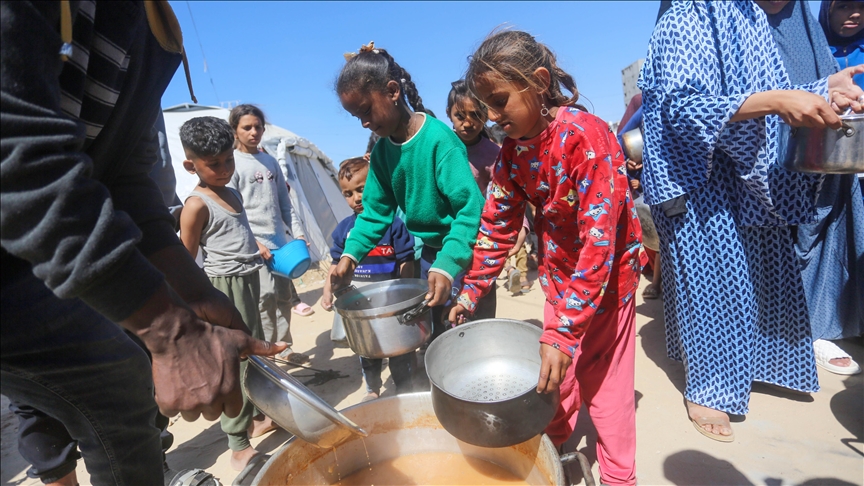
The UN agency for Palestinian refugees (UNRWA) sounded the alarm on Saturday over a rapidly escalating humanitarian catastrophe in the Gaza Strip.

“All basic supplies are running out in Gaza. It means babies, children are going to bed hungry,” Juliette Touma, the agency’s director of communications, said in a statement.

“Six weeks into the Israeli-imposed siege blocking the entry of aid and commercial supplies, food stocks are nearly gone, bakeries closed, and hunger is spreading,” the agency also noted.

The UNRWA emphasized that “immediate action is needed to prevent a deepening humanitarian crisis.”

The Israeli army renewed a deadly assault on Gaza on March 18, shattering the ceasefire and prisoner exchange agreement that took hold in January.

More than 50,900 Palestinians, most of them women and children, have been killed in Gaza in a brutal Israeli onslaught since October 2023.

The International Criminal Court issued arrest warrants last November for Israeli Prime Minister Benjamin Netanyahu and his former Defense Minister Yoav Gallant for war crimes and crimes against humanity in Gaza.

Israel also faces a genocide case at the International Court of Justice for its war on the enclave.

Continue reading
15 Martyred: Why Does Israel Kill Ambulance Men?

The international community must hold Israeli officials and responsible individuals accountable for the deliberate killing of 15 paramedics and first responders from the Palestinian Red Crescent and Civil Defense. The victims—killed by the Israeli military in Rafah, in the southern Gaza Strip—also include an employee of the United Nations Relief and Works Agency for Palestine Refugees (UNRWA). This killing is part of Israel’s widespread and systematic attacks on humanitarian, medical, and UN workers, all of whom are protected by international law.

According to field evidence, Israeli forces killed eight Palestinian Red Crescent paramedics, five Civil Defence personnel, and one UNRWA employee; all were on duty at the time of their targeting. The crime has been referred to as “the largest mass execution of humanitarian workers in the history of modern warfare”. Following the total destruction of the workers’ vehicles, the majority of their bodies were subsequently interred in a deep pit that was then filled with sand. This horrifying scene serves as further evidence of Israel’s ongoing genocide in the Gaza Strip, and is a major crime that is a serious breach of international humanitarian law.

The crime is just one of a string of intentional assaults that have been directed at humanitarian and medical workers since 7 October 2023. Since then, Israel has killed over 1,400 medical personnel, 27 Red Crescent paramedics, and 111 Civil Defense personnel as part of a systematic campaign to destroy the Gaza Strip’s health and relief infrastructure to kill Palestinians, while simultaneously aiming to destroy their means of subsistence as well.

A Palestinian Red Crescent ambulance left Rafah’s Hashash neighbourhood early on Sunday (23 March 2025) to evacuate injured individuals who had been hit by Israeli attacks. However, the medical staff inside the ambulance suffered injuries themselves as a result of the Israeli occupation forces’ intense fire. Three more ambulances were sent to evacuate the injured, including the crew members hurt in the initial attack, as the situation worsened. The area was then abruptly surrounded by a strict security cordon by the occupation forces, which has since cut off all communication with medical personnel.

That same day, a Civil Defense rescue team in Rafah’s Tal al-Sultan neighbourhood received urgent calls to travel to al-Hashash area. The calls stated that Israeli occupation forces had unexpectedly invaded the area, killing and injuring dozens of people and trapping medical personnel. Though the call was answered by a team of six Civil Defense personnel, communication with the team was lost shortly after they left to do their job.

One of the crew members was severely beaten by the Israeli occupation forces and then released that evening. The rest—the UNRWA employee, five Civil Defense personnel, and eight Red Crescent paramedics—were killed.

Additional ambulance and Civil Defense crews were able to reach the scene on Friday 28 March, following international coordination, and discovered the mission leader, Civil Defense officer Anwar Abdul Hamid al-Attar, dead, with his body shredded. The rescue crews that arrived Friday also found all of the Red Crescent vehicles, fire trucks, and ambulances completely reduced to charred metal.

Despite being protected by international humanitarian law, the paramedics were directly targeted, as evidenced by the ripped remains of the safety gear discovered at the crime scene. Additionally, evidence shows that the Israeli occupying forces not only killed the victims, but also covered up their crime by using bulldozers and other large equipment to bury the bodies in a mass grave.

The bodies of the eight Red Crescent paramedics were recovered by rescue crews on Sunday 30 March 2025, the first day of Eid al-Fitr. One crew member is still missing, and is thought to be being held by the Israeli military. The bodies of the UNRWA employee and five Civil Defense personnel were also discovered on 30 March.

The Palestinian Red Crescent has identified the following victims: Mohammed Bahloul, Ashraf Abu Labda, Mohammed Al-Hila, Raed Al-Sharif, Mustafa Khafaja, Ezz El-Din Shaat, Saleh Muammar, and Refaat Radwan. The victims from the Civil Defense are Yousef Rasem Khalifa (ambulance officer), Fouad Ibrahim Al-Jamal (ambulance driver), Ibrahim Nabil Al-Maghari (firefighter officer), Samir Yahya Al-Bahabsa (firefighter officer), and Zuhair Abdul Hamid Al-Farra (firefighter driver). The victim who worked for UNRWA is Kamal Mohammed Shahtout.

“As soon as the incident occurred, we entered the site west of Rafah with OCHA crews, “Sufyan Ahmed, a member of the Civil Defense team involved in the effort to recover the victims’ bodies, said in a statement to Euro-Med Monitor. “The Israeli army told OCHA that the bodies of the victims were found next to a fire truck and an electrical pole. Using a small bulldozer, we started our excavation at the spot the army had designated. One body was discovered. After examining it, it was determined to be the body of the mission leader, Anwar Abdel Hamid al-Attar.”

He continued: “We used OCHA to get in touch with the army and enquire about the whereabouts of the other bodies. They replied that the bodies were in the same hole from which we had taken al-Attar’s body, next to the electrical pole. We dug deeper into the hole and kept looking, but we could not find anything. We then had to leave the site because the army had given us a limited amount of time.

“We went to the site the following day and waited at a nearby location, awaiting the army’s approval to enter,” he added. “After roughly five hours, we were told that entry was refused, so we departed. The following day, we anticipated being granted access to the site, but were still denied permission. After a few days of waiting, we received approval yesterday, Sunday, and were able to access the site. We were told that the army would stay with us until they told us where the bodies were interred so that we could start the excavation process.”

Explained Ahmed: “When we got to the site, a quadcopter was flying overhead, showing us where the bodies were buried. We received a sign pointing to the graveyard from the drone. We were shocked to learn that the designated site was far from the one where we had previously been informed the bodies were interred. At that moment, we recognized that they had been attempting to delay, procrastinate, and waste our time the first [few days]. We, the Civil Defense staff (two paramedics and two drivers), convened briefly after the new location was determined to devise a strategy for safely retrieving the bodies. We had prior experience on similar missions and had the required equipment.

“We started digging right away, discovered a body, and recovered it. We dug out another body that we found underneath. We then found a third body underneath. We dug further until all of the Red Crescent and Civil Defense personnel’s bodies were found in the same hole. The body of an UNRWA employee was the only one still missing. We asked OCHA about its location, and they told us that it was close to the ‘barracks’ area, west of Rafah.

The bodies had distinct features, but they were in the early stages of decomposition. When they were examined, it was evident that a barrage of bullets had struck them. Based on my observations, the injuries were located in the chest region. A closer look revealed that some of the victims had still been alive despite their injuries—they were apparently buried alive with their feet bound.

“Among the bodies we looked at was Ibrahim al-Maghari’s. His body was covered in severe bruises and showed evidence of torture, and his legs seemed bound. After being shot in the back of the head, his face was completely ripped apart. Regarding Fouad al-Jamal’s body, he was shot in the head from a very close distance, causing his skull to shatter, [giving the appearance of] crushed bones. We discovered that every employee of the Palestinian Red Crescent had been shot in the left and right sides of the head.

After getting permission from the Israeli army, we removed the bodies with immense grief and suffering, moved them to ambulances, and left the site for the hospital.”

Ahmed went on, “We saw bags, blankets, clothing, and other items belonging to thousands of citizens who had been displaced that day, when we first arrived at the scene of the incident and collected the body of Anwar al-Attar. However, these items were absent when we returned to the site a few days later, indicating that the incident site had been altered and tampered with.”

He affirmed: “We were joined by a Red Cross delegation and a forensic physician with expertise in autopsies when the bodies were recovered. Along with documentation experts, we were joined by a delegation from UNRWA and OCHA. All of them observed the process of recovery.”

Another Civil Defense crew’s testimony, which was obtained by Euro-Med Monitor, claims that the victims were cruelly tortured and killed by the occupation forces. The body of one Civil Defense member was wearing handcuffs, while others were discovered in a state of partial undress, and additional victims were found to have suffered from extreme torture that led to their deaths, such as having more than 20 bullets fired into their chest. Most of the victims’ bodies were discovered in a mass grave that was two to three metres deep, this testimony confirms, suggesting that Israeli soldiers forced the victims out of their cars, killed them in cold blood, and then buried them to hide any evidence of the crime.

The Geneva Conventions, which provide protection for medical personnel, relief and humanitarian workers, and United Nations personnel, are gravely violated by this heinous crime, which also blatantly violates international humanitarian law. This is one of many full-fledged war crimes committed by Israel as part of its genocide against Palestinians in the Gaza Strip. The international community must take prompt legal action and hold Israel and its allies accountable, as Israel is clearly attempting to eradicate the Strip’s Palestinian population, either by killing them directly or by destroying the institutions that support their existence—the gravest possible crimes.

All states must swiftly launch international criminal investigations to bring every perpetrator to justice. This includes using national courts to hold their own citizens accountable for any crimes related to Israel’s genocide, as well as supporting the International Criminal Court’s work and assisting the Court in any way possible, such as by issuing arrest warrants and turning over any criminals to the appropriate authorities. In order for states to fulfill their responsibilities under international law, Israeli citizens or dual citizens who have committed crimes against the Palestinian people must be prosecuted under the principle of universal jurisdiction.

Every state, both individually and collectively, must fulfill their binding legal obligations and act quickly to end the genocide in the Gaza Strip. Since this is a fundamental, non-negotiable right of a population under international law, states should take all reasonable steps to protect Palestinian civilians in the Strip; protect medical, humanitarian, and UN personnel there; lift the blockade on the enclave; and permit the immediate and unhindered entry of humanitarian aid. There is no legal exception that would permit Israel to deny this aid to the Palestinian people.

The international community must impose economic, diplomatic, and military sanctions on Israel due to its egregious and ongoing violations of international law. These sanctions should include a travel ban; a freeze on the financial assets of officials linked to crimes against Palestinians; a suspension of military cooperation; and a ban on arms sales to—and purchases from—Israel. In addition, trade privileges and bilateral agreements that give Israel economic advantages and allow it to carry out crimes against Palestinians must besuspended as part of these sanctions.

The United States and other nations that give Israel any kind of support or assistance in connection with the commission of its egregious crimes, including aid and contractual relationships in the military, intelligence, political, legal, financial, media, and other areas that contribute to the persistence of such crimes, should be held accountable and prosecuted.

Euro-Med Human Rights Monitor

Continue reading
‘All Attempts at Displacing Gazans Failed’ – A Historical Outline

By Ismael Al Sharif

One of the most widely circulated press items in the Gaza War was a photo in Al-Dustour daily in its 11 March, 1971 edition under an “Evacuation of the Gaza Strip Begins,” headline. This image traveled around the world, confirming the importance of print journalism and its continued role as a primary source of information for documenting events, and its enduring presence despite digital developments.

Al-Dustour witnessed pivotal moments in the repeated attempts to empty Gaza of its population. The idea of ​​displacing the residents of the Strip began in the early 1950s, when a number of military personnel, bureaucrats, and senior UNRWA officials met and took out old maps to discuss possible displacement destinations. After lengthy discussions, it was decided to push Gaza’s residents toward the vast, sparsely populated Sinai Desert.

The plan targeted the displacement of approximately 60,000 people, equivalent to a quarter of Gaza’s population at the time. Despite the start of preparations, the idea was met with categorical rejection by the residents of the Gaza Strip, who clung to their land and refused to leave.

In 1956, the Zionists occupied the Gaza Strip during the Tripartite Aggression against Egypt. David Ben-Gurion, along with senior military commanders, attempted to forcibly displace the population of the Strip to the West Bank and Sinai. However, pressure from the United States prevented the plan from being implemented and the attempt was foiled. A year later, the occupation was forced to withdraw from Gaza.

In 1967, Moshe Dayan devised a plan aimed at forcing as many residents of the Gaza Strip as possible to emigrate to the West Bank and Egypt. Some residents were eventually deported to the West Bank, but the plan did not achieve the desired results, as relatively few residents left Gaza.

In 1971, while the late Yitzhak Shamir was serving as military governor of the Gaza Strip, he decided to forcibly displace the population. He bulldozed thousands of homes and forced a number of residents onto buses and transported them to the city of Al-Arish. But the plan failed, as the population quickly returned to Gaza, supported by pressure from Arab countries and major powers, which prevented the plan from being fully implemented.

With all attempts at direct displacement having failed, the Zionists found themselves in a predicament; neither killing nor enticement persuaded the people of Gaza to leave their homeland. The occupation then changed its strategy, devising a plan to systematically and slowly destroy Gaza through siege, starvation, and repeated military escalation. Once again, however, the Gazans foiled the plan and held their ground, refusing to leave.

In 1992, the “Greater Gaza” project was proposed during the term of Yitzhak Rabin. Secret plans were drawn up to impoverish the Strip, making life there nearly impossible, and drive its residents to emigrate to Sinai. However, this plan, too, failed.

In 2004, then-Shin Bet chief Avi Dichter devised a plan bearing his name, believing he had found the ideal solution to displace the population of Gaza by encouraging what he called “voluntary migration,” particularly to European and Gulf countries. However, this plan also failed, and the people of Gaza remained steadfast in their land, refusing to leave.

In 2014, the Israeli occupation relaunched its first plan, seeking to remove the border between Egypt and the Gaza Strip and push the population of the Strip toward Egyptian territory. However, Egypt confronted and thwarted this plan, preventing it from achieving its goals.

Then came the Trump administration’s so-called “Deal of the Century,” which included unofficial clauses regarding the transfer of Palestinians from Gaza to Sinai. The US administration exerted pressure on Cairo to implement this plan, but Egypt categorically rejected it, also leading to its failure.

Then came the Al-Aqsa Intifada, which Israel exploited to carry out the largest genocide ever carried out, with the aim of displacing the people of Gaza. It practiced murder and siege, cutting off their basic necessities of life, hoping to force them to leave. However, despite the brutality of the aggression, Gaza stood firm, thwarted the plan, and emerged victorious with its unbreakable will.

Trump returned once again to revive his plan, this time attempting to displace the people of Gaza through what he called “soft displacement.” However, he clashed with a tough king who firmly confronted this plan and rejected it without hesitation.

The Zionist entity, with American support, failed to adhere to the temporary truce with Hamas, and the war of extermination resumed, amid a stifling siege, famine, and a scarcity of water and medical services.

Over the decades, the Zionist entity attempted to exterminate and displace the people of Gaza, sometimes by force and sometimes by enticement. But Gaza stood firm, and the banner of steadfastness was passed down from generation to generation. Just as this banner was passed down from generation to generation, so too was the banner of defending the holy sites, passed from one Hashemite king to the next.

The commandments of our forefathers became ingrained in our conscience: to always stand with Palestine. Over these long years, Al-Dustour newspaper has stood with the Palestinian cause, exposing the enemy’s schemes and mobilizing support and backing for justice. Al-Dustour has been a witness to history, conveying Gaza’s voice and echoing its steadfastness. At every critical moment, it was present, documenting, exposing, and defending the truth without hesitation.

A day will come, decades from now, when future generations will pass on images from Al-Dustour’s editions that documented this phase of the conflict with the enemy, testifying to Gaza’s steadfastness and the resilience of its people in the face of attempts at genocide and displacement. Just as Al-Dustour has always been present in the battles of steadfastness, Gaza will remain engraved in its conscience: An immortal story and an indelible symbol.

Ismael Al Sharif is a columnist in Ad Dustour newspaper in Jordan.

Continue reading
How do You Stop Israel’s New War?

As Israel’s forces intensify their assault on the occupied West Bank, concerns are mounting over its broader objectives, further territorial expansion, forced displacement of Palestinians, and the gradual annexation of the occupied land.

Israel has killed more than 64 Palestinians, arrested at least 365, displaced hundreds of thousands and destroyed scores of homes and properties in the occupied West Bank since it launched its operation, the “Iron Wall,” on January 21, just days after a ceasefire took effect in the Gaza Strip.

For the first time in more than 20 years Israel deployed tanks in the West Bank and Defense Minister Israel Katz said that the army will remain in some refugee camps “for the next year.”

Since the start of the operation by the Israeli forces on January 21, several refugee camps have been nearly emptied of their residentsand over 5,000 Palestinian families have been displaced by the ongoing Israeli attacks in the West Bank according to the Palestinian government.

Starting in Jenin Camp, the operation has expanded to Tulkarm, Nur Shams, and El Far’a refugee camps and led to the displacement of more than 40,000 Palestine refugees. 

As well, the occupation forces stormed several towns, including Idhna, Al-Shuyukh, and Beit Awa in Hebron, as well as the Al-Disha and Aida camps in Bethlehem, the Al-Mughayyir and Birzeit towns in Ramallah.

Israeli troops also raided the Amari camp in Al-Bireh and the Airport Street area in the Kafr Aqab neighborhood, located north of Jerusalem. 

As the operation is spreading across most West Bank cities and refugee camps, analysts say that Israel’s long-standing aim to annex the occupied Palestinian territory is now more evident than ever and that it plans to annex the West Bank, squeeze the Palestinians into the smallest areas possible, particularly to expel them from Area C,referring to the division that makes up some 60 per cent of the Palestinian territory.

The use of air strikes, armored bulldozers, controlled detonations, and advanced weaponry by the Israeli forces has become commonplace, a spillover of the war in Gaza.

Such militarised approaches are inconsistent with the law enforcement context of the occupied West Bank, where there have been at least 38 airstrikes in 2025 alone. 

Jenin Camp stands empty today, evoking memories of the second intifada and this scene stands to be repeated in other camps. 

On the other hand, as the Israeli operation escalates, illegal settlers push further into Palestinian territories as 

Area C -over 60 per cent of the West Bank- is basically what the Israeli settler movement and the Israeli state view as ultimately theirs. 

Besides, they are creeping into Area B, which constitutes approximately 22 per cent of the West Bank. 

The illegal settlers are backed by the Israeli state, which provides them with military, economic, and political support across the political spectrum, not just from right-wing factions.

Since the start of the onslaught against the Gaza Strip on Oct. 7, 2023, at least 927 Palestinians have been killed and nearly 7,000 injured in attacks by the Israeli army and illegal settlers in the West Bank, according to the Palestinian Health Ministry.

In January, the Israeli anti-settlement group Peace Now warned that Israeli authorities were planning to approve the construction of 2,749 new settlement units in the occupied West Bank.

The group said 2025 could see “record numbers” of settlement expansions, an average of 1,800 units per month.

On its part, the International Court of Justice declared in July that Israel’s long-standing occupation of Palestinian territories is “unlawful,” demanding the evacuation of all settlements in the West Bank and East Jerusalem.

The United Nations Relief and Works Agency for Palestine Refugees (UNRWA) reiterates that civilians and civilian infrastructure must be protected at all times and that collective punishment is never acceptable.

However, under the Knesset laws implemented on January 30, UNRWA no longer has any contact with the Israeli authorities, making it impossible to raise concerns about civilian suffering or the urgent need for the delivery of humanitarian assistance. 

UNRWA, the main agency providing humanitarian aid for Palestinians in the refugee camps, has been banned by Israel to operate in East Jerusalem and now in the West Bank which is having a huge impact on the well-being of people, and on the economic situation.

This puts at grave risk the lives of Palestine Refugees and the UNRWA staff that serve them.

 Israel has long tried to eliminate the UN agency, which enshrines the right of Palestinian refugees to return home.

Israel’s aggressive assault on the refugee camps and the UNRWA, aligns with Israeli Prime Minister Benjamin Netanyahu’s goal “to end the concept of a Palestinian refugee”.

Moreover, the ongoing West Bank operation is seen as part of Israel’s plan to establish an exclusively Jewish state and recent reports surface that Israel is preparing to set up a military base in the Jenin camp, a part of its strategy to eliminate the refugee identity. 

All of Israel’s actions and policies throughout the last several decades have been geared toward the ultimate goal of creating a Greater Israel across all of historic Palestine.

Najla M. Shahwan is a Palestinian author, researcher and freelance journalist. Author of 13 books in literature and a children story collection. Chairwoman of the Palestinian Center for Children’s Literature (PCCL). Founder of Jana Woman Cultural Magazine. Recipient of two prizes from the Palestinian Union of Writers. She contributed this article to The Jordan Times.

Continue reading