Al-Duwairi: The Houthis will not stop bombing Israel Unless…

Military expert Major-General Fayez Al-Duwairi said that if the massacres and Israeli blockade of Gaza continue, the Houthis Ansar Allah group will continue bombing deep inside Israel.

He emphasized that targeting Ben Gurion Airport in particular would lead to the cessation of air traffic and the suspension of flights by some international airlines and creating a state of confusion forcing millions to go down to the shelters.

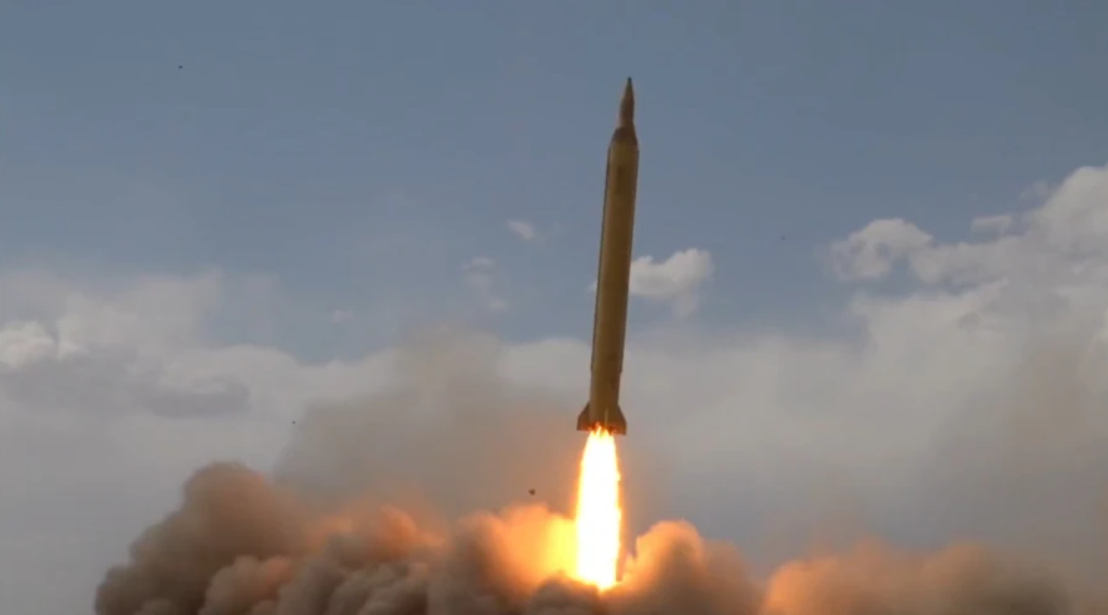
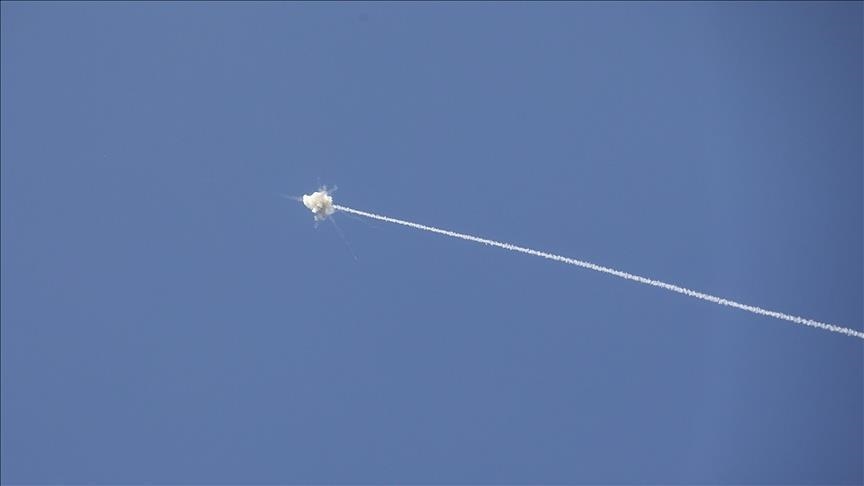
The Israeli army announced it intercepted a missile fired from Yemen toward Israel early Sunday morning as the Houthis threatened to impose a no-fly zone on airports in Israel due to the escalation in the Gaza Strip.

Houthi military spokesman Yehya Saree announced that the group targeted Ben Gurion Airport with two ballistic missiles all the way from Yemen, a distance of over-2000 kilometers in support of Gaza.

The Houthis have since initially linked attacks on ships in the Red Sea and attacks deep inside Israel wouldn’t stop until the  Israeli war on the Gaza Strip comes to an end.

Nasr al-Din Amer, deputy head of the Houthi media told Al Jazeera Net that the group’s long-range missiles aim to close down the Ben Gurion Airport and prohibit navigation there until the blockade and aggression on Gaza is lifted.

Al-Duwairi noted the Houthis’ strikes prompted the Israeli occupation to change its defense strategy. Since last week, its  focus shifted from the American THAAD system to the Israeli Arrow system, as THAAD previously failed to intercept two missiles launched by the Houthis one of which landed in the surroundings of the airport.

He predicts the Israeli occupation would continue its attack on Yemen and suggests that an airstrike would be imminent in the coming days. However, he explained that the targets are unknown and would likely be civilian.

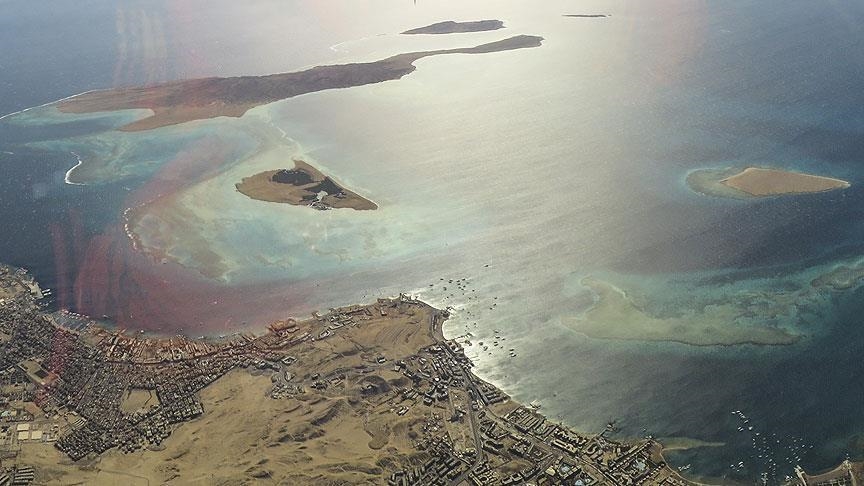
The Israeli military announced in a statement last Friday it had carried out attacks on two ports in the Al Hudaydah Governorate on Yemen’s west coast using fighter jets, targeting and destroying infrastructure it claimed belonged to the Houthis in the two ports.

Prime Minister Benjamin Netanyahu threatened: “We know the Houthis are merely an arm, and that Iran is behind them and provides them with support, instructions, and authorization.” He warned the Houthis would pay a heavy price, and “we will defend ourselves by all means to preserve Israel’s security,” as reported in Al Jazeera.

Continue reading
Can ‘Realist’ Trump Pull Off Gaza Ceasefire?

By Michael Jansen

During his ongoing visits to Saudi Arabia, Qatar and the Emirates, US President Donald Trump seeks to focus on business opportunities and investment in the US rather than address the negative political realities to which he contributed during his first term (2017-2021).

At that time, he dismissed the two-state solution in favour of “The Deal of the Century” which would give Palestinians a degree of autonomy within Israel. He defunded UNRWA, recognised Jerusalem as Israel’s capital, moved the US embassy there, and said the US no longer considers Israeli settlements illegal overturning a 1978 policy. The fate of the refugees, Jerusalem, and settlers were meant to be negotiated under the two-state solution by the sides under the 1993 Oslo accord. He closed the US consulate in occupied East Jerusalem which served Palestinians and the PLO office in Washington. Trump recognized Israeli annexation of Syria’s occupied Golan.

Trump began his second term by calling for the expulsion of Palestinians from Gaza which would be redeveloped as a Middle East Riviera instead of exerting pressure on Israel to end the Gaza war and enable its reconstruction. Under Trump’s real estate venture Gazan Palestinians were supposed to settle in Egypt and Jordan, which along with all the Arabs flatly rejected this proposal. Egypt drew up a counterproposal to reconstruct devastated Gaza while its population stays put.

His resort scheme has angered the Arab public from the Gulf to the Atlantic. His call for Saudi Arabia to establish relations with Israel has been rejected as Riyadh has said it will normalise when there is a Palestinian state with its capital in Jerusalem.

Since Trump made Saudi Arabia his first foreign destination in 2017 during his first term, the region has changed significantly by pivoting to the East. Saudi Arabia and the Emirates have cultivated ties with Russia – Riyadh’s partner on oil production and pricing – and China which buys Gulf oil and exports billions of dollars in goods to the Gulf. The Emirates, Egypt and Iran joined BRICS (the grouping of Brazil, Russia, India, China, and South Africa) while Saudi Arabia applied but did not follow through. China mediated Saudi-Iranian reconciliation. This has ended Iran’s isolation in the region.

On the positive side, early in this term Trump opened talks with Iran over its nuclear programme to replace the 2015 deal from which he withdrew in 2018. A fifth round of talks is expected. Although Trump wants to be a peacemaker, he has threatened war if the talks fail.

As a peacemaker, Trump bombed Yemen heavily to force Yemen’s Houthis to end attacks on international commercial and naval vessels in the Gulf of Aden and the Red Sea. The Houthis and US agreed to end this confrontation. Trump has not, however, halted Houthi drone and ballistic missile attacks on Israel which the Houthis say will stop if Israel observes a ceasefire or ends the war on Gaza.

Trump has not planned to stop in Israel during this Gulf tour, indicating that there is some distance between him and Israeli Prime Minister Binyamin Netanyahu. He has not only refused to ceasefire in Gaza but also maintained a ten-week blockade of the strip. He could have done both to ease Trump’s swing around the Gulf where Gaza is high on the agendas of the rulers and public. Since Netanyahu has carried on with his Gaza war, Trump has ignored him when resuming talks with Iran on limiting its nuclear programme in exchange for lifting sanctions and agreeing to a ceasefire with Yemen’s Houthi. The ceasefire has been welcomed by Washington’s Arab allies, particularly Saudi Arabia which had been urging an end to US attacks on Yemen before Trump began his tour.

Without Israeli involvement, the US has also negotiated with Hamas over the release on Monday of US-Israeli hostage Edan Alexander. For Trump, this is a greatly desired success in the US. In Israel, families of hostages who are not US-Israel dual citizens fear their relatives will be forgotten by Netanyahu who is determined to not only continue with the war but also to expand it once Trump departs from the region. Hostage families are not alone in their suspicions. A majority (54 per cent) of Israelis said that the war was being driven by personal rather than security reasons. Only 21 per cent agreed with Netanyahu’s prioritisation of eliminating Hamas over rescuing the hostages. A March poll showed 70 per cent of Israelis wanted Netanyahu to resign.

He has adopted this stance for several reasons. First, right-wingers in his coalition have vowed to pull out if he ends the war. Second, once the war is over, Netanyahu will be called upon to account for lax Israeli security in the south where Hamas breached the fence on October 7th, 2023, killed 1,200 Israelis and visitors and abducted another 251. There was no excuse for laxity. Young female Israeli soldiers deployed as “watchers” along that part of the border with Gaza, warned repeatedly that Hamas was conducting drills and manoeuvres ahead of an attack. Their warnings were not taken serioiusly by senior Israeli officers. Some of these women were killed and some captured. Third, as long as the war is being waged, Netanyahu will not have to explain how lightly armed Hamas fighters have managed to carry on the fight while the mighty Israeli army and air force levelled Gaza and killed 53,000 Palestinians. Netanyahu has a lot of explaining to do.

Jansen is a columnist for the Jordan Times

Continue reading
Trump: The Deal-Maker in Our Midst

By Dr. Ali Bakir

US President Donald Trump begun his Middle East tour on 12 May, starting in Saudi Arabia with the Gulf Cooperation Council (GCC) summit, then moving on to Qatar and concluding in the United Arab Emirates (UAE). Trump will be accompanied by a large delegation, including senior White House staff, several ministers, high-ranking officials, and an army of businesspeople. At the core of Trump’s tour to the influential and wealthy GCC states—Saudi Arabia, Qatar, and the UAE—will be investments, economic ties, business, and bilateral relationships. The Trump administration aims to attract hundreds of billions of dollars in investments from Gulf wealth funds into the United States.

Expected discussions include Israel’s military campaign in Gaza, Palestinian statehood, negotiations over Iran’s nuclear program, and the ceasefire deal with Yemen’s Houthi group. Additionally, Syria and Lebanon may also feature on the agenda. Syrian President Ahmad al-Sharaa is reportedly seeking a meeting with Trump during his visit to Saudi Arabia, aiming to persuade him to lift sanctions and increase US involvement in Syria’s reconstruction, economy, and oil sector.

Trump critically needs this tour to project an image of a successful leader who has secured hundreds of billions of dollars in pledged investments and deals, as well as closer political and security ties with GCC states. Hundreds of agreements are anticipated during the visit, covering areas such as AI, transportation, minerals, energy, infrastructure, aviation, defense, and potentially broader agreements on semiconductors and nuclear energy.


Matter of prestige

The significance of this tour is heightened by the fact that Trump is facing both internal and external challenges, having yet to achieve any substantial victories in his ongoing struggles. These include the tariff dispute, Israeli involvement in Gaza, the Iran nuclear deal, Russia’s war in Ukraine, tensions with Canada and Greenland, and his ongoing conflict with China. An image of victory during his Gulf tour would help compensate for these setbacks. Gulf leaders are well aware of this and will arrange exceptional welcome ceremonies and generous hospitality for him. In other words, they will arrange a wonderful show for him. This not only caters to his personal ego but also enhances his standing both domestically in the US and internationally, where he is in dire need of a win. The outcome could create a win-win situation. However, it is important to note that not all the promises made during this tour will materialize. While some initiatives may come to fruition, others may remain merely part of the spectacle.

Unlike his first visit to the region during his initial term in the White House, which included Israel, Tel Aviv is notably absent from his current itinerary. This exclusion is quite significant. Under Netanyahu, Israel has little to offer the US president, aside from more problems, a negative image in the region, and a tarnished reputation for the president himself. It serves as a reminder of his failure to achieve a ceasefire in Gaza, largely due to Netanyahu’s unwillingness to pursue it.

In a previous interview following Biden’s election at the end of 2020, Trump explicitly blamed Netanyahu for the failure of his peace initiative with the Palestinians, stating, “Netanyahu never wanted peace.” Amid the ongoing conflict, initiatives aimed at encouraging Saudi Arabia to recognize Israel—an objective pursued by Trump during his first term—are likely to remain on hold. Riyadh has indicated that it requires tangible progress toward a Palestinian state first, a condition that Israel has not been willing to meet. However, Reuters reported this week that the US has shifted its stance and is no longer insisting that Saudi Arabia normalize relations with Israel as a prerequisite for advancing discussions on civil nuclear cooperation.

Desire to appear as dealmaker

Regardless, Trump’s Middle East tour represents more than just a diplomatic engagement with key US allies; it is a calculated effort to reclaim geopolitical momentum and project strength amid mounting domestic and international challenges. The emphasis on economic deals, defense cooperation, and strategic investments highlights Washington’s strategy of leveraging the Gulf’s financial and political capital to enhance Trump’s image as a dealmaker-in-chief. However, beneath the pomp lies a web of unmet expectations and unresolved conflicts.

While Saudi Arabia, Qatar, and the UAE are acutely aware of Trump’s need for a symbolic win, they remain cautious about committing to politically costly moves without tangible concessions, particularly concerning Palestinian statehood. Ultimately, this trip may provide short-term optics that bolster Trump’s leadership narrative, but its long-term impact will depend on whether these engagements translate into sustained commitments or fade into the background noise of global challenges.

Dr Bakir is Assistant Professor at Qatar University, and non-resident senior fellow at the Atlantic Council.

Continue reading
Trump Slams Door on Netanyahu

Israeli Army Radio has reported that personalities close to US President Donald Trump informed the Israeli Strategic Affairs Minister, Ron Dermer, that the US president had decided to cut off contact with Prime Minister Benjamin Netanyahu.

The Army Radio explained that these acquaintances close to Trump informed Dermer that Netanyahu was manipulating the US president, stressing that what Trump hates most is being perceived as being manipulated.

The radio quoted an Israeli official as saying that Minister Dermer’s conversation with senior Republican officials, did not work because of his displayed arrogance.

This came hours after a report in the Israel Hayom newspaper asserting that the US president is “disappointed” with Netanyahu and intends to take “steps” in the Middle East “without waiting for him.”

Since the start of his new presidential term on January 20, 2025, Trump has offered diverse and unlimited support to the Netanyahu government, which has been waging a genocidal war against the Palestinians in the Gaza Strip since October 7, 2023.

However, the Israel Hayom daily quoted an unnamed sources as saying that “there is a decline in the personal relations and mutual disappointment between Netanyahu and Trump.”

The newspaper added that two senior sources close to Trump said, in closed conversations in recent days, that he has decided not to wait for Israel any longer and is moving forward with steps in the Middle East without “waiting for Netanyahu.”

The sources did not elaborate on the nature of the steps Trump intends to take unilaterally, but there is a complaint in Tel Aviv that Trump sometimes acts without coordination with Israel.

The most recent example is the ceasefire agreement reached by the United States and the Yemeni Houthi group, which does not include Israel and which Israel was unaware of before its announcement according to Al Jazeera.

Continue reading
Trump’s Twist With The Houthis

By Dr Khairi Janbek

During his meeting with the Canadian Prime Minister Mark Carney, US President Trump interrupted the proceedings and declared that the American bombing campaign against the Houthis has stopped. He said, they don’t want to fight us so we respect that.

Now, what does that translate to, is not really very clear. Does it mean that the Houthis will not attack US ships only, or will they cease their actions which threaten maritime movement in the Red Sea including Israeli ships? And will the fighting, for instance, end British bombardment and/or Israeli bombardment. I suppose it remains to be seen.

It is said by observers that the Trump decision was a surprise to the international community and even to some in his administration, though one would argue there are no more surprises with president Trump since his definition of the “America First” policy has come to mean either extracting himself out of the problems he makes as if nothing happened or alternatively stick his nose in already existing mess here and there, then extracting himself out of it without having either solved or achieved anything.

What went on and still goes on in the Red Sea area seems to be closely tied to the big red apple or the big prize, and that is the nuclear negotiations with Iran. Otherwise what would make the Houthis stop fighting, they have been bombed for such a long time without any tangible results?

On the one hand, one would assume that Iran is sending positive signals to the Americans by clearly restraining their proxies in Yemen, while at the same time the Saudis are urging both the Americans and the Iranians to reach an agreement over the issue, while in the mean time, in the background, Israel is lurking behind the scenes being restrained in the name of a successful nuclear agreement.

Indeed, the success of the nuclear agreement will mean that Iran can have a civilian nuclear program subject to periodic inspection, and that by itself, should bolden Saudi Arabia to have its own civilian nuclear program and enrich uranium on its own territory independent of the usual American demand that Saudia should sign first a peace agreement with Israel.

I suppose someone must give in, after all President Trump will be returning back from his coming trip to the Gulf with almost $3 trillion, and calling the Persian Gulf, the Arab Gulf in America; which would be just as meaningless as calling the Gulf of Mexico, the Gulf of America.

As for Israel, well the Houthis declare clearly that their soul stand with Gaza will not refrain from bombing the Zionist state?

Now, to what extent can Mr Netanyahu, the prime minister, whom till now has managed to disguise his political survival in the garment of a regional strategy, will be allowed to upset the American plans, especially, first of all, in counter bombing the Houthis, or even emboldened enough to bomb Iran as the sponsors of the Houthis.

If Israel is to be kept out of the Gulf currently, it will work on exacting a price somewhere else.

Dr Khairi Janbek is a Jordanian writer based in Paris, France.

Continue reading